Process

Tectonic Shifts

Something tectonic is shifting.

It’s difficult to articulate the magnitude of the slow but massive moving plate of direction and force I feel. It’s something that says it’s time to let go and ask oneself what I actually want, not what I think I can achieve. Of saying aloud what I truly truly can envision.

Let me back up.

So, it’s been a while my dear friends.

I’ve been caught up in the web of work that distracts and delights. My “life” is in at least three kinds of shambles due to lack of attention. But it’s the kind of whirlwind that I adore. How amusing and ironic it is that just as I start to gain some traction in this space, pick up a bit of speed, find a voice through language that seems to start nibbling on the edges of these issues, the work itself intrudes and demands all of my attention. So I’ve had so many feelings and thoughts about making and doing and what matters over these past few weeks. But the energy that I usually reserve for this endeavor, the space and time to think and carve out reason and lessons from impulse and feeling, is currently directed elsewhere most of the time.

So there’s been a lot to ponder, but little time to share it.

Here’s a bite at least.

I’ve written before about the relentless pursuit of the perfect, about my contentious relationship with potentiality. It has been both a motivator and inhibitor. It was, perhaps is still, a trait that I both love and fear in myself.

Loved because I believed that this need to impress, to perfect, to show the world how amazing a thing I can make was/is the reason I make impressive things. I believed that an instinct that runs far back into me, as far back into the conception of myself as I can remember, must be at the core of the work that I do, that it must be at the heart of the thing.

Hated because it was the same voice that said that no amount of doing was enough, kept me awake in the middle of the night believing I would fail this task while simultaneously shouting that it was too small, too pedestrian, too simple to be worth attempting, and that had I bigger vision, I might pursue an artistic feat more real and true.

And too often what ended up happening was this: the beginning of a work is filled with the elated holiness of that first blush, and over time as the thing came into sharper and sharper focus, it seemed to fade from that Aristotle inspired image of a perfection play that lived in the clouds of my imagination. And it’s apparent to me now that near the end of every major process of the last decade or so, I’ve walked away at the moment of the work’s full birth feeling a bit like a fraud, filled with big words and ideas, and scared that someone will expose me and show that none of them have really made it into the thing itself.

But recently, and it’s been building over time, as I’ve found moments to reconnect with old works, think about what truly brought me joy in them, it strikes me that, no, the ideal that I had in my head was not the thing I wanted and loved about being a creator, but a dolly waived in the face vigorously enough that I was distracted into thinking it the goal.

This current piece in particular, this Tempest, shows more than ever how funny that idea was in the first place.

Perhaps this is news to no one but myself, but there is no such thing as THE Tempest. Certainly not with 6 weeks of rehearsal in a park with little money or people. But even with years and infinite funds and whatever space one could imagine, there is no such thing as a definitive. There is just this Tempest, just a Tempest, that I happen to be working on. A particular work made by a particular group of people based on a particular set of factors that govern how the thing is made. Some of these things we can control. Some we cannot. And while I could lament, if I cared to, about how I might better perfect the process, even if I nothing ever went wrong, even if I had more time or money, even if I never lost a performer to circumstances beyond their control, even if the bounds of physics themselves were magically lifted and anything I could see in my mind were possible. Even if all this were true, it wouldn’t change one basic thing:

At the core, the work is you wrestling it out.


With the need to look beautiful.

With the need to be right.

With the need to impress.

With the need to be known.

With the need to reach out to others.

With the need to be larger than you feel yourself to be.

With the need to say something that matters to the world.

With the need to push sadness away.

With the need to feel at home with others.

With a thousand needs that I cannot imagine that are totally unique to you.

With the need to make something perfect and untouchable that no one can ever criticize.

And whatever of those needs drive our feelings and impulses we are often caught figuring out whether to fight or free them as we make our way through the scene (or song, or paragraph, or whatever). Sometimes that fight can feel like endpoint of the work. But I don’t think it is. It’s never the reason we began our art in the first place.

And, for me anyway, I think I’m seeing that beating oneself up about the distance between the ideal of the thing, the perfect version of The Tempest, or LADY M, or The Ballad of Joe Hill is really not about simply getting to the penultimate amazing version of the show. It’s letting the needs dictate the process.

Because perhaps, if I could just get there and prove the worth of the work, the implicit message is that that need with which I am wrestling will magically quiet. Which is why I keep opening the door to another wrestling match even as I grow weary (and older) and feel a little less ready to duke it out inside myself.

But the voice isn’t so strong any more. And I’m a lot less interested in yelling at myself.

Which at first I feared was a mellowing of the artistic impulse.

And perhaps this is what was so disquieting to me several months back when I despaired about the state of my art and myself in it. Perhaps it’s why I felt so far away from the form and unsure if I could continue. Because the thing I identified in myself as the core of my artistic self, this need to work and work and work towards only this “best” version of a piece, wasn’t sitting right anymore. That voice just made me tired a lot of the time.

And in feeling that, I worried that I was losing the central part of myself that made anything worth anything close to worthy. And I worried that I would give in, and make stuff I didn’t care about. That I would give up and stop making at all. That I would have to concede that the making didn’t really matter.

But I think I was missing the point. That I might not make things that appeased the voice. But I also might get to ask myself what I really wanted out of all this. When I am truthful, when I think about the reasons I actually stay, it is no longer to make a perfect piece. It isn’t really to even impress anyone any more. Those used to be bigger driving forces but I don’t know that they are any more.

And somewhere in the midst of this place, one in which there are so many things I can’t control as I usually do, places where there is no way to keep perfection as an attainable outcome, I realize that I have to ask myself what it is that I actually actually want out of being an artist.  And perhaps rather than being dependent on that relentless voice to propel me into success, that perhaps I am actually succeeding in spite of it.

If this work isn’t perfect, but it still feels worth doing, something else must be at play. And I think I’ve honed in on what it might be:

It is the moment when out of nothing, comes something. Whether a room of 4 or 4,000 I am able to witness a birth of sound or movement or word that I didn’t know or only sensed was possible and by helping to direct it, or shape it, or even just witness it I am part of something much greater than the tininess of me. And it can feel perfect in that moment of birth, but the perfection isn’t really the point at all.

It is that in the face of chaos and nothingness and void, there is connection and creation and discovery.

It’s a kind of divinity really.

And I’m learning that it is what in the work actually satiates. Not the most amazing performance, or the most ingenious transition. Because a particular skill or craft does not always equate to genuine creation. Maybe those less practiced in the outcome can actually be a more direct means to find it.

And strangely, in the midst of seeing how joyful I find the moments of that spark in this process in which I am bereft of so many of my usual tricks, I see more clearly the ways in which I am setting myself up to put it lower on the docket of importance.

And so perhaps it’s why I’m coming to this funny cross roads with theater. Because I’m sensing there are ways more efficient to find that spark that ignites through the emptiness. And that the ways that seems most directly plugged into that are more and more looking less and less like a regular process, or theater, or even perhaps “performance” at all.

Like I said, tectonic shifts.

But for now, let’s just enjoy letting the angry perfect voice go in pieces. Let’s enjoy knowing that I cannot give you THE Tempest.

Just this one upcoming, which I think you will enjoy.

A
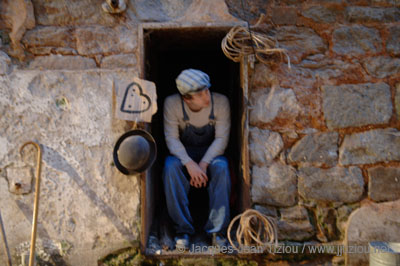
Spirits…

O the heavens, we are in the thick of it. O, yes, we are.

I often wonder what exactly I must look like in rehearsals.

The best days I am blessedly unaware of myself, seemingly like the spirit in this play I’m laboring on, a mostly un-embodied ball of energy that floats in and among the room’s inhabitants, sending thoughts and energy to and into them. I am aware of only the echoes of shape and motion – a sweep of the arm, a pacing back and forth, a note scribbled quickly in a book. In this form I feel massive and all encompassing, a thing of air and energy.

The worst days I see myself far more concretely, feel myself sitting on the floor or see the words almost tangibly come out of my mouth. On these days I am small and desperately trapped – by body, by brain, by the limitations of time and gravity. In these moments I often see a room staring at me and in the space of a breath or pause quietly ponder at the insanity of them to have followed me here.

I try to look at them squarely. I try not to shrink under the glare. I try to tell the truth of unknowing while still believing that I (for it is never they that have brought us here) can lead us out of the tangle and wooded thickets we have ventured forth into.

When in directing mode senses come into sharper contrast – sounds either exalt or oppress, the room can be a nest in which to cozy in or an overbearing push that squeezes down on the work like a trash compactor.  It’s like the sensitivity dial is jacked up to its highest point. Even clothes can suddenly itch and scratch with a fervor that seems sudden and unwarranted.

Am I alone in this? Is this why there are nights I toss and turn? Is it why I cannot help myself but to apologize again and again in the room for such sensorial dissonances, whether not I am the cause? I don’t know if it is also the purgatory of other artists to feel this way, to know you must open yourself so wide and full and then chafe at the rough hewn bits that pass through your fingers. To know that the only way to make them smooth is to sit in that roughness and work it out.

In working The Tempest at this moment, I can’t help but feel a little bit of Ariel in myself. I’ve agreed to be here, sought out this particular form of servitude. And I take delight in the use of my powers to create shape and spectacle, to send the inhabitants of this island running, hair up-staring and all aflame like reeds, in many places and then bring them back to meet and join.

But unlike that dainty spirit, I’m sometimes less perfectly certain that I can perform the task to every article, that I can do such worthy service, and do so without giving over to grudge or grumbling. Like this production’s particular version of that entity, which takes its shape not in human form but appears in and about our space’s fabric elements, I am finding that pushing too hard or getting stuck too long forces the magic to be lost. I see how the promises made and kept earlier in this process are no guarantee for pay off and that there is plenty more toil to do.

But when I sit and ask myself on this morning why undertake this service, I cannot help but believe that unlike that spirit, that when it comes to the end of all this I will not gladly demand my liberty. That for me, the strive towards freedom from this earth-bound form is the freedom. That it is not in the finishing of the task, but in the doing of it that we mere humans glimpse at the capacity for magic. That like another in this play, I will miss it well and be sad in giving this work its freedom, even when I know well the necessity in completing the contract to do so.

The time twixt now and the end will be spent by us all most preciously…

A

Art crush

Hello my friends. It’s, again, been a few days. And this rhythm, perhaps once or twice a week, is likely where I’ll be living for the next few months.

I don’t say that because I think you’re upset about it, I just like to keep folks informed. Because the truth is I’m back in rehearsals, and that changes the tempo, the rhythmic pace, of one’s existence. It gives me such a different perspective on all these things I write about.

It’s a kind of amnesia, getting one’s feet back onto the floor. It’s as if all of the sudden I’m remembering a feeling that I’ve forgotten. There is a kind of: “Oh! This! I remember this. I love this. Why have I been doing anything else but this all this time?!”

This is always how it starts.

All those things we later don’t understand ourselves putting up with. All those indignities that in stark recollection we are surprised at our ability to tolerate. The long hours, the strange spaces, the running from place to place, all of it.

Last night I had people rolling on the ground outside covered in wet and dirty spandex while it rained.

And when it’s good (and right now, it’s very good) it all seems totally worth it.

A new work, for me, is a little like falling in love. And like falling in love, the moment when we surrender to an emotion that has the capacity to make us feel bigger, fuller, than we had been just the moment before, it is easy to allow ourselves to do anything to stay in that place. It is easy for the feeling, which can be so ecstatic and full, to feel like greater compensation than any amount of money ever could.

It is a constant surprise to me that this can continue to stay true even now, ten years into the doing of it.

I was chatting with a friend the other day about this: how the process of making something can feel like someone opens a door and on the other side is something amazing and incredible. And when you have to close it for some length of time it’s hard not to just yell at people who don’t care about the door, hard not spend all your time just waiting to open it again, hard to recapture the image of what’s on the other side.

An artistic love, like any affection, is a process of revealing oneself to an another, an unknown, and finding how you fit into it, into something larger than yourself. It is an amplifying mirror – reflecting one’s image back to themselves in bigger and sometimes stranger ways than we usually see ourselves.

Like love, it causes me to panic, simultaneously scared and excited to meet this new thing I’ve temporarily committed myself to. And the newer that love is, the less known, the more it throws me into paroxysms of emotion. Ups and downs between wanting to commit the rest of my life to this thing and feeling so silly and small and unsuited to this task, waves that come and go over days, hours, sometimes minutes.

I, for one, still struggle to be in it.

Even when I know the agitation, the terror, the butterflies, the inability to sleep as the mind races through images at night, even though I know all these things are part and parcel with the joy, I sometimes don’t know how to just release and let them in. And for me this manifests in extremes of doing and not doing. I spend  hours creating detailed, printed, minute by minute plans for the day, which are often tossed aside within the first hour. And then later, exhausted, I sit and stare out windows or listen to the same song over and over again trying to get it to reveal artistic secrets to me.

This cycling between manic outward production and preoccupied inward energy gathering, like love, binds us to the thing we cycle around in a way that, like love, can feel so specific and special that it’s hard to believe that other people can share this passion. It’s sometimes frightening to think that even the others involved might not care for it as deeply as I do. And like love, the feeling can make one feel enmeshed and alone all at the same time.

I have these dreams about rehearsals. Both waking and asleep. Nothing in them is ever sexual or explicit in any literal way. But they feel like romance dreams. And in recalling them, they pull on the same strings deep in the center of my chest. It is a love ache that these thoughts elicit. I think about a rehearsal’s scene or sound like a person’s offhand joke or their dimple. And like a giddy teenager I can replay the moments again and again trying to recapture the rapture they engender.

Let’s call it what it is.

It’s an art-crush, this.

And like a new love, I worry about letting the feeling take over me. I worry talking about it too much. About putting too much faith in its newness. About giving away all of myself to it before I know it will catch me.

But really, there’s nothing to be done but to just be in it.

To try take it in so we do not deny ourselves the pleasure, with an eye or two on the rest of the world so we don’t too totally lose touch with reality.

To endeavor to be honest with our new love, so that we do not lose our sense of selves in an effort to fit inside it, but stay supple enough to let it change and open us in ways we might not have known possible.

To keep our sense of fairness and standard and integrity, so that even if we could give everything of ourselves so thoroughly away, we don’t, because later, when our love tempers and perhaps even fades, we’ll need it.

– A

Gasping

Progress in the speed of real time is hard to see.

For years when I thought of the person I was back in college and the first early years out, I just imagined the same person I am now, maybe a little smaller, a little poorer and a little blonder (I was using Sun-In, one of the greatest follies of youth). Essentially though, I believed myself to be the same. I’d look pictures of the work I did at that time and imagine me in the work just the same as now. Some days it could feel frustrating to see myself stuck in sameness, not feeling the same clear progression I used to have demarcated by an academic calendar. This was partly the impulse for a return to such a place, where the promise of measurable and specified growth is inherent in the enterprise.

Yet… There are hints to the contrary:

  • Re-reading my directing notebook from The Ballad of Joe Hill as I prep the return to the piece now in 2013 I think about the fear I had that the work would all come crashing down around me. I realize how much more I’ve learned to love and trust intuition as a guiding force in my work.
  • Re-visiting my alma mater to teach or share work, I find myself talking with students and seeing more starkly the different between where they and I each are.
  • In a moment of fretting about someone else’s perception of something I’ve done or am doing, I catch myself, let it go, and think about times previous when that wouldn’t have been possible.

But mostly, I think our awareness of change is commensurate with its actual occurrence, meaning we acclimate to our new selves in the slow and steady forward tempo they are created. So our evolving selves seem to us a constant, even though someone who leaves and returns to us might be amazed by the effected change on us by life.  Easy to see in others, hard to catch in yourself except in passing or in shadow.

And because of this it gets easy to get frustrated with growing, easy to miss the reward of experience (which seems to have been so clearly a fixed part of who we are) and mourn the vigor of youth and the promise of potential. This happens big (looking at the major arcs of our careers) and small (looking at what we have accomplished in a week of work). We go back and give our younger selves the benefit of the intelligence gained and then find fault in current ourselves for not having the future predicting foresight to avoid new mistakes, forgetting that the old ones got the current knowledge to us in the first place.

It’s a fallacy, just as much as the perfect unformed, undone, artwork whose imagining will never be tarnished by the reality of actually doing it. But fallacy or no, it works on us. And here at Swim Pony, I like not only identifying a problem or trend, but trying to alleviate the problem.

It just so happens that last 7 days have found me at home working mostly on my own. Tracking the progress of anything is hard, doing so in a bubble with no outside contact even harder. So nearing the end of the week I found myself saying, “I’ve done a lot. I swear I’ve done a lot.” With less and less conviction. But happily, near the end of the week I stumbled on a lucky accident that I wanted to share.

I am a semi-luddite, with a dinosaur phone and an instinctual late-adopter policy on technology. My to do lists are one area in particular that has stubbornly resisted updating from analog. Which is why each morning for the last week I’ve started the day with a sheet of legal paper (it’s longer) folded in half, a pen and a highlighter. I re-write the things left uncrossed from the previous day’s list onto the clean paper, add anything that has since arisen, and then highlight the things that are most urgent for the day’s doing.

Day to day, this tool is functional, helping me keep track of what’s come up and what should be on my radar and the priority in which I should be aware of it. And day to day, this list is a kind of metaphor for my growth and progress on the larger scale: taking in new info and removing things completed or learned. But unlike my larger progress I was left at the end of the week with a tangible record of each day’s doings, each step along a week of accomplishments.

Last night I stopped for a moment to take stock of this catalogue of agendas. On first glance, I was a little disappointed to see that the list size from day one to seven was roughly the same and that the number of things removed from each day was also just about equal across each list.

But then I looked closer.

I saw how things I’d thought I needed were taken off based on new information. I saw things I had delegated to others to share the burned of work. I saw things listed early in the week too vaguely had broken down into specific steps that I could (and did) complete. I saw that each day had been a small piece of progress on a multitude of fronts that added up to some big advances in the larger scheme.

And then, just to see what would happen, I went back to the first day’s list and crossed off all the things that I’d managed to finish in the 6 that followed and I actually (if you can believe such silliness) gasped at my desk.

But for one task, everything I’d wanted to achieve at the start of that week, I’d completed.  What struck me so completely was that, yes, the lists were the same size today as they were last Tuesday, but my wants kept updating with the days’ lists as well. And a little posting here day after day, we add to the finished pile one piece at a time realizing only at the end that each little step does add up to a whole body of work completed.

Perhaps it’s worth taking such moments of stock once in a while. Perhaps it might be useful to record the state of the self, to define one’s wishes and ambitions and current capabilities as they are and then compare them with the same measures from the past. So that we do not only, as we are often encouraged, measure our current selves against the prospective ones we hope to be, but also see that we have become “future” selves, ones who can take a moment to go back and gasp and be proud of how far we’ve come.

– A

Learning vs Doing

You know that feeling when something just… bugs you?

In that way where it’s not a huge deal, not enough to really even know exactly what about it irritates, but it a fact just rubs you wrong each time you hear it?

I get those little inklings once in a while when I hear about certain artistic projects happening out in the Philly sphere. It’s hard to pinpoint exactly which ones will they will be. But they are things that from first mention just make me itch. They leave a sour taste. They make my nose wrinkle. And recently I’ve tried to unpack those little pin pricks a bit to figure out what it is about them that creates that feeling.

Ok, long intro aside, I’ve been writing here long enough that hopefully you readers know that I care a lot about the art that happens here in my community. And if you read this blog you know that I am, almost always, for more work from more kinds of people. But there are just some projects that I hear about and get this negative vibe from. My guess is that anyone with a high level of skill in an area has feelings like this about certain kinds of creative endeavors.

Mine come when I hear about companies that are creating new devised or generative works for the first time. This is almost exclusively linked to full productions from companies that have not established themselves as devisors in the past. When I hear that company X that usually does this or that semi-traditional cannon work is doing a “devised” show I have this weird itch. It’s a gut feeling and it makes me turn my head to the side and squint a little.  It makes me just a bit annoyed.

I don’t get upset in the same way when I hear about companies doing killer work I wish I were doing. I don’t get that way when I hear about new up and coming companies fresh out of the box. It’s something to do with relatively established, usually working the traditional mode, folks who out of the blue decide they’re doing this thing that I do all the time.

Why is that? Is it jealousy? Competitive fear? Haughty condescension?  I don’t claim to be above any of those things. But I really don’t think that’s what it’s about.

Here’s what I do think it is: There’s learning and then there’s doing.

Learning is for us, the makers. Learning is the way in which we experience ourselves opening, vulnerable and hopefully awakened with a new methodology. It is the space in which we find room to grow. Learning is mostly a private affair because the real beneficiary is us, the learner.

Doing is the opposite. Doing is the ways in which that thing that we have learned and grown is implemented and displayed, put forward and adorned in front of an audience. It is about skill and virtuosity and execution. Doing is performance. And doing is about the viewer because we’re doing it for them.

In every artistic endeavor we are likely engaging in a bit of both. When we start out, we are doing very little doing and learning an awful lot. And the doing we do is mostly in service of the learning. In these early stages, when we do the doing for people, they know we’re just starting, it’s generally understood to view the thing through that lens.

As we grow older, as we become “professionals” there are fewer spaces for learning. We become doers, sometimes to a deadening degree. It’s understood that what an audience sees is doing without quotations. We take that caveat off our performances. And that means an audience can look at the thing with the understanding that this is mostly for them.

I am for learning. I am a believer in continuing the educational process. And In almost all of my creative works I build time set off from the making (the doing) of the play for the group to explore uncharted territory. This is usually called exploration, but it might as well be called learning. It’s the time when I give us room to grow that new growth without having to support the weight of doing it for a viewer.

In other words, when I start a new project, I make sure to find time for us to learn before we have to do.

I do that because devised work, by its nature, is a learner’s game. The piece does not exist. And in the same way a playwright needs time and space to learn about the world he’s writing, generators in a room together when they first start doing something, need way more time to learn what’s happening, what they’re going to do.

And I like the idea that people would want to engage in that process. I want more theater that is made this way. Which is why I especially like inviting in people who’ve rarely created that way to do it with me.

What I do have trouble with is when learning is sold as doing. And this, I think, is where the itchy feeling comes in. While I always include some amount of learning in a process, I know that I need less of it than I used to. Because I’ve been doing it long enough to know when I can accelerate or anticipate certain things I’ve learned about doing. And I have a pretty good guess when others can’t.

The thing that’s tricky about trying something new that is similar but not the same as something you’ve been successfully doing is remembering that the new thing is actually new. That it’s a thing you don’t know how to do as completely, that you haven’t yet learned all the ins and outs of doing.

That the ratio of learning to doing that you’ve been operating on with the thing you do know how to do is not going to be applicable for the new thing you’re learning about doing. And that means that you need to give yourself more time to be in learning mode before you start doing it in front of people. And I think the itchy feeling comes when I sense that a project hasn’t made enough room  for the learning. I know how hard devising is. I know how long it takes. I have a pretty good sense of the effort and skill needed to actually do it. Which means that I can sense when something is about to be shown as a thing “done” that is actually a thing that is still being learned.

It’s not just that I don’t want to see bad work (which I don’t). But I see bad work all the time. No, in this case the niggling feeling is tug of the mama bear. I am feeling protective of my craft. And I think generative creation really is a quite different skill than interpretive theater. Making a thing and enacting someone else’s thing are not the same. We cringe at a movie in which a basketball player mistakes sports fame for an ability to do any craft that involves performance in front of an audience. And in the same way, I sometimes worry that people don’t realize when they decide to devise that what they’re doing is a learned skill.

In the learning of my craft I have had so many opportunities to be a beginner. I had so many tiny steps along the way, small showings, little audiences, chances to build my skill incrementally. I don’t know any serious deviser that began with a full-fledged production. And I fear that those who attempt to do so will think the fault is in the medium and not in the desire to jump to the end of a series of steps in a developmental learning process. I fear people will assume that these methods new to them are not as good as the ones they’re used to without realizing that it may be because they are not as good at using them.  I fear it will sour people that might be open to learning such things away from doing them successfully in the future.

I fear that not only will creators misunderstand, but that audiences will too. That they will see under-prepared, under-qualified work and think this is doing when what they are actually seeing is pretty raw learning. And I fear that because there’s no one to explain  what they’re seeing it will do a disservice to the work on a larger level, make them ask for the same old “play plays” the company did last season.

I have been in devised work that did not get the allotted time or skill to be successful. And because such work demands that everyone be involved a lot more closely, I think it’s that much more painful when it fails. I hate hearing people talk about such disasters.  It brings me close to saying things like, “Those people shouldn’t be doing this kind of work.”

Which isn’t totally true. They can. Eventually. If they take the time to learn.

There are actors who are so effortless in their doing, so complete in their learning that it seems like magic. It’s easy to imagine an unknowing audience member who might think that they too could simply get up and do it. But we “in the know” can see the skill, the deep learning behind what they are doing. And we can be chaffed a little each time someone off-handedly intimates that they could just step into our work with the ease and élan of that same skillful performer.

If that audience member tried to just “do” that same thing, they’d learn rather quickly how much they don’t know.

And I think that’s about the most apt comparison I can make for the itchiness I feel sometimes.

I know there are companies that will try and do it all right out of the gate. And I know that they’re not doing anything maliciously, that they just can’t see the effort that it really takes.

But still. 

A part of me just wishes they wouldn’t go doing it until they’ve learned a bit more about how.

A

On Valuing Age, On Appreciating Wisdom

I find my thoughts drifting these days to my almost three year old niece and the fact that any day now she will become an older sister. She’s decided on her name for the impending baby. I imagine is as excited as an almost three year old can be about such a thing, understanding it about as much as an almost three year old can.

I keep thinking, “Man kid. You have no idea how much everything is going to change.”

Then: “You are about to feel so grown up.”

When my thoughts drift this way, I think about how much my identity as an older sibling has meant to me, shaped me, and shifted who and how I am. My earliest memories start around the time my own sister was born – at that “almost three” age. So for as long as I’ve had a remembrance of myself, it’s included the sense that I was older and more experience than at least one person in my little world.

It had a profound effect.

It meant that even when I was a “little kid”, I was still the “big girl” in the family. It meant that I always saw myself in the light of being the first to pioneer new frontiers. It meant that I linked being older with being wiser, stronger and more powerful. Getting bigger meant I would be that much more the holder of experience that I could pass along. It became a deep value of mine, the acquisition of such wisdom, and it’s become a huge part of who I am and what I want out of my life. So I’ve always reveled in  “grown up-ness” and deeply appreciated what each increasing year has given me. And I still look forward to getting older with excitement and anticipation.

Of course,  there are plenty who would tell me I’m a young pup. Which, of course, I am in many respects. While many days I feel like I’ve done a lot and lived a fair amount, there are certainly times when I see myself in context of those that are ahead of me and feel young and inexperienced indeed.  But unless you have just been born NOW! or are Jiroemon Kimura you always have someone younger and someone older than you. And that means that you always have the ability to view your identity in the context of being more youthful than someone ahead of you, or further along than someone behind you.

The arts in general (and the performing arts in particular) aren’t always the best contexts for celebrating experience. While we pay some token homage to great masters, anecdotally it feels to me like we tend to reward the promise in a young savant painter, the grace and beauty of a youthful dancer, and the charisma of the impish new actor far more than we do the earned and learned skill of decades long practitioners in these same mediums.

And really, that’s too bad.

I think fetishizing the early work of artists is damaging to art as a whole. Not that such young work can’t be beautiful and moving but it’s often much simpler and straight ahead than the stuff we make later on. In art as in life life, we generally learn that things that seemed so black and white once upon a time are much more complex and mysterious. Things that we held positions on in unilateral unyielding ways we start to see shades of gray in. Things we never ever believe we were capable of, both good and bad, we suddenly realize we have completed. Our creations cannot help but reflect our deeper and more multifaceted views of the world.

So though I can appreciate the promise in the early works of a budding artist, it’s usually in their mid and later stuff that I think you really discover the complexity and depth of what a creator has to offer. It’s in the complexity that you see what these makers are really made of. It’s these kinds of works that may not be so easily digestible that challenge me to be a deeper and better art viewer. It’s in the stuff that reflects all the life that others gained that I see the kind of artists I want to be. I believe we should be treating this like gold.

And I try to remember this when I sometimes fantasize about my early creation, try to caution myself from forgetting its value. I try and stop idealizing an approach and attitude that lacked the decade of making I now have and remember how easy it is to forget what was tough, rough and messy.

I’ve had the luxury of re-working shows that I started creating 3, 5, 7 years ago. And with each of them I have had a moment in rehearsal where I think:

“I am so so much better at this than we used to be. We are all so so much better now than we were before.”

Not everyone gets that chance and sometimes a slow building of skill and experience can seem to have always been there. Which is why it’s so important to remember not just what you have learned but that you have learned, that value of age and experience.

The arts are a punishing field. If you’ve lasted a while, you must know something that others who haven’t stuck it out don’t. But there aren’t enough voices out there that tell you that.

Recently, I’ve seen a number of companies with variations on apprentice/young professional programs. I’m often struck when I see them in action by the distance between the actors with years of well earned experience and where these fresh faced folks currently are. I jokingly say that I keep seeing babies on stage. Sweet, wonderful, babies. But babies nonetheless.

These lovely eagerlings are the promise of artistic potential, but they are often not the delivery of that craft. At least not yet.

And that’s a great thing, so long as the attitude of our community is that as an early career artist, the work ahead of you should be what you have to look forward to. It’s a wonderful place to be so long as you know you will be rewarded as your depth and skill and knowledge increases from here. It’s a lovely path to look ahead to when it means that someday you can turn back to the road traveled thus far with pride and not a sense of burden.

It’s important to remember.

I don’t want to be part of a profession where people don’t need to wish they were babies again. I want to be part of medium that rewards me because I want to keep growing up.

– A

Redefining, renegotiating

I went to a tiny college. My senior year, single and fancy free, I was on the hunt for a low key dating thing. I was on the prowl, not setting too terribly high a standard and yet there was not a single person I could find on campus that I remotely wanted to get involved with.
The problem was this: In such an insular community, I already knew everyone. And anyone I might have been interested in, I already had some fore-knowledge of. I likely knew all the people they’d dated, knew things about them, and had an opinion of who they are and what they were about. And ditto in the reverse for them knowing the same info about me. And having just gone through a two year LTR followed by a series of emotionally involved if less physically proximate entanglements, I was interested in meeting who didn’t already have an idea of who I was. And in return, I wanted to meet someone that was a surprise, that wouldn’t know me in the context of the other folks I’d been involved with or the specifics of my extra curriculars and major.  In short, I wanted a bit of a fresh start.
Recently, after a week of incredibly and exciting productive work on a new project in its infancy, a collaborator of mine and I were reflecting and he said, “You don’t know me very well.”
My first impulse was to argue, to say, “That’s not true at all. I’ve seen a lot of you in rehearsals, learned the ways you think, what excites you and the kinds of things you want to say in your work.” And then I thought about that feeling I had in college. Why despite my desire to get involved, I simply didn’t want that to be with the folks I saw around me. Why I was had this negative sense of knowing everything about everyone’s business.
After a moment of thought I said to this person, “That’s true. I don’t know you very well.” Because I think the truth is that I don’t. And in some ways, it’s easier that way.
Growing up in an artistic community can be a tricky business.
I think about mistakes I’ve made in the past with more than a little bit of cringe-i-tude. I think about stuff I’ve said, challenges I’ve backed down from, people I’ve pissed off, and the painful artistic flubs I’ve brought on the world. Some of them I really wish I could change. Not all, surely, but in anything, in life, we’re bound to mess up a bit, and I am certainly no exception. And it’s a tough thing as we grow to try and negotiate that evolving self, the person you feel you are versus who others have defined you to be.
Growing up, my sister and I had very different personalities. We categorized ourselves (and were categorized) in pretty different boxes. Dale – the outgoing, far more socially fluent of the Mackeys – was known for her sensitivity, her ebulient wit and charm and her facility with language and words. I on the other hand – a bit more inwardly focused, a bit more guarded, focused and intense – was the science-minded Mackey. I associated myself with drive and passion but quietness and a tougher time communicating with those around me.
Dale was the socialite poet, I the mastermind thinker.  And these labels felt awfully firm in their attachment.
So it’s funny to me now when I say to people that I’m a little socially awkward and they say, “Really? I don’t see that.” And it’s taken me a lot of those to realize that I’m still affixing a badge from an Adrienne that may not really exist any more. My sister and I realize now in our adulthood while we do have some differences, in the new contexts we’ve placed ourselves into we are far more similar than either of us realized. Indeed, part of the reason I started posting so often in this space is that I realized just how much I liked expressing myself through writing and just how long I’d been hesitant to do so because we already had a writer in the family. It was only just occurring to me that perhaps that was no longer true.
The creative identities and patterns we forge as young people in an artistic community can be hard to outgrow. Beyond type casting, the habits we entrench in our early workings can stick to us, and they can be difficult to shake. I have felt this keenly as I start to take collaborations with folks that scrappily began as friends just getting together and have to shift them into the “real deal” in terms of scope, money and professionalism. There have been times when I have found frustration that those people with whom I have only begun working seem to negotioate the personal/professional line easier than those that knew me at 23.
There are creators in this city who were once my teachers. There are people who have worked with me before I knew how to pay. There are folks that have seen me break down, lose steam and hope. But most of those things aren’t true anymore. And I don’t want those patterns that I don’t think are applicable to define who I am today. So rather than getting frustrated, I’m trying to see this as a kind of opportunity. A chance to learn a lesson in how to define oneself to others at every stage of one’s career. We do this a lot when we’re young. But maybe it’s still helpful at the midway point or even near the finishing line.
Almost every theater company I know in Philadelphia was founded in my lifetime. And that means that relatively recently almost every one of those institutions has been where I am now. That’s a comforting thought, no? To think even the monoliths were slogging to figure it out, just as much as we are now. To think that the largest and most impervious “institutions” were not gifted status and knowledge by the gods. That they built it over time (and not even that long a time). That they likely made mistakes (may still be making them), but above all, did so by changing and updating themselves as they grew.
Which means you don’t have to do everything right, right now. Which means that you can try and fail and figure out how to do better.
 Which also means that your faults are yours to own and change. That no one is making you who you will become. You  are. That it’s up to you to see your actions and look at how they are perceived and received and decide if it’s what you want.  And if it isn’t, to change.
We must not be afraid of doing it.
You are never trapped by history. If you are in a pattern, be that in the way you make work, the area or title under which you do that, or the people with whom it happens, you can change it if you’re willing to put in a little elbow grease or speak up when speaking up is needed. And rather than seeing that as a burden, think of it as a chance to re-affirm, to re-assess and re-negotiate your sense of self and art in the world. Don’t assume that the people around you have grown alongside you. Rather take the time to re-state your hopes and desires and goals, even if you think that they must be obvious. You might find that a perfect fit from the past is chafing needs a little tending. Or you might just find that everyone else has also been hoping to shed the old habits as well and is happy to jump on your boat and float that way with you.
So be bold and brave enough to keep asking for the things you want and need.
The only thing you have to lose is the stuff you don’t want anyway.
A

What’s old is new again (?)

The 2006 Philadelphia Live Arts Festival and Philly Fringe

Coming home…

Sometimes a piece of art in early stages is filled with a certain kind of special newness.

It’s a fluttering, butterfly feeling, a buoyancy that fills me with brilliance and space. It feels like being full of something delightfully lemony and bright. It feels like opening a door a crack and peaking into a possible future full of light.

It can be with a person – an actor or co-creator. But it just as easily could be a bit of writing, a song, an inspiration, the kind of process you’ve just discovered.

It’s a creative crush, this affinity and affection. I think of this thing, the who or what I’m falling for, and it starts to feel like a piece of me. Or rather, it feels like I am beginning to know it, and I like it, and I want to be even more a part of it. It feels like it could become a piece of me, lifting me up and making me better. I want to mesh these two separate things – the work and myself – into a single whole.

In the wanting to be filled up with this deliciousness I treat my memories of this bit of text written or character choice. I do it over and over. I listen to the same snippet of music or replay in my mind this or that scenic choice. I take it out when I’m blocked like a secret piece of candy, mining this tiny taste of sweet for sustenance. And through this replaying of little moments, obsessing and relishing in the details like a gushy teenager, I think of where this thing might go in the future. I think about our potential happily ever after.

It’s sort of like falling in love. Falling in love the way one would with a potential lover, but instead with my work, with my own capacity for creation.

And while it does feel that way, like love, I think that love is not exactly the right way to describe this feeling. I think it’s closer to desire, infatuation. Closer because the feeling gives a glimpse at something perfect and mysterious without letting one in on all the arduousness of specificity, of actually having to do the work of completing the promised outcome.

Perhaps in art as in life, infatuation and love feel confusingly similar, but are not quite the same.

Desire, need, infatuation are emotions based in hunger and lack. They are shadows, mere glimpses at potential. And I think it is only possible in absence of the whole where one can maintain an imagined perfection.

As I once heard someone say, there are two kinds of art works – perfect ones and finished ones.

Love is something different. It grows out of actually weathering through the test of stress and time. It is a gathering. Of knowledge. Of familiarity. Of fault. Of history. It is precise in a way that infatuation cannot be, because it is built on actual details and shared experience.

I think that our artistic work is like a romantic partner. It is a relationship we have to manage over time. And I think that in our art, as in our personal lives, we need to define what kind of partnership we believe in having with our companion. Do we seek a turbulent but intense bond that is unknowable and always elusive? Or do we work our way to a cozy if duller comfort?

Perhaps this is where the myth of the wild art of youth comes from. The work of our 20’s is like the kind of boyfriends one had right out of college. They are a bit messy and dangerous. They hurt you and teach you where you need to keep yourself protected. But they mean so very very much. They have moments that seems so impossibly intense and lovely that even if they turn out terribly, you love them for their failures.

Are these early plays the ones we settle down with? Or do we instead slowly grow into our art? As we grow we begin to revisit things we initially passed over because they weren’t shiny enough. We tackle subjects and modes of working that we couldn’t quite grasp the depth of in the first go round. And we stop trying so hard to impress and begin to steep ourselves in tenderness and support, in a making that is deeper and perhaps more lasting…

Is one better? I don’t know. But I’ve been thinking about this a lot lately.

The first full piece I premiered in Philadelphia was a show I created called The Ballad of Joe Hill. I made that work in 2006. And this fall I will be presenting it again after seven years.

This seems a little impossible – seven years for a work to come to fruition. That a thing I started during a time in my life that was intensely uncertain will find a new form when so much of who I am and what I do is now known. This piece, which is one that examines what a life is worth and how we make it so, is one that began a relationship with so many of the people I now think of as home. And it is one that I have often looked back fondly on for the sheer creative ineptitude and blind luck and intuitive spirit that guided its creation. It was a piece born out of those infatuated seeds. It was a piece I wept and worried and laughed over at every step of its creation. And in watching it again, in thinking about what was there that first go round, I see so many things that still lift me up with light. And I wonder what it will mean to go back there.

Can I find love within this thing borne of infatuation?

Or perhaps I’m simply framing this all wrong.

If desire is steeped in anonymity and vulnerability and love in recognition and protection, perhaps my question ought not to be whether one is better than the other. Perhaps I do not need to assume that the thing must be one or the other.

Maybe my question should be whether they must be mutually exclusive.

A

Eureka

Yesterday I was out running when without warning my right brain exploded.

It began as I was listening to a piano concerto and randomly thought, “What if we had a toy piano in The Tempest?” And something about the concreteness of that image began to open up a series of others, piling on top of each other: from set pieces to staging visuals, ways to solve a problem moment in Act IV to songs that would completely underscore a given moment at the beginning. These ideas began to vomit up so fast, so rapid fire that I was actually afraid I would forget them before I was able to get back home and write them down. I spent the next fevered four miles trying to create a mnemonic to help me remember.

It’s things like this that make me angry at my brain.

For the past week I’ve been slowly and methodically working my way through a script, trying to come up with potential cuts and updating the text to reflect the cross-gender casting choices I have made. I wanted to make sure I understood all the language, the references, and that I would be able to speak intelligently about what the play was about. But more than any of those functional things, I was looking through this text trying to get to the heart of the thing. I wanted to know the texture of this piece, I wanted to find the essential flavors of the thing.

I think of it as tasting the play. Until I know that feeling in the mouth, until it is tangibly sweet or crunchy or spicy, it’s only surface level research. Until I can really bite on the qualities and chew them up, anything I say feels paper-thin and insubstantial – something from brain but without soul.

I can’t explain exactly how I know when I’ve found that texture. The form the inspiration takes is never the same. It’s been many things – a song, an image in a book, a color pattern on a building, a series of words in a script – but whatever it is, it’s some tiny thing that opens everything else up. It’s the trickle from which a stream begins to flow. When I find it, it seems like a dam breaks, like a tiny hole bursts in the wall between me and the piece. It’s a way that I can start to glimpse the other side. And rather than a feeling of randomly trying to move forward on all fronts, my direction finally has purpose and, well, direction. I can use that momentum as a vector to channel my efforts and start to chip away and the division. It’s the first step to getting closer to the thing I seek.

The trick is finding that crack. Without it, it’s just banging away at a brick wall.

Yesterday, while running, I felt something crack (“We split, we split!”) and I truly had the impulse to yell “Eureka!”

As if I were in some Renaissance laboratory with my alchemy agents. As if I’d just turned steel into gold. It felt like something had just been bequeathed to me, magically, divinely, I’m not sure, but totally random and out of my control.

“Eureka!”

This “Eureka” is not singular, there will be more to come. Always, one finds them multiple times throughout a production’s life, a random punch that busts through a plateau a given stage of the work has hit.

But weirdly, as grateful as I was for  the ideas and their clarity – ones I had felt in desperate need of in order to tackle this play – it also reminded me of how out of control the whole process of inspiration feels. If I’ve found any pattern in the Eurekas I’ve had in the past, the consistent thing about them is that they’re frustratingly indirect.

I have committed myself to time and space to work with collaborators only to have the Eureka come in the last hours together. I have had them about a project I just finished during the project I should be currently working on. I’ve had them randomly and intensely about pieces that do not yet exist and that then vehemently demand themselves into being. I have had them in the midst of giving a interview about a piece, suddenly knowing I will shift things in a massive but yet untried fashion. I have had them on the bus while randomly chatting with someone about the play.

They are sometimes convenient. They are sometimes not. They are almost always unexpected.

In the shower, while running, cooking, traveling, whether I have pen and paper or not, whether I am able to remember them, sometimes in vivid nightmare, sometimes in distracted day dream, they come when they feel like it but never ever ever when I ask them to. And the more desperate I start to feel, the more intensely I crave the Eureka, the faster and tighter I try and grasp for it, the more elusive they are.

Ugh.

It makes me a little nuts that I can spend 20 hours in a week trying to pull the play apart and it’s only in the moment that I take a break that my brain floods in with the amazing perpendicular and unexpected ways of seeing the thing. It’s in the moment I’m thinking about something totally different that I start to make connections.

Gods of Eureka, I don’t mean to anger you. But I spent all week offering sacrifice of time and thought. Why are you so random? Why must you wait until I don’t have a pen and am really sweaty and out on Festival Pier?

It’s no longer is a surprise. And in some ways, I can see that the sacrifice of the research was not wasted, it was simply percolating. But it’s still maddening.  It feels like I’m just doing all this work in order to distract myself. I wish I could just get to the meat of the thing head on.

I’m trying not to hate on this. I’m trying to just relax, and let it be, which probably helps the thing come quicker.

But it’s hard. It’s so hard when you put in effort and don’t see an equivalent result right away. I want to be able to just DO the thing, not do and do and then suddenly have the thing appear in front of me.

It’s hard to sit there hammering away at the wall.

A

Collaborators

Talking with someone who you are thinking about working on a project with is a little bit like dating. There’s a chemistry, a way of similarly talking about what you want and how you want to do it that is so tricky to define. Seeing someone’s work matters. But not always. Someone who can talk a good game is important. But it’s not everything.

Sometimes it feels like you just know. And sometimes you’re right. Other times you are super duper wrong.

I’ve been thinking about this a lot lately as I bring people on in various kinds of capacities for a whole host of projects. There are the collaborators I’ve worked with in the past, people who may not at first blush seem right for the thing I’m asking them to do, but damn it something just says, if you want them do it anyway. There are people that I don’t know at all, who might be crazy or unstable or un-collaborative, but something in my gut just says to do it.

There are people I have made things with that turned out really really well and for some reason the process just didn’t feel right. So even though the outcome was fantastic, something internal keeps me from bringing them back.

There are other people who feel like the open my brain up and make me see things that I could never have imagined. They are creators that I feel like talk the way I talk about work. As if I can be more honest about what I really want and how I want it. I still don’t know exactly what that feeling is or how it happens, but I know when it’s there. And whether it results in the best work I’ve ever made or not, I seek it hungrily.

And then there’s everything else in between.

It’s hard to know sometimes exactly what you’re looking for, and in what proportion: some combination of intelligence, kindness, initiative, talent, confidence. And of course the balance of these things in one person can often smooth out the deficit in another. It is a strange alchemy, this practice of creating something with a group of people. It’s a kind of cookery I’m often feeling just a step behind on.

In high school I co-wrote a musical review with my best friend at the time. We spent months in secret creating a script for “What We Did For Love” (remember that post where I said I could never go to a college without a musical theater program?). The show was a pre-Glee high octane rom-com high school musical fantasia with a loose homage to Shakespeare’s Twelfth Night. We were a phenomenal writing team. In fact, I don’t know that I’ve been quite as passionate and diligent about a co-collaborator. And recently, when I went back and looked at the thing I was still more than reasonably impressed with some of the snappy, silly, and oh-so heart-felt-edly genuine words we poured our efforts into.

As co-directors (the only time such a thing has ever been functional for me, btw) we were compliments of each other in an easy and comfortable way. While I preferred to look at the big picture of staging, structure and transitions, Tracey was super smart about the details that really mattered, especially when it came to the wry smile of our ingénue or the right delivery of the male lead. Nowhere was this eye for detail more needed than in casting. Which was unfortunate when Tracey came down with chicken pox and had to miss the entire audition process.

The leads we could convene on. These were folks we knew and had strong ideas about going in. But it was those smaller, bit roles, the ones that weren’t large, but really made our script what we imagined it to be. This is where we stalled. We talked, but there wasn’t any substitute when it came down to it, and she just had to go with some of my impulses.  Some of which worked out, others not so much.

The problem with me, I think, is that when confronted with something, I am often swept up by imagining the potential of the thing or person rather than what is actually in front of me. I imagine what, given infinite time and ideal circumstances and a bit of luck, could be the best version of a collaboration. And in some cases, the more underappreciated I see someone to be, the more I really want to be the one to put that person in a position to really shine, surprising everyone with the potential I envision so that their undiscovered artistic superpowers might be brought out.

This works fantastically in some cases, especially when I am thrown into a situation where I have little control over the people I am involved with. I have often agreed to create with those I know almost nothing about and been open enough to discover a multitude of amazing and creative things about them. When I have to make the best of an unknown, I am generally pretty great at mining for the gold.

Sometimes though, that ability to imagine the possibility of such a discovery can get in the way of objective assessment. I often find myself in love with a strange or small quirk in a performer or potential collaborator. Many is the time I realize I am measuring them not against some impartial standard but against themselves. When I see them grow, it feels amazing because I have been on that journey with them. But this is not always the experience of the audience. They most often only see the end result, which may not seem so impressive without the context of the starting point.

There are days when I wonder if I’m a lucky fool. Or some kind of idiot savant. I have had the fortune to hook up with some amazing artists. But I don’t know if I always knew what I was doing. There are many times when I wonder if I actually know what “good” is.

Which is why I am often at such a loss for how to choose new co-creators. Which is why I like to stick so close to the chest and hold on to those people I know and love. I do think they are talented, but more than that, I know they are interested in the way that I happen to create. Which is a hard to define mix of forthrightness and listening. Which requires an open mind and relatively flagrant disregard for how things are usually done. A maker whose mode of making includes a hearty belief in their own artistry but is able to apply that in context of a group discovery and naïveté. I need each process to feel like we are finding it anew together. I need artists who know they will find something worth doing because they know they’re awesome. But for the result to be a real discovery, none of us can be sure exactly what that awesome thing will be. Which is perhaps why I so rarely begin in the usual fashion from a script. Which is why Swim Pony’s work is often me asking people to do anything except what I’ve seen them do before. Which is why I tend to like performers who tackle things from an odd angle that I don’t totally know how to deal with.

So back to Tracey. It was rough, and I didn’t like that I had to cast the show mostly without her. There was one, a kind of mannish gym teacher, role that I gave to a freshman. It was, in the end, not the most shining part of the play. And I realized halfway though the process that the person Tracey wanted would have been a lot better.

But I think I cast that freshman because I liked the idea of giving her space to be huge and loud and in charge. I wanted her to have a chance to be brash and funny because she wasn’t really that way in person. I liked the idea that she could, some day, be that character, even if she wasn’t right now. And It wasn’t the best in the moment choice, but it was a kind of long view tactic at creating a space in which people get to express all kinds of sides to themselves.

That kind of vision of theater requires community that invests in its creators over the long haul. It requires us to want to allow people not to display talent but develop it. To break the stereotypes of what we see people already capable of in the immediate takes time and a lot more leeway to give them room to grow.

I don’t know which is better.

But it’s why I continue to surround myself with lots of opinions, so that I have balance in the way I evaluate the people with whom I will work.

A