Uncategorized

Lessons learned from past work – SURVIVE!

jamie ball

In a similar vein to this post I want to return to another piece and look back at some of the things in my process that changed because of doing that work.

SURVIVE! was a milestone piece. It was a show that launched me into a different kind of professional orbit. It was a work that forced me to think outside of my comfort zone at a level that was totally new. It was a research based project. It brought me back to my science roots. It was one of the best and hardest things I’ve ever done. It was a piece that at one point or another broke almost every single participant in the process.

Here’s the blurb:

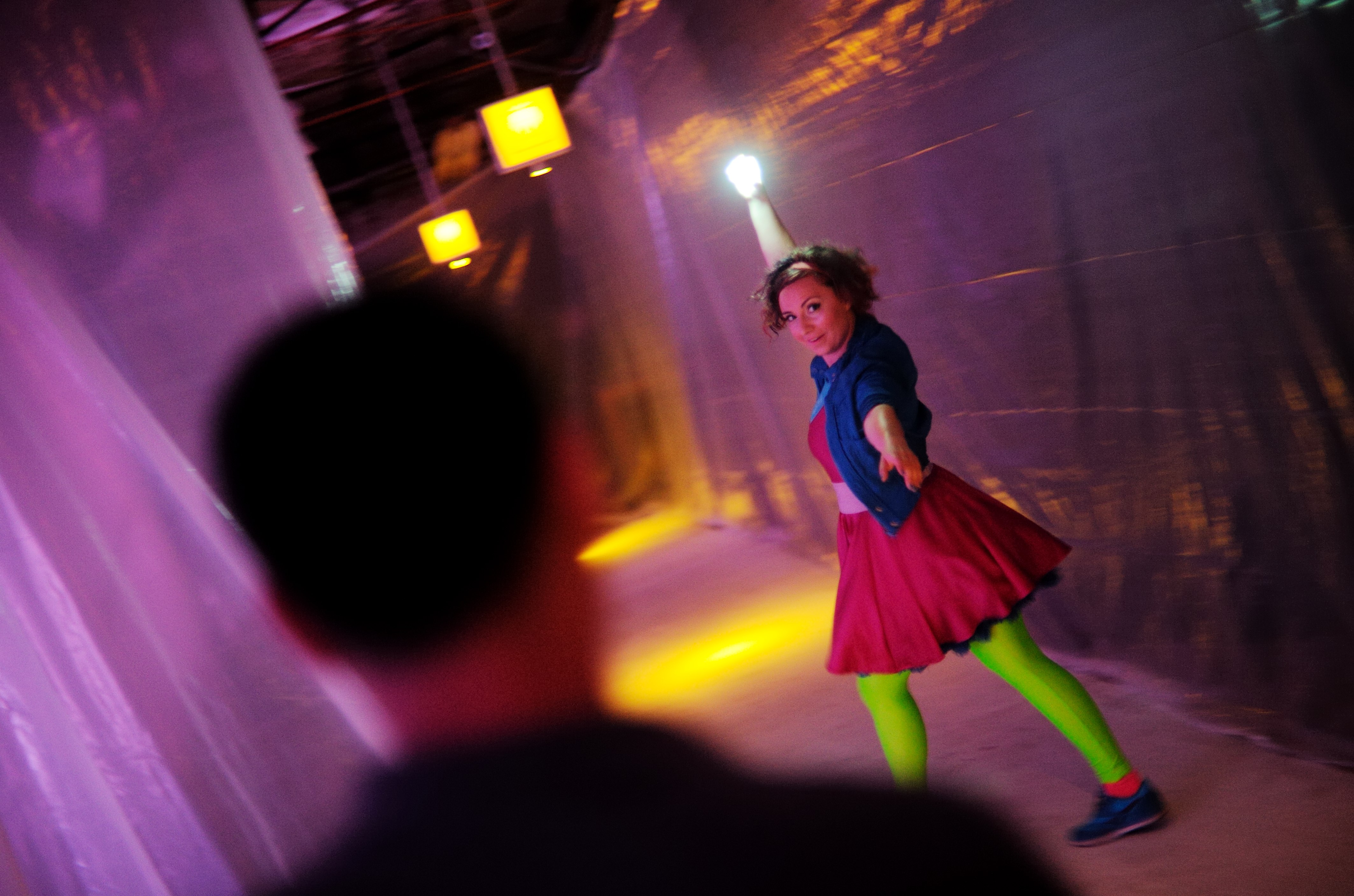
Part performance, part installation, part wandering through a maze, and part choose-your-own-adventure story, SURVIVE! takes on themes of science and humanity’s existence in the universe. Audience members wander through the show’s 20,000 square feet, guided by “a tenth dimensional narrator” named AMA and her four “fractals” who translate the universe for us through their unique perspectives. Surround yourself in a “walkway to space,” visit a Gentle Scientist who will patiently explain the universe for you or tap dance your way across dimensions through this experiential journey into the space that surrounds us.

Here’s the video.

And here’s a few things I learned:

– There is nothing like having everyone in a project feel like they are partly responsible for the larger vision.

– You are a writer.

– Ask for what you actually want and not what you think you can get.

– The craziest experiments are the ones that teach the most. Embrace being in a dirty basement with no idea what you’re doing. Someday you’ll miss it.

– When you have a design crush on a collaborator, you better hold onto that person.

– Don’t believe it’s not possible. That’s for suckers.

– It is work to expand your capacity to imagine. Put in the time.

– Failure is useful. Seek it whenever you can.

– Fear is understandable. Even if it seems like you cannot move through it, do. You have to.

– Hire a production manager.

– Bring people into a process that don’t make theater.

– Devoted people will work under some of the most insane conditions, but should they?

– You’ll always want more money. Don’t believe the part of you that says this thing could be “real” if only you had the cash. That’s a loser’s attitude.

– Sometimes your peers don’t see what they’re doing wrong, no matter how obvious it might be to you. Tell them. Don’t avoid giving them an opportunity to grow because you’re afraid of conflict.

– When you feel like you don’t know what you’re doing you probably don’t. That’s when the best stuff happens.

– Exploration is the best part of a process. Don’t be in a rush to force it into a shape.

– Bring designers in at the start. They’ll teach you to see your work differently.

– Intuition is undervalued. Resist the impulse to make it all make sense. Logic is only one way to evaluate the world. Keep throwing things at the wall and let yourself see which ones stick.

– Let it go. Even if it changes everything you said you’d do. Even if it invalidates the title. Even if it’s written into a grant. Especially if it’s written into a grant.

A

Fear of Falling

Falling

There is a scene in one of my very favorite terrible movies, Final Destination, in which one of the main characters is sitting on a plane ready to take off and has a premonition. Suddenly, violently, his mind is filled with images of a fiery crash so intense that he starts to panic to a point that he and his friends need to exit the aircraft.

Every time I am about to take off in a plane I have this same premonition.

In the movie, the character has correctly predicted an event that he could not logically have known would occur. He and his companions watch as the plane explodes mid-air moments after leaving the ground.

So far, this has not happened to me.

These visions and the phobia that accompanies them started in late 2001. It is not, as one might think, related in any way to a belief that a terrorist is on my flight and that we will explode due to a nefarious attack on the American people for being infidels. But the horrible tragedy of that year somehow flipped an awareness switch that I now can’t turn off.

“Adrienne! Planes are tiny metal machine boxes in the sky!”

In a way that never occurred to me before, I now think about the innumerable tiny parts that need to function for a plane to fly. I see a bolt rust and fall out. I see a sensor light go unnoticed. Suspended in the air all I imagine is the enormous potential energy of gravity waiting to pull me quickly back to the ground.

Perhaps I ought to study aerodynamic engineering to allay these fears. Or perhaps this might just make it worse. I logically know that I am far more likely to die in a car, or by tripping down a flight of stairs, or even being eaten by a shark. It’s that primal animal brain that feels my heart rise up in my cheat, that keeps my body aflutter with each jerk or sway, sends my palms sweaty and my breath shallow. Take off and landing are the worst because I am most keenly aware of the goal to get up into the air or down out of it. Because I know this feeling is irrational, I have developed a system. I watch the cabin crew with hawk-like precision to analyze for any twitch or strain of facial muscle.  Surely that sweatered woman would not look so bored if she feared her life were in danger. Surely her face would reveal if I had real cause for panic.

Around the same time I also had occasion to develop a phobia of elevators, triggered by riding the one in my college’s theater building. It sometimes fell, just a little bit, perhaps a half foot of drop upon arrival, right before the doors opened but it again awakened me to the possibility that something could go wrong.

I used to dream recurrently about that elevator. I was always just about to get out when it went plummeting, somehow simultaneously slow motion and sped up at the same time. Always as my feet left the floor and I began to felt my free fall self floating, I’d calculate the chances of survival down the three flights to the bottom. Just as I began to come up with the answer, a shaky maybe at best, I know I was about to hit the floor and wake up in a panicked sweat.

The point of all this is to say that once you sense danger, vulnerability, or threat, however irrationally, it’s hard to make those feelings go away. It seems impossible to get back to a place that is obliviously brave – to find that boldness engendered through lack of awareness. I used to love flying and thought little about using a vertical left. It never occurred to me to think about mechanical failure until one day it did. And now I always do.

Our work can be a little this way too, no?

As a young creator use the most direct route to the creative product because, well, we don’t know any better. If a singing clown will best deliver the message, so be it. But one nasty collaboration, one spectacular failure, one horribly mean critique can sometimes flip a switch that’s hard to unflip. “How could I ever have thought a clown was a good idea? And singing? I don’t know how to do that.” It poisons our obliviousness. If one choice can be hugely stupid and fail, certainly another could as well. Which is probably a much more rational thought than my fear dying in an elevator crash. But about as useful to getting anything done.

How do we recapture that ease of moving forward without a fear of falling?

For a while during the height of my phobia I took a lot of stairs and did a lot of driving. I came up with rationalizations – “It’s so much healthier to walk up anyway!” and “Having the car gives so much more flexibility!” – but I knew the driving factor was anything but reasonable. And those detours at stumbling blocks get tiring to maintain. And when I realized I was actually reinforcing the brain patterns that told me it was sane to fear the things I avoided, I knew it had to stop.

How do you get over fear of riding planes and elevators? Continuing to ride planes and elevators is a good start.

If you worry you aren’t a singer/dancer/comedian/ventriloquist and steer clear of trying, you will definitely never sing/dance/be comedic/ventriloquate. And if you tell yourself there’s a plethora of work out there and that you can just detour up the stairs, you’re missing the point. Creation is an act of exposure and vulnerability by its nature. And the more bounds you put on it, the likelier it is to shrivel.

My falling phobias have not disappeared but their hold isn’t as strong. Every time I have that Final Destination style premonition and it doesn’t come to pass, I’m a little less under its sway. So every time I think about solving a creative problem in a way that is motivated by fear, I try and do what I do on planes: Turn to the others around me and talk as if I’m not afraid, as if I could do this all day. What else is there to do? At the end of the ride one of two things will always happen. You’ll have gotten to some kind of destination or you’ll have fallen out of the sky and died.

And if you die, at least you won’t be conscious to know about it.

A

Ursie

ursie 2

Early on New Year’s day “Ursie” Gude passed away. That morning she had talked to one of her sons about how she hadn’t been feeling well and mentioned there wasn’t much to do but get up and get on with the day.  A month earlier she and I had talked about how her mother and father made the journey from a small town in Switzerland to America. At the same visit, she told me stories about how her father had bootlegged during prohibition. She had just been visited by all of her living children over the holiday.  Her maiden name was Hug. She danced the jitterbug with my fiancée at my sister’s wedding. She was born on October 13th 1925. She had 9 children and 5 grandchildren of which I am one. She was 87.

Death is a jumbling experience. It feels like mixing all the good with all the sadness. In the last 24 hours I remember a series of small moments in rapid succession:

– Sitting in a St. Louis kitchen drinking coffee.

– Getting caught sneaking a piece of ham at Christmas.

– Silver spoons in a cabinet.

– Learning that Ursie is short for Ursula, short for Ursuline, short for Ursulina.

– Fingers that wouldn’t unbend.

– A tiny smile at small salacious details in the family history.

– Pulling games out of a dark wooden closet together.

– The words “Oh! And you know – ” with a particular cadence I’ve never heard from anyone else.

These tiny moments do not encapsulate a person. But they are what I have to remember.

A memory: Sitting with Grandma Gude on her couch. She tells me she is old. How does she know? Watch this. She pulls at the furrowed, blue veined skin on the top of her hand. She releases and I watch as it leisurely returns to its original position. Now do yours. I do and my skin snaps back almost instantaneously. See, that’s how you know. I’ve lost my elastic. But yours is still there.

Today when I look at the tops of hands I think, “How much elastic?” and once in a while I check myself. I’d say I have 60/40 left.

A story I heard second hand: In 2008, as you might remember, we had a national election. My grandmother was a deeply devout Catholic. She also didn’t agree with John McCain. She struggled with this choice, weighing an unswerving faith against a personal set of principles and intuitions. She agonized over an internal moral conversation most would never bother to have. So much so that she consulted a priest and admitted, somewhat pained, that she ultimately had to vote for Obama, even if some of his views disagreed with the church.

“Oh my dear, it’s fine. So did I.”

A family dinner: My aunt tells my grandmother she should get the internet. She doesn’t know what it would be good for. Keeping in touch with your grandchildren! You could send them an email. Let’s do it now! And, though some of us are slightly wary, we all do so together at the table. Somehow the caps lock is on.  And then we have to explain that it’s as if the whole letter is being shouted. Her reply is that’s ok. We’ll leave it that way.

My grandmother and I didn’t talk much about the work that I make. But she’s mixed into it, along with all the other pieces of myself. She is present when I stop myself to listen. She is present in the small nervous gesture of pulling on the skin of my hand. She is present when I am wrought with a choice that others might easily make. She is present when I make the effort to try something new, even if it’s approached with a bit of chagrin.

These tiny moments cannot encapsulate a person. But they are what I have to remember: jumbled together out of order, without a clear timeline. Memory is strangely non-linear – it feels so much more like a collage or an aggregate of these moments mixed around and piled on top of each other. No one of them is enough.

In trying to contemplate or communicate about things that are unspeakable, a shadow is all we can hope to cast.  And perhaps ultimately it’s why I’m a creator. I want to study the shadows of experience in myself and those around me. Hone in on them so that I might know the thing I’m trying to look at just a tiny bit better. To let these seemingly random or disparate pieces combine into something approaching a whole.

To try and capture something of a kind, incredibly strong, quiet matriarch. Of a person who was practical and loving. Of a mother and grandmother. Of a storyteller and survivor. Of a woman who cared for so very many people I care so very much about, each one of whom has their own tiny moments that mix around and muddle and add up to missing her.

A

SWTD (Single White Theater Director) seeks WMAMD (World’s Most Awesome Managing Director)

chemists

And after we work out this formula, I’ll go tune up your car.

I spend a lot of time thinking about how to innovate the experience of live performance.

I also spend a lot of time creating administrative structures that try and match that innovative practice.

Let me say first off, I know I am a smart person. I work really hard. I like numbers and took a lot of math in college. I enjoy complex thinking. So when I don’t understand the rules for 1099s and budgeting a small theater company I trust that I’m not confused because I’m stupid. Even if it feels like it. If I was able to master basic quantum mechanics, I have to believe that I can deal with my season’s financial balance sheet. I trust that my brain is capable of learning these things.

I don’t say this lightly. Knowing that you can do something is half of the battle. Not everyone has that luxury. I don’t mean having the intelligence to complete a task. I mean trusting that one is capable. Having the confidence to know that the task before them is doable. This is a funny position that artists find themselves in often.

When was the last time an accountant’s boss walked up to them and said they needed to learn a new set of choreography? How about the secretary who has to sit down and write a novel? Even a Nobel Prize winning chemist might get flummoxed if someone told them one day they’d need to repair cars for the next few weeks. Smart is beside the point. Most workers would revolt if their job duties suddenly shifted to an area that they have never encountered. If you are self employed, which almost all creators, especially generative artists, are then you have the unenviable task of having to learn not only the work that you want to do, but all of the other corollary jobs that go along with making that work happen.

I’ve talked before about the many things I do in a day that aren’t directly related to making creative work. I think it’s dangerous to spend more time producing the work than creating it. We are creatures of habit that adapt to our environment and circumstance. If you create you become a creator. If you produce you become a producer. Your brain can’t help but put its energies towards the activities you select to engage in.

There are lots of advocacy programs in the arts that cheerlead artists into learning how to do this related admin stuff. And I think that at a small level these resources are fantastic. When we first start out we must be able to control the business end of our practice. And I would posit that there are tangible benefits to understanding how your production runs from the ground up. And yet…

Once in a rehearsal process Mikaal Sulaiman, an amazing sound design collaborator, and I were playing around with ideas for a scene. We were in the space listening to potential piece of music and I offered what I thought was a small change to the cue. He nodded and agreed that the suggestion would be a really good one. Then he sighed heavily.

“What’s up?” I asked

His reply: “Sometimes I think it’s great that you have no idea how hard the things you ask for are.”

I think about this exchange a lot. I think it’s an incredibly wise statement.

Just like that Nobel winning chemist, I chose to focus my efforts on a particular subject, regardless of my capability of mastering others. And some times honing in on your tiny specific area allows you to see things that too wide a view might not. If I know the hours that it would take to achieve that perfect sound cue, I might hesitate ask for it. If I know how much it costs to implement a set design addition, I might stop myself from mentioning it. If all I’m thinking about when I dream a cast size is dollar signs, I might pare down on instinct. I should be thinking about what the best directing choice is. There is a time and place to alter that choice to reality, but you need to allow yourself the chance to imagine an idea’s fullest possibility before you start to hacking away at it.

I’m not saying art should have no limits. But perhaps the artist shouldn’t be the one constantly limiting themselves. Because if I can know the core impulse behind why I need that sound cue, or set design, or giant cast, then I might find a different inventive way to solve it. But if my work is mostly driven by non-artistic considerations, you will get mostly non-artistically considered art.

We have a finite amount of time and mental space. Everyone has to decide where he or she wants to allocate those resources.  I didn’t study to become an accountant. I know I could do that job given the time and proper training. But I don’t want to. That’s not lack of intelligence. So I’ve stopped beating myself up for not knowing how to do something there’s no reason to assume that I should.

What I want, what I think would be revolutionary, is to find someone who does. A person who is as excited, as innovative, as amazingly brilliant about the running of a company as I am in making the art. I want someone way smarter than me. I want a person to help implement this kind of work in a way that isn’t status quo. I want an avant-garde co-producer who is going to be as imaginative in their solutions as I will be. Someone who I can ask for things with a hardness I have no idea about. Someone who may offer suggestions that might be as hard in return, but who I trust is offering them because it’s the best thing to do, even if I don’t see it right away.

Are you out there?

Come find me.

A

Convention

window gobo

What if we banned them all tomorrow

Some more thoughts in relation to an early entry focused on issues of things that theater isn’t making the most advantage of.

I think innovation can come in two modes: form and content. Content revolves around the material that the work explores. Form revolves around the ways that content is delivered. For this essay I’d like to talk a little about form. Though, I’ll point out that there is definitely another one to be written about the ways we need to diversify the content of theater works as well.

Form is the way in which we deliver our message. In some sense, it is the traditions we keep about what it means to see a play, to go to the theater, to take part in a live dramatic experience. Sometimes the conversation centers on the experimental means people use to deliver their content and how that’s different than the norm. To me, that’s only half the conversation.

It’s not fair to hold new modes of form delivery to a higher standard of examination. If we get to ask what the usefulness of Sleep No More’s unique delivery system is, we should be asking the same thing about Who’s Afraid of Virginia Woolf. To ignore the conventions of form of “regular” theater is to obscure the fact that many of the “givens” about the way modern audiences usually see plays are not at all native to the art form. They seem normal because they are the way most people do things. But there’s nothing rigidly requiring them.

I thought it might be interesting to look at some often seen theater conventions with fresh eyes. So first off, what does it mean for something to be a convention?

Two relevant definitions from the dictionary:

– A general agreement about basic principles or procedures; a principle or procedure accepted as true or correct by convention

An established technique, practice, or device (as in the theater)

Which means that a convention stays put because we all agree that it is a useful practice or choice. It is accepted through common use. But there is nothing to say that we can’t all change our minds about what’s useful and what should be commonly accepted. I would propose that there are plenty of theater conventions that need updating for a new era, conventions that are long past their expiration date.

I’ve been thinking a bunch lately about how we rehearse our plays in one kind of space (often sparse, in which everything is imagined) and then pile on a lot of stuff in tech. If we really didn’t need it in rehearsal to get to the play’s meaning, do we actually need it in performance? The converse point of this is of course, if we want design to really matter in performance, might we need to bring designers into the rehearsal process much earlier?

Here’s a few items for the “Please for the love of god can we all agree to stop doing this” list of theater design:

People moving scenery in the semi dark: Seriously. Why do stage hands need to run around in blacks? The idea that it somehow makes them less visible is silly. Is it possible to imagine a theater in which we create sets that do not require massive re-dressing? Could we do away with plays that would be served far better by a move jump cut? If it takes five minutes to move a bureau and change out doilies to make the space different, is this the best use of the tiny amount of time we have a captive audience? In a 2 hour show with even a modest number set changes, is it really in our best interest to spend 5 – 10% of that time moving furniture?

Bad, fake-y set painting: When you see “aging” or “dirt” on a set wall do you actually think that wall has been standing there for decades? Of course not. It almost always looks super fake. If you want me to literally believe that is aged wood you’ll have to do better. Or find a way to abstract it so I can fill in details with my own imagination.

“Expensive” and “lavish” design that looks neither expensive nor lavish: Ever notice how “rich” people in plays look like they’re wearing clothes someone bought at Goodwill’s “fancy” section as they sit on their IKEA furniture? Humans are highly attuned to what is fake. Why ask your audience to spend so much imaginative energy ignoring that you’re dressed in hand me downs?

Blue light = Night time: Have you ever gone out at 10:30pm and seen a blazing blue light covering your street? Neither have I. If everything else about your play is realistic, why does that logic suddenly break down when it comes to what darkness is? Also, if the audience can see the actors, then I don’t buy gag in which the other character can’t.

Cross gender casting and age makeup: I know you aren’t a boy. I know you aren’t 80. And if the whole story hinges on me believing it, you’re asking the viewer to do a lot of ignoring just to get to a baseline believability to start building emotional attachment.

Blackouts between scenes: I know. It’s a staple. It is probably the most common lighting cue in the whole world. But really, isn’t a blackout just a poor man’s edit cut in a movie? I think we can do better. I think we can be more creative than just turning all the lights out and running around while the audience sits there with their eyes plenty adjusted to the darkness, waiting for us to get on with the thing. Even the best sound designer in the world is not playing music that I want to watch more than the play I was just enjoying.

Sound that comes out of a speaker system and not the object on the stage: Guns, phones, doorbells, record players, radios please make the sound that the script indicates.

Living room layouts that make no logical sense: I don’t care if the sight lines are better. If no human would set up a room that way, why would you?

“Oh no! It’s raining.”: There’s no rain. Or I’d be wet. Even if you use a thunder sound cue there’s no rain on stage.

Under-thought video and radio effects: If the script calls for a video clip or radio announcer somewhere in the show, please think long and hard about whether you have the capacity to make this believable. If your budget doesn’t cover it, don’t do it.

The super fake looking TV effect: Stop with the flickering light in a box.

Window gobos: I’m not even going to elaborate here.

There are so many more. But the larger point is this: can we rethink what a theater set can and should be? A movie can always make it more real. Need to go to the Grand Canyon? You will NEVER build as a good a set as filming the real thing. So why spend tons of money to show something in a literal way when theater is able to ask audiences to imagine it?

A movie can’t gesture to a wooden beam and ask you to imagine it as a tree. A movie can’t point to the sky and call it the heavens. So why don’t we use that advantage more? Why are we spending so much time trying to literally show everything?

A

Games

candyland

I’m really interested in games these days: what they teach us, how we play them, and why we like them.

There are games that are meant to be won, there are games in which the journey is as important as the outcome. Some place emphasis on luck and some on skill and most are a combination of the two. Some games teach us how to strategize and others how to deal with unexpected challenges. Games are metaphors for real life. They are ways in which we examine ourselves in theory to find out what we think and do in reality.

When I was a kid I used to cheat at Candyland.

I would “shuffle” cards to ensure that they came up with the best colors for myself. It was like flying and dragging oneself through the mud at the same time. I knew exactly what I was doing and I still couldn’t help it. I wanted to win and I hated being subject to the chance system of whatever gets drawn out of a pile. I wanted the control, and I hated the idea that I could lose no matter how hard I tried. Fairness meant a lot to me and if the entire game was rigged to offer random chaotic dispersal of riches, well, I couldn’t handle it. In an unfair world I provided myself with any advantage I could.

This is still true about me. I hate to lose. And I really hate losing when there seems to be nothing I can do about it.

But mixed with the raw need to get ahead was something else. I loved this one card: a blue queen.

frostine

She was translucent. She was magical. She was pure and blue and cold and ice. Her hair almost disappeared into thin air. She captured something that my tiny little self couldn’t articulate but desperately wanted to hold. It wasn’t the furthest jump along the board. In fact, in some cases, it actually pulled me backwards from the actual winning of the game. But I didn’t care. I loved her. She was enchanting. Little girls’ desire to be princesses aside, there was something alluring about the idea of this blue enchanting lady. She reminded me of the Snow Queen and the White Witch from Lion, the Witch and the Wardrobe.  She was a symbol of beauty but also of power. I kept searching for her in part because I wanted to win, but maybe even more because I just wanted the thrill of drawing that card. I wanted it because I felt like it was something I wanted to become.

And that is also still true: when I find something aesthetically, emotionally, whatever-ly, that seems to catch me, I just can’t shake it. I have to hold onto it if at all possible. And until it’s obviously impossible, I just keep clinging to the path towards it whether or not it moves me forward or backwards.

Game designer Bruce Shelley is quoted as saying “great game-play is a stream of interesting decisions the player must resolve.” Or put another way, given motive A and B how do we proceed?

With Candyland it turns out that everyone knew what I was doing. They humored my cheating because they thought it was funny and they didn’t mind letting me have that blue queen. And so I was able to persist in the semi-delusion that special card was drawn so often by me not because I was a cheater but because it was on some level mine.  I won often not because the adults let me do so, but because I was smart enough to beat an unfair system. It reinforced a moral compass in which there is value both in being the best but also sticking to the aesthetic ideal that draws you, evening if seemingly backwards from the goal that everyone else seems to be pursuing.

A rehearsal process is kind of like a game. We set up rules and define parameters. We receive guides about how to proceed and we play it as best we can. Usually, there is some external measure that defines a “win” or “loss.” But often that external measure is simply one of many factors the players have to weigh. And depending on what kind of room you’re in, what box you’ve opened, you’re either fighting against the folks that surround you, or joining forces to get to the other side.

I want to think of theater less like a task to accomplish and more like a game. I want to invite the audience into that experiment and see what they do.  I want to believe that there’s a way to play in which the process is a tool, one that I know I can engage in again and again, to grow and get better. Which takes the pressure off “winning” this particular round.

So watch for some experiments in the coming months… Maybe you’ll be invited to play.

A

Rigid

rigid

If only life were just like this

You can’t direct by yourself.

You can plan and research and come up with concepts to try out, but you still can’t do it alone. One of the things I’ve really liked about this writing project is that every day whether I feel like it or not, I have to produce something. It’s the same reason I recently took up the piano – so that I had a creative thing to do every day even if I wasn’t working on a show.

It’s what I find really tough about being a collaborative generator. You just can’t do it by yourself. There are times when just talking to someone about the thing I’m doing, I start saying stuff that I literally never conceived until it came out of my mouth with that person. It’s frightening to realize your best self is the one that is spontaneously spouting off. It’s not the one that sits and thinks and works out the puzzle slowly. The ideas that come from that process almost invariably suck.  The creative work flies so much faster for me when I am bouncing it off of others. I see something an actor proposes and it sends me in a million directions I never thought the piece might go before that moment. And after it seems like it was always meant to be.

It’s great when I get to be there. But in between the lucky times I’m actually in rehearsals it’s frustrating to sit down and want to “create” in a room all alone and feel totally unable to do anything useful. My work is to shape other humans. And the humans in turn shape me back. I made more progress on an idea to stage a piece out at a historic mansion in a single week of playing around with some people than I did in an entire year of planning. So much of the work is about responding to what is actually there in the room. As someone who spends so much time in my head, it is a release to have to pay attention to what is in front of me.

As the work gets to higher and higher levels of professionalism it takes longer to get to the rehearsal. Frustratingly it also means I have to make so many more decisions before the feet are on the floor. Isn’t that the director’s job? To make all the choices for everyone else? No. I hate that shit. I just don’t work that way. I’ve tried. And when I do it, I usually make crap. I’ve tried slogging through some plan I came up with at home just to prove what I wanted to do was possible, but it always fights the room’s larger ethos. And it never ends up in the show.

10,000 hours. That’s the number that you’re supposed to rack up to gain a master status at something, right? I want to chip away at this number. But how? How do I work on it by myself? This frustrates me. I want to work hard. I want to improve. But there is so much space between the pieces and it feels like I’m wasting time. Like theater and I are in a long distance relationship. The times when we’re together are intense – positive and negative – but it’s always over before I really got to settle in. Each project, each meeting, is so different from the last it’s hard to remember what it was like the last time we were together.

The past few years have found me developing rituals around these periods in order to hold onto the creative impulses as tightly as possible. During Lady M I got into a habit in which I woke up at 7 am, drank a cup of coffee in silence, took a shower during which I pondered the scene that needed work that day. At about 10 minutes in the water an image solidified and I ran, literally ran, in towel and bathrobe to my computer to spend the next two hours typing. Around 9 the main thrust of the idea was had to be down, even if only in random notes or image. If I tried too much newness to much later than that the whole thing would start to fog and muddy. I then ate a quick breakfast, running things over in my head, dressed and went back up to frantically edit for another two or three hours. Another quick hour to print and plan rehearsal and race over to the theater on my bike to try it out. Afterwards, I always came home, drank one glass of whiskey and then lay down on my back (always supine, never on the side) to fall asleep on the floor of my office for between two and three hours. At which point, in darkness, I walked back down to bed.

I repeated this cycle nearly unaltered for two solid months.

Other shows have been similarly rigid in completely different patterns. Clearly, it’s not the particular schedule or boundaries. It’s probably just the fact that there is definition and border to the day. If I know exactly how it must go – wake up, write scene, plan rehearsal, implement plan, come home, repeat – then somehow, it just happens. There is something in this rigidity of “it has to happen whether or not you want it to and it has to be now” that works my creative muscles most effectively. When the choice of what the day will be is infinite, there’s just not enough push back to make anything happen.

I need to be between that rock and a hard place for the ideas to come. In rehearsals that limit is the effort of trying to communicate with another person. In planning work for the same day the time limit deadline that is approaching forces me to buckle down. It’s why in the interim phases the things I am most productive at is grant writing. Those suckers need to get turned in. Hard work with well-defined expectations is easy.  Just the thought of trying to explain a directing choice to an actor forces me to clarify it. Without that hardness, all my ideas are mush.

When I’m going and going and going – doing three projects at once and running from one rehearsal to the next, it feels like a positive reinforcement cycle. The creativity begets more of itself. And that, like most positive reinforcement loops, whips up until I am so exhausted that I burn out and retreat. It feels a little frustratingly all or nothing. I’m worried that when the 30 days of this project comes to a close I will just stop writing. Because if I don’t have to do it every day, then every day will be a day I have to think about making time. If it doesn’t have to be every day, it doesn’t have to be any day. The enemy of creativity isn’t blockage. For me it’s inertia.

Is this a generative art problem alone? Do interpretive artists deal with this as well?

How do you stay kind to yourself but create goals and limits that motivate you? I’d love to hear others’ solutions, or attempts at solutions.

A

The Infinite and Four Words

-2

Staring at infinity again…

Recently, I attended the National Performance Network conference.

Did I mention that I am the worst at networking?

I have learned (for professional survival) how to hide it, but I am deeply introverted at my core. The amount of time that I can spend alone is staggering. I have deep-seated angst about having to do things like call strangers on the phone. And the ultimate trial of my life has been trying to act like a functional human being at a cocktail hour.

Even thinking about it right now makes me a little shaky.

I have always had trouble understanding how other people work. When I was ten my mom consistently had to remind me that other people didn’t see my emotions so if I felt strongly about something, I had to tell them. It never occurred to me they wouldn’t know. Right around the same time it flashed into my mind that if other people couldn’t see my feelings, they might also have ones that I couldn’t see either.

That one still trips me up.

But in a weird twist of fate, I have chosen a professional that requires by its very nature, my constant and vigilant attention to try and decipher how and why people do what they do (so I can show it onstage) and what they will think about seeing someone else doing it (so that I can gauge the audience offstage). Perhaps it’s my own unconscious mind’s attempt at self-correction.

Anyway, I went to this conference and between the awkward conversations over bad drinks and boxed lunches I found myself slowly winding down. Like a phone battery losing power, over the course of three days I worked really hard to stay interested and upbeat and try to charm and chat my way into the hearts of presenters across this nation. I looked over the booklet to see which breakout sessions I should watch for and selected them for maximum pay off potential. But by the last day, around the moment I was thinking, “Ugh, I am so very happy I don’t have to do this any more”  I had to mentally gave myself permission to stop trying so hard.

And on the very last day, after the very last session, in the very last hour I thought I would have to talk to people, something happened that totally caught me off guard: I found myself in a genuine conversation.

A few of us locals – Ben Camp, Shavon Norris and Jen Childs – were sitting near each other after the end of a discussion session about the function of comedy in theater. We started chatting about grants and funding and making a living in theater and so on and so on. This guy comes over and started chatting with us. His name was Adrian Danzig and he was a theater artist in Chicago and he too was pondering these kinds of questions with thought and care.

If you aren’t aware, Adrian Danzig is a mother fucking bad ass of a clown.

He is someone who I spotted early at the conference and thought, “Four words, Adrienne Mackey. You need to get over your anxiety enough to say four words. ‘I love your work.’ And then you can walk away.”

And here I was suddenly, with no effort, talking about all the things I care and think deeply about with my peers and one of the very people I wanted to meet at this thing: everything from how non-profits drive and change our work, to the trickiness of collaborations, artist versus administrator brains, to the need to value the time and energy we spend.

We were kicked out of the room and moved to a lobby to then tackle sustainability in the arts and how one grows up and into (or out of) a company and the work it takes to make a life in the arts that means something and doesn’t squash the things that matter. The experiences that shape that meaningfulness and how to create new ones for the future. Why to make new, mutable, imperfect, ever changing work in the face of the great classics (favorite quote of the evening “The best clowning is in the future”).

At one point in the middle of conversing we hit upon the new and amazing program that the Doris Duke Foundation has started. The award provides a lot of resources to really talented people and in one of the other sessions the program officer was telling the gathered group that even the Board of Directors was at first skeptical about this idea of handing artists a ton of money.

I commented that it made me sad to think that even this collection of people, those who are at the very forefront of what it means to value the art making process didn’t trust our capacity to be responsible. To which Shavon replied that she didn’t think it was a lack of trust. It was simply a lack of understanding. That the people who were on that board were likely not artists. That the artist mindset is so different from the way almost everyone else in the world makes money.

Most people work really hard to make enough so that some day they can spend all their time doing what they really want to do. Artists begin by spending all their time doing what they really want to and then work really hard to make enough money to keep doing it.

Of course the board was suspicious. When the average person wins the lottery what’s the first thing they say they are going to do? Quit their job. Logically, the board should worry that if they give artists a ton of money they’d act like most people.  And quit their jobs.

And after hearing that I thought, I’m ten again. I have no idea about other people at all.

Somehow at the end of all that talking we landed on the deep and primal nature of vibration and its ability to connect us to everything else that exists in the world. We started at money and ended at the infinite. Which is really the way that conversation’s direction ought to flow, don’t you think? Too often it feels like talking about art heads in the other direction.

And at once we hit the entire universe the conversation was done. We all got up to go. And just before he walked away, I managed the courage to run up and say something to the effect of:

“OhandbythewayIreallylove500clownandI’mfromChicagoandyouguysareawamazingsothanksand… I love your work.”

And then I walked away.

It takes a bit of work to remember that to choose a life in the arts is to offer yourself the gift of doing what you want to do. Artists eat their fulfillment as main meals instead of saving it like life’s dessert.  In the daily doing of it, you can lose sight of that fact.

Some days, the infinite and four words is all it takes to remind yourself.

A


PS – As per usual, JJ Tiziou (www.jjtiziou.net) for the photo

Superstar!

Image

Sometimes you can’t predict the things that change your life

Yesterday I posted an article on the Swim Pony facebook page.

I’m not going to summarize it. I just drove six hours home and I’m tired. But there’s a question in there about how we first fall into our art mediums. In it the author talks about feeling ashamed of his “middle brow” gateway into his art. How he felt ashamed about the kinds of things that first inspired him to jump into theater.

I can sympathize. You want to know what made me want to direct? There are of course many little leans along the way. But when I look at an experience that shaped my vision for spectacle, music, an inventive approach, was a show that I probably wouldn’t have realized. It’s a big ass musical. Andrew Lloyd Weber at that.

I admit it. Jesus Christ Superstar changed my life.

I was Herod’s wash girl in a community theater production the summer after my sophmore year of high school. It was hands down one of the best experiences of my life.

This production was probably the place I decided that high concept theater was for me. I watched the director of the production do so some things that at the time seemed like impossibly daring choices. I watched him convince us all to do these things. He asked us to dare. He asked us to try.

The overture would not simply be a chance to sit back and hear the strains of music to come, oh no. We performed a modern dance interpretation of the John the Baptist story as a prelude to the events to come. I gyrated both on my feet and on the ground in what amounted to a supped up burlap sack and watched as a temptress revealed a head on a plate.

We chorus members ran from the stage down the side halls of the building up to the balcony to breathlessly sing Hosana over top the audience’s heads and then back down to the main doors to fling ourselves down the aisles with hands filled with wheat stalks (is that what those were?) to wave back and forth…

The trembling bass of the guy they cast who a could barely get out “We need a more permanent solution to our problem.”

I can remember the exact vibrating anticipation sensation of my single line as I ran out screaming “Crucify him!”

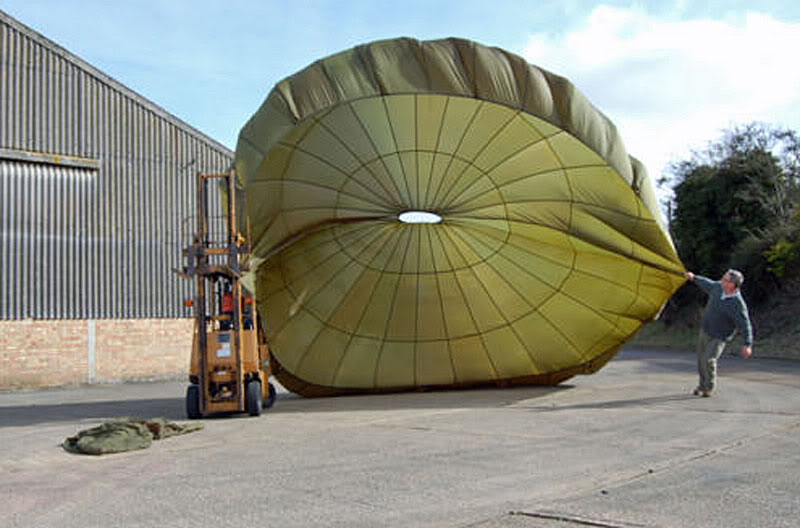
We made great use of a giant army green colored parachute. I remember multiple of us chorus members scrunched inside it slowly oozing across the stage in an amoeba blob depositing Jesus for his next scene.

It returned in the penultimate moment to, you guessed it, parachute up and down as the entire cast held the edges. It billowed and filled the stage in gusts of wind, finally falling down its last time as the actor playing the title role ran under just in time to get his head in that tiny hole at the top.

The effect of him spread out across the stage, hands outstretched towards all of us, his followers, grasping at the edges of his robes needing him to sing to us and filling him with music at the same time. He looked at me in our second to last performance, paused, dropped his eyes for a moment and smiled.

God, I still love Jesus Christ Superstar.

I do not want to direct musicals. I spend most of my efforts trying really hard to resist my impulses towards cheese. But there are things that show did to me that I still carry with me.

I remember the passion with which the people around me attacked this project.

I remember watching my director deep in conversation with the actors, asking them questions, trying to think through a moment.

I remember hearing these crazy ideas to dance wildly or run down a hall or get under a parachute and feeling like we were discovering something.

There was an invitation to step into a new way of seeing. It didn’t matter if I liked the idea on first presentation. It was my job to try and occupy a concept that I’d never considered.

I’m still trying to do that today: trying to get my plays to be that big green parachute: fucking huge and full and trying to wrap up the whole place in themselves.

A

Do Grants Make Our Work Worse?

doofy-lion

Write a grant. Is this what you get?

Everyone has felt that moment when the idea for a thing you’re going to create passes at just the right angle and you get a glimpse of the whole. The inspiration is a shadow. It’s a search and rescue party.

At the start the work it is mutable and infinite. Waiting to be formed. It’s impressionable like silly putty, waiting for an imprint to be pressed upon it. It’s a delicate place and I love it there. For me, it’s the very best of places.

In such a moment I feel myself a sculptor standing in front of stone. Any move, any blow, will change the course the future statue in front of me will become. These early hits are the most important, not because you know what you are making, but – in fact – because you are most open to discovery, because you can revel in the NOT knowing.

Artworks are made through intuitive decision making processes. Sometimes in creating a scene or writing a line of music, it’s difficult to explain what sources I’m drawing upon. I’ve learned to trust the instinct to just do it and figure out why later. I’ve come to trust that when I hit that marble there’s something in the hammer that knows better than my mind about what might happen, a chemistry between the thing and the person who shapes it. That the thing has as much to say, as do I and only in trusting this can we stumble forward into being. It’s often only after I finish a piece that I have any ability to go back and articulate the variety of influences moving me while the creation process was occurring. If I was paying that much attention at the time, I’d probably have gotten distracted from the doing.

Which brings me to that lion.

King Frederick I of Sweden gets a lion. It dies. He loves it and wants it stuffed so he can look at it for eternity. Sadly, the taxidermist gets only the pelt and the bones of the beast to work from. And, lacking Google image search or Wikipedia, he takes the stuff and does the best he can to guess. What you see above is the result.

That lion is not the product of a million potential strikes on a piece of marble. That lion is an ill-fitting jigsaw puzzle. The man who put him together never saw a lion. But he knew he HAD to make one. Someone sent him a bunch of lion pieces and said he needed to add them up into an animal. He’d never observed it live. He’d never visited its habitat. Never saw it catch prey or watched it stretch in the sun. He didn’t know how it lived. He only knew he was limited by the skin and bones he had in front of him.

There’s no room to add to what a lion is. The pieces are all you get to use. But lacking more info the taxidermist uses his own experiences and influences to help shape the pieces to create this unknown thing. The lion is a strained mix of creative inspiration and someone else’s pre-defined boundary.

Like an animal we’ve never seen, at early stages, we cannot know our work entirely. We don’t know its habitat or function. We’re just seeing it’s shadow in the wild. We need to be careful of defining too strongly what the limits of a lion should be. We shouldn’t be in such a rush to say, “this is where the mouth goes and this is the femur” before we really know how it moves.

There’s a study I read a year ago by a psychology researcher named Timothy Wilson from the University of Virginia called “The Disruptive Effects of Self-Reflection.”

In it they set up a station in which female college students selected a poster for their dorm room from five choices. Two were “good” art (van Gogh and Monet) and three “bad” art (as Wilson says “a cartoon of animals rising in a hot air balloon, a photograph of a cat perched on a rope with the caption ‘Gimme a Break’ and a photograph of a cat standing at a fence with the caption ‘One Step at a Time’”).

When subjects picked without explaining they went with the good stuff 95% percent of the time. When they had to write down why they made their choice only 64% of people picked the creative master over the kitty cat. Which means that 31% of people chose the simple stuff, the things that were easier to talk about because they had to explain why they were making those choices.

Kitty cats looking for a break are much easier to explain than Monet. And it would appear that when we confront an inability to rationally explain why we’re doing what we’re doing, sometimes our pre-frontal cortex encourages us to change that thing we’re doing to make it easier to line up with explanations we’re trying give.

The study also said “When telephoned a few weeks later, however, [the choosers of “bad art”] were significantly less satisfied with their choice than were subjects who had not analyzed reasons.”

This is what over-articulating can do to us.

And this study only measures blunt brush strokes. It can’t say what percentage of people considered a cat poster more heavily than they would have. Or if it made them appreciate the masters less because they felt confused or inadequate when asked to talk about them.

I worry that a grant is a recipe for cat posters.

A grant proposal for a work of art is by its nature, not a description of a whole finished thing. It’s not a novel, it’s a book jacket. Not even a book jacket. A proposal for a book jacket. How could it be anything more than this? The book isn’t built yet.

And yet, funding sources in the non-profit granting sector require an incredibly explicit and articulated vision of a final outcome, even when a project is at its earliest stages. Is it possible that in the same way a college student might pick a simpler poster when they need to explain their decision, the very act of saying what you think you might do in a creative process has a significant impact on the ways and kinds of work that ends up getting made? In my own anecdotal experience, the general trend of art-makers over their careers tends to move from non-linear associative storytelling towards more logical and narrative based presentation. I’ve always assumed that this was a function of a kind of “growing up” in artistic identity and output. Now I’ve begun to wonder if that might not also be a function of the ways that companies fund their works as they gain more professional stature.

I know I’ve gotten much better at grant writing as I’ve practiced. You learn not to try and explain the entire messy complexity of what you’re making. You define a narrow slice that becomes a representative of the whole. You leave out the nasty bits. You tell yourself that you’ll come back to them. It’s the parts that you CAN articulate cleanly that you share for someone else because the other stuff is still unknown to even you.

But a grant is a footprint. It’s a promise that there’s a whole animal out there that you’re going to capture. To describe in words is to encapsulate and confine. It’s not so simple to write and write and write about a thing and then go back and give yourself permission to diverge from everything you’ve written. Those pathways form in your brain whether or not you want them to.

If van Gogh wanted to explain the sunflowers in words, he probably would have written an essay. You know, with words. The whole point of that painting is that there are things we experience and feel and cannot explain in any other way In trying, it’s possible we diminish it. Force it into a single dimension that it doesn’t easily occupy.

Messy stuff is hard to talk about. And I see my work get cleaner as I get older. I used to think that was craft. But what if it’s not? What if cleaner isn’t better? What if it’s just easier to get funded?

I felt so strongly about this a year ago that I wrote the guy. See:

uva psych

He’s really nice. You should buy his book.

I recently sat down to try and write a grant for a project in the earliest of stages. It is currently an impulse more than anything. I began a list of elements that I think might become part of it. As I tried to tie them together, things kept popping out. The grant writer in me looked at that language and said, “This doesn’t make sense. You need to clean it up.” And when I started to do that, when I started making some logical connections between the things I’d listed, the artist in me could feel the thing shrinking. I could feel it beginning to solidify. I could feel that lion’s smile growing.

So I stopped.

I really would like some money to fund the exploration of this project. But what became clear is that it would be a choice. I could write something that could get me money or I could chip away at the marble and see what was in there. But I couldn’t do both.

At least not right now.

A