doing

Dispatches from the Awesome Lady Squad, #2: In which the ladies plan to meet for a second time

cooltext1368115366I’ve been feeling lighter lately.

I’ve been walking around with just a bit more bounce in my step.

I’ve been feeling, well there’s just no other word for it, rather awesome indeed.

I believe I’ve been feeling that way because for the first time in a long time it seems like change is imminent.  Over the past few years, I’ve spent a lot of time worrying about finding my place as an artist in the world. I’ve worried about whether I was doing the right thing. I’ve worried about whether a choice I made would get me on the right path. I’ve worried if I’d ever land in the place where I was supposed to be. But you know what? I think I’m finally, finally, finally, realizing that the whole idea that there is a right place, that there is one just path, that there’s even a standard of measurement that is anything close to absolute is a load of crap. And that realization is part of what I think is making me feel so awesome in particular about the Awesome Lady Squad.

After the last squadron meeting I felt the positive power of defining a new perspective. About refuting the idea that there is an absolute when it comes to what’s “normal or that there is a fixed set of disadvantages and that there are givens that stay given about the way that things work.

I thought about the way I run my theater company: as a hybrid artist somewhere between non-profit and individual who is able to make the kind of creative work that doesn’t fit easily into categories and still manage to pay my collaborators the same level as many mid-sized theaters in town. I’m pretty sure that if I’d asked my mentors first coming out of school if such a set up would be possible, they’d have all said no. My guess is that at that time they would have told me there wasn’t funding or structure or opportunity for such a different way of doing things.

At the time, there probably wasn’t an obvious route towards what I wanted.

Now, there is. But that’s only because I found it.

I’ve spent a lot of time in 2013 fretting about whether it’s possible to change how women are treated in the arts. And as one of the attendees from the last meeting said, it’s a feeling that has taken up a lot of space in my life. I’ve felt mad that things aren’t the way they should be. But at this moment, I’m a lot more interested in putting that energy towards actually getting them so they are.

Right now, the route to doing that isn’t obvious.

But after we do it, other cities can look to Philly and see that it was there all along.

The resolution I want you to join me on in 2014 is this: you have to know – not desire, not wish, not hope – but deep down truly know that there is a future world where the Awesome Lady Squad doesn’t need exist because we’ve solved all the problems we’ve identified. And we need to know that it’s going to become reality, and soon. Gathering people and realizing that you are not alone, that your perspective is one that is shared by many, that your view of the world need not be rage-inducing or isolating, that you can indeed find a space where every person around you also starts from the same set of ethical givens, this is the first step. It’s an important one. Because it’s the one where we all have to stop and say, hey, the things that I disagree with are actually NOT truth. They are NOT givens. Not in this room. Not right now.

And once we carve out a little bit of space to stake our the Awesome Lady Nation, we’ll be able to invite the rest of the world in as citizens. One by one, we’ll make them all denizens of our Awesome new world.

Charting that course is already underway and you can check out our first scouting mission here. On Sunday January 26th from 7 – 9pm at the Arts Parlor (1170 S Broad) we walk just a little further down that road.

We’ll use the same format from last time, me asking some big questions, and you guys sharing your big answers. For a few hours in a few square feet of space we’ll create a world where people believe in equity and fairness and respect for female creators. And if we can make it true in a room at the Parlor for a few hours at a time, there MUST be a way to expand that perspective, that new sense of reality past that room and out into the world.

Hope to see you there.

An as always, thanks for being awesome.

– A

52 Weeks and Flux

I used to put pictures up with my posts a year ago. Does that make them better?

A year ago I wrote this.

One year.

It sort of seems impossible.

Dear reader, in some ways it feels as if that person and her impulse to write could have been me both 10 years and 10 minutes ago.

Yet, in thinking about this past year, I also sense a slow tectonic level type of shift. And while this movement has quite possibly been in the works for a very long time, perhaps since the start of my creative career, it also feels like a wave finally beginning to crest.

And troublingly, I don’t quite know how to say any of this. Not in a way that feels specific enough. That feels like it really articulates it. I just know that there is a high level of Flux in me right now.

I like this word – Flux.

First searched in the dictionary Flux is listed as this: “A series of changes.” And also “continuous change.”

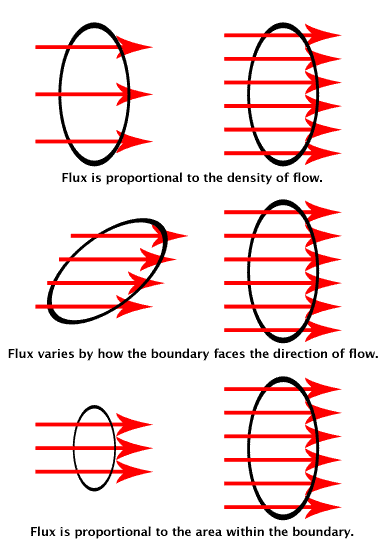
Back when I was studying science I learned about Flux in the context of physical passage: The amount of a defined thing moving through a defined amount of space in a defined amount of time.  In this context Flux is a rate. Something whose motion feels closer to a verb than a noun. I remember in particular a problem on a multivariable calculus final in which bees were flying out of a hive at great speed.

Flux is not the hive. Nor is it the bees. It is a measure of them as they pass from one place to another.

When I get to ruminating poetically, the Flux in me feels like the measure of something moving internally from the person I was to the person I am meant to be.  And right now that feeling, that rate of movement of stuff from one place to the next, that series of continuous changes, all of it feels as if it is being pushed very hard. Like a swift current, the force is visceral. It is gathering momentum.

This is why it is so funny to read my thoughts from a year ago.  Because so much in me feels like it is in motion, but so many of the words remain applicable. Most notably from that year ago, the question of what I am doing and why remains.

Most days planning spools further and further away from the present: a year before I can re-apply to this or that, to get funding to start on the next thing, maybe more before I might be ready for this other opportunity.

And at the same time, the passage seems so quick: A year, an entire year of life and what really is different? What do I have to show for it? Is it enough?

So to the feeling of Flux I must ask: Have I actually, tangibly, changed or does it just feel that way? 52 weeks later what can I say to the person who asked if I could define what I want out of art and cut out the rest of the crap to “really concentrate on making what matters”?

A year ago I was looking for change that was easy and obvious to show myself. I thought about changes in location, in career, in love, in life. I ultimately decided that these weren’t the changes I actually wanted to make.

But perhaps there are other changes. Things that are invisible forces. Changes that are harder to see with the naked eye but that move continents if given enough time.

Here is what I do know:

I don’t feel the need to make a new “play” any time soon.

I might be done making “plays” for a while.

But I do want to make something, and I need to figure out what that is.

And while all my creative impulses are terribly impractical from a producer standpoint, for the first time in a while that feels like fun and not a hindrance.

With luck (and hopefully likelihood) I’ll read this in a year’s time and see what Flux has forced me to find.

– A

Getting to “Fuck It” Faster

If you’ve been standing within 100 feet of me in the last month or so, you’ve inevitably heard me go on and on about my most recent directing project.

It is, in essence, a project that does not adhere to any of the rules that I follow in my “real” work. It is one that I traveled almost two hours a day to get to and from. It is one that rehearsed at odd and tiring hours after full days of other work. It is one that paid me far less than the salary I set for myself in my own company’s work. It is one that I embarked on with little choice in content, space, personnel or schedule. Never in a Swim Pony project do I allow designers to be assigned to me. Never do I cast a massive ensemble based on a day’s worth of auditions. Never do I work in a tiny and oddly shaped theater space. Never do I do so many of the things that I did for this recent production of Midsummer Night’s Dream at Arcadia.

Yet, I can hardly recall a time in recent memory when I have been this excited to get to rehearsal, felt as free in pushing and playing with my actors, as wildly open to trying any and everything that my mind could conceive.  And ironically, I can also hardly recall a time when encountering things that did not go the way I expected where I felt so easy in adapting to the new circumstance and believing that success or no, it would all still absolutely have been worth it.

I thought about this yesterday as I semi-moped about my house feel post-partum performance let down. I thought about what it might mean that I have been so very happy these past weeks and what I might need to do to capture this feeling more often.  And as I was semi-moping I thought about the times in the past when the work has felt the most fraught and when it has felt the most free. And collage-like came a cascade of things people have said to me that feel strangely similar:

A written comment from a vocal jury performance: “Adrienne Mackey is a wall of sound”

A reader of this blog: “It surprised me to realize that you could be that vulnerable.”

The remark during a training session for Roy Hart work: “Adrienne, you are like a golden tank. Beautiful but bulldozing over everything in your path.”

In a therapy session recently: “Don’t take this the wrong way, but sometimes I find you very hard to read.”

And as these thoughts fell through my mind over the course of the day, they began to layer into the shape of something resembling a realization. Not an earth shattering one, in fact something that I’ve pretty much always known, but one that I realize I haven’t totally acknowledged as a problem: that when I really intensely care about something, especially when I’ve had the chance to stew about it for a long time beforehand, I often psych myself out of really enjoying it. When I really want to do my best, when I am trying my hardest to do that, I often over-think myself out of doing what I want and having a good time.

Often in school, in training, in life, in my work I have these moments where I want so badly to do well and I feel myself failing. And this failing becomes this nasty spiral where I want to do well so I push too hard or work too much and then feel the falseness of that work, feel the desperation of it, and end up falling farther down the hole. And so I try to relax and not care, but of course, I know this too is a lie, that I do care, that I want to do well, and so feel guilty about trying not to do and bounce back and forth between half measures of forceful pushing and uncommitted frustrating motions of trying to disengage from my angry and needing and deeply caring self.

Almost always when I get to an incredibly exasperated and dark place at the bottom of this spiral I say, “Fuck it.” And only then in hopelessness despair do I finally give up trying.

And this, inevitably, cliché-ingly predictably, is when I finally break the cycle and start making the stuff that’s really good, the stuff I wanted to make the whole goddamn time.

It is so recurrent that I can even know that I have to get to “fuck it” and in mind boggling-inducing meta levels of self-sabotage manage to try too hard at finding the feeling of “fuck it” until I give up even at this and rage at the gods with a hearty “fuck it trying to find fuck it!”

And then, of course, the work gets good.

Perhaps external measures of success have become so entangled with my own sense of worth, with my own sense of desire, that when I think about it I genuinely feel like I don’t actually know what I want. Maybe I am so often in my head that I start to game out every strategy ahead of time and this removes me from actually experiencing anything in the actual moment of its happening. Or possibly the key to really loving something is the delicate balance of knowing when it’s time to try hard and when to let go.

Maybe it is all of these things.

The real gift of the process I found with my students at Arcadia was that I walked in and had absolutely nothing to prove to anyone. I was doing a play with no one to impress in a style I have almost no expertise over on a subject I pretty much didn’t give a shit about. And somehow that gave me freedom to do exactly what I wanted. Which was lovely and freeing and incredibly important to me. And by the time I realized how much I cared about it, I had already found the permission to keep doing it. And in so doing, saw the freedom and permission that all of my lovely darlings gave themselves so that together we all set ourselves free.

This is what I thought about yesterday in the afterglow of a lovely process.  And sitting here now a day later thinking about those thoughts I think this:

What the fuck (it)?

Because, really, what the hell do you do about that? What do you do with the knowledge that when you try hard you are trying too hard? That when you try not to try you end up trying harder? That you’ll keep going around that until you despair and give up and then stop trying and then you’ll finally do it right? That this always happens unless you magically manage to end up doing something where you don’t realize that you care until its too late and you’re already doing a good job?

Ugh.

If I look back at my past, I see this pattern emerge everywhere. Beginnings are so often the most joyous place for me. The moment of beginning, the time before I know enough to know enough to know when I’m messing up is usually when I manage to subvert the work and get to “fuck it” faster. It is the moments when I don’t realize what I’m doing or I go into it not thinking much at all about it that I am able to just relax and really let rip.

This is how I discovered a theater of devising rather than scripted plays.

This is how I became a funk-a-delic back up singer.

This is how I started teaching new approaches to voice.

This is how I found myself loving so fully a production of Midsummer.

This is how a person who has intense personal space issues looks at a hoard of college students and cannot help herself but to hug them, to grab them about the ears and kiss their faces. How a person whose persona is thoroughly entrenched in wanting and needing and demanding respect in my field and from my peers can have no shame. How she who is so studious and careful in letting people in has no trouble showering these students with all the feelings that I am filled with when I see them in voluminous words unprepared ahead of time (so as to ensure they accurately describe the true depth of my feeling). And how in such total lack of preparation I find truer expressions than in the many times in the past I have tried with hours and days of writing and re-writing to say something right from the core of me.

Even here. Even in this space, it feels just a bit forced trying to pin it down in words after the fact. And I am trying as I write these very words not to hit the back button, but to allow myself the luxury of letting these thoughts tumble out just as they come.

And I don’t exactly yet know just how I will do it, but I think this is the work I must be doing now. Finding my way to “fuck it” faster. Figuring out how I can be as generous with myself as I am with them. How I can give myself the sovereignty over my artistic space, to do whatever I want simply because I want to, because it makes me happy, and believe that this happiness is the key to my artistic success.

– A

Lonely

I know that often I write about art in a general way, one that relates to most of the people working in my field, and when possible to the arts as a whole.

Today I’m not gonna do that.

Today I want to talk about being a director. And for me that can feel awfully lonely.

A few days back I was giving a colleague a ride home from an Arcadia University gig out in the burbs. Both of us have been hired by said school to direct student productions (different ones, in case that’s not obvious) for the college. And on this day when we both happened to be heading home at the same time of night we ended up in a car together chatting about the experience.

After the expected pleasant inquiries about rehearsals and how things are going, we sat in a still silence for a little bit. We chatted about upcoming works on the horizon and exchanged a few war stories about the theater scene. It was a perfectly nice way to spend 45 minutes headed home. It was the kind of conversation I have with other directors a lot.

A few days later we ended up in the car again. This time, catching up rather quicker on the status of rehearsals we were left without some of the pat topics that usually pop up. And somehow we started talking about what it feels like to be in charge.

It’s funny, it doesn’t occur to me often that this is a specific facet of the way that I work compared to the other artists I work with. It doesn’t occur to me that often, through repetition and familiarity, that many artists don’t walk into a process with that mindset. I know that when I walk in the room, I’m expected to have a plan of what we’re going to do. I know that I am the only one of my kind there to carry out the role. And I never see anyone else do what I do and therefore I have only myself to compare with.

There is a very basic power differential. The caveat, of course is that there are lots of people that try and create a sense of communal responsibility and I am whole-heartedly one of them, but it is there. And that sense of responsibility is exciting and distancing. It means you are always a few steps ahead of the rest of the room. A simple illustration: it is hard to imagine a rehearsal in which a performer or designer walked in and stated the plan of the day or one in which the director could show up and look at the others in the room with an expectation of what they are about to do. I don’t think this has to be good or bad. But it definitely is. And unless you’re a company without a director there is likely a negotiation that’s been worked out either ahead of time or during the process in which that power is defined and bounded.

However, I’m getting off topic. That isn’t really what I want to chat about. I think there are interesting questions about what might happen if we tried to change this dynamic. It might show us why that structure is so necessary or it might open up new and exciting potential. But for me, who for better or worse, is working in this way almost any time I work, it makes me realize how lonely I feel so often.

I’ve heard a lot of directors say that every time they begin a show they ask themselves, “How do you make a play again?” I thought this might be particular to devisers so it was surprising and kind of heartening to hear that those who dwell mostly in the scripted experienced the same terror. It was interesting to hear that she too re-reads her old notes from shows past to figure out how that person from the past navigated the journey from nothing to something. And I was happy and sad to see that she too spends a lot of time feeling lonely in a process.

I wonder if that sense of “how did I do this before?” is something to do with the fact that you don’t share your process in the same way. So much of what we do is before and after the rest of the room arrives and leaves. And even with documentation, it can be hard to track all the discoveries and thoughts that by necessity are shared between actors and designers and stage managers with the people they work with. One reason I so often try and go back to my old books of notes is to sense the person who was able to do this thing before and catch some of her strength.

Another strange thing about being a director, that I think may be unique to the role: you never watch others like you work. There’s only one of you in a process. Designers and actors get to see other designers and actors. They see people like themselves develop their craft. And for better or worse they have to do this a lot. And there are times when I get jealous that in doing so they get to watch and experience other directors too. That they probably know more about the particulars of other directors than I do. I sometimes ask them “What did that other person do?” not because I have some desire to copy but because I genuinely just want to know.

My sense of myself in the work is kind of like an island. I know what my terrain looks like. I know how I traverse it. And when people who’ve been elsewhere come to visit me, they can share stories of their experiences, but I know that I really have no concrete sense of what’s going on in those other locales. And while many of the directors I know get the chance to observe early in their career, there is not the built in continuation of this practice as time goes on.

When I first started in school and was just out of it, I saw a lot of other directors directing. I was in other people’s rehearsals a lot. And it provoked thoughts in me about how they solved the problems in front of them. It made me think about my process and question what I would do in the same scenario. And some of my favorites were those that were quite different from my own sense of artistic aesthetic, not because I wanted to do what they did, but because it made me really need to define why I wanted to do it my way instead. In fact, I once had a director say to me as a fledgling AD, “I love the thoughts you send in your notes. I will use none of them because they aren’t the play I’m making, but I love them.”

I learned to be a director in a room full of directors. And since becoming one, it’s been a very long time since I saw another one in the wild.

I’d like to.

I wish I had the opportunity. To watch. To listen. To observe a bit.

To travel to another island simply to try and understand the way it works in contrast to your own.

A

You can

Is it just me or do people seem tired lately?

I don’t mean standard issue Festival post-partum malaise. I mean an industry-wide heaviness that is seeping into a majority of the conversations I have with people these days. A lot of people seem really weighed down, overwhelmed and ready to cut and run. I’ve been thinking about this weight, the sadness I sense in others and creepingly in myself. I’ve been thinking about how to tackle it and where it comes from.

First, a story, or a confession rather.

About a year ago, I was on the relationship rocks. Not through any kind of infidelity or betrayal. No, there wasn’t anything particularly wrong with my partner and I. That said, through nit-picking and bickering, through the penumbra of apathy and assumption that LTRs can sometimes attain, I’d found myself in a place where nothing felt particularly right either.

I was bored, I felt trapped and I wasn’t sure this was what I wanted my future to look like.

The long and short of all this was that I had to ask myself some hard questions. I had to be honest about whether I was actually living the way I wanted to. I had to really own up to whether the choices I’d made were ones that I really wanted to continue with.

Basically, I had to decide if I wanted to stay or I wanted to leave.

Here’s the thing: as scary as that realization was, it occurred to me for the first time in a long time that I had a choice in the matter. Having to contemplate the very real possibility of not assuming the things I had would always stay that way meant that I really looked at them closely.

And for the first time it occurred to me that some of them were things I really didn’t want to lose. And it also occurred to me that there were things I was doing that were not making that terribly easy. In the midst of this very dark time I had to look at some choices I was making and some habits I was holding onto that were working against some of the things I professed to want. Contemplating whether I really wanted these things kicked me in the ass a bit about getting in gear to go get them.

Another confession, while this was happening in a lot of areas of my life at the time, the LTR I was really most worried about was with my identity as a creator.

Look.

We’ve all found ourselves in the midst of a lot of work that we don’t much care about for, work we don’t really even seem to like. And in those moments it’s easy to say to yourself, as the proverbial Talking Heads saying goes, “How did I get here?”

I, clearly, didn’t throw in the whole towel. But I did throw out a few things and I gave myself some mandates on what had to change. I decided to let go of some things that were making me tired. And I decided that when I get to the end of a project, as I have done just now, I’ll have to think not only about what the outside world tells me in terms of whether the work is good or bad, but whether it’s making me happy, whether I’m really doing what I want.

Another full disclosure: I really liked working on The Ballad of Joe Hill. There were a lot of great things that happened for the show.

But I’m pretty sure the Festival wasn’t the right vehicle for the piece.

That’s hard to write.

It’s hard to write because I spent years courting them and building my reputation as a creator worthy of presentation. It’s hard because there’s a measure of success that comes with being presented by a big name. It’s hard to write because without something like the Festival, I’m on my own to find the people I want to see my shows.

But I still think it’s true.

I’ll give the required caveat: I really appreciate everyone that came out to see Joe Hill. A lot of people really responded to the work. I am thankful to them. I appreciate them. I am happy that they came.

But I still don’t know that they are the people I wanted to reach. And I still don’t know that I totally achieved what I set out to do.

That’s even harder to write.

But I still think it’s true.

What I set out to do what get people that might never see a “play” to come and see this thing that I made. I wanted to find the folks that are a little rowdy and rough around the edges. I wanted to find the people that are into a dare, a risk, a potentially strange, dare I say, unsafe experience.

That’s what I really wanted. Because that was the promise the 2006 version offered to me all those years ago when I first made the show. That was the LTR that I signed up for: an off-road practice of the theatrical experience. A chance to honestly and actually shake up an artistic medium.

What I wanted out of Joe Hill was to get actual NEW theater audiences into the seats. To pave the way for a future definition of theater and theater audiences that are more in line with the ones I want to make.

And I’ll be the first to admit I didn’t get that this time.

Which doesn’t take away the success the show did achieve on other measures of success. It doesn’t take away the pride I have in what I made. But it also doesn’t excuse me from what I really want.

And unless I want to end back up in the heavy place, I need to keep reminding myself of that, and I have to be honest next time I start thinking about where I want my work presented whether it’s going to have a fair shot at getting me where I want to go.

See, there’s nothing wrong with failing. But you have to be honest at the get go about what the goals are and whether you’re really working towards them. And when you aren’t, you have to be ruthless, even when it’s hard, about pointing yourself back towards the where you want to head. This is the divining rod we all carry around in us as artists, that  magnetic pull that tells us whether we are truly inside the truth of our work. And sometimes fear or failure or poverty or allure of praise can push us off that course. Sometimes a compromise isn’t a bad thing. But there are times when it isn’t what we really want and we can feel it, deep down, when when it’s actually at odds with what we really need to be making.

Look, if you’ve already made it as far as a life in the arts, it’s pretty clear that no one is forcing you to live any way but the way you want to. Last I checked, there was no theater artist acting with a gun to their head.  And the bold, startling, scary but ultimately empowering truth is this:

No one in the world will be a stronger advocate for your work than you will be. No one will better articulate and know what you need than you do.

Which means you have no one else to blame if you aren’t doing something you love. Which means that if you feel your work is selling out or getting too middle of the road you are the one that is letting it get that way.

But which also, happily, means that the only thing stopping you from exactly the work you need is yourself.

“But the money Adrienne! The Money!!!” You cry.

“Really?” I reply “Is it really the money? Is the money so good that it’s worth it?”

I just don’t think so.

“But the structure! The company! The audiences! I’ve worked so long and hard to get it to this point. What will I do if I have to leave it all behind.”

Look.

Pew doesn’t know your work. Fringe Arts doesn’t know your work. Independence, William Penn, that big name donor, that huge fancy festival, that amazing company artistic director, that opening night party tray sponsor,  your viewers, even your long term collaborators, not a single one of them know your work better than you do.

Only you know the work you need to make.

They want a lot of things all those people. But for you to want them, you have to, have to, have to also want to be doing the thing that they want or your collaboration with them will always be you wishing you were doing something else. And no matter how happy or supportive or structured or monied these things get you, it still won’t be worth it.

I think this is the fatigue. I really do. I think it’s years and years and years of trying to ignore that the difference between what we have and what we actually want to be doing. You can feel the honest to god joy when you really fucking nailed it on the goddamn head with exactly what you were meant to be doing and who you should be doing it for. And you have to chase that shit like there is no tomorrow.

You do not have to take that role if it’s stupid or offensive.

You do not have to apply for that grant if you hate the terms of agreement.

You do not have to have expensive costumes if the fundraising stresses you out.

You do not have to seek out wealthy audiences if they aren’t the folks you really want there.

You do not have to do any of the things that others tell you. You can do what you want to do.  And only when you do that will you start figuring out if and how that is possible. And it is possible that it isn’t possible. But at least you aren’t pretending that it is and that you’re actually doing it. At least then you can decide if you want to do something else. Or maybe, maybe likely, maybe amazingly, you’ll take that incredible wealth of talent and actually figure out how to do that thing you really wanted to be doing.

Too often I hear my peers talking about work they don’t love with companies that don’t pay enough with people they don’t really want to be around. This is what’s making us tired. And I’m tired of it.

You don’t like the work you’re doing. From now on, it’s on you.

Because you can change that.

Your leverage is your presence in their company.

Your leverage is your work in their festival.

Your leverage is your name on their grant.

Your leverage is your kindness and intelligence and heart in their life and you CAN use it to stem the tide in the opposite direction.

You may say to me, “But my leverage is nothing. They don’t care if I leave, they’ll just find someone else.”

To which I say, then is that really the system that you want in on? A world in which your presence has no value whatsoever? A place in which the uniqueness of what you bring to the table is completely devoid of significance? A system in which your abstention on the grounds of monetary or moral grounds doesn’t mean anything?

Is that worth giving up your happiness for?

No it’s not.

And if they don’t appreciate it, maybe especially if they don’t, if you don’t feel satisfied, if you aren’t getting enough to make the thing worth it, it’s up to you to use that leverage in the other direction. To show the folks what you’re really made of.

You can, nay, you must.

If you don’t, no one else will.

A

Spirits…

O the heavens, we are in the thick of it. O, yes, we are.

I often wonder what exactly I must look like in rehearsals.

The best days I am blessedly unaware of myself, seemingly like the spirit in this play I’m laboring on, a mostly un-embodied ball of energy that floats in and among the room’s inhabitants, sending thoughts and energy to and into them. I am aware of only the echoes of shape and motion – a sweep of the arm, a pacing back and forth, a note scribbled quickly in a book. In this form I feel massive and all encompassing, a thing of air and energy.

The worst days I see myself far more concretely, feel myself sitting on the floor or see the words almost tangibly come out of my mouth. On these days I am small and desperately trapped – by body, by brain, by the limitations of time and gravity. In these moments I often see a room staring at me and in the space of a breath or pause quietly ponder at the insanity of them to have followed me here.

I try to look at them squarely. I try not to shrink under the glare. I try to tell the truth of unknowing while still believing that I (for it is never they that have brought us here) can lead us out of the tangle and wooded thickets we have ventured forth into.

When in directing mode senses come into sharper contrast – sounds either exalt or oppress, the room can be a nest in which to cozy in or an overbearing push that squeezes down on the work like a trash compactor.  It’s like the sensitivity dial is jacked up to its highest point. Even clothes can suddenly itch and scratch with a fervor that seems sudden and unwarranted.

Am I alone in this? Is this why there are nights I toss and turn? Is it why I cannot help myself but to apologize again and again in the room for such sensorial dissonances, whether not I am the cause? I don’t know if it is also the purgatory of other artists to feel this way, to know you must open yourself so wide and full and then chafe at the rough hewn bits that pass through your fingers. To know that the only way to make them smooth is to sit in that roughness and work it out.

In working The Tempest at this moment, I can’t help but feel a little bit of Ariel in myself. I’ve agreed to be here, sought out this particular form of servitude. And I take delight in the use of my powers to create shape and spectacle, to send the inhabitants of this island running, hair up-staring and all aflame like reeds, in many places and then bring them back to meet and join.

But unlike that dainty spirit, I’m sometimes less perfectly certain that I can perform the task to every article, that I can do such worthy service, and do so without giving over to grudge or grumbling. Like this production’s particular version of that entity, which takes its shape not in human form but appears in and about our space’s fabric elements, I am finding that pushing too hard or getting stuck too long forces the magic to be lost. I see how the promises made and kept earlier in this process are no guarantee for pay off and that there is plenty more toil to do.

But when I sit and ask myself on this morning why undertake this service, I cannot help but believe that unlike that spirit, that when it comes to the end of all this I will not gladly demand my liberty. That for me, the strive towards freedom from this earth-bound form is the freedom. That it is not in the finishing of the task, but in the doing of it that we mere humans glimpse at the capacity for magic. That like another in this play, I will miss it well and be sad in giving this work its freedom, even when I know well the necessity in completing the contract to do so.

The time twixt now and the end will be spent by us all most preciously…

A

Learning vs Doing

You know that feeling when something just… bugs you?

In that way where it’s not a huge deal, not enough to really even know exactly what about it irritates, but it a fact just rubs you wrong each time you hear it?

I get those little inklings once in a while when I hear about certain artistic projects happening out in the Philly sphere. It’s hard to pinpoint exactly which ones will they will be. But they are things that from first mention just make me itch. They leave a sour taste. They make my nose wrinkle. And recently I’ve tried to unpack those little pin pricks a bit to figure out what it is about them that creates that feeling.

Ok, long intro aside, I’ve been writing here long enough that hopefully you readers know that I care a lot about the art that happens here in my community. And if you read this blog you know that I am, almost always, for more work from more kinds of people. But there are just some projects that I hear about and get this negative vibe from. My guess is that anyone with a high level of skill in an area has feelings like this about certain kinds of creative endeavors.

Mine come when I hear about companies that are creating new devised or generative works for the first time. This is almost exclusively linked to full productions from companies that have not established themselves as devisors in the past. When I hear that company X that usually does this or that semi-traditional cannon work is doing a “devised” show I have this weird itch. It’s a gut feeling and it makes me turn my head to the side and squint a little.  It makes me just a bit annoyed.

I don’t get upset in the same way when I hear about companies doing killer work I wish I were doing. I don’t get that way when I hear about new up and coming companies fresh out of the box. It’s something to do with relatively established, usually working the traditional mode, folks who out of the blue decide they’re doing this thing that I do all the time.

Why is that? Is it jealousy? Competitive fear? Haughty condescension?  I don’t claim to be above any of those things. But I really don’t think that’s what it’s about.

Here’s what I do think it is: There’s learning and then there’s doing.

Learning is for us, the makers. Learning is the way in which we experience ourselves opening, vulnerable and hopefully awakened with a new methodology. It is the space in which we find room to grow. Learning is mostly a private affair because the real beneficiary is us, the learner.

Doing is the opposite. Doing is the ways in which that thing that we have learned and grown is implemented and displayed, put forward and adorned in front of an audience. It is about skill and virtuosity and execution. Doing is performance. And doing is about the viewer because we’re doing it for them.

In every artistic endeavor we are likely engaging in a bit of both. When we start out, we are doing very little doing and learning an awful lot. And the doing we do is mostly in service of the learning. In these early stages, when we do the doing for people, they know we’re just starting, it’s generally understood to view the thing through that lens.

As we grow older, as we become “professionals” there are fewer spaces for learning. We become doers, sometimes to a deadening degree. It’s understood that what an audience sees is doing without quotations. We take that caveat off our performances. And that means an audience can look at the thing with the understanding that this is mostly for them.

I am for learning. I am a believer in continuing the educational process. And In almost all of my creative works I build time set off from the making (the doing) of the play for the group to explore uncharted territory. This is usually called exploration, but it might as well be called learning. It’s the time when I give us room to grow that new growth without having to support the weight of doing it for a viewer.

In other words, when I start a new project, I make sure to find time for us to learn before we have to do.

I do that because devised work, by its nature, is a learner’s game. The piece does not exist. And in the same way a playwright needs time and space to learn about the world he’s writing, generators in a room together when they first start doing something, need way more time to learn what’s happening, what they’re going to do.

And I like the idea that people would want to engage in that process. I want more theater that is made this way. Which is why I especially like inviting in people who’ve rarely created that way to do it with me.

What I do have trouble with is when learning is sold as doing. And this, I think, is where the itchy feeling comes in. While I always include some amount of learning in a process, I know that I need less of it than I used to. Because I’ve been doing it long enough to know when I can accelerate or anticipate certain things I’ve learned about doing. And I have a pretty good guess when others can’t.

The thing that’s tricky about trying something new that is similar but not the same as something you’ve been successfully doing is remembering that the new thing is actually new. That it’s a thing you don’t know how to do as completely, that you haven’t yet learned all the ins and outs of doing.

That the ratio of learning to doing that you’ve been operating on with the thing you do know how to do is not going to be applicable for the new thing you’re learning about doing. And that means that you need to give yourself more time to be in learning mode before you start doing it in front of people. And I think the itchy feeling comes when I sense that a project hasn’t made enough room  for the learning. I know how hard devising is. I know how long it takes. I have a pretty good sense of the effort and skill needed to actually do it. Which means that I can sense when something is about to be shown as a thing “done” that is actually a thing that is still being learned.

It’s not just that I don’t want to see bad work (which I don’t). But I see bad work all the time. No, in this case the niggling feeling is tug of the mama bear. I am feeling protective of my craft. And I think generative creation really is a quite different skill than interpretive theater. Making a thing and enacting someone else’s thing are not the same. We cringe at a movie in which a basketball player mistakes sports fame for an ability to do any craft that involves performance in front of an audience. And in the same way, I sometimes worry that people don’t realize when they decide to devise that what they’re doing is a learned skill.

In the learning of my craft I have had so many opportunities to be a beginner. I had so many tiny steps along the way, small showings, little audiences, chances to build my skill incrementally. I don’t know any serious deviser that began with a full-fledged production. And I fear that those who attempt to do so will think the fault is in the medium and not in the desire to jump to the end of a series of steps in a developmental learning process. I fear people will assume that these methods new to them are not as good as the ones they’re used to without realizing that it may be because they are not as good at using them.  I fear it will sour people that might be open to learning such things away from doing them successfully in the future.

I fear that not only will creators misunderstand, but that audiences will too. That they will see under-prepared, under-qualified work and think this is doing when what they are actually seeing is pretty raw learning. And I fear that because there’s no one to explain  what they’re seeing it will do a disservice to the work on a larger level, make them ask for the same old “play plays” the company did last season.

I have been in devised work that did not get the allotted time or skill to be successful. And because such work demands that everyone be involved a lot more closely, I think it’s that much more painful when it fails. I hate hearing people talk about such disasters.  It brings me close to saying things like, “Those people shouldn’t be doing this kind of work.”

Which isn’t totally true. They can. Eventually. If they take the time to learn.

There are actors who are so effortless in their doing, so complete in their learning that it seems like magic. It’s easy to imagine an unknowing audience member who might think that they too could simply get up and do it. But we “in the know” can see the skill, the deep learning behind what they are doing. And we can be chaffed a little each time someone off-handedly intimates that they could just step into our work with the ease and élan of that same skillful performer.

If that audience member tried to just “do” that same thing, they’d learn rather quickly how much they don’t know.

And I think that’s about the most apt comparison I can make for the itchiness I feel sometimes.

I know there are companies that will try and do it all right out of the gate. And I know that they’re not doing anything maliciously, that they just can’t see the effort that it really takes.

But still. 

A part of me just wishes they wouldn’t go doing it until they’ve learned a bit more about how.

A

It’s never what you think it is

Sticking with it: it’s where we separate real artists from the people who used to make art.

Because real art making is not about your amazing idea. It’s about not stopping. Real art making is about learning that ideas are only worth their executional salt. If you only dream it, if you never do it, you haven’t actually made anything.

And that’s as it should be, no? A cook who dares not near a stove can’t really claim his title. A swimmer who never hits the water doesn’t have much credibility. And plumbers are only made so by, well, plumbing things.

Do you feel despair, my dears, as I do between those long stretches of making anything? It’s because until you create again, you are just another person who used to make art. It’s because you can feel that impulse, that inertial force, that ease in which you just might stop and give up. Unless you’re making some art, you aren’t actually an artist.

And isn’t it just the bitterest of pills to swallow?

I look at the people younger than me and I want to ask them: How many of your fellow artistically minded graduates really hunkered down and decided to make a life in the arts? How many incredible creative compatriots decided to do something else? How sure are you that you’ll never give up?

I look at the people in my own age bracket and I want to yell: Think of all the people you’ve made work with in the last decade? How many of those people are still doing it? Isn’t that scary?! Aren’t you tired like me? Do you worry that you will keep going?

I look at the people a generation ahead of me that are still doing it and I want to inquire: How? How are you still here? Can you promise me it gets better? How did you make it work? Do you still worry about giving up?

In those times between being someone who used to make art and being an artist, how do you keep summoning up the energy and effort and love and vulnerability?

I don’t mean to say that if you aren’t cast in a show you don’t count. Art work is not limited to the opportunities that others afford us. Our work is so much more than the moment of performance in front of an audience. Our work is reading about the subject we want to create from. Our work is learning a new monologue or asking a friend to come and read our freshly written scene. Our work is discussing an idea and creating a plan of action. It’s searching out objects and finding inspirational images or writing 500 words a day to figure out what kind of stuff we actually want to make.

Our art is so much more than just an outcome. But it also must be more than just an idea.

The art in our mind – the play imagined, the painting visualized, the text  to be written – is always perfect. And the actual work we make is always something short of that ideal. Ideas are not art. Art is when the wheel hits pavement and starts to generate friction. It’s when reality begins to pierce the perfection.

Want an ever bitterer pill?

Your good ideas and intentions simply won’t matter if they never get implemented.

Your beautiful dreams are of no substance if you do not hang out long enough to get them done.

There is a new push in teaching and child development to stop telling kids how smart they are and to instead praise how hard they work. Turns out that when someone is praised for being good at something, they are incentivized to keep this image of themselves intact. If you think you are smart, if you want to keep this idea of yourself intact, doesn’t it make sense that you won’t want to put yourself in a situation that would prove otherwise? And it turns out that when you tell children they are “smart” they are a lot less likely to try something beyond their current capacity to succeed. When you are afraid of failure, you play it safe.

What to do? Tell them they are good at working really hard. Teach them that they will get a lot from trying really hard. Tell them the amount of effort and work they put into something will reap an equivalent reward. The difference between being smart and working hard is that one is a state to maintain and the other is an action to perform. Which one do you think is more productive?

You young ‘ens, with your amazing and fancy new ideas! Oh! How can I express how much I know where you are? Your artistry is like clay in your hands. You feel its heft and weight and shape. You know you are capable of making it into whatever you need it to be. You are strong. You are artistic potential incarnate, if only you could just get started. You know you can make awesome things. You just don’t have the right tools yet to shape this beautiful raw material. You just haven’t been given the opportunity to present what you can do.

Forget that opportunity. It’s never coming. Just throw that clay on the floor and start making whatever you can in the best way you know how.

I spent a year out of school waiting for the moment to become the artist I knew myself to be. I worked for others and held my own ideas tight inside myself. I waited and waited for the right place to display myself, to unveil what I knew I had to say. In that waiting I kept thinking “Oh how surprised all of you will be when you see what I really am!” In that year that I waited and dreamed and hid myself I wasn’t just less than the artists I wanted to be, I just wasn’t an artist. And it took me realizing that I’d spent a year working in a coffee shop and a cheese store (and that this was NOT going to be the sum of my very expensive education) to realize I needed to stop waiting and start doing.

That play you’ve been half working on for the last six months? You know, the one that you’re already not that excited about?  You know that essay you have been meaning to write but just can’t get into? That painting that’s already a little underwhelming?

All those works of art, the ones that feel like they are already imperfect and kind of one dimensional and boring and maybe I hate them and this isn’t the art I was really meant to make…

Go finish it.

Not because it’s going to be good. (It probably won’t be.) Go finish it because it teaches you how not to give up. Go finish it because it teaches you to soldier on in the face of your own limitations. Go finish it because it teaches you the value of “working hard” and not “being smart.” Go finish it because this kind of work is the lesson that will teach you the most about what it really means to succeed, which is not leaving the work undone and unfinished.

I defy you to show me any company that you love, any artist you admire, whose cannon does not include some seriously stupid and poorly executed crap. I look back at the things I’ve done and I cannot help but wince at over-long and flowery writing, at “dramatic” directing choices that now simply read as amateurish and scene work that I intended as intense but simply came off as inane. There are essays I have written in the course of this writing project that I seriously hate, but I published them anyway. And truth be told, the ones that I deemed most perfect are not the ones that have flown into people’s hearts. They are often the ones I might have sat on if I hadn’t forced myself to put it out there.

Folks a bit further on in your careers, correct me if I’m wrong here, but as far as I can tell, the need to succeed only gets worse. As you develop better taste, you’re that much more aware of the gulf between what you want and what you actually are.

But isn’t that better? Would you actually want to know that there is some pinnacle of artistic prowess and you’ve achieved it? That what there is to learn is something you’ve already gleaned?

Artists that survive are not the most brilliant or the most talented or the smartest. They are the ones who don’t let the idea of their work get in the way of the work they’re actually doing. They are the ones that do not look at failure as referendum on their worth. They look at process and see if they did they best that they could do. Artists who are successful are the ones that keep making art.

Here’s a hint: some of your work will suck. No matter what you do, some of those babies you bring into the world are big fat ugly stinkers. And even if they aren’t, even if they’re great, even when they’re earth-shatteringly groundbreaking, they’re likely never as good as they were in your head.

Let me repeat that for emphasis:

It’s never going to be as good as it was in your head.

We all might as well get used to it now.

(I’m looking at you.)

Stop making excuses. Stop waiting for the impulse to appear. Stop waiting until you are as capable of execution as your idea is worth.

Stop waiting. Start making.

A

PS: You folks who’ve been around the artistic block a few times, help some of us feel better. What’s the worst thing you ever made?