theatre

52 Weeks and Flux

I used to put pictures up with my posts a year ago. Does that make them better?

A year ago I wrote this.

One year.

It sort of seems impossible.

Dear reader, in some ways it feels as if that person and her impulse to write could have been me both 10 years and 10 minutes ago.

Yet, in thinking about this past year, I also sense a slow tectonic level type of shift. And while this movement has quite possibly been in the works for a very long time, perhaps since the start of my creative career, it also feels like a wave finally beginning to crest.

And troublingly, I don’t quite know how to say any of this. Not in a way that feels specific enough. That feels like it really articulates it. I just know that there is a high level of Flux in me right now.

I like this word – Flux.

First searched in the dictionary Flux is listed as this: “A series of changes.” And also “continuous change.”

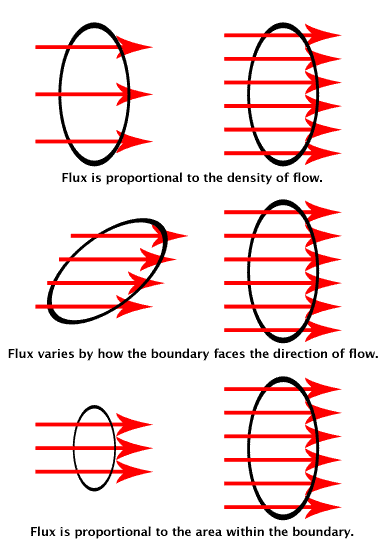
Back when I was studying science I learned about Flux in the context of physical passage: The amount of a defined thing moving through a defined amount of space in a defined amount of time.  In this context Flux is a rate. Something whose motion feels closer to a verb than a noun. I remember in particular a problem on a multivariable calculus final in which bees were flying out of a hive at great speed.

Flux is not the hive. Nor is it the bees. It is a measure of them as they pass from one place to another.

When I get to ruminating poetically, the Flux in me feels like the measure of something moving internally from the person I was to the person I am meant to be.  And right now that feeling, that rate of movement of stuff from one place to the next, that series of continuous changes, all of it feels as if it is being pushed very hard. Like a swift current, the force is visceral. It is gathering momentum.

This is why it is so funny to read my thoughts from a year ago.  Because so much in me feels like it is in motion, but so many of the words remain applicable. Most notably from that year ago, the question of what I am doing and why remains.

Most days planning spools further and further away from the present: a year before I can re-apply to this or that, to get funding to start on the next thing, maybe more before I might be ready for this other opportunity.

And at the same time, the passage seems so quick: A year, an entire year of life and what really is different? What do I have to show for it? Is it enough?

So to the feeling of Flux I must ask: Have I actually, tangibly, changed or does it just feel that way? 52 weeks later what can I say to the person who asked if I could define what I want out of art and cut out the rest of the crap to “really concentrate on making what matters”?

A year ago I was looking for change that was easy and obvious to show myself. I thought about changes in location, in career, in love, in life. I ultimately decided that these weren’t the changes I actually wanted to make.

But perhaps there are other changes. Things that are invisible forces. Changes that are harder to see with the naked eye but that move continents if given enough time.

Here is what I do know:

I don’t feel the need to make a new “play” any time soon.

I might be done making “plays” for a while.

But I do want to make something, and I need to figure out what that is.

And while all my creative impulses are terribly impractical from a producer standpoint, for the first time in a while that feels like fun and not a hindrance.

With luck (and hopefully likelihood) I’ll read this in a year’s time and see what Flux has forced me to find.

– A

Some days I’m just tired of talking about money

There’s a moment in Inside Llewyn Davis that absolutely slayed me when I saw it on Monday night. The movie, which follows a young folk singer from Greenwich Village in 1961, shows an artist struggling to survive. There’s plenty of emotional twist and turnage that make this film an engrossing one, but the moment that gutted me, that hit awfully close to my own heart’s home was one about two thirds of the way through. The protagonist has taken an arduous journey from New York to Chicago in hopes of impressing a music mogal named Bud Grossman. Llewyn Davis arrives in Grossman’s office looking beaten. He asks for… what? Recognition, money, help, something he doesn’t even quite know how to ask for, for an opportunity it seems he already believes he has no shot at.

Grossman looks condescendingly at the record he has just been handed, one bearing the same name as the movie, and says something to the effect of “Well show me what you got. Show me what’s Inside Llewyn Davis.

So he does.

In a dark, half lit room, the character nervously sits with this man who holds the potential to change his future, a man who sits like a stone staring, unblinkingly at him.

Here Llewyn Davis sings.

Sing beautifully, achingly, heart-breakingly open. The camera moves so little, it is one of the closest things I have felt in film to the real spirit of live music, to being that close to someone who is filled up with song. For me, it felt as if I was witnessing someone doing the very, exactly, and absolutely necessary thing they were put on the earth to do.  It felt that for Llewyn Davis music is the language that he as a person is truly intended to be speaking to the world. And the song, which I barely remember, is itself almost besides the point. The singing of it, and the feeling of doing it, is what’s really worth watching, and in the act is contained a beautiful kind of holiness.

At the end of the song there is this thick and vulnerable silence that feels like nakedness.

The man with the power looks at the one without and with all the casualness and ease of a Hawaii vacation, with all the finality and solidness of a period at the end of a sentence, says to him:

“Well I don’t see any money in that.”

Sucker punch.

In the heart.

With a spear.

Made of ice.

I’ve thought about that scene for days now. I’ve repeated this line to myself over and over and somehow, it only makes it worse the more I think about it.

Why does this injure me so much? Why does this wound to an imagined artist from 50 in the past get to me so much? Why does the reduction of one person’s lovely song to a lack of dollar signs get in me and stomp around? I keep asking myself these questions. And I really do wonder why, in a life where I spend so much time and effort fretting over and raising and dealing with and paying out and worrying worrying worrying about money why this stupid little line in this movie has got me so twisted and tangled inside.

This happened to me, this moment, in almost exact verbatim.

I was sitting across a table from someone proposing a production of my work. I was asked to describe the project that I wanted to create. I talked about the legacy of a movement and the music that it produced. I talked about the textures of peeling walls and echoing voices down a 200-foot corridor. I spoke about the sweeping grandeur of becoming a legend and the power of watching and listening and singing as the eye bounces between the living humans and the decaying space that contains them. And for once, happily, when I finished speaking I really felt that I had captured it, this vision of my future creation, at least in part, at least enough that I believed I had spoken about it with honesty and truth and sincerity.

And at the end of speaking, I too found myself in a moment of silence, thick and vulnerable, waiting in a kind of nakedness.

“I don’t think we can get enough chairs in there. I don’t know how we’ll be able to cover the costs of this thing.”

Same story, different medium.

And you know the funny thing?

I felt bad for having done it. I felt stupid for bringing such a proposal in. Preposterous, even, for wanting to do something so commercially unviable. That I came to that meeting kind of knowing and not really caring that the thing wasn’t ever going to make money, that it was an inordinate amount of work for such a tiny number of potential audience viewers, but that I didn’t care and wanted to do it anyway. That I believed in its value despite this.

Here is a true statement: I am not a religious person. I was not raised in a tradition of faith.  But sometimes when I make something it opens up a space that is larger than myself. And that space it is the closest thing I know to belief in something higher, bigger and more powerful than me. The moment of creation is the moment in which I feel the distinguishing line between the tiny bits that make up me and the tiny bits that make up the clothes on my body and the tiny bits that make up the people in the room and the lights above my head and the sound that passes between us and the floor that we rest on and the building we reside in and the whole rest of the world, all those tiny pieces become one part of one big thing that we all share together for the moment that the feeling passes through all of us.

Eventually I did end up making that piece that didn’t have enough chairs to make it monetarily worthwhile.

But I will never forget that moment: when you hope that the person sitting across from you, by virtue of being so close to the thing you have committed yourself to will understand, when you dream that they will see the world and the thing you show them with the eyes with which you also see it. When you imagine for a just a moment that it might be as easy as it was before you had to start selling the things you’ve made, things that in truth you would rather give away freely for the sheer love that the creation of them affords. It is the definitive nonchalance with which that hope is shattered, the tedium with which the deepness and sanctity and need you have for what you make is disregarded. This misunderstanding of what the art’s usefulness is, what it is there for, this is what punctures the chest.

It is not intended as cruel, this act of refusal, this alternate measure of art’s worth, but it is presented as truth, which to me is so incredibly much worse. Because it makes one feel that such a feeling is so thoroughly beside the point, and that you the person feeling it are silly and small in doing so.

It’s negotiating the massive space between a dollar sign and the thing that lights you up inside and makes you so much bigger than you were before. It’s taking that thing and then having to figure out how you can push and poke it so that 50 chairs instead of 40 fit inside your vision of it.  It’s taking the most beautiful song that you know how to sing, the one that comes from way way way deep down inside you and being told, as if it’s the simplest thing in the world, that it will never make any money.

It is the definitive and inflexibly casual insignificance of the artistic product when it is unable to be shaped into commodification.

This is the thing that hardens the soul.

This is the moment of singing that song, Llewyn Davis, and I feel it with you.

Fuck You Manic Pixie Dream Girl

Holly Golightly: Did I tell you how divinely and utterly happy I am?

Paul Varjak: Yes.

A few months back during Fringe season I went and saw a show inside a real house. It was a lovely play with breakfast and beautiful writing and was based on Breakfast at Tiffany’s. (The book not the movie, in case you were wondering.)

This is a post I’ve wanted to write this post ever since then.

Not because the play was bad, because it wasn’t – it was wonderful actually, one of my favorites of the season – and though I loved the staging, the writing, the actors, so much about the experiment in dramatic form start to finish, despite all this afterwards when I sat in the car with my partner in viewing-crime discussing what we’d seen all I could think was:

“God I detest that female character.”

Not the actress, not the writing of her part, but that faux feminine charming and carbonated, silly yet exotic, tiny pink banged and attractive and mysterious and wild and ukulele playing, Natalie Portman-esque, devoid of any actual humanness cypher of girlishness. Film critic Nathan Rabin put it far better that I when he called her “that bubbly, shallow cinematic creature that exists solely in the fevered imaginations of sensitive writer-directors to teach broodingly soulful young men to embrace life and its infinite mysteries and adventures.”

Fucking manic pixie dream girl. I hate her so much.

I didn’t write this post back then because I liked the people who put the play on and I didn’t want to hurt them by bashing it when so much of it I truly enjoyed. Especially when I really didn’t have anything more to say on the matter than the fact that I really detest this trope, one I see as rooted in all kinds of shitty ideas about girls and women and the kinds of people they can be, one whose recent “emergence” in this particular form is cloaked in a kind of faux liberation. I think versions of her have been around far longer than we realize. The manic pixie dream girl (or MPDG as I will call her from here out) embraces a “seize life!” zeal but only in so much as it is thrown at her pent up male would-be partners. And while I find this odious and tedious in the extreme, while I have in many ways created my sense of aesthetic and artistic purpose to fly in the face of the MPDG’s twee triviality and lack of substance, at the time I didn’t really have much more to say on the matter. I just had my silent fervent hate.

However, this summer into fall, I have been spending an awful lot of time with women a fair bit younger than myself. Amazing, bold, incredible young women. Women whose ideas and humor have surprised and delighted me, who brought choices into classrooms I could never have predicted and who found inventive slants on characters I have seen performed dozens of times. I look at these young women with their incredible talents and wild and weird inner lives and it fills me with joy.

I admit that many of these fantastic people I underestimated upon first meeting. And I think that’s in part because it took some time to find the strange and silly underbellies that were hidden within them. Wild and wondrous senses of daring, humor and ridiculousness that I suspect are not often enough given space to be explored. And I wonder if this lack of space isn’t partly what constrained my seeing the wholeness of them. And then I think about the kinds of roles they will have available to them in a year or ten year’s time. I think about the shows that I have seen recently, the struggles of my female friends who are performers, the distance between the roles that they have truly loved and the ones they have had to suffer through to keep a face to their name in the acting world. I race in my mind for plays that I could bring to these lovely young ladies, works could lift them and their wildness up.

I have so much trouble doing so. There are more than none. But there are certainly not enough.

In high school when I got really serious about theater I committed to reading a play every week for two years. I raided my theater department’s library in hopes of finding the great roles that I wanted to inhabit someday. And while I found a few, I also realized that more and more there were plenty of stories that intrigued me, that tantalized and pulled me in, but had no women in them or only a few or none I personally wanted to be unless I was cast across my gender. And slowly over time one half of a dual cast narrator from Joseph and the Amazing Technicolor Dreamcoat, the hyperventilating Alma from Eccentricities of a Nightingale, Widow Begbick in Brecht’s Man is Man, even the beautiful and frustrated monologues of love from Twelfth Night’s Viola, these roles, despite being some of the best I could ask for, just didn’t feel quite enough any more. They were the stories that were made available, but none of them felt exactly enough mine to continue telling. And somewhere in the midst of this it occurred to me that I could tell some of the stories that excited me through the performers onstage even if I didn’t actually have to be that body up there in front of people.

This frustration was the one of the forces that ultimately pulled me out of acting and into directing. In the latter space, one in which the stories I told were not limited to the options others presented to me, it felt like I had more I could say and more ways I could say it. And I found the plays, fewer and farther between than I’d have liked, that highlighted the female roles I’d wished I’d been offered. And when I eventually realized that even beyond these lay the opportunity to create new stories that were entirely of my own imagining, I finally believed that there was enough substantive food for a life of digging into artmaking.

The problem I see with the MPDG and princess and all the other lame female counterparts in much of our contemporary storytelling is that they teach women (and the girls who grow up to become them) that these are the extent of the roles that we have available to us. In art, and I think also in life. I read a study about how the greatest predictor of the number of girls that will grow up to work in science and technology-based fields is hugely correlated with how many women are working in these fields in their community. Not even how many they personally come into contact with, but the number that exist generally in their sphere of being. I would guess that the increase has something to do with a young person’s sense of awareness that such a thing is possible.

It is hard to imagine beyond anything that you know of or have seen. Our narrative context fuels so much of the imagination we later have available to us. So what you see and what you encounter in the stories you take in, especially in formative artistic years will inevitably shape the possibilities that you allow yourself in the future. I fear and I worry that the amazingly bold and smart and incredible young women I have met will be limited to becoming the most amazingly bold and smart and incredible versions of MPDGs and princesses and nurses and ingénues rather than applying those same forces of will and intellect towards the multitude of other avenues that might be available to them. I worry that if some aspect of them is too hard to squeeze into those narrow shapes that they will be excluded. I worry that if they do fit inside them that some of the other incredible parts of them will be pushed out so that they fit more neatly within.

My first year out of college, when I had so few moorings, so little outlet for the stories I wanted to tell, I flirted with becoming the MPDG. I became enraptured with a boy and then became enraptured with my ability to construct a persona that I thought was charming and alluring. And I, despite my feminist upbringing, despite my experience crafting my own stories, despite my sense of myself as a strong and independent person, found it easy to default to a narrative that seemed pre-designed for me. I could sense this trope and its effervescent power and in little bits and pieces I began playing and becoming her. I felt her narrative pull and began to conform my outer self to match it. Then one day this boy gave me a movie and told me that a character in it reminded him of me. And at the end of that movie I realized in no small amount of horror that he wasn’t wrong, that I had made myself to resemble this precious punky person and that I had created a vision of my life in my own mind in which I was a side character.

It was only when that version of my life story and the caricature of myself that I’d formulated within it began to fail that I realized how little of my whole self I’d really offered.

This is the power of art and narrative, whether we make it or consume it. It shapes our sense of ourselves in the world. It can limit not only our sense of being in the works of art themselves,  but it can transform our ability to conceive of ourselves in the world at large. A new incredible story at its best helps us change the way we think. It offers us a vision of a world that we might hope to live in. And when we limit our narrative selves to these paltry simplistic women, we limit the kinds of women we imagine we can be. And by passing those stories on, we teach our younger female counterparts that this is enough to be satisfied with.

I worry for these young ladies that I have met over these past many months. I worry that their outward forms will dictate so much of their inner artistic work. I worry that they have grown up on these stories that do not contain the entirety of them and I worry that they will be forced to shrink themselves down to fit inside the ones that are made available. I want to grab them and tell them that they should demand huge spaces in their artistic lives. That the stories we tell are the way we make sense of the world around us. That creating visions of how we can be is how we begin to become that. That they owe it to themselves and the women they will become.

That they are more than MPDGs and her static character counterparts. For she is singularly dimensional. She does not advance through the course of the story. She is there to shift the inner workings of others. She is inwardly inanimate like a rock. The manic pixie dream girl has no opportunity to change or shift or grow or move.

There are a lot of reasons that I make my own work. This is one of the biggest ones. It’s why I write this post now, several months later, not because my singular dislike of this character matters very much, but because I want to tell them they are not like she is. That they can do so much more than any of these things.

– A

Getting to “Fuck It” Faster

If you’ve been standing within 100 feet of me in the last month or so, you’ve inevitably heard me go on and on about my most recent directing project.

It is, in essence, a project that does not adhere to any of the rules that I follow in my “real” work. It is one that I traveled almost two hours a day to get to and from. It is one that rehearsed at odd and tiring hours after full days of other work. It is one that paid me far less than the salary I set for myself in my own company’s work. It is one that I embarked on with little choice in content, space, personnel or schedule. Never in a Swim Pony project do I allow designers to be assigned to me. Never do I cast a massive ensemble based on a day’s worth of auditions. Never do I work in a tiny and oddly shaped theater space. Never do I do so many of the things that I did for this recent production of Midsummer Night’s Dream at Arcadia.

Yet, I can hardly recall a time in recent memory when I have been this excited to get to rehearsal, felt as free in pushing and playing with my actors, as wildly open to trying any and everything that my mind could conceive.  And ironically, I can also hardly recall a time when encountering things that did not go the way I expected where I felt so easy in adapting to the new circumstance and believing that success or no, it would all still absolutely have been worth it.

I thought about this yesterday as I semi-moped about my house feel post-partum performance let down. I thought about what it might mean that I have been so very happy these past weeks and what I might need to do to capture this feeling more often.  And as I was semi-moping I thought about the times in the past when the work has felt the most fraught and when it has felt the most free. And collage-like came a cascade of things people have said to me that feel strangely similar:

A written comment from a vocal jury performance: “Adrienne Mackey is a wall of sound”

A reader of this blog: “It surprised me to realize that you could be that vulnerable.”

The remark during a training session for Roy Hart work: “Adrienne, you are like a golden tank. Beautiful but bulldozing over everything in your path.”

In a therapy session recently: “Don’t take this the wrong way, but sometimes I find you very hard to read.”

And as these thoughts fell through my mind over the course of the day, they began to layer into the shape of something resembling a realization. Not an earth shattering one, in fact something that I’ve pretty much always known, but one that I realize I haven’t totally acknowledged as a problem: that when I really intensely care about something, especially when I’ve had the chance to stew about it for a long time beforehand, I often psych myself out of really enjoying it. When I really want to do my best, when I am trying my hardest to do that, I often over-think myself out of doing what I want and having a good time.

Often in school, in training, in life, in my work I have these moments where I want so badly to do well and I feel myself failing. And this failing becomes this nasty spiral where I want to do well so I push too hard or work too much and then feel the falseness of that work, feel the desperation of it, and end up falling farther down the hole. And so I try to relax and not care, but of course, I know this too is a lie, that I do care, that I want to do well, and so feel guilty about trying not to do and bounce back and forth between half measures of forceful pushing and uncommitted frustrating motions of trying to disengage from my angry and needing and deeply caring self.

Almost always when I get to an incredibly exasperated and dark place at the bottom of this spiral I say, “Fuck it.” And only then in hopelessness despair do I finally give up trying.

And this, inevitably, cliché-ingly predictably, is when I finally break the cycle and start making the stuff that’s really good, the stuff I wanted to make the whole goddamn time.

It is so recurrent that I can even know that I have to get to “fuck it” and in mind boggling-inducing meta levels of self-sabotage manage to try too hard at finding the feeling of “fuck it” until I give up even at this and rage at the gods with a hearty “fuck it trying to find fuck it!”

And then, of course, the work gets good.

Perhaps external measures of success have become so entangled with my own sense of worth, with my own sense of desire, that when I think about it I genuinely feel like I don’t actually know what I want. Maybe I am so often in my head that I start to game out every strategy ahead of time and this removes me from actually experiencing anything in the actual moment of its happening. Or possibly the key to really loving something is the delicate balance of knowing when it’s time to try hard and when to let go.

Maybe it is all of these things.

The real gift of the process I found with my students at Arcadia was that I walked in and had absolutely nothing to prove to anyone. I was doing a play with no one to impress in a style I have almost no expertise over on a subject I pretty much didn’t give a shit about. And somehow that gave me freedom to do exactly what I wanted. Which was lovely and freeing and incredibly important to me. And by the time I realized how much I cared about it, I had already found the permission to keep doing it. And in so doing, saw the freedom and permission that all of my lovely darlings gave themselves so that together we all set ourselves free.

This is what I thought about yesterday in the afterglow of a lovely process.  And sitting here now a day later thinking about those thoughts I think this:

What the fuck (it)?

Because, really, what the hell do you do about that? What do you do with the knowledge that when you try hard you are trying too hard? That when you try not to try you end up trying harder? That you’ll keep going around that until you despair and give up and then stop trying and then you’ll finally do it right? That this always happens unless you magically manage to end up doing something where you don’t realize that you care until its too late and you’re already doing a good job?

Ugh.

If I look back at my past, I see this pattern emerge everywhere. Beginnings are so often the most joyous place for me. The moment of beginning, the time before I know enough to know enough to know when I’m messing up is usually when I manage to subvert the work and get to “fuck it” faster. It is the moments when I don’t realize what I’m doing or I go into it not thinking much at all about it that I am able to just relax and really let rip.

This is how I discovered a theater of devising rather than scripted plays.

This is how I became a funk-a-delic back up singer.

This is how I started teaching new approaches to voice.

This is how I found myself loving so fully a production of Midsummer.

This is how a person who has intense personal space issues looks at a hoard of college students and cannot help herself but to hug them, to grab them about the ears and kiss their faces. How a person whose persona is thoroughly entrenched in wanting and needing and demanding respect in my field and from my peers can have no shame. How she who is so studious and careful in letting people in has no trouble showering these students with all the feelings that I am filled with when I see them in voluminous words unprepared ahead of time (so as to ensure they accurately describe the true depth of my feeling). And how in such total lack of preparation I find truer expressions than in the many times in the past I have tried with hours and days of writing and re-writing to say something right from the core of me.

Even here. Even in this space, it feels just a bit forced trying to pin it down in words after the fact. And I am trying as I write these very words not to hit the back button, but to allow myself the luxury of letting these thoughts tumble out just as they come.

And I don’t exactly yet know just how I will do it, but I think this is the work I must be doing now. Finding my way to “fuck it” faster. Figuring out how I can be as generous with myself as I am with them. How I can give myself the sovereignty over my artistic space, to do whatever I want simply because I want to, because it makes me happy, and believe that this happiness is the key to my artistic success.

– A

Amateur is Latin for Love

Over the past six months my life has taken a radical shift. I went from the intensive grinding gears of two large scale projects – one a gig for Shakespeare in Clark Park in which I worked as a director for hire as wells as The Ballad of Joe Hill a work created and produced by my own company Swim Pony – into a far more predictable series of teaching gigs – a new post as voice teacher for Pig Iron’s APT, a residency at Drexel, coaching a mostly non-actor set to coach med students interpersonal skills at UPenn’s school of Medicine and directing a production of Midsummer at Arcadia.

As I headed into the summer I felt a sense of relief and apprehension. Relief that my time into September was booked with work that I both believed in and had found a way to appropriately compensate myself for. I felt a sense of pride at having booked myself solid for the first time ever with 6 months of artistic work alone while still paying a mortgage and socking away from money for savings. I thought and felt, “Finally, we are approaching a place of stasis, a solid foundation upon which a life can be built.”

And as I left the month of September, reasonably compensated, well received by press and peers and patrons on my work over the past months, I still felt somehow just a little unsettled by I can’t say exactly what: a sense that I’d done well but… With a feeling that I’d created two works of which I was proud, one that I felt was the first appropriately resourced self produced piece I’d ever been in charge of but… That I’d made shows that I think showed my professional skill, that highlighted many aspects of my  expertise, plays that made me proud as a professional creator, and yet…

Yet, still, something niggled at me. The audiences were a bit timid at one. The energy not quite right in another. The joy, the abandon, the feeling, the… what? the… love.

Yes.  That’s it. The love was what I felt missing. That underneath the polish and skill and work was just a little bit less love than I went into all this seeking. Somewhere in this summer of incredibly hard work and tiring hours and beautiful images and incredible ideas I was missing a little bit of amore.

Look. The people with whom I created my last two professional projects are ones that I adore. They are my core creators, most of them, the people that I will work with in many cases for the rest of my life. But something about these last two shows left me a bit cold. Not through any fault of my co-creators, but perhaps because I myself allowed myself to be swept up in the accomplishment of professionality, of the implied self worth that doing a thing at a “meaningful” level of competence and expertise did I let myself hide a little of the messy and silly and sometimes uncertain and ridiculous person that I love myself to be in a process. I doubt these co-creators would admit it, but I bet deep down they felt it.

I could not have spoken this to myself then as I do now. But I think I knew it. We all wanted a bit more of that love in our work.

So it was at this juncture that I looked into that stretch of fall to winter months with no “professional” work in sight. Here I found myself in a sea of students of varying ages and skills sets and talent levels ahead of me. It was here, with a chip on the shoulder and a block of doubt in the stomach that I set off into the wilds of “amateur” theater. I went to auditions and first classes and training session with zero expectation of artistic fulfillment, looking instead to do a decent job, make some connections, steel myself against the antsy feeling being out of “real” rehearsals. I intended to let life be simple for a bit in order to plan my re-emergence back into the “real” theater scene soon enough.

So I went to my classes with their small number of students in order to get them on board with the weirdo piece I wanted to create. I went to rehearsals to direct play that I have loathed for a very long time expecting to wade through language I could care less about. I went to work to train folks on characters and skills I have repeated ad nauseum over the last few years. I went to these things expected a heavy heart and soul. I went there ready to be frustrated with amateurism and a lack of professional rigor.

I went there expecting these things. And I found that I was wrong. I found myself, suddenly realizing that I was happier than I have been in months, possibly years. That heaviness and weight of proving myself and my worth had been freed from myself and that for the first time in a long time I have re-found a kind of love. Yes amazingly, I find myself at the near end of this time more inspired, more buoyant than I have in perhaps years. I went expecting amateurs and what I found was love.

So often we define the amateur as the absence of talent skill or training. Back in late October I read an article by Todd London about innovation in which he points out that the word Amateur comes from the Latin root for “love.” When I read this, something dropped in me. An “Ah ha” kind of moment. A moment where I realized that the amateur is not solely, as is so commonly assumed, defined as one who does something at a “non-professional” level but one who does it for no other reason than a deep and abiding love. The amateur can have no other reason for doing the thing other than the pure and true love of it, for they have no other compensation to reward them. How often we degrade it, define ourselves in opposition to it, in order to prove our own worth. How often, I realized, I myself was working, creating and doing things in so many ways simply to prove that I was most certainly not an amateur but a professional, a person worthy of time attention and thought. Worthy to be seem by foundations to presenters to peers this need for professionalism had infected my spirits. It had stopped me from silliness. It is true that over the past several months I have created things and worked with those that on almost any level one would not call “professional.” But in exchange I have found something that might be worthier still: Love.

And after months away from it there are moments that I cherish

–       The act of creating ritual, silly and ridiculous and childish

–       The moment of discovery for the very first time in a scene or a word or a movement

–       The undaunted display of failure, the expectation that one is at the beginning of a journey, and the sense that one is not worth less because they have not yet mastered the way how to do something

This thought, this core of the work as an exploit of love has lifted me. And now that I find myself nearing the end, I wonder how I take these with me back to the land of professional living. I wonder how I take the happiness and joy and love that I have lived with over these past months back to my work and my life and my collaborators.

And were this any other post here, I’d find some way to neatly wrap all this up into a perfect bow of professional conduct and meaning. But I don’t think I’ll do that just now. I’ll leave it ragged and happy and unfinished. And just be satisfied with that.

A

Lonely

I know that often I write about art in a general way, one that relates to most of the people working in my field, and when possible to the arts as a whole.

Today I’m not gonna do that.

Today I want to talk about being a director. And for me that can feel awfully lonely.

A few days back I was giving a colleague a ride home from an Arcadia University gig out in the burbs. Both of us have been hired by said school to direct student productions (different ones, in case that’s not obvious) for the college. And on this day when we both happened to be heading home at the same time of night we ended up in a car together chatting about the experience.

After the expected pleasant inquiries about rehearsals and how things are going, we sat in a still silence for a little bit. We chatted about upcoming works on the horizon and exchanged a few war stories about the theater scene. It was a perfectly nice way to spend 45 minutes headed home. It was the kind of conversation I have with other directors a lot.

A few days later we ended up in the car again. This time, catching up rather quicker on the status of rehearsals we were left without some of the pat topics that usually pop up. And somehow we started talking about what it feels like to be in charge.

It’s funny, it doesn’t occur to me often that this is a specific facet of the way that I work compared to the other artists I work with. It doesn’t occur to me that often, through repetition and familiarity, that many artists don’t walk into a process with that mindset. I know that when I walk in the room, I’m expected to have a plan of what we’re going to do. I know that I am the only one of my kind there to carry out the role. And I never see anyone else do what I do and therefore I have only myself to compare with.

There is a very basic power differential. The caveat, of course is that there are lots of people that try and create a sense of communal responsibility and I am whole-heartedly one of them, but it is there. And that sense of responsibility is exciting and distancing. It means you are always a few steps ahead of the rest of the room. A simple illustration: it is hard to imagine a rehearsal in which a performer or designer walked in and stated the plan of the day or one in which the director could show up and look at the others in the room with an expectation of what they are about to do. I don’t think this has to be good or bad. But it definitely is. And unless you’re a company without a director there is likely a negotiation that’s been worked out either ahead of time or during the process in which that power is defined and bounded.

However, I’m getting off topic. That isn’t really what I want to chat about. I think there are interesting questions about what might happen if we tried to change this dynamic. It might show us why that structure is so necessary or it might open up new and exciting potential. But for me, who for better or worse, is working in this way almost any time I work, it makes me realize how lonely I feel so often.

I’ve heard a lot of directors say that every time they begin a show they ask themselves, “How do you make a play again?” I thought this might be particular to devisers so it was surprising and kind of heartening to hear that those who dwell mostly in the scripted experienced the same terror. It was interesting to hear that she too re-reads her old notes from shows past to figure out how that person from the past navigated the journey from nothing to something. And I was happy and sad to see that she too spends a lot of time feeling lonely in a process.

I wonder if that sense of “how did I do this before?” is something to do with the fact that you don’t share your process in the same way. So much of what we do is before and after the rest of the room arrives and leaves. And even with documentation, it can be hard to track all the discoveries and thoughts that by necessity are shared between actors and designers and stage managers with the people they work with. One reason I so often try and go back to my old books of notes is to sense the person who was able to do this thing before and catch some of her strength.

Another strange thing about being a director, that I think may be unique to the role: you never watch others like you work. There’s only one of you in a process. Designers and actors get to see other designers and actors. They see people like themselves develop their craft. And for better or worse they have to do this a lot. And there are times when I get jealous that in doing so they get to watch and experience other directors too. That they probably know more about the particulars of other directors than I do. I sometimes ask them “What did that other person do?” not because I have some desire to copy but because I genuinely just want to know.

My sense of myself in the work is kind of like an island. I know what my terrain looks like. I know how I traverse it. And when people who’ve been elsewhere come to visit me, they can share stories of their experiences, but I know that I really have no concrete sense of what’s going on in those other locales. And while many of the directors I know get the chance to observe early in their career, there is not the built in continuation of this practice as time goes on.

When I first started in school and was just out of it, I saw a lot of other directors directing. I was in other people’s rehearsals a lot. And it provoked thoughts in me about how they solved the problems in front of them. It made me think about my process and question what I would do in the same scenario. And some of my favorites were those that were quite different from my own sense of artistic aesthetic, not because I wanted to do what they did, but because it made me really need to define why I wanted to do it my way instead. In fact, I once had a director say to me as a fledgling AD, “I love the thoughts you send in your notes. I will use none of them because they aren’t the play I’m making, but I love them.”

I learned to be a director in a room full of directors. And since becoming one, it’s been a very long time since I saw another one in the wild.

I’d like to.

I wish I had the opportunity. To watch. To listen. To observe a bit.

To travel to another island simply to try and understand the way it works in contrast to your own.

A

The Ballad of John and Jen

When I started writing on this blog, it felt like I was pouring out a lot of the things that I had been feeling for a long time. The first posts were thoughts and arguments I’d been having a lot – internally with myself and externally with others – and were pretty well formed in terms of their reasoning and logic by the time they went onto (virtual) paper.

In the last few months, however, things have slowed. That’s partly (perhaps largely) due to my busier schedule of work. But I think it’s also because I’ve started to dig deeper into some of these things, I’ve begun to get at the stuff under that stuff. I’ve started to get at the things way down that one may not really realize. When you really start to pull apart your choices you start to see the unnammables that work on you, the things that you didn’t totally even realize were there. When you get down into the real muck of it, this stuff is less formed and harder to parse out. You start to pull apart shit that is often much much trickier to unravel and reason through.

I think this might be where some of the real scary stuff is.

I think this is where the less polite stuff is.

I think this might be where people could get a little upset.

But I think this might be where some of the real work is. And I think this might be the place where you start to tackle the issues that really might make a difference. All of which is to say that this post is coming back around to some of the women in theater/gender parity stuff.  This is a first step at trying to dig into the muck.

Let’s begin with the truth: we have some major work to do.  Even those of us with the best intentions aren’t really fixing this problem. Those of us with cursory intention are likely perpetuating it. We can blame the theaters that continue to produce plays with way imbalanced seasons. We can bemoan the writers that continue to create the plays. We can lament the market for having a glut of women. We can do all these things. But it isn’t going to get us anywhere. And if we actually want to get somewhere we have some “money where our mouths are” choices to make.

Backing up a bit: I had an argument back in mid-April, right around the time I wrote this post slamming a few Philly reviewers for their presentation of women in Shakespearean roles. This argument, one that had seven months ago is still picking at me and has been ever since I had it. It would randomly surface in my head in the middle of rehearsal, while driving, watching TV, I just couldn’t let it go. Couldn’t let it go because at the time I had it I was trying and failing to say something, something that I felt with incredible force and vigor and anger and fullness, something that felt like it implicated me and in the way I make choices about my work, and frustratingly was also something I felt totally unable to articulate.

The argument was a sweeping one, the kind that starts with a couple offhand comments and ends up gobbling up an entire afternoon. It was the kind of argument you can only have with someone that you really trust, because you actually start to uncover defenses. It was the kind of argument where you talk about the things you believe deep deep down inside about yourself and the world around you. And my sole caveat here is that it’s totally impossible to try and reconstruct all the things we said. But basically, it came down to this hypothetical:

If you have a slightly better male artist and a slightly worse female one, should you pick the worse one to help achieve better representation of female artists?

In the moment of the argument, it felt like I had no choice but to argue for the latter. It felt like a mission from on high. Like my entire life depended on making the case for that female playwright. That there was something deeply stacked against her. That I was the only way she was going to get a chance and if I couldn’t find a way to make that choice seem reasonable and obvious to my argument partner that she and no female writer after her would ever get it.

Which of course I failed to do.

And of course there are (and were) many reasons one could counter the position I took. Rational, reasonable, intelligent and thoughtful positions that we went back and forth and back and forth about. I almost ended up in tears because sitting there I felt so torn between the opposite side’s reasonableness and some kind of irrational deep down feeling that said there was something very wrong about taking a side other than the one I was on.

Neither of us could be moved. We left it unfinished.

But as I said, this question and the debate that ensued has continued to stick, continued to hang out in the back of my mind, needing to come to completion. It’s been this nagging incomplete thing trying to resolve itself for seven months now.

Over time, small details begin to accrue:

An review for a work of my own in which women played “men’s” roles

Writings from the dear Katherine Fritz

A book on the virtues of affirmative action

And then finally this: a study in PNAS about gender in the sciences that both control for and show statistically validated evidence of bias from Corinne Moss-Racusin and her colleagues at Yale. It was this last one cracked something open that I can hopefully finally start to put into words.

Here’s an intro from Sean Carroll’s blog for Discover:

Academic scientists are, on average, biased against women.

I know it’s fun to change the subject and talk about bell curves and intrinsic ability, but hopefully we can all agree that people with the same ability should be treated equally. And they are not.

What the researchers did a randomized double-blind study in which academic scientists were given application materials from a student applying for a lab manager position. The substance of the applications were all identical, but sometimes a male name was attached, and sometimes a female name.

With me so far? I swear, this comes back to the arts.

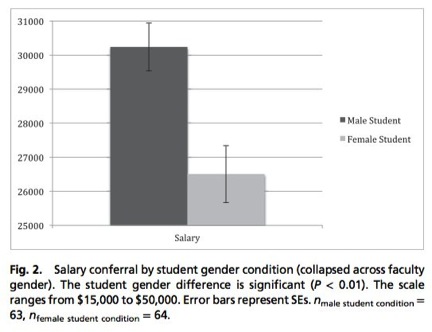
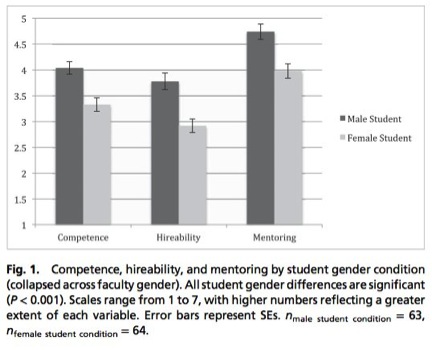
So half of the applications were Johns and half of them Jennifers. What the findings showed were that the faculty members rated John significantly more “competent and hireable” than an identical female applicant named Jen. These participants also selected John to receive a higher starting salary and offered more career mentoring to this male applicant.

And the real kicker? It didn’t matter if the faculty member was male or female. Both were “equally likely to exhibit bias” against Jennifer and viewed her as “less competent.”

A depressing graph:
graph 1 PNAS

How about another?

graph 2 PNASIn her great Scientific American blog post about this study, Ilana Yurkiewicz appropriately writes:

Whenever the subject of women in science comes up, there are people fiercely committed to the idea that sexism does not exist. They will point to everything and anything else to explain differences while becoming angry and condescending if you even suggest that discrimination could be a factor. But these people are wrong. This data shows they are wrong.

The thing that stuck with me about this study, maybe even more so than the disturbing results themselves, is that, as Yurkiewicz points out, the scientists didn’t view gender as a factor in their decision-making. They thought they were using objective data for their assessments – rationally reasoned, non-gendered arguments – to determine the strengths of this particular candidate for this particular job.

I’d bet my house that were I to get into argument with those interviewers of Timon of Athens that the points they would have countered with would been rationally reasoned, non-gendered arguments. And my point is that just because you don’t obviously act like a sexist or consciously espouse anti-female philosophy doesn’t mean it isn’t working on you. And even the benefit of experiencing that disadvantage is no shield from inflicting it on others.

Does anyone want to guess about whether I think this pattern might be found in other contexts?

If it can happen so sneakily in something as cut and dry as the representation of skills on a job application with the exact same credentials but a difference of –en versus -ohn at the end of a J…

If there are forces that bias us against thinking that a woman is as capable and intelligent as a man in doing a job in such a carefully crafted scenario of objectivity

If that can happen in a field whose express purpose is to remove bias from its methodology

How can we possibly imagine that we can create object assessments in all the incredible number of variances and nuances and details about what makes a better work of art?

So of course if you knew for one hundred percent sure that you were absolutely judging the work objectively then yes yes yes yes yes you should absolutely pick the “better” play. But I what I’ve come to finally articulate these seven months later is that I just don’t believe there is anyone in the working world that can honestly say that they can do that.

If you have a slightly better male artist and a slightly worse female one, should you pick the worse one to help achieve better representation of female artists?

The problem isn’t your answer to this question. The problem is that this is how the question seems to always be framed.  And I don’t buy this scenario is really the one that any of us is objectively encountering.

So when I hear “It just turned out that way,” I’m calling bullshit. When I hear, “The season line-up just ended up male heavy,” I’m calling foul. When I see foundations that just “happen” to be given to a majority of male-driven companies, I’m not going to say “Well that must have just been the applicant pool this year.”

We all know the odds are already stacked against women because we see it manifest all around us. And while the scientist in me wants to document and collect all the evidence I can to try and display this finding to the world, the maker in me says I need to find a way do something about it now. I don’t have time to wait for a fix. I don’t have time for more research. I’m making my work right now. And there’s no thinking theater artist I know who would truthfully declare gender wasn’t an issue on the general scale. Where we break down is whether we are willing to acknowledge that it’s happens in our own personal choices.

Intentionally or not, like it or not, we are all making a million tiny anti-women decisions and justifying them with million other reasons.  The troubling implication from that PNAS study is that we not only judge women’s past work less fairly but that the bias impedes the potential for future opportunity. And without opportunity we are less likely to create new examples in which people can start to see anything different. Every performer or writer or director knows without a chance to make anything you can’t get better at making things. Even if you wanted to work way harder to achieve the same perception of success it’s going to be way harder to find the opportunity to do so.

And here’s where I’m going to get honest with you all.

I think a lot about this. I try very very VERY hard to root this shit out at the source. But I know I do it too. I wish I didn’t. But it’s just… in there. And were I able to somehow analyze my seemingly objective rational non-gendered artistic decisions I bet I’d find that I too have subtly undercut women in my process or in the field as a whole. Though I might not see exactly how those predisposed biases slip in, I know am not immune. And neither are you.

And in knowing that, I have felt myself at a cross roads where it seemed like I was asking this question:

If you have a slightly better male artist and a slightly worse female one, should you pick the worse one to help achieve better representation of female artists?

And increasingly, over the last decade of my career I’ve forced myself to do the thing that felt, in some vague and hard to define way, the slightly less artistically “right” choice because I believed it was the better moral one to make.

Just so that I’m totally clear about this:

I’m saying that I have steered projects in artistic directions that I might not have otherwise had I not cared about making a less imbalanced world through my theater. I have often picked the slightly “worse” artists because I believed it was the morally right thing to do.

And I do it constantly. I do it on projects ALL the time. Not just on the ones where it seems obvious. I make myself go against my gut in lots of choices because I think it’s better for theater as a whole.

I don’t often don’t say that out loud.

In fact, I don’t know that I’ve said it to almost anyone before now.

And part of the reason for my artistic public persona – my warrior-queen-who-get-all-the-grants-and-deserves-them-because-I’m-a-badass-take-no-holds-creator stance – is to show that despite doing this you cannot impeach my creative process. I want to demand that people acknowledge my artistic worth. And I do that because I secretly fear that people will see what I’m doing and think less of the work. Because deep down in the muck I fear that most people think women are not as artistically capable or that their stories are not as interesting.

In the past I’d get really hung up about it. I’d worry that I was losing my sense of artistry in order to make a point. And though I still believed it was worth it, I fretted about the cost.

I used to think that I was trading quality for principle when I did that.

Now I’m just going to think, “Jennifer.”

Perusing the outcomes of those choices here’s what I find: way way way more often than not, the person I picked was able to bring something to the table that was tangibly better. For obvious reasons, I am not pointing out specifics here but suffice to say, when I went with that slightly non-gut choice, I was often rewarded back in spades. And even when I wasn’t, if I could remember to view the failure in context of the qualities of the artist’s work and not simply their gender, I almost always saw that the real issue had little to do with them as women.

I’m not saying you have to pick terrible performers. I’m not saying you can never work with who you want. But I am saying that creative worth is totally squishy. I’m saying that we make artistic assessments for all kinds of totally ridiculous reasons. I’m saying that the way it’s usually is done is a massive amount of momentum pushing you towards a choice. I’m saying that we’re probably wrong as often as we are right about how a collaboration or an artistic impulse is going to work out. That failure is built into our creative growth.  I’m saying we might as well start being “wrong” for the right reasons.

I’m saying that if you do this for a living, you have to know that so much of the time the difference between two options in the scope of a whole process doesn’t mean that much in the long run. I’m saying the difference between “really good” and “just a little bit better” is likely negligible. And perhaps not actually there. And even if it might be, at a certain point, the artistic benefit no longer justifies the outcome.

I’m saying if you’re at all considering a chance to give the opportunity to a female voice or person or story you should do it.

I’m saying if you actually care about doing anything about it, you have to do it. Even if something is pulling you away from it. Maybe especially then. Because that thing that’s pulling is ugly and dark and mean. And it hides in reasonable arguments’ clothing, it hides in gut reactions we don’t quite unpack. The only way to exorcise it is push in the opposite direction. Even when it seems strangely hard to do so. Even when it makes you feel a little funny. Activist-y. Moral high-ground-y. Like you’re doing the wrong thing-y.

Trust that you’re an amazing artist. Trust that this small push in the other direction will not harm your work. Know that it is a better thing for the world to have done. And see that your work is no worse off for it.

And then perhaps we can start actually getting this shit fixed.

– A

You can

Is it just me or do people seem tired lately?

I don’t mean standard issue Festival post-partum malaise. I mean an industry-wide heaviness that is seeping into a majority of the conversations I have with people these days. A lot of people seem really weighed down, overwhelmed and ready to cut and run. I’ve been thinking about this weight, the sadness I sense in others and creepingly in myself. I’ve been thinking about how to tackle it and where it comes from.

First, a story, or a confession rather.

About a year ago, I was on the relationship rocks. Not through any kind of infidelity or betrayal. No, there wasn’t anything particularly wrong with my partner and I. That said, through nit-picking and bickering, through the penumbra of apathy and assumption that LTRs can sometimes attain, I’d found myself in a place where nothing felt particularly right either.

I was bored, I felt trapped and I wasn’t sure this was what I wanted my future to look like.

The long and short of all this was that I had to ask myself some hard questions. I had to be honest about whether I was actually living the way I wanted to. I had to really own up to whether the choices I’d made were ones that I really wanted to continue with.

Basically, I had to decide if I wanted to stay or I wanted to leave.

Here’s the thing: as scary as that realization was, it occurred to me for the first time in a long time that I had a choice in the matter. Having to contemplate the very real possibility of not assuming the things I had would always stay that way meant that I really looked at them closely.

And for the first time it occurred to me that some of them were things I really didn’t want to lose. And it also occurred to me that there were things I was doing that were not making that terribly easy. In the midst of this very dark time I had to look at some choices I was making and some habits I was holding onto that were working against some of the things I professed to want. Contemplating whether I really wanted these things kicked me in the ass a bit about getting in gear to go get them.

Another confession, while this was happening in a lot of areas of my life at the time, the LTR I was really most worried about was with my identity as a creator.

Look.

We’ve all found ourselves in the midst of a lot of work that we don’t much care about for, work we don’t really even seem to like. And in those moments it’s easy to say to yourself, as the proverbial Talking Heads saying goes, “How did I get here?”

I, clearly, didn’t throw in the whole towel. But I did throw out a few things and I gave myself some mandates on what had to change. I decided to let go of some things that were making me tired. And I decided that when I get to the end of a project, as I have done just now, I’ll have to think not only about what the outside world tells me in terms of whether the work is good or bad, but whether it’s making me happy, whether I’m really doing what I want.

Another full disclosure: I really liked working on The Ballad of Joe Hill. There were a lot of great things that happened for the show.

But I’m pretty sure the Festival wasn’t the right vehicle for the piece.

That’s hard to write.

It’s hard to write because I spent years courting them and building my reputation as a creator worthy of presentation. It’s hard because there’s a measure of success that comes with being presented by a big name. It’s hard to write because without something like the Festival, I’m on my own to find the people I want to see my shows.

But I still think it’s true.

I’ll give the required caveat: I really appreciate everyone that came out to see Joe Hill. A lot of people really responded to the work. I am thankful to them. I appreciate them. I am happy that they came.

But I still don’t know that they are the people I wanted to reach. And I still don’t know that I totally achieved what I set out to do.

That’s even harder to write.

But I still think it’s true.

What I set out to do what get people that might never see a “play” to come and see this thing that I made. I wanted to find the folks that are a little rowdy and rough around the edges. I wanted to find the people that are into a dare, a risk, a potentially strange, dare I say, unsafe experience.

That’s what I really wanted. Because that was the promise the 2006 version offered to me all those years ago when I first made the show. That was the LTR that I signed up for: an off-road practice of the theatrical experience. A chance to honestly and actually shake up an artistic medium.

What I wanted out of Joe Hill was to get actual NEW theater audiences into the seats. To pave the way for a future definition of theater and theater audiences that are more in line with the ones I want to make.

And I’ll be the first to admit I didn’t get that this time.

Which doesn’t take away the success the show did achieve on other measures of success. It doesn’t take away the pride I have in what I made. But it also doesn’t excuse me from what I really want.

And unless I want to end back up in the heavy place, I need to keep reminding myself of that, and I have to be honest next time I start thinking about where I want my work presented whether it’s going to have a fair shot at getting me where I want to go.

See, there’s nothing wrong with failing. But you have to be honest at the get go about what the goals are and whether you’re really working towards them. And when you aren’t, you have to be ruthless, even when it’s hard, about pointing yourself back towards the where you want to head. This is the divining rod we all carry around in us as artists, that  magnetic pull that tells us whether we are truly inside the truth of our work. And sometimes fear or failure or poverty or allure of praise can push us off that course. Sometimes a compromise isn’t a bad thing. But there are times when it isn’t what we really want and we can feel it, deep down, when when it’s actually at odds with what we really need to be making.

Look, if you’ve already made it as far as a life in the arts, it’s pretty clear that no one is forcing you to live any way but the way you want to. Last I checked, there was no theater artist acting with a gun to their head.  And the bold, startling, scary but ultimately empowering truth is this:

No one in the world will be a stronger advocate for your work than you will be. No one will better articulate and know what you need than you do.

Which means you have no one else to blame if you aren’t doing something you love. Which means that if you feel your work is selling out or getting too middle of the road you are the one that is letting it get that way.

But which also, happily, means that the only thing stopping you from exactly the work you need is yourself.

“But the money Adrienne! The Money!!!” You cry.

“Really?” I reply “Is it really the money? Is the money so good that it’s worth it?”

I just don’t think so.

“But the structure! The company! The audiences! I’ve worked so long and hard to get it to this point. What will I do if I have to leave it all behind.”

Look.

Pew doesn’t know your work. Fringe Arts doesn’t know your work. Independence, William Penn, that big name donor, that huge fancy festival, that amazing company artistic director, that opening night party tray sponsor,  your viewers, even your long term collaborators, not a single one of them know your work better than you do.

Only you know the work you need to make.

They want a lot of things all those people. But for you to want them, you have to, have to, have to also want to be doing the thing that they want or your collaboration with them will always be you wishing you were doing something else. And no matter how happy or supportive or structured or monied these things get you, it still won’t be worth it.

I think this is the fatigue. I really do. I think it’s years and years and years of trying to ignore that the difference between what we have and what we actually want to be doing. You can feel the honest to god joy when you really fucking nailed it on the goddamn head with exactly what you were meant to be doing and who you should be doing it for. And you have to chase that shit like there is no tomorrow.

You do not have to take that role if it’s stupid or offensive.

You do not have to apply for that grant if you hate the terms of agreement.

You do not have to have expensive costumes if the fundraising stresses you out.

You do not have to seek out wealthy audiences if they aren’t the folks you really want there.

You do not have to do any of the things that others tell you. You can do what you want to do.  And only when you do that will you start figuring out if and how that is possible. And it is possible that it isn’t possible. But at least you aren’t pretending that it is and that you’re actually doing it. At least then you can decide if you want to do something else. Or maybe, maybe likely, maybe amazingly, you’ll take that incredible wealth of talent and actually figure out how to do that thing you really wanted to be doing.

Too often I hear my peers talking about work they don’t love with companies that don’t pay enough with people they don’t really want to be around. This is what’s making us tired. And I’m tired of it.

You don’t like the work you’re doing. From now on, it’s on you.

Because you can change that.

Your leverage is your presence in their company.

Your leverage is your work in their festival.

Your leverage is your name on their grant.

Your leverage is your kindness and intelligence and heart in their life and you CAN use it to stem the tide in the opposite direction.

You may say to me, “But my leverage is nothing. They don’t care if I leave, they’ll just find someone else.”

To which I say, then is that really the system that you want in on? A world in which your presence has no value whatsoever? A place in which the uniqueness of what you bring to the table is completely devoid of significance? A system in which your abstention on the grounds of monetary or moral grounds doesn’t mean anything?

Is that worth giving up your happiness for?

No it’s not.

And if they don’t appreciate it, maybe especially if they don’t, if you don’t feel satisfied, if you aren’t getting enough to make the thing worth it, it’s up to you to use that leverage in the other direction. To show the folks what you’re really made of.

You can, nay, you must.

If you don’t, no one else will.

A

The Hard Hard and the Easy Hard

Epiphany.

There are two kinds of hard: Easy Hard and Hard Hard.

Easy Hard is something that takes a lot of work. It is effortful. It is a struggle. But it’s something that you genuinely sense that you are capable of. It’s something that feels possible in your body and brain. As if, there is already a neural pathway somewhere in there that says, “Yeah this is close enough to something I know or have done before to assume I have all the faculties to complete it.” Easy Hard is rewarding because you achieve something that you set out to do and you are able to see it come to pass.

Now don’t get me wrong. Easy Hard is most certainly not Easy.  Easy Hard takes dedication and motivation and drive. Easy Hard is when you kick yourself in the butt to go out and finish that grant application even though you’re tired. Easy Hard is coming in and banging out a movement sequence or staging transition that still feels clunky. Easy Hard is planning the timeline for your next show or figuring out what the right collaborators will be to give the piece the legs it really needs. These are the tough and daily choices we make between apathy and inaction and getting shit done. They ain’t easy.

But they are, by in large, things we know. Or at least they are things we have a sense of how to do. And they are likely different for each of us. Because now that I write this, I realize that my Easy Hard is probably different than someone else’s. The things that are a slog but I know are doable are likely to a lot on who I am and how I function.

This is related to what I was saying last time I wrote here. That there are some things that seem to me to come with being an artist and it’s a tough thing to know sometimes whether I should adjust these expectations or whether I should try and tackle them in ways that are less comfortable.

The money thing for example.

We all need cash and for those on the path of self-producing rather than pay-for-hire work there are a few ways we get it: foundations, individual donations, ticket sales, etc etc.

I have always had a pretty small portion of my budgets come from donations, especially of the large individual patron-esque kind. This is pretty much because I hate talking to people. Exaggeration, maybe, but the kernel of truth is there. I have a very hard time schmoozing. Not because I am terrible at it. I just absolutely, in the very depth of my soul, seriously writhe around in discomfort because of it. Not because of the people, who are almost always incredibly nice and supportive and wonderful. They give money away to the arts. What better kind of person could I be talking to? But for whatever reason, that goes way further back than just this company, I have something in me that says “You don’t deserve to be talking to these people.”

The scale we’re talking about pretty much doesn’t matter. I’ve almost gone into panic attacks asking for a party platter and I’ve started shaking because someone told me I hadn’t responded to a major donor email fast enough. Don’t even get me started trying to cold approach a presenter at a conference. And though I’ve done it, and still do it, it is inexpressibly uncomfortable to step up to that plate.

This is the Hard Hard. It’s the thing that you do that doesn’t seem at the same rate as other things. It feels a little like trying to sing and knowing that you’re tone deaf – something you might sense is off but can’t figure out how to fix. For me anyway, the effort of doing never seems to lessen. The Hard Hard is the stuff that is likelier to be deeper rooted, stuck in your own stuff from way back, and much harder to get around.

The Hard Hard is usually not logical. Which I think is why it’s Hard Hard.  Writing a grant is boring, but for me it’s a pretty routine thing. Though I don’t love doing it, once I get in gear, I can just get it done. With Hard Hard things – like calling an actor and saying that they’ve hurt my feelings or trying to assess the best person to hire for a job I don’t know much about – even once it’s done, even when I know it’s the right thing, I still am just glad it’s over and usually hope I don’t have to do it again.

But I wonder sometimes, can you just work through the Hard Hard? If you just force yourself to stay there will it eventually go away? Or will it get done but just take a ton of effort?

Right now, when it comes to money, I generally circumvent by diverting into an Easy Hard solution. I don’t make dinner parties or fundraisers or modes that require talking to people much any real portion of my income stream. I write a lot instead and thus far, I’ve gotten away with it.

And I am still on the fence about whether this is a victory. Whether I’ve just found a way to game a system that doesn’t play to some of my strengths by exploiting a tiny portion, or whether I’ve painted myself into a corner with way fewer options. Whether I’ve just put myself in a place where more and more I don’t have to tackle the unknown.

A

Over or Around

Back in 2008 I was lucky enough to travel to Paris and study for 8 weeks with the Roy Hart affiliated Pantheatre. It was valuable training at a time when I needed a creative hurdle. And I definitely appreciate the specifics of what I took away in terms of approach to the voice in theater.

But also concurrent with the particulars of that program was an interesting personal exploration. Things I noticed while in this program:

–       I can spend an inordinate time alone

–       I am often content not to speak to people for long stretches

–       Without other distractions I implement an incredibly rigid and rigorous routine in almost every aspect of my life

–       If I give myself the task to do so, I will write a lot, and do so every day


These were not particulars to the work at Pantheatre. At least not intentionally. The habits I developed arose in part because I knew this was a time, the first in a very long time, in which my only task was to be in one place working on a skill. And because I really had total control of my environment and my schedule I slipped into extreme habits that I normally couldn’t.

I woke up early, made my breakfast and lunch for the day, took the metro to class and spent the next 6 – 8 hours there. I then would go home, buy groceries for dinner, workout for 60 minutes, listen to one of three podcasts while I ate, write for a half an hour or more, read a chapter of the book I was researching in for a new piece, and then go to bed at 10:30. On Wednesdays when we had only had half days of class I spent afternoons visiting a destination selected from a list of places I’d made before leaving the US. Saturdays I’d pick two. Sundays I cleaned my apartment from top to bottom and looked over my finances.

Every single day I cooked each meal I ate. Every day I exercised. Every day I wrote.

I pasted my schedules and lists onto the walls of my Parisian apartment so that I could be surrounded with order and structure. I took copious notes in class, ones that I still use today. I journaled about every place that I saw, dissected each moment and feeling I had. I didn’t really talk to a lot of people other than my classmates, and even them, just a few. I deviated just once or twice to go out with the group on the class outings.

And I when I write all this it seems a little lonely but in truth it was one of the happiest, richest times I can remember. I felt incredibly full, expanding in all directions. The work resonated in the tiniest spaces of me and the routine became a kind of ritual that I could dig a little deeper into each day. I tasted food more than I had in years. I was in tune with my physical being in a way that I had not been perhaps ever. All of my teachers noted that by the end of the program I seemed settled and happy and calm in a way that was remarkable given where I’d started. They all said that my performing became freer and easier than it had at the start. I felt that too. Something about the structure outside the room made me ready and able to tackle the wild challenge inside it.

As soon as I came back home, all of these habits vanished. In truth, I didn’t even really try to keep them going. I knew even before I stepped off the plane that there was just no way to be the same person here that I was there. And the kind of rigidity that had come so naturally, just wasn’t suited to the life I lived in the “real” world.

I think about this time a lot.

I think about what I should think about it.

It’s probably obvious that I’m a pretty introverted person when left to my own devices. There are a lot of things that come with being a theater professional that I find inordinately anxiety producing or difficult. I have often had to suck up this tendency and learn skills that are not always easy. I have also found ways to circumvent traditional ways of doing something. This is the perennial question: over or around?

I’m never certain whether trying to navigate a new path is cowardly or inventive. Am I simply giving in to fear when I try and do something in a more complicated but easier for me style? Or am I making a world where people like me can do things like I do them? Hard to know.

More on this tomorrow I think.

A