Context for Creation

#thesummit

Look.

I am bad at twitter. I don’t tweet much or well. Call me twit-illiterate. It’s also been a heinously busy couple of weeks. Which is why it’s taken me a bit of time to catch up on #thesummit.

More than a few people have passed along thoughts about this. More than a few have asked my opinion. But I wanted to wait until I felt like I’d really read enough about it to have an informed opinion before responding. If you haven’t caught up check out this for an overview. And this for the much commented on tweets in-situ. And here’s the quote from Ryan Rilette quoted from the DC Theatre Scene article:

“It’s really hard, and here’s why it’s hard.  I think it’s hard because there’s not enough in the pipeline right now.  …There are a lot of new plays that are getting produced by small theatres that are by women.” 

He went on to discuss how there are not enough plays by women produced in New York City and not enough in London (although he credited London with doing a great job), and said that a theatre needs something that’s going to help sell any play they put on.  He said one can’t choose a total unknown, and that to find three plays a season by female playwrights would require them to have name recognition or something else to draw audiences, if one is not going to go the route of using star actors. 

He said there are “not enough yet in the pipeline” and that “it’s gonna take a couple of years… a decade… before it’s going to shift, but it’s going to shift.”

A decade. Wow. I’ll be in my 40’s then.

That would be awfully… depressing to have to wait that long for more opportunities to arise. Probably depressing enough to just stop entirely. Something I see an awful lot of my female counterparts begin to contemplate around this age. It would be something I’d contemplate if I actually believed it would take that long. If I really thought my female peers had to wait around for these folks to use that whole decade’s worth of time to see some progress.

But I don’t buy this. And I also don’t feel like waiting.

Which is why what’s far more interesting to me, and what seems to have shifted this forum out of the standard and unremarkable bias women artists see and deal with all the time, is the final provocation of the night from Elissa Goetschius from Strand Theater that included a series of statistics:

  • At Signature, since the 2005 season, only 10 of 90 credited writers have been women, with women directing 2 of 54 productions.
  • Since Ford’s reopened after renovations, 2 out of 29 productions have been directed by women – the same woman.
  • At the Shakespeare Theatre, since opening the Harman in 2007, they have produced 51 shows – none of which have been written by a woman. 3 were adapted by women, and 9 were directed by women.
  • At Arena, since the 1998 season, 44% of productions have been directed by women. However, three women account for over half of those woman-directed productions, while 49 different men have directed here. The plays and lyrics that have appeared on Arena’s stages reflect the work of 110 men, but only 35 women.

When I read that and I thought, “Sounds familiar.”

I’m guessing, like myself, she’s been having this conversation for a long time. And as I went digging into her online presence I found this from March 2013.

I went back and checked my own blog for my statistics project on representation of women in Philly theaters. The dates of these posts? January 8th, 2013 AND February 7th, 2013 AND Febraury 8th, 2013.

Just about a year… Just about a year those facts have been out there. Hard numbers that do not lie about the state of the art we are in. Mine in Philly and Ms. Goetschius’ in DC.  As a former student of chemistry, I really thought when I threw my info out there it would set something off in other people. But it’s been a year now and not enough is different. I still think numbers and data are useful; they are a tool to wield. But they are not, as it turns out, enough on their own.  I admire Elissa Goetschius for going to #thesummit with numbers but I believe it is her fortitude to require their presence in the conversation that really started the firestorm.

Is it odd, do you find it strange, that within weeks of my post about gender parity in Philly theaters last year that another female director in another large America city was taking up another numerical compilation project in much the same way?

I do not think this is incidental. This means that it is clearly time to be having this conversation. I think it’s a sign we are gearing up for the real deal fight. I think it means the troops are gathering the tools we need to start taking this on. The numbers are a beginning. And now it’s time for all of us to make the response to them a necessity.

Elissa, if you happen to be reading this, I want you to know we are having this conversation in Philly too.

Like you, I am not waiting 10 years. I’ve already waited one, and not enough has changed.

So, like you, I’ve decided we’re having it now.

Which is why in honor of last March’s statistics project, I’m devoting this entire March’s blog to this issue. Every day a new article.

Every. Day. A few hours of time devoted to thoughts or actions to tackle this shit.

Cause it is shit.

Which why it stinks so badly.

You can expect more updates from The Awesome Lady Squad soon.

You can expect more thoughts about how we can critique and work with critics to change the way we frame women in theater to our audiences.

You can expect more observations about the myriad of ways we undercut women in subtle and unintentional ways.

You can expect more on what we can start doing NOW to make next year look different.

And hopefully by the end of March, by the time my 3/30 birthday rolls around, I’ll get a big fat present in the form of some actual movement and change.

I’m not giving it a year to start moving.

I’m giving it a month.

Are you ready?

I am.

– A

PS – Also worth reading is the fateful final question-er Elissa Goetschius’ thoughtful response and Brett Steven Abelman‘s as well.

Connor’s Story

When I first started doing theater I was in 7th grade. It was a way for me to get out of my own skin, skin I wasn’t super comfortable in yet. It was a way to escape and be someone else. It was also a chance for me to be with other people, to find community. I liked having what felt like a secret club of people who got together to create something bigger than any one of us individually.

When I first started doing theater the stories I told didn’t really matter: Annie, The Music Man (twice) and Neil Simon’s Start Spangled Girl. But it was the act of telling them that made meaning for me of my experience, the act of being together with people. In high school, I wanted very much to be Bernadette Peters, to have big hair and a big voice and a fancy costume and to be very good at what I did. Somewhere in the midst of that time my desire transformed from simply wanting to be a part of something to wanting to be a part of something amazing, to create it at a high level of skill.  So I trained in music and acting and having always prized myself a very good student, I threw myself into that study with fervor and drive.

When I first started doing theater I thought that the purpose of it was to raise myself up to the level of the creators whose works I was enacting. I thought that playwrights and composers had some kind of magical skill. I thought that their works can from some nebulous place that was very different than the kind of place I pulled my own artistic feats from. And it wasn’t until I first found myself making a piece of my own that I realized that I too had that capability, that capacity. And it wasn’t until then that I was really really hooked.

When I first started doing theater, my experiences shaped my ideas of what the end product was supposed to look like: fancy, professional, expensive. When I first started making theater my experiences shaped my ideas of who the audience for that work was supposed to be: increasingly large and anonymous groups of people who come to see me and my works because of my skill and excellence. It was an impulse to impress. And when I first started doing theater I thought that my job was to try and tell the stories that matter to the most people. To try and create as universal a message as possible. To create a Great American Play.  To try and reach people I didn’t know and pour into them the experience of my greater artistic truth.

I don’t really think that any more.

If your plan is to see Welcome To Campus and you haven’t yet, don’t read this next part. If you’ve already seen it, or know you won’t make it, go ahead and proceed.

There’s a moment early in Campus where the student tour guides, who have been up to this point manically presenting Drexel in a shiny brochure-style intro, crack just a little. They are listing, as one ought as a highly school spirited representative, their favorite letters in the word DREXEL. Student Cami, a go-getter, chooses D for its primary position. Garth relates his choice of the E as the “workhorse” of the word. And so on through L and X. And then just after Dean has also chosen D (without which he would “just be EAN”) there’s an awkward pause. A sort of looking around and then realizing “Oh right…” kind of moment. And then Lexi breaks the uncomfortable tension with a plaintive, “Connor’s supposed to be the R.”

Through the rest of the play – a walking tour in which the students relate their actual college experiences in the locations in which they actually occurred – Connor and his obvious absence are hinted at and remembered. His return is promised and reiterated. And while we grow closer to Lexi, Carl, Cami, Garth and Dean, our sixth tour guide Connor remains an enigmatic mystery. The audience knows only that he seems to have been rather important to our tour guides and that clearly he isn’t going to be here.

The stories the tour guides tell (once having broken their shiny personae) do not relate to him really. They are stories about their experiences from their actual college lives. They are stories of a kind that no traditional tour will give. What the actors and I aimed for was to find a way to share the intimacies and strange details that really make up their experience of higher education. And yet, in these moments in between performances of the most awkward dates of one’s life or ruminations on feeling terribly alone in a new place, they all keep hinting at this other unseen person.

An outsider to the show might wonder what exactly the decision process was behind including such a motif through the show.

I could create a fancy and artistic sounding justification. But the real reason is this: there really is a Connor and he really was going to be a sixth tour guide. He also doesn’t  go to Drexel any more.

I taught a class last fall in preparation for this show. All the tour guides in the performance were part of this class. We spent 10 weeks together talking and playing and writing and reading and sometimes farting around trying to create an idea for a play. Over the course of this term we found together this idea of a college tour, an offshoot of an initial idea I’d proposed, one that included their own personal stories. And for their final I prompted them to give a theatrical tour of an actual moment from their lives in a non-theatrical space, ideally the actual location if possible.

One of the last ones we took was Connor’s tour, which happened in a large and scary building called Drexel One Plaza (Garden Level for those in the campus know). On a cold day late in the term we walked from the black box theater over to the building, tried the back door with no avail and then walked around to the front to be told by a security guard that the building wasn’t open to the public after 6.

We got in anyway; the group managed to sneak in through a side door after one of the students confidently declared he could find a way to get us in. When we did get in,  filled with excitement and giddiness at having outsmarted the proverbial castle guards, we walked through the empty building’s halls. And though I pretended not to notice the security cameras lining the ceilings, I did gently encouraged Connor to get a move on with his tour.

We walked through the strange windowless floor to a simple and unremarkable classroom. Connor’s story was relatively straightforward. It talked about feeling a distance from the Drexel. It talked about being displeased with the administration and academic environment. It talked about how his long distance girlfriend and her support was really the only thing standing in the way of him throwing in the towel on this version of the college experience. And then he told us about the day that she sent him a text message.

He told about a recent day he had been sitting in this classroom and how he had been looking at the board (the one we were now looking at just then) and how he had been holding his phone (the one he was now holding) and how he’d received a text message. He told us that reading the text he knew he would break up with his girlfriend later that day and how he knew when it happened he was going to have to leave Drexel.

It’s how I found out he wouldn’t be there next term.

And we all sat there. Sat and stared at him and his phone and the room and each other. Each thinking about the fact that this was the room where that choice had been made. The same way you stare at the walls of Versailles knowing a king used to sleep in a bed there. It was a weird kind of re-enactment, one where you become aware of just being. Aware of your being in a place where someone else’s being has just been.

As I was sitting with the class thinking about all this a security guard arrived and told us we had to leave. We giggled and pretended to be sorry for breaking rules we clearly weren’t sorry to have broken at all.

This is one of my favorite moments of teaching, ever. I still have trouble putting into words quite why.

I really like the play I’ve made with these Drexel students. I think that Welcome To Campus is a really lovely play. But it’s funny sometimes when I watch the audience. I think about the fact that to them Connor is just some name. That even though the actors and I went to the trouble of re-creating the whole thing – mentioning Connor’s absence, staging a security guard denying us entry to a building, building in a covert break in, telling the story of the text message, the sitting in silence and getting kicked out at the end, all of it – there’s some part of me that is sad that they don’t know that what they’re seeing is just a re-creation of the real moment that has stuck so hard with me in this process.

A few days ago Connor came to see the show and I got to watch him watch his scene.

This is one of my favorite moments from teaching, too.

I didn’t direct this play solely for this moment. There’s more in this piece than just this particular layer. But it felt like the right kind of full circle. That finally we had an audience member who really knew what the journey of this play had been. Because even though he wasn’t there when we built so much of the later parts of it, he was an insider in one of the moments that sits at its center. And now I could watch this insider see the thing as an outsider. See a creative voice get to be an observer of the artistic result.

Connor is the opposite of the kind of person I used to want in my audience. He knows more about the moment of his personal scene than I can, than I ever could, understand. But that scene feels like the kind of gift I feel my work needing to be – a way to see our own lives reflected back to us, to parse them out for meaning and beauty – through the help of the artistic process. And while I don’t want to deny the anonymous who see the work their place, for the few I’ve met have been lovely and effusive, I wonder in a piece like this if the point is not for this insular community to create a message to send to the outside world, but for us to use the work as a way to understand our place within it.

How do we open our process to an audience that will not only be our external viewers but our internal community? How do we bind them to the building of the thing? How do we share in the depth and power of expanding and filling our stories with shape and craft?

I don’t yet know. But it feels like the calling.

– A

Quickie

Image

Just a reminder that we’ll be convening the Awesome Lady Squad this Sunday the 26th at the Parlor (come snow or come sun) from 7 – 9 pm at The Arts Parlor (1170 S Broad Street).

All ladies of all genres are welcome – artists, administrators, creators, interpreters, any and all folks with thoughts about how they’d like to see women take part in the arts community in Philadelphia. Feel free to pass the invite along to others as well.

And if you want to make sure you’re on the list to hear all the awesome updates about the Awesome Lady Squad as they happen just click here and you’ll be assured to get the info.

Have an awesome day.

A

52 Weeks, 52 Plays: Week 2

So first off I want you to know that I’m aware it isn’t the second week of 2014.

I have been reading a play a week. I’ve just been a little backlogged in getting thoughts about them onto (virtual) paper. And I say this mostly because I am super judge-y of folks that start grand resolutions and barely complete the opening stages. And because I assume everyone in outside world is the same as the voices in my mind, I want to appease your judgments.

Clearly, there are times it’s a dark place in my brain.

Anyway.

For the second week of the year 2014 I read The Play About My Dad by Boo Kellebrew. For the uninitiated, a reminder that I’m intentionally not reviewing these works (you can read about why here) but instead free associating on the theatrical elements or ideas this play proposes or makes me think on.

The Play About My Dad is indeed, as the title suggests a play about the playwright and her father. It is also about Hurricane Katrina and the way in which we think about epic disaster on both the very small and personal and very large and overwhelming scales. The piece weaves past and present by jumping between conversations between the playwright and her father, ostensibly writing the play for the audience in this moment in front of us and three other perspectives on Long Beach Mississippi, a town very close to the Gulf and massively affected by the storm. The three other stories center around Essie – a woman who raised Larry (playwright Boo’s father), Neil and Kenny – a pair of EMTs who knew the family when Boo was young, and Rena, Jay and Michael – a family who are caught literally and figuratively over their heads when they try to ride out the storm and who meet Larry (a doctor) when they arrive at a local hospital.

Unlike the play from week 1, this piece is satisfyingly messy in lots of ways and doesn’t wrap up storylines in neat packages. There are little bits scattered through the play – the rift between Essie and her daughter – in which the playwright hints at connections between these characters and the turbulent relationship between the playwright and her father. The show is clearly a metaphor, but an incomplete one, one that seems not wholly processed or understood. I liked this about the work, that like most of us, our deepest interpersonal relationships are not ones that we often have completely sorted out and that this complexity is brought into sharp focus most when we are confronted with extreme calamity.

From the moment it begins there is a meta device at play in this play, one in which the playwright’s father is supposedly speaking to the audience. We hear “Boo” (the playwright’s same name) tell her father to stop putting on his “acting” voice. Later the same character points out the theatrical devices (changing lights to indicate shifts in time) that underpin the staging.  “What a funny thing,” I thought as I read, “to draw my attention to the insincerity inherent in acting by one who is in fact acting and therefore inherently insincere themselves.” I looked up the show’s past production to note that in fact the performer was not the playwright’s father (nor did the playwright appear onstage) a fact the audience would ostensible know. It requires a fair amount of mental calculus I think to ask us to become aware to some aspects of the “falseness” while still blissfully suspending our disbelief for others.

This theater trick, one that happens a lot, falls under a category I call: The Betrayal of Fiona Shaw. A while back I saw her at BAM in Rime of The Ancient Mariner. At the start of the piece Ms. Shaw emerges from the wings in a track suit and tennis shoes. She walks out into the house and begins to talk with people one on one. Some are clearly friends she knows, others are strangers she greets and chit chats with. It was literally electric in its effect on the audience. It was one of the most amazing moments of theater I’ve seen in recent memory. She began to bring up men to the stage, one at a time, to try on a hat and strike a pose, ostensibly to take a small part in the story she was about to enact. Her simple presence, us knowing who she was and the fact that she was out among us made the entire room focus their attention like lasers on her. Small children’s arms almost pulled out of their sockets as they vied for a moment onstage. Men around me furtively chatted with their wives about whether they ought to throw themselves into the selection pool. It was fabulous.

And then. And then. And then.

And then Ms. Shaw brings up a guy with a super fake looking trench coat. He clearly has never worn such a coat in real life. She goes through the same motions but this time there’s something awfully rehearsed abut the proceedings. All of the energy and immediacy is gone. I notice he has dance shoes on. I look in the program and I can see there is a second performer in the picture of the show. And he looks exactly like this guy.  Back in the performance she pretends as if she is dissatisfied and has him sit, not back in his seat, but in the front row while she selects a few more.

This, what I can now see is a charade, enrages me. All the things that I loved about the moment before now seem fake and tainted. I feel as if I have been tricked and I want to expose the trickster for doing so. So when, as I knew would happen, she goes back to the young dancer man with the shoes and the bad coat, I am nothing but smugly disappointed that I knew the whole thing was a lie.

This is the Betrayal of Fiona Shaw.

It isn’t that theater requires me to pretend. It’s that you take advantage of that generous instinct when you expose or undercut the fantasy with such antics but then require me not to go too far. Get me to think that I might get to be a part of the stage show, then make me feel foolish for have invested the energy to believe I could be in it.

Ms. Shaw’s Betrayal made me want to point out that I know that the actor playing Larry is not actually Boo’s father, nor is Boo actually Boo. Would it be impossible to truly put that person onstage? Maybe… There is something compelling about a “non-actor” (as one sees in some characters in a Wes Anderson movie or a piece like Beasts of the Southern Wild). As a group we discussed what it would be like in a play like this to work with the actual father, discussed the trickiness of this, because unlike a movie you not only have to pull this moment out of someone but get them to do so consistently, over and over again, that this is the endurance power that a theater maker needs.  We settled on a wish for another layer for the work that says “I’m not actually the father but I’m going to act as if I am.”

What is barely indicated in the play is sound, a recurring fascination of mine, an element I think would also change this work intensely. I hear the sound of the storm as I read this play and I imagine it coming from everywhere. Again like the previous week’s play, the sense of the rhythm of this world as created by sound that surrounds the space, makes it more than a disengaged visual and binds the bodies of the viewers into the space. Unlike the previous week, the sounds of this world seems to need to be human sized and I kept hearing a chorus of voices rising and falling in layers of sound beds as the piece continued.  In this vein, I love the idea of a performance in a place that was as anti-theatrical as the instinct to put the father onstage, to expose the workings. Perhaps it is a room where we see all of the things that make the play happen, capitalize on the power of theater to transform the pedestrian into the magical. Or perhaps we are in a space where there are dark corners and things that can hide unseeable but in plain view. Either way it feels like entrances from wings and “offstage” undercuts the feeling that all of this is happening right now around and among us, that there is no escaping and that we as the audience, just as the characters are bound to ride out this experience until its end. There are no places we can escape here.

Throughout the reading of it, this work made me think about the texture of water. Its undulating, slow amassing, its pelting cold, its fetid stagnation. Water is everywhere in this play – both in the imaginations of the characters and increasingly surrounding them as the story continues – and as a stager of plays I kept thinking, “In performance what would be more powerful if that presence were real or implied?” For the pair of EMTs stuck in an ambulance marking the level as it slowly raises around them, I really really wanted to see and feel real water. And contrastingly, with the family stuck in their attack, I wanted just the opposite – water that is implied through light, through sound, a presence that is ominous and lurking, but never actually visible.

There is something delicious about water in a theater space, an element that feels simultaneously alive and inhuman, one that is so incredibly un-controllable. Its presence en masse seems almost decadent. Why else do we coo at the thought of Mary Zimmerman’s Metamorphoses in a pool? It feels like some of the purest kind of spectacle, almost cheap in its ease at satisfying our craving for theatrical effect. While discussing this play I came across a company that created a silent version of The Tempest for DC-based Synetic Theater.

Try and tell me that without the water that production looks half as interesting. In college, I created my first devised work on the Greek myth of Ceyx and Alcyone. It was one from the Zimmerman Metamorphoses actually and tiny Adrienne was so hungry to create in her own rehearsal room the lush grandeur that I saw in that production (three times, no less). In performance one of the buckets of water that we had placed onstage slipped out of the performer’s hands and covered the theater floor in an inch of standing water. The scenes that followed – one lover fighting another not to leave, a god destroying a tiny boat as its occupant’s families watched, the transformation of a sail into the giant wings of a bird – were all utterly transformed as water clung to the bodies and fabric. It was the moment I learned that as creators we must must must accept our lucky accidents. That we must be open to creative gifts that we haven’t planned. It elevated the thing I was trying to tell in a way I didn’t know I absolutely needed.

halcyon11-1024

Theater always looks better with water. (Hey that’s Ben Camp in college!)
 

But I also wonder if that kind of clear and poetic and beautiful water is the same water of Kellebrew’s play. The kind of water in these pictures does indeed seem somewhat cruel but it is also achingly lovely. It, like a Baudelaire poem, is an image whose savagery is blunted by its beauty. And so perhaps to give us that poetic water is an easy out, a way to shield us from the real horror of such an experience. The other thing that I felt so intensely in this work is the suspense of waiting. Early on in the play, the semi-omniscient Kenny reveals that today is the day that he and Neil will die. In another space, this could be maudlin or silly, but here it truly sets the tone of anticipation. Of the sense that one’s outcome is determined and all that is left now that the wheels are in motion is to wait and wait and wait.  So I wonder if the staging, like the play, doesn’t also require us to wait for that water, to want to feel its beauty at the same time we fear its power and perhaps, as Essie is released near the end, to use that loveliness when we need it most: in the midst of our most difficult moments, when we need to create poetry out of the depths of our despair.

And I think that’s about it for this one. Week three soon to come!

– A

And if you want a little bit more info about the playwright you can get her bio from her company CTown here:  http://www.collaborationtown.org/whos-who.html

Dispatches from the Awesome Lady Squad, #2: In which the ladies plan to meet for a second time

cooltext1368115366I’ve been feeling lighter lately.

I’ve been walking around with just a bit more bounce in my step.

I’ve been feeling, well there’s just no other word for it, rather awesome indeed.

I believe I’ve been feeling that way because for the first time in a long time it seems like change is imminent.  Over the past few years, I’ve spent a lot of time worrying about finding my place as an artist in the world. I’ve worried about whether I was doing the right thing. I’ve worried about whether a choice I made would get me on the right path. I’ve worried if I’d ever land in the place where I was supposed to be. But you know what? I think I’m finally, finally, finally, realizing that the whole idea that there is a right place, that there is one just path, that there’s even a standard of measurement that is anything close to absolute is a load of crap. And that realization is part of what I think is making me feel so awesome in particular about the Awesome Lady Squad.

After the last squadron meeting I felt the positive power of defining a new perspective. About refuting the idea that there is an absolute when it comes to what’s “normal or that there is a fixed set of disadvantages and that there are givens that stay given about the way that things work.

I thought about the way I run my theater company: as a hybrid artist somewhere between non-profit and individual who is able to make the kind of creative work that doesn’t fit easily into categories and still manage to pay my collaborators the same level as many mid-sized theaters in town. I’m pretty sure that if I’d asked my mentors first coming out of school if such a set up would be possible, they’d have all said no. My guess is that at that time they would have told me there wasn’t funding or structure or opportunity for such a different way of doing things.

At the time, there probably wasn’t an obvious route towards what I wanted.

Now, there is. But that’s only because I found it.

I’ve spent a lot of time in 2013 fretting about whether it’s possible to change how women are treated in the arts. And as one of the attendees from the last meeting said, it’s a feeling that has taken up a lot of space in my life. I’ve felt mad that things aren’t the way they should be. But at this moment, I’m a lot more interested in putting that energy towards actually getting them so they are.

Right now, the route to doing that isn’t obvious.

But after we do it, other cities can look to Philly and see that it was there all along.

The resolution I want you to join me on in 2014 is this: you have to know – not desire, not wish, not hope – but deep down truly know that there is a future world where the Awesome Lady Squad doesn’t need exist because we’ve solved all the problems we’ve identified. And we need to know that it’s going to become reality, and soon. Gathering people and realizing that you are not alone, that your perspective is one that is shared by many, that your view of the world need not be rage-inducing or isolating, that you can indeed find a space where every person around you also starts from the same set of ethical givens, this is the first step. It’s an important one. Because it’s the one where we all have to stop and say, hey, the things that I disagree with are actually NOT truth. They are NOT givens. Not in this room. Not right now.

And once we carve out a little bit of space to stake our the Awesome Lady Nation, we’ll be able to invite the rest of the world in as citizens. One by one, we’ll make them all denizens of our Awesome new world.

Charting that course is already underway and you can check out our first scouting mission here. On Sunday January 26th from 7 – 9pm at the Arts Parlor (1170 S Broad) we walk just a little further down that road.

We’ll use the same format from last time, me asking some big questions, and you guys sharing your big answers. For a few hours in a few square feet of space we’ll create a world where people believe in equity and fairness and respect for female creators. And if we can make it true in a room at the Parlor for a few hours at a time, there MUST be a way to expand that perspective, that new sense of reality past that room and out into the world.

Hope to see you there.

An as always, thanks for being awesome.

– A

Resolution for 2014: Form the Awesome Lady Squad

Happiest in the new year Swim Pony friends.

Can I share some stuff I realized in 2013?

I spent a ton of time this fall teaching. In so doing I realized I’ve been rather taken with many of the young women that I’ve worked with.

I also met a bunch of young female artists who are trying to get their feet wet in the Philly scene. In doing so I realized that I wanted them to get their artistic voices out there and that it’s possible I could make that easier.

And as you likely know if you’ve landed here, I’ve been writing over the past year about women in theater and what I see happening and how it’s been making me feel and think.

And the previous two combined with this last thing has brought me to reflect in this, a newly formed 2014, back on my own early career. It occurred to me that all of my mentors were men. That one of the things that it took me a really long time to find was other female art makers a bit further along in their career. That it wasn’t until I made a show that was an explicitly all female undertaking that I really felt like I’d found a cadre of female voices to share the female art-making experience with. It made me think about the fact that while I appreciate the necessity of talking and discussing and highlighting inequity, I’m really most interesting in figuring out how to actually do something about it.

Many of you who read this blog have had smart insightful things to say. And in writing so much lately about women in the arts I’ve wanted a way to pool thinking about this topic, especially with those just coming into the field.

I don’t know what form yet this will take – drop in sessions where young female creators can meet and ask questions, round tables on topics that I’ve been discussing, a small talk from a female artist each month or all of the above – but it feels like something on the once a month scale would be a project I’d be interested in and have the life space for.

So as a resolution for the new year, I’m starting by collecting some female folks on Tuesday Jan 7th at 10am at the Arts Parlor (1170 S Broad) from a variety of career stages, to ask what they wish they’d had then or what they wish they could have now as a female artist, things they’d like to see different and what might be useful to explore in an open source format. So feel free to pass this along to folks of any variety of career stage, I’m interested in getting a variety of perspective. I’d especially love to get any students, young creators, newer female artists, to hear their perspectives on entering the artistic workforce now.

Y’all know I slant towards the generative side of the arts but I’m interested in a solving a variety of problems, so come with whatever you want to talk about.

If you’re interested and want in, come, and if you can  hit me up first so I have a sense for numbers: swimponypa@gmail.com

If you can’t come, but want to throw a few cents in, post your thoughts below on topics for this or future discussions…

I’ll be in touch about this again soon.

Thanks,
A

52 Weeks and Flux

I used to put pictures up with my posts a year ago. Does that make them better?

A year ago I wrote this.

One year.

It sort of seems impossible.

Dear reader, in some ways it feels as if that person and her impulse to write could have been me both 10 years and 10 minutes ago.

Yet, in thinking about this past year, I also sense a slow tectonic level type of shift. And while this movement has quite possibly been in the works for a very long time, perhaps since the start of my creative career, it also feels like a wave finally beginning to crest.

And troublingly, I don’t quite know how to say any of this. Not in a way that feels specific enough. That feels like it really articulates it. I just know that there is a high level of Flux in me right now.

I like this word – Flux.

First searched in the dictionary Flux is listed as this: “A series of changes.” And also “continuous change.”

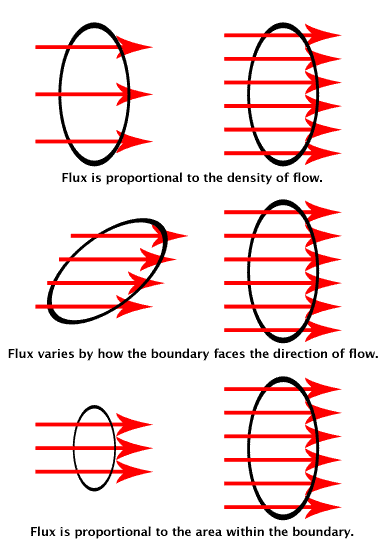
Back when I was studying science I learned about Flux in the context of physical passage: The amount of a defined thing moving through a defined amount of space in a defined amount of time.  In this context Flux is a rate. Something whose motion feels closer to a verb than a noun. I remember in particular a problem on a multivariable calculus final in which bees were flying out of a hive at great speed.

Flux is not the hive. Nor is it the bees. It is a measure of them as they pass from one place to another.

When I get to ruminating poetically, the Flux in me feels like the measure of something moving internally from the person I was to the person I am meant to be.  And right now that feeling, that rate of movement of stuff from one place to the next, that series of continuous changes, all of it feels as if it is being pushed very hard. Like a swift current, the force is visceral. It is gathering momentum.

This is why it is so funny to read my thoughts from a year ago.  Because so much in me feels like it is in motion, but so many of the words remain applicable. Most notably from that year ago, the question of what I am doing and why remains.

Most days planning spools further and further away from the present: a year before I can re-apply to this or that, to get funding to start on the next thing, maybe more before I might be ready for this other opportunity.

And at the same time, the passage seems so quick: A year, an entire year of life and what really is different? What do I have to show for it? Is it enough?

So to the feeling of Flux I must ask: Have I actually, tangibly, changed or does it just feel that way? 52 weeks later what can I say to the person who asked if I could define what I want out of art and cut out the rest of the crap to “really concentrate on making what matters”?

A year ago I was looking for change that was easy and obvious to show myself. I thought about changes in location, in career, in love, in life. I ultimately decided that these weren’t the changes I actually wanted to make.

But perhaps there are other changes. Things that are invisible forces. Changes that are harder to see with the naked eye but that move continents if given enough time.

Here is what I do know:

I don’t feel the need to make a new “play” any time soon.

I might be done making “plays” for a while.

But I do want to make something, and I need to figure out what that is.

And while all my creative impulses are terribly impractical from a producer standpoint, for the first time in a while that feels like fun and not a hindrance.

With luck (and hopefully likelihood) I’ll read this in a year’s time and see what Flux has forced me to find.

– A

Some days I’m just tired of talking about money

There’s a moment in Inside Llewyn Davis that absolutely slayed me when I saw it on Monday night. The movie, which follows a young folk singer from Greenwich Village in 1961, shows an artist struggling to survive. There’s plenty of emotional twist and turnage that make this film an engrossing one, but the moment that gutted me, that hit awfully close to my own heart’s home was one about two thirds of the way through. The protagonist has taken an arduous journey from New York to Chicago in hopes of impressing a music mogal named Bud Grossman. Llewyn Davis arrives in Grossman’s office looking beaten. He asks for… what? Recognition, money, help, something he doesn’t even quite know how to ask for, for an opportunity it seems he already believes he has no shot at.

Grossman looks condescendingly at the record he has just been handed, one bearing the same name as the movie, and says something to the effect of “Well show me what you got. Show me what’s Inside Llewyn Davis.

So he does.

In a dark, half lit room, the character nervously sits with this man who holds the potential to change his future, a man who sits like a stone staring, unblinkingly at him.

Here Llewyn Davis sings.

Sing beautifully, achingly, heart-breakingly open. The camera moves so little, it is one of the closest things I have felt in film to the real spirit of live music, to being that close to someone who is filled up with song. For me, it felt as if I was witnessing someone doing the very, exactly, and absolutely necessary thing they were put on the earth to do.  It felt that for Llewyn Davis music is the language that he as a person is truly intended to be speaking to the world. And the song, which I barely remember, is itself almost besides the point. The singing of it, and the feeling of doing it, is what’s really worth watching, and in the act is contained a beautiful kind of holiness.

At the end of the song there is this thick and vulnerable silence that feels like nakedness.

The man with the power looks at the one without and with all the casualness and ease of a Hawaii vacation, with all the finality and solidness of a period at the end of a sentence, says to him:

“Well I don’t see any money in that.”

Sucker punch.

In the heart.

With a spear.

Made of ice.

I’ve thought about that scene for days now. I’ve repeated this line to myself over and over and somehow, it only makes it worse the more I think about it.

Why does this injure me so much? Why does this wound to an imagined artist from 50 in the past get to me so much? Why does the reduction of one person’s lovely song to a lack of dollar signs get in me and stomp around? I keep asking myself these questions. And I really do wonder why, in a life where I spend so much time and effort fretting over and raising and dealing with and paying out and worrying worrying worrying about money why this stupid little line in this movie has got me so twisted and tangled inside.

This happened to me, this moment, in almost exact verbatim.

I was sitting across a table from someone proposing a production of my work. I was asked to describe the project that I wanted to create. I talked about the legacy of a movement and the music that it produced. I talked about the textures of peeling walls and echoing voices down a 200-foot corridor. I spoke about the sweeping grandeur of becoming a legend and the power of watching and listening and singing as the eye bounces between the living humans and the decaying space that contains them. And for once, happily, when I finished speaking I really felt that I had captured it, this vision of my future creation, at least in part, at least enough that I believed I had spoken about it with honesty and truth and sincerity.

And at the end of speaking, I too found myself in a moment of silence, thick and vulnerable, waiting in a kind of nakedness.

“I don’t think we can get enough chairs in there. I don’t know how we’ll be able to cover the costs of this thing.”

Same story, different medium.

And you know the funny thing?

I felt bad for having done it. I felt stupid for bringing such a proposal in. Preposterous, even, for wanting to do something so commercially unviable. That I came to that meeting kind of knowing and not really caring that the thing wasn’t ever going to make money, that it was an inordinate amount of work for such a tiny number of potential audience viewers, but that I didn’t care and wanted to do it anyway. That I believed in its value despite this.

Here is a true statement: I am not a religious person. I was not raised in a tradition of faith.  But sometimes when I make something it opens up a space that is larger than myself. And that space it is the closest thing I know to belief in something higher, bigger and more powerful than me. The moment of creation is the moment in which I feel the distinguishing line between the tiny bits that make up me and the tiny bits that make up the clothes on my body and the tiny bits that make up the people in the room and the lights above my head and the sound that passes between us and the floor that we rest on and the building we reside in and the whole rest of the world, all those tiny pieces become one part of one big thing that we all share together for the moment that the feeling passes through all of us.

Eventually I did end up making that piece that didn’t have enough chairs to make it monetarily worthwhile.

But I will never forget that moment: when you hope that the person sitting across from you, by virtue of being so close to the thing you have committed yourself to will understand, when you dream that they will see the world and the thing you show them with the eyes with which you also see it. When you imagine for a just a moment that it might be as easy as it was before you had to start selling the things you’ve made, things that in truth you would rather give away freely for the sheer love that the creation of them affords. It is the definitive nonchalance with which that hope is shattered, the tedium with which the deepness and sanctity and need you have for what you make is disregarded. This misunderstanding of what the art’s usefulness is, what it is there for, this is what punctures the chest.

It is not intended as cruel, this act of refusal, this alternate measure of art’s worth, but it is presented as truth, which to me is so incredibly much worse. Because it makes one feel that such a feeling is so thoroughly beside the point, and that you the person feeling it are silly and small in doing so.

It’s negotiating the massive space between a dollar sign and the thing that lights you up inside and makes you so much bigger than you were before. It’s taking that thing and then having to figure out how you can push and poke it so that 50 chairs instead of 40 fit inside your vision of it.  It’s taking the most beautiful song that you know how to sing, the one that comes from way way way deep down inside you and being told, as if it’s the simplest thing in the world, that it will never make any money.

It is the definitive and inflexibly casual insignificance of the artistic product when it is unable to be shaped into commodification.

This is the thing that hardens the soul.

This is the moment of singing that song, Llewyn Davis, and I feel it with you.

Fuck You Manic Pixie Dream Girl

Holly Golightly: Did I tell you how divinely and utterly happy I am?

Paul Varjak: Yes.

A few months back during Fringe season I went and saw a show inside a real house. It was a lovely play with breakfast and beautiful writing and was based on Breakfast at Tiffany’s. (The book not the movie, in case you were wondering.)

This is a post I’ve wanted to write this post ever since then.

Not because the play was bad, because it wasn’t – it was wonderful actually, one of my favorites of the season – and though I loved the staging, the writing, the actors, so much about the experiment in dramatic form start to finish, despite all this afterwards when I sat in the car with my partner in viewing-crime discussing what we’d seen all I could think was:

“God I detest that female character.”

Not the actress, not the writing of her part, but that faux feminine charming and carbonated, silly yet exotic, tiny pink banged and attractive and mysterious and wild and ukulele playing, Natalie Portman-esque, devoid of any actual humanness cypher of girlishness. Film critic Nathan Rabin put it far better that I when he called her “that bubbly, shallow cinematic creature that exists solely in the fevered imaginations of sensitive writer-directors to teach broodingly soulful young men to embrace life and its infinite mysteries and adventures.”

Fucking manic pixie dream girl. I hate her so much.

I didn’t write this post back then because I liked the people who put the play on and I didn’t want to hurt them by bashing it when so much of it I truly enjoyed. Especially when I really didn’t have anything more to say on the matter than the fact that I really detest this trope, one I see as rooted in all kinds of shitty ideas about girls and women and the kinds of people they can be, one whose recent “emergence” in this particular form is cloaked in a kind of faux liberation. I think versions of her have been around far longer than we realize. The manic pixie dream girl (or MPDG as I will call her from here out) embraces a “seize life!” zeal but only in so much as it is thrown at her pent up male would-be partners. And while I find this odious and tedious in the extreme, while I have in many ways created my sense of aesthetic and artistic purpose to fly in the face of the MPDG’s twee triviality and lack of substance, at the time I didn’t really have much more to say on the matter. I just had my silent fervent hate.

However, this summer into fall, I have been spending an awful lot of time with women a fair bit younger than myself. Amazing, bold, incredible young women. Women whose ideas and humor have surprised and delighted me, who brought choices into classrooms I could never have predicted and who found inventive slants on characters I have seen performed dozens of times. I look at these young women with their incredible talents and wild and weird inner lives and it fills me with joy.

I admit that many of these fantastic people I underestimated upon first meeting. And I think that’s in part because it took some time to find the strange and silly underbellies that were hidden within them. Wild and wondrous senses of daring, humor and ridiculousness that I suspect are not often enough given space to be explored. And I wonder if this lack of space isn’t partly what constrained my seeing the wholeness of them. And then I think about the kinds of roles they will have available to them in a year or ten year’s time. I think about the shows that I have seen recently, the struggles of my female friends who are performers, the distance between the roles that they have truly loved and the ones they have had to suffer through to keep a face to their name in the acting world. I race in my mind for plays that I could bring to these lovely young ladies, works could lift them and their wildness up.

I have so much trouble doing so. There are more than none. But there are certainly not enough.

In high school when I got really serious about theater I committed to reading a play every week for two years. I raided my theater department’s library in hopes of finding the great roles that I wanted to inhabit someday. And while I found a few, I also realized that more and more there were plenty of stories that intrigued me, that tantalized and pulled me in, but had no women in them or only a few or none I personally wanted to be unless I was cast across my gender. And slowly over time one half of a dual cast narrator from Joseph and the Amazing Technicolor Dreamcoat, the hyperventilating Alma from Eccentricities of a Nightingale, Widow Begbick in Brecht’s Man is Man, even the beautiful and frustrated monologues of love from Twelfth Night’s Viola, these roles, despite being some of the best I could ask for, just didn’t feel quite enough any more. They were the stories that were made available, but none of them felt exactly enough mine to continue telling. And somewhere in the midst of this it occurred to me that I could tell some of the stories that excited me through the performers onstage even if I didn’t actually have to be that body up there in front of people.

This frustration was the one of the forces that ultimately pulled me out of acting and into directing. In the latter space, one in which the stories I told were not limited to the options others presented to me, it felt like I had more I could say and more ways I could say it. And I found the plays, fewer and farther between than I’d have liked, that highlighted the female roles I’d wished I’d been offered. And when I eventually realized that even beyond these lay the opportunity to create new stories that were entirely of my own imagining, I finally believed that there was enough substantive food for a life of digging into artmaking.

The problem I see with the MPDG and princess and all the other lame female counterparts in much of our contemporary storytelling is that they teach women (and the girls who grow up to become them) that these are the extent of the roles that we have available to us. In art, and I think also in life. I read a study about how the greatest predictor of the number of girls that will grow up to work in science and technology-based fields is hugely correlated with how many women are working in these fields in their community. Not even how many they personally come into contact with, but the number that exist generally in their sphere of being. I would guess that the increase has something to do with a young person’s sense of awareness that such a thing is possible.

It is hard to imagine beyond anything that you know of or have seen. Our narrative context fuels so much of the imagination we later have available to us. So what you see and what you encounter in the stories you take in, especially in formative artistic years will inevitably shape the possibilities that you allow yourself in the future. I fear and I worry that the amazingly bold and smart and incredible young women I have met will be limited to becoming the most amazingly bold and smart and incredible versions of MPDGs and princesses and nurses and ingénues rather than applying those same forces of will and intellect towards the multitude of other avenues that might be available to them. I worry that if some aspect of them is too hard to squeeze into those narrow shapes that they will be excluded. I worry that if they do fit inside them that some of the other incredible parts of them will be pushed out so that they fit more neatly within.

My first year out of college, when I had so few moorings, so little outlet for the stories I wanted to tell, I flirted with becoming the MPDG. I became enraptured with a boy and then became enraptured with my ability to construct a persona that I thought was charming and alluring. And I, despite my feminist upbringing, despite my experience crafting my own stories, despite my sense of myself as a strong and independent person, found it easy to default to a narrative that seemed pre-designed for me. I could sense this trope and its effervescent power and in little bits and pieces I began playing and becoming her. I felt her narrative pull and began to conform my outer self to match it. Then one day this boy gave me a movie and told me that a character in it reminded him of me. And at the end of that movie I realized in no small amount of horror that he wasn’t wrong, that I had made myself to resemble this precious punky person and that I had created a vision of my life in my own mind in which I was a side character.

It was only when that version of my life story and the caricature of myself that I’d formulated within it began to fail that I realized how little of my whole self I’d really offered.

This is the power of art and narrative, whether we make it or consume it. It shapes our sense of ourselves in the world. It can limit not only our sense of being in the works of art themselves,  but it can transform our ability to conceive of ourselves in the world at large. A new incredible story at its best helps us change the way we think. It offers us a vision of a world that we might hope to live in. And when we limit our narrative selves to these paltry simplistic women, we limit the kinds of women we imagine we can be. And by passing those stories on, we teach our younger female counterparts that this is enough to be satisfied with.

I worry for these young ladies that I have met over these past many months. I worry that their outward forms will dictate so much of their inner artistic work. I worry that they have grown up on these stories that do not contain the entirety of them and I worry that they will be forced to shrink themselves down to fit inside the ones that are made available. I want to grab them and tell them that they should demand huge spaces in their artistic lives. That the stories we tell are the way we make sense of the world around us. That creating visions of how we can be is how we begin to become that. That they owe it to themselves and the women they will become.

That they are more than MPDGs and her static character counterparts. For she is singularly dimensional. She does not advance through the course of the story. She is there to shift the inner workings of others. She is inwardly inanimate like a rock. The manic pixie dream girl has no opportunity to change or shift or grow or move.

There are a lot of reasons that I make my own work. This is one of the biggest ones. It’s why I write this post now, several months later, not because my singular dislike of this character matters very much, but because I want to tell them they are not like she is. That they can do so much more than any of these things.

– A

Getting to “Fuck It” Faster

If you’ve been standing within 100 feet of me in the last month or so, you’ve inevitably heard me go on and on about my most recent directing project.

It is, in essence, a project that does not adhere to any of the rules that I follow in my “real” work. It is one that I traveled almost two hours a day to get to and from. It is one that rehearsed at odd and tiring hours after full days of other work. It is one that paid me far less than the salary I set for myself in my own company’s work. It is one that I embarked on with little choice in content, space, personnel or schedule. Never in a Swim Pony project do I allow designers to be assigned to me. Never do I cast a massive ensemble based on a day’s worth of auditions. Never do I work in a tiny and oddly shaped theater space. Never do I do so many of the things that I did for this recent production of Midsummer Night’s Dream at Arcadia.

Yet, I can hardly recall a time in recent memory when I have been this excited to get to rehearsal, felt as free in pushing and playing with my actors, as wildly open to trying any and everything that my mind could conceive.  And ironically, I can also hardly recall a time when encountering things that did not go the way I expected where I felt so easy in adapting to the new circumstance and believing that success or no, it would all still absolutely have been worth it.

I thought about this yesterday as I semi-moped about my house feel post-partum performance let down. I thought about what it might mean that I have been so very happy these past weeks and what I might need to do to capture this feeling more often.  And as I was semi-moping I thought about the times in the past when the work has felt the most fraught and when it has felt the most free. And collage-like came a cascade of things people have said to me that feel strangely similar:

A written comment from a vocal jury performance: “Adrienne Mackey is a wall of sound”

A reader of this blog: “It surprised me to realize that you could be that vulnerable.”

The remark during a training session for Roy Hart work: “Adrienne, you are like a golden tank. Beautiful but bulldozing over everything in your path.”

In a therapy session recently: “Don’t take this the wrong way, but sometimes I find you very hard to read.”

And as these thoughts fell through my mind over the course of the day, they began to layer into the shape of something resembling a realization. Not an earth shattering one, in fact something that I’ve pretty much always known, but one that I realize I haven’t totally acknowledged as a problem: that when I really intensely care about something, especially when I’ve had the chance to stew about it for a long time beforehand, I often psych myself out of really enjoying it. When I really want to do my best, when I am trying my hardest to do that, I often over-think myself out of doing what I want and having a good time.

Often in school, in training, in life, in my work I have these moments where I want so badly to do well and I feel myself failing. And this failing becomes this nasty spiral where I want to do well so I push too hard or work too much and then feel the falseness of that work, feel the desperation of it, and end up falling farther down the hole. And so I try to relax and not care, but of course, I know this too is a lie, that I do care, that I want to do well, and so feel guilty about trying not to do and bounce back and forth between half measures of forceful pushing and uncommitted frustrating motions of trying to disengage from my angry and needing and deeply caring self.

Almost always when I get to an incredibly exasperated and dark place at the bottom of this spiral I say, “Fuck it.” And only then in hopelessness despair do I finally give up trying.

And this, inevitably, cliché-ingly predictably, is when I finally break the cycle and start making the stuff that’s really good, the stuff I wanted to make the whole goddamn time.

It is so recurrent that I can even know that I have to get to “fuck it” and in mind boggling-inducing meta levels of self-sabotage manage to try too hard at finding the feeling of “fuck it” until I give up even at this and rage at the gods with a hearty “fuck it trying to find fuck it!”

And then, of course, the work gets good.

Perhaps external measures of success have become so entangled with my own sense of worth, with my own sense of desire, that when I think about it I genuinely feel like I don’t actually know what I want. Maybe I am so often in my head that I start to game out every strategy ahead of time and this removes me from actually experiencing anything in the actual moment of its happening. Or possibly the key to really loving something is the delicate balance of knowing when it’s time to try hard and when to let go.

Maybe it is all of these things.

The real gift of the process I found with my students at Arcadia was that I walked in and had absolutely nothing to prove to anyone. I was doing a play with no one to impress in a style I have almost no expertise over on a subject I pretty much didn’t give a shit about. And somehow that gave me freedom to do exactly what I wanted. Which was lovely and freeing and incredibly important to me. And by the time I realized how much I cared about it, I had already found the permission to keep doing it. And in so doing, saw the freedom and permission that all of my lovely darlings gave themselves so that together we all set ourselves free.

This is what I thought about yesterday in the afterglow of a lovely process.  And sitting here now a day later thinking about those thoughts I think this:

What the fuck (it)?

Because, really, what the hell do you do about that? What do you do with the knowledge that when you try hard you are trying too hard? That when you try not to try you end up trying harder? That you’ll keep going around that until you despair and give up and then stop trying and then you’ll finally do it right? That this always happens unless you magically manage to end up doing something where you don’t realize that you care until its too late and you’re already doing a good job?

Ugh.

If I look back at my past, I see this pattern emerge everywhere. Beginnings are so often the most joyous place for me. The moment of beginning, the time before I know enough to know enough to know when I’m messing up is usually when I manage to subvert the work and get to “fuck it” faster. It is the moments when I don’t realize what I’m doing or I go into it not thinking much at all about it that I am able to just relax and really let rip.

This is how I discovered a theater of devising rather than scripted plays.

This is how I became a funk-a-delic back up singer.

This is how I started teaching new approaches to voice.

This is how I found myself loving so fully a production of Midsummer.

This is how a person who has intense personal space issues looks at a hoard of college students and cannot help herself but to hug them, to grab them about the ears and kiss their faces. How a person whose persona is thoroughly entrenched in wanting and needing and demanding respect in my field and from my peers can have no shame. How she who is so studious and careful in letting people in has no trouble showering these students with all the feelings that I am filled with when I see them in voluminous words unprepared ahead of time (so as to ensure they accurately describe the true depth of my feeling). And how in such total lack of preparation I find truer expressions than in the many times in the past I have tried with hours and days of writing and re-writing to say something right from the core of me.

Even here. Even in this space, it feels just a bit forced trying to pin it down in words after the fact. And I am trying as I write these very words not to hit the back button, but to allow myself the luxury of letting these thoughts tumble out just as they come.

And I don’t exactly yet know just how I will do it, but I think this is the work I must be doing now. Finding my way to “fuck it” faster. Figuring out how I can be as generous with myself as I am with them. How I can give myself the sovereignty over my artistic space, to do whatever I want simply because I want to, because it makes me happy, and believe that this happiness is the key to my artistic success.

– A