getting it done

52 Weeks and Flux

I used to put pictures up with my posts a year ago. Does that make them better?

A year ago I wrote this.

One year.

It sort of seems impossible.

Dear reader, in some ways it feels as if that person and her impulse to write could have been me both 10 years and 10 minutes ago.

Yet, in thinking about this past year, I also sense a slow tectonic level type of shift. And while this movement has quite possibly been in the works for a very long time, perhaps since the start of my creative career, it also feels like a wave finally beginning to crest.

And troublingly, I don’t quite know how to say any of this. Not in a way that feels specific enough. That feels like it really articulates it. I just know that there is a high level of Flux in me right now.

I like this word – Flux.

First searched in the dictionary Flux is listed as this: “A series of changes.” And also “continuous change.”

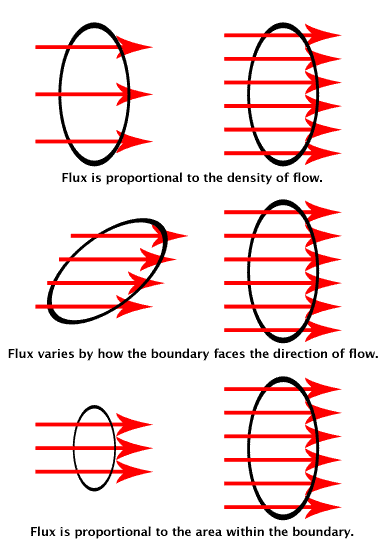
Back when I was studying science I learned about Flux in the context of physical passage: The amount of a defined thing moving through a defined amount of space in a defined amount of time.  In this context Flux is a rate. Something whose motion feels closer to a verb than a noun. I remember in particular a problem on a multivariable calculus final in which bees were flying out of a hive at great speed.

Flux is not the hive. Nor is it the bees. It is a measure of them as they pass from one place to another.

When I get to ruminating poetically, the Flux in me feels like the measure of something moving internally from the person I was to the person I am meant to be.  And right now that feeling, that rate of movement of stuff from one place to the next, that series of continuous changes, all of it feels as if it is being pushed very hard. Like a swift current, the force is visceral. It is gathering momentum.

This is why it is so funny to read my thoughts from a year ago.  Because so much in me feels like it is in motion, but so many of the words remain applicable. Most notably from that year ago, the question of what I am doing and why remains.

Most days planning spools further and further away from the present: a year before I can re-apply to this or that, to get funding to start on the next thing, maybe more before I might be ready for this other opportunity.

And at the same time, the passage seems so quick: A year, an entire year of life and what really is different? What do I have to show for it? Is it enough?

So to the feeling of Flux I must ask: Have I actually, tangibly, changed or does it just feel that way? 52 weeks later what can I say to the person who asked if I could define what I want out of art and cut out the rest of the crap to “really concentrate on making what matters”?

A year ago I was looking for change that was easy and obvious to show myself. I thought about changes in location, in career, in love, in life. I ultimately decided that these weren’t the changes I actually wanted to make.

But perhaps there are other changes. Things that are invisible forces. Changes that are harder to see with the naked eye but that move continents if given enough time.

Here is what I do know:

I don’t feel the need to make a new “play” any time soon.

I might be done making “plays” for a while.

But I do want to make something, and I need to figure out what that is.

And while all my creative impulses are terribly impractical from a producer standpoint, for the first time in a while that feels like fun and not a hindrance.

With luck (and hopefully likelihood) I’ll read this in a year’s time and see what Flux has forced me to find.

– A

Getting to “Fuck It” Faster

If you’ve been standing within 100 feet of me in the last month or so, you’ve inevitably heard me go on and on about my most recent directing project.

It is, in essence, a project that does not adhere to any of the rules that I follow in my “real” work. It is one that I traveled almost two hours a day to get to and from. It is one that rehearsed at odd and tiring hours after full days of other work. It is one that paid me far less than the salary I set for myself in my own company’s work. It is one that I embarked on with little choice in content, space, personnel or schedule. Never in a Swim Pony project do I allow designers to be assigned to me. Never do I cast a massive ensemble based on a day’s worth of auditions. Never do I work in a tiny and oddly shaped theater space. Never do I do so many of the things that I did for this recent production of Midsummer Night’s Dream at Arcadia.

Yet, I can hardly recall a time in recent memory when I have been this excited to get to rehearsal, felt as free in pushing and playing with my actors, as wildly open to trying any and everything that my mind could conceive.  And ironically, I can also hardly recall a time when encountering things that did not go the way I expected where I felt so easy in adapting to the new circumstance and believing that success or no, it would all still absolutely have been worth it.

I thought about this yesterday as I semi-moped about my house feel post-partum performance let down. I thought about what it might mean that I have been so very happy these past weeks and what I might need to do to capture this feeling more often.  And as I was semi-moping I thought about the times in the past when the work has felt the most fraught and when it has felt the most free. And collage-like came a cascade of things people have said to me that feel strangely similar:

A written comment from a vocal jury performance: “Adrienne Mackey is a wall of sound”

A reader of this blog: “It surprised me to realize that you could be that vulnerable.”

The remark during a training session for Roy Hart work: “Adrienne, you are like a golden tank. Beautiful but bulldozing over everything in your path.”

In a therapy session recently: “Don’t take this the wrong way, but sometimes I find you very hard to read.”

And as these thoughts fell through my mind over the course of the day, they began to layer into the shape of something resembling a realization. Not an earth shattering one, in fact something that I’ve pretty much always known, but one that I realize I haven’t totally acknowledged as a problem: that when I really intensely care about something, especially when I’ve had the chance to stew about it for a long time beforehand, I often psych myself out of really enjoying it. When I really want to do my best, when I am trying my hardest to do that, I often over-think myself out of doing what I want and having a good time.

Often in school, in training, in life, in my work I have these moments where I want so badly to do well and I feel myself failing. And this failing becomes this nasty spiral where I want to do well so I push too hard or work too much and then feel the falseness of that work, feel the desperation of it, and end up falling farther down the hole. And so I try to relax and not care, but of course, I know this too is a lie, that I do care, that I want to do well, and so feel guilty about trying not to do and bounce back and forth between half measures of forceful pushing and uncommitted frustrating motions of trying to disengage from my angry and needing and deeply caring self.

Almost always when I get to an incredibly exasperated and dark place at the bottom of this spiral I say, “Fuck it.” And only then in hopelessness despair do I finally give up trying.

And this, inevitably, cliché-ingly predictably, is when I finally break the cycle and start making the stuff that’s really good, the stuff I wanted to make the whole goddamn time.

It is so recurrent that I can even know that I have to get to “fuck it” and in mind boggling-inducing meta levels of self-sabotage manage to try too hard at finding the feeling of “fuck it” until I give up even at this and rage at the gods with a hearty “fuck it trying to find fuck it!”

And then, of course, the work gets good.

Perhaps external measures of success have become so entangled with my own sense of worth, with my own sense of desire, that when I think about it I genuinely feel like I don’t actually know what I want. Maybe I am so often in my head that I start to game out every strategy ahead of time and this removes me from actually experiencing anything in the actual moment of its happening. Or possibly the key to really loving something is the delicate balance of knowing when it’s time to try hard and when to let go.

Maybe it is all of these things.

The real gift of the process I found with my students at Arcadia was that I walked in and had absolutely nothing to prove to anyone. I was doing a play with no one to impress in a style I have almost no expertise over on a subject I pretty much didn’t give a shit about. And somehow that gave me freedom to do exactly what I wanted. Which was lovely and freeing and incredibly important to me. And by the time I realized how much I cared about it, I had already found the permission to keep doing it. And in so doing, saw the freedom and permission that all of my lovely darlings gave themselves so that together we all set ourselves free.

This is what I thought about yesterday in the afterglow of a lovely process.  And sitting here now a day later thinking about those thoughts I think this:

What the fuck (it)?

Because, really, what the hell do you do about that? What do you do with the knowledge that when you try hard you are trying too hard? That when you try not to try you end up trying harder? That you’ll keep going around that until you despair and give up and then stop trying and then you’ll finally do it right? That this always happens unless you magically manage to end up doing something where you don’t realize that you care until its too late and you’re already doing a good job?

Ugh.

If I look back at my past, I see this pattern emerge everywhere. Beginnings are so often the most joyous place for me. The moment of beginning, the time before I know enough to know enough to know when I’m messing up is usually when I manage to subvert the work and get to “fuck it” faster. It is the moments when I don’t realize what I’m doing or I go into it not thinking much at all about it that I am able to just relax and really let rip.

This is how I discovered a theater of devising rather than scripted plays.

This is how I became a funk-a-delic back up singer.

This is how I started teaching new approaches to voice.

This is how I found myself loving so fully a production of Midsummer.

This is how a person who has intense personal space issues looks at a hoard of college students and cannot help herself but to hug them, to grab them about the ears and kiss their faces. How a person whose persona is thoroughly entrenched in wanting and needing and demanding respect in my field and from my peers can have no shame. How she who is so studious and careful in letting people in has no trouble showering these students with all the feelings that I am filled with when I see them in voluminous words unprepared ahead of time (so as to ensure they accurately describe the true depth of my feeling). And how in such total lack of preparation I find truer expressions than in the many times in the past I have tried with hours and days of writing and re-writing to say something right from the core of me.

Even here. Even in this space, it feels just a bit forced trying to pin it down in words after the fact. And I am trying as I write these very words not to hit the back button, but to allow myself the luxury of letting these thoughts tumble out just as they come.

And I don’t exactly yet know just how I will do it, but I think this is the work I must be doing now. Finding my way to “fuck it” faster. Figuring out how I can be as generous with myself as I am with them. How I can give myself the sovereignty over my artistic space, to do whatever I want simply because I want to, because it makes me happy, and believe that this happiness is the key to my artistic success.

– A

Sad truths about art, as imparted to an eight year old

The other day I was walking to the store to buy groceries. As I approached a park ahead on my right I heard a small voice emanating from the impending entrance and soon after saw that a young girl was standing on jungle gym equipment singing to herself.

She was maybe 7 or 8, the age before you’ve honed the full sense of shame and just how far your voice can carry in public. She clearly had no awareness that any passerby might notice her as she bent over in concentration swaying back and forth in pink high tops and purple pants to an almost trance-like beat within her. She raised her head to the sky and belted out words in her tiny voice as if her life depended on it. The song, a syrupy pop devotional, proclaimed a hunger for a romantic love that was clearly far past the understanding of someone her age. It was obvious however, that she wanted, nay needed, nothing else in the world but to feel that feeling that she sensed in the music. Her little voice strained to capture the fullness of an adult’s embodiment of love.

It was absurd and laughable, this. And also inexplicably cute. And I might have simply smiled to myself and kept walking had I not noticed something else. I might have kept going were it not for something that happened at the end of the phrase I happened to hear as I passed.

As this little girl made her way through a predictable downward cascade of arpeggiated notes – “So give me lo-ah-ah-ah-ah-ah-ove” – she hit a stinker. In this pattern mimicked from the radio or her sister’s ipod was one big nasty note that stuck out. I turned my head for just a second as I walked past and witnessed the full force of artistic anguish in this poor little girl’s face.

And that’s when I stopped.  Just past the gates, out of her sight.

She let some fifteen or thirty seconds pass in silence, just enough time for me to almost begin walking again, and then took a breath to sing the phrase again.

“So give me lo-ah-ah-ah-ah-ah-ove.”

Again a bum note, different this time, earlier in the progression, but unambiguously not part of the intended effect.

And from the sounds that followed I can only presume she jumped to the ground and stamped her feet in rapid alternation to the frustrated bleet of “Ugh! UGH! Gah! GAHHH! AGHHHH! I never get that riiiiight! I. Can. NEVER. GET. THAT RIGHT!!!!”

Stillness for a moment. And then crying.

“Oh no,” I thought. “You’re in for it.”

Little girl of 7 or 8 that I passed on the street who I do not know and who I caught singing bad pop songs in the on park – you’re doomed. Doomed because there’s a secret that no one tells you when you first start making art. It’s a dirty bit of knowledge those tattered survivors fail to impart on the younger set: this feeling will never go away. You think you can’t do it now because you’re small and new. And while it seems tolerable that your level of taste starts out far higher than your talent, the truth is it never quite catches up.

That feelings you have in the explicitly “learning” phases of life – the ones that say, “I know I haven’t quite mastered this yet, but I know that someday, I totally will be like the people admire and imagine have landed. Yes someday in the far distant future I know that I’ll know what I’m doing.” – you think that disappears.

Sorry, it won’t. In fact, you realize one day that you don’t ever get to get there, whatever you’ve imagined there to be. And then maybe just like now, you also will cry and stamp your feet because you feel like you don’t know how to do what you’re trying to do. Eventually, you just get better at hiding it. You might feel a little cheated that no one told you that the feeling of inadequacy that you think comes from being a student is something that not only doesn’t disappear, but grows. That feeling of faking it is something that simply become a fact of existence punctuated by glorious and terribly brief periods of belief that you actually know anything about anything. And that you too will likely hide in plain sight in front of younger artists who might even think you have landed and that you will perpetuate this facade.

Little girl of seven or eight, let me give it to you straight:

Imagine whatever you believe the end point to look like. Capture a distant island of “artistic success” in your mind. You think you can see a journey. You think you are building a boat to that island. But that too is a mirage. And by the time you’ve sailed your ship that far out to sea you’ll realize that there is no there there. There’s just you and an ever expanding horizon of what is possible. That note won’t satisfy you in the long run little one. For a moment or two, but not for a decade or more. There will be other notes you’ll get hungry for soon enough.

And were it not weird for me to presume that this tiny blonde thing needed my life coaching…

Were it not odd indeed for a professional theater director of ten years to stop a child on the street to give her advise on a life in the arts…

Were this little girl not likely to be justifiably scared of some adult woman stopping her on the street and projecting her own insecurities and fears and failures onto the song that she heard and liked and doesn’t understand but just wants to sing because she thinks it will make her feel good…

Were all those things not the case, I might have walked back a few steps and looked at her and said:  “Keep trying. You’ll get that note. And by the time you do, you’ll have found something else to worry about. And that is both the loveliest and most frustrating truth of the artist’s life – that if you really want it, you likely won’t ever really believe you’ve done enough. You will have pride and accomplishment and satisfaction. But you likely won’t ever feel like you’ve arrived.”

And then she would likely have looked at me and said:

“Lady, I just like to sing. And I’m eight. And you’re scaring me.”

She’d be right. But so would I.

But because it was odd for me to do all those things I just listened to her stamp her foot and start again. I thought of my day’s own frustrations and furious workings to beg a thing that seemed so obvious and simple to please already just come into being.

And I figured best to just continue on and buy some bread.

– A

Lonely

I know that often I write about art in a general way, one that relates to most of the people working in my field, and when possible to the arts as a whole.

Today I’m not gonna do that.

Today I want to talk about being a director. And for me that can feel awfully lonely.

A few days back I was giving a colleague a ride home from an Arcadia University gig out in the burbs. Both of us have been hired by said school to direct student productions (different ones, in case that’s not obvious) for the college. And on this day when we both happened to be heading home at the same time of night we ended up in a car together chatting about the experience.

After the expected pleasant inquiries about rehearsals and how things are going, we sat in a still silence for a little bit. We chatted about upcoming works on the horizon and exchanged a few war stories about the theater scene. It was a perfectly nice way to spend 45 minutes headed home. It was the kind of conversation I have with other directors a lot.

A few days later we ended up in the car again. This time, catching up rather quicker on the status of rehearsals we were left without some of the pat topics that usually pop up. And somehow we started talking about what it feels like to be in charge.

It’s funny, it doesn’t occur to me often that this is a specific facet of the way that I work compared to the other artists I work with. It doesn’t occur to me that often, through repetition and familiarity, that many artists don’t walk into a process with that mindset. I know that when I walk in the room, I’m expected to have a plan of what we’re going to do. I know that I am the only one of my kind there to carry out the role. And I never see anyone else do what I do and therefore I have only myself to compare with.

There is a very basic power differential. The caveat, of course is that there are lots of people that try and create a sense of communal responsibility and I am whole-heartedly one of them, but it is there. And that sense of responsibility is exciting and distancing. It means you are always a few steps ahead of the rest of the room. A simple illustration: it is hard to imagine a rehearsal in which a performer or designer walked in and stated the plan of the day or one in which the director could show up and look at the others in the room with an expectation of what they are about to do. I don’t think this has to be good or bad. But it definitely is. And unless you’re a company without a director there is likely a negotiation that’s been worked out either ahead of time or during the process in which that power is defined and bounded.

However, I’m getting off topic. That isn’t really what I want to chat about. I think there are interesting questions about what might happen if we tried to change this dynamic. It might show us why that structure is so necessary or it might open up new and exciting potential. But for me, who for better or worse, is working in this way almost any time I work, it makes me realize how lonely I feel so often.

I’ve heard a lot of directors say that every time they begin a show they ask themselves, “How do you make a play again?” I thought this might be particular to devisers so it was surprising and kind of heartening to hear that those who dwell mostly in the scripted experienced the same terror. It was interesting to hear that she too re-reads her old notes from shows past to figure out how that person from the past navigated the journey from nothing to something. And I was happy and sad to see that she too spends a lot of time feeling lonely in a process.

I wonder if that sense of “how did I do this before?” is something to do with the fact that you don’t share your process in the same way. So much of what we do is before and after the rest of the room arrives and leaves. And even with documentation, it can be hard to track all the discoveries and thoughts that by necessity are shared between actors and designers and stage managers with the people they work with. One reason I so often try and go back to my old books of notes is to sense the person who was able to do this thing before and catch some of her strength.

Another strange thing about being a director, that I think may be unique to the role: you never watch others like you work. There’s only one of you in a process. Designers and actors get to see other designers and actors. They see people like themselves develop their craft. And for better or worse they have to do this a lot. And there are times when I get jealous that in doing so they get to watch and experience other directors too. That they probably know more about the particulars of other directors than I do. I sometimes ask them “What did that other person do?” not because I have some desire to copy but because I genuinely just want to know.

My sense of myself in the work is kind of like an island. I know what my terrain looks like. I know how I traverse it. And when people who’ve been elsewhere come to visit me, they can share stories of their experiences, but I know that I really have no concrete sense of what’s going on in those other locales. And while many of the directors I know get the chance to observe early in their career, there is not the built in continuation of this practice as time goes on.

When I first started in school and was just out of it, I saw a lot of other directors directing. I was in other people’s rehearsals a lot. And it provoked thoughts in me about how they solved the problems in front of them. It made me think about my process and question what I would do in the same scenario. And some of my favorites were those that were quite different from my own sense of artistic aesthetic, not because I wanted to do what they did, but because it made me really need to define why I wanted to do it my way instead. In fact, I once had a director say to me as a fledgling AD, “I love the thoughts you send in your notes. I will use none of them because they aren’t the play I’m making, but I love them.”

I learned to be a director in a room full of directors. And since becoming one, it’s been a very long time since I saw another one in the wild.

I’d like to.

I wish I had the opportunity. To watch. To listen. To observe a bit.

To travel to another island simply to try and understand the way it works in contrast to your own.

A

Been a while…

Hey Friends.

So.

It’s been a while.

This summer has been a bit of a hiatus from this space. It’s been a lovely and hectic and busy time. And it’s filled me with lots of new thoughts about making and doing.

And I’ll be honest, at some point after being away for a while I started to feel a little guilty. This is par for the course with me. I like to do things perfectly or not at all, and once I start to get that, “I haven’t written anything in a while…” feeling, my first instinct is to find some kind of distraction – a stupid show or a silly game – that keeps my mind off the fact that I’m feeling a little overwhelmed because something I care about isn’t perfect.

This is the same perfection/ignore cycle that resulted in my mom threatening to cut me off if I didn’t call her to say hi during my junior year of college. Because once you feel a little guilty about not doing something it just builds and builds and builds.

Back then, I just worked more to keep that feeling away and at bay. And surrounded by other workaholics, that seemed like the norm, just what you did – put your personal problems on hold – so I never questioned the impulse. Now though, whether it’s because I don’t have the stamina (negative view) or I’m less able to give in to the self-destructive impulse (positive view) I just don’t tolerate the punishing schedule ad nauseum anymore.

Which isn’t to say I don’t work hard. I do. We all do. But it is not with the frenetic blind need from before. I can’t work and work and work if I don’t see the light at the end of the tunnel, if it seems like it’s working for working sake alone. And this summer has been an interesting case study. It’s one of the first times in years that I’ve had as many things going on. But it’s also one of the first times that I feel like I’ve given myself a process in which I actually have all the resources I need.

The Ballad of Joe Hill which is running currently at FringeArts has, in particular, given me some food for thought. The first iteration of this show had a kind of magic. It was brutal, produced on about $1,500 of cash and a whole lot of sweat and heart, begging and borrowing. There was a tiny core of people and we did everything. We carried each object into the space with our hands. We rehearsed in dribs and drabs when we could fit the time in between jobs. We changed where we performed. We hauled dirty, heavy risers in and out of tiny storage spaces. We printed fliers and begged the press to come. We made change for the audience and stored our money in a cigar box.

The stuff is still carried, the space is still dirty, but this time Joe Hill has a small army of folks – a full time SM, PM, riser and light crew and more. Our equipment was delivered. We have real bathrooms. Our box office is taken care of. I have not once had to think about marketing. We have had full 8 hour day rehearsals in lovely controlled spaces. And – and this really is the greatest of all the things – I haven’t worked a single other job since we started working full time.

If I had to imagine what I really needed for this show when I did it that first time, this is close.

And I have to remind myself of this. Last time, the crap that seemed out of my control the first time – the money, the resources, the time, etc – gave me a mental pass on making my best work:

“If only I had real money”

“If only I had everyone all the time”

“If only I knew someone with more expertise with lighting”

“If only I could just concentrate on doing my job”

“If only”

The problem with “If only” thinking is that it puts you in the past (“If we’d only had…”) and the future (“If I can only get…”) but never in the present. And theater in particular as a medium is about the glorious immediacy of RIGHT NOW. It’s our biggest superpower – the ability to require another human to “be” with you, right then and there. “If only” stops you from seeing what’s really there and instead what could have or might be if only you were a different person in a different place with different stuff.

I don’t have that pass anymore.

I have myself and the work.

And in a way, that makes this project a bigger win. Maybe even harder fought. Because it’s not a battle with tangible limitations. It’s just a battle with myself and all that empty space. If I fail, there aren’t other excuses to blame. It’s not because I didn’t have what I needed. It’s because of me.

So.

It’s been a while.

I hope to be here more often. And I’m going to try and not let myself get too caught up in the “If only I had more time to write this” feeling I’m having right now. I’m going to attempt to work through this lesson and simply do the work that I can do, right now, and let that be good enough.

– A

Gasping

Progress in the speed of real time is hard to see.

For years when I thought of the person I was back in college and the first early years out, I just imagined the same person I am now, maybe a little smaller, a little poorer and a little blonder (I was using Sun-In, one of the greatest follies of youth). Essentially though, I believed myself to be the same. I’d look pictures of the work I did at that time and imagine me in the work just the same as now. Some days it could feel frustrating to see myself stuck in sameness, not feeling the same clear progression I used to have demarcated by an academic calendar. This was partly the impulse for a return to such a place, where the promise of measurable and specified growth is inherent in the enterprise.

Yet… There are hints to the contrary:

  • Re-reading my directing notebook from The Ballad of Joe Hill as I prep the return to the piece now in 2013 I think about the fear I had that the work would all come crashing down around me. I realize how much more I’ve learned to love and trust intuition as a guiding force in my work.
  • Re-visiting my alma mater to teach or share work, I find myself talking with students and seeing more starkly the different between where they and I each are.
  • In a moment of fretting about someone else’s perception of something I’ve done or am doing, I catch myself, let it go, and think about times previous when that wouldn’t have been possible.

But mostly, I think our awareness of change is commensurate with its actual occurrence, meaning we acclimate to our new selves in the slow and steady forward tempo they are created. So our evolving selves seem to us a constant, even though someone who leaves and returns to us might be amazed by the effected change on us by life.  Easy to see in others, hard to catch in yourself except in passing or in shadow.

And because of this it gets easy to get frustrated with growing, easy to miss the reward of experience (which seems to have been so clearly a fixed part of who we are) and mourn the vigor of youth and the promise of potential. This happens big (looking at the major arcs of our careers) and small (looking at what we have accomplished in a week of work). We go back and give our younger selves the benefit of the intelligence gained and then find fault in current ourselves for not having the future predicting foresight to avoid new mistakes, forgetting that the old ones got the current knowledge to us in the first place.

It’s a fallacy, just as much as the perfect unformed, undone, artwork whose imagining will never be tarnished by the reality of actually doing it. But fallacy or no, it works on us. And here at Swim Pony, I like not only identifying a problem or trend, but trying to alleviate the problem.

It just so happens that last 7 days have found me at home working mostly on my own. Tracking the progress of anything is hard, doing so in a bubble with no outside contact even harder. So nearing the end of the week I found myself saying, “I’ve done a lot. I swear I’ve done a lot.” With less and less conviction. But happily, near the end of the week I stumbled on a lucky accident that I wanted to share.

I am a semi-luddite, with a dinosaur phone and an instinctual late-adopter policy on technology. My to do lists are one area in particular that has stubbornly resisted updating from analog. Which is why each morning for the last week I’ve started the day with a sheet of legal paper (it’s longer) folded in half, a pen and a highlighter. I re-write the things left uncrossed from the previous day’s list onto the clean paper, add anything that has since arisen, and then highlight the things that are most urgent for the day’s doing.

Day to day, this tool is functional, helping me keep track of what’s come up and what should be on my radar and the priority in which I should be aware of it. And day to day, this list is a kind of metaphor for my growth and progress on the larger scale: taking in new info and removing things completed or learned. But unlike my larger progress I was left at the end of the week with a tangible record of each day’s doings, each step along a week of accomplishments.

Last night I stopped for a moment to take stock of this catalogue of agendas. On first glance, I was a little disappointed to see that the list size from day one to seven was roughly the same and that the number of things removed from each day was also just about equal across each list.

But then I looked closer.

I saw how things I’d thought I needed were taken off based on new information. I saw things I had delegated to others to share the burned of work. I saw things listed early in the week too vaguely had broken down into specific steps that I could (and did) complete. I saw that each day had been a small piece of progress on a multitude of fronts that added up to some big advances in the larger scheme.

And then, just to see what would happen, I went back to the first day’s list and crossed off all the things that I’d managed to finish in the 6 that followed and I actually (if you can believe such silliness) gasped at my desk.

But for one task, everything I’d wanted to achieve at the start of that week, I’d completed.  What struck me so completely was that, yes, the lists were the same size today as they were last Tuesday, but my wants kept updating with the days’ lists as well. And a little posting here day after day, we add to the finished pile one piece at a time realizing only at the end that each little step does add up to a whole body of work completed.

Perhaps it’s worth taking such moments of stock once in a while. Perhaps it might be useful to record the state of the self, to define one’s wishes and ambitions and current capabilities as they are and then compare them with the same measures from the past. So that we do not only, as we are often encouraged, measure our current selves against the prospective ones we hope to be, but also see that we have become “future” selves, ones who can take a moment to go back and gasp and be proud of how far we’ve come.

– A

The way we think about charity is all wrong

I’m not usually a re-poster of videos and I’m usually especially loathe to re-post TED  videos. Too often it’s just too easy to pass along another person’s great ideas in place of the far more difficult task of sitting down and coming up with one’s own. Too often it feels as if such videos are a way of saying, “Here in place of original and provoking thoughts I had to wrestle and wrangle myself is a shorthand to someone else’s.”

But today I make an exception.

I want you to watch this. All the way through. It’s 20 minutes and it encapsulates so many of the feelings I’ve tried to express in this space that I felt like I need to pass it along.

Mr Pallotta eloquently expresses how our current conception of what a non-profit is and how the current system actually hurts the causes they claim to be protecting. Here are just a few responses to the five points he lays out.

1) Compensation: The quote from this that struck me most: “We have a visceral reaction to the idea that anyone would make very much money helping other people. Interesting that we don’t have a visceral reaction to the notion that people would make a lot of money not helping other people.”

He then follows with: “You know, you want to make 50 million dollars selling violent video games to kids, go for it. We’ll put you on the cover of WIRED magazine. But you want to make half a million dollars trying to cure kids of malaria, and you’re considered a parasite yourself.”

It’s funny. I still have an internal sensor that goes off when I think about that statement. I believe artists are important. I believe their work matters. And when I think about an Artistic Director making half a million dollars a year, but first instinct is to think of them as stealing. This “ethical” stand requires those of us who imagine going into such a field to make a trade off between doing good for the world in general or doing good for ourselves in particular. Wouldn’t it be better if we could incentivize the future’s most brilliant thinkers away from working for oil companies and towards making the greatest art possible?

This is not a theoretical conversation for me. I did not think I would go into the arts. And if I hadn’t, I would be making a lot more money than I do now. Not a lot like 20 or 30% more. A lot like 10, 20 maybe even 50 times more than I do now. My chemistry degree is one I could have parlayed into a career at places like Dow or Dupont. I could have gone to a grad school that someone would have paid for. My very first year out of college I could have made triple what I currently earn. That is a long term sacrifice. And I think that as Pallotta says in the video the “stark and mutually exclusive choice” can at times seem like a crazy thing to have done.

There’s a graph he shows in the talk that looks like this:

compensation

Is it any wonder that the best and brightest are NOT staying in the non-profit arts world?

Terry Nolan, for reference, the AD of one of the largest theaters in town was making just under $101,000 for the year 2011. Amy Murphy, the Arden’s managing director, was at just over $88,000. Do those numbers of first blush make you angry? They might, because we’ve been taught that our work is intrinsically rewarding and therefore not worthy of payment. It is up to us to think about how we can recalibrate this expectation. I don’t know either of these two terribly well. But guess that these figures are nothing close to what they could be making for similar intelligence and hours applied to other fields. And this is the very top end of what’s currently being compensated in Philly.

I found both of these numbers, by the way, from a 5 minute Google search. Because if you’re a high paid member of a non-profit, you are legally required to publish to the world, exactly what your salary is.

2) Advertising and Marketing

This section is especially interesting to me in thinking about my work as a performance medium. Pallotta cites 2% of GDP as the figure at which charitable giving is stuck. I thought about at different 2% – the percentage of people in the Philadelphia area that go to see theater. Does your theater company convince 2% of the population to come see your work? I doubt it. Could it? Would changing the way with think about investing in marketing help? Once we reached those people once could we fundamentally increase the participation in the art form as a whole?

3) Taking Risk

“So Disney can make a 200 million dollar movie that flops and no one calls the attorney general.”

In the arts in particular this topic hits incredibly close to home. Pallotta’s talk is mostly in relation to risk based on revenue generating ideas and that does ring true in the arts, but the micro-managing fatigue I hear in others and feel in myself is particularly pointed in the arts section. Creating new work is inherently a risky business and I’ve written before about the ways in which current funding structures don’t reward innovative or unanticipat-able process that result in real revolution in art making but instead encourage all aspects of a project to be figured out ahead of time.

“When you prohibit failure, you kill innovation.”

The larger culture praises the Googles and Apples and Facebooks for trying 100 crazy of ideas in the hopes that one of them changes everything about the way we think about the internet or phones or email. Artists are by their very nature programmed to be doing this kind of out of the box thinking. By definition they are masters at bringing into being things that neither  they or anyone else has yet been able to conceive. So why do the systems for getting them the resources to do that so often require overly controlling and specific explanations of process and outcome before they’ve even begun to create? It’s a recipe for non-visionary work. That artists manage to succeed despite this is a testament to their creativity and power, not a message that the system is a good one.

4) Time

“Amazon went for 6 years without returning any profit to investors.”

Artists know exactly how long it takes to hone and build craft. But were we to ask for the kind of time and investment of funds towards a project on the order of 6 years we’d be laughed at.

5) Profit to Attract Risk Capital

This is a major difference in the way for profit art mediums – record labels, movie studios, Broadway theaters – work compared to the non-profit. I’m not saying that we should all become corporations but it might be worth thinking about the ways in which entrepreneurship and traditional business structures can help revitalize the way we think about raising money in the arts.

Lastly, he goes into the point that the question of funders wanting to stick to project based work and keeping overhead low. This again, is an area that most artists I know are constantly up against. So much work needs to happen before a project is conceived and in the in between spaces to continue to keep the company going that we end up with overworked, under-resourced administrators and creators who when they finally get into the room are so distracted and tired they aren’t able to make the work they’ve been spending all the time preparing for. What if ALL funding was “general operating”? What if artists had TOTAL control over how they funded their art making process? I bet after a few years of adjusting to the shock they – the folks who are making work every day and see how and where that implementation would be most useful – would be more productive than anyone would imagine.

Are you interested in this? I am. And I want to open up this discussion with other artists. Maybe if we can all get on the same page, we can codify the way we’d like things to be and share that vision with the people that could help make that happen.

If you want in, hit me up?

– A

PS – Thanks to Brendon Gawel for passing this along to me in the first place.

Learning vs Doing

You know that feeling when something just… bugs you?

In that way where it’s not a huge deal, not enough to really even know exactly what about it irritates, but it a fact just rubs you wrong each time you hear it?

I get those little inklings once in a while when I hear about certain artistic projects happening out in the Philly sphere. It’s hard to pinpoint exactly which ones will they will be. But they are things that from first mention just make me itch. They leave a sour taste. They make my nose wrinkle. And recently I’ve tried to unpack those little pin pricks a bit to figure out what it is about them that creates that feeling.

Ok, long intro aside, I’ve been writing here long enough that hopefully you readers know that I care a lot about the art that happens here in my community. And if you read this blog you know that I am, almost always, for more work from more kinds of people. But there are just some projects that I hear about and get this negative vibe from. My guess is that anyone with a high level of skill in an area has feelings like this about certain kinds of creative endeavors.

Mine come when I hear about companies that are creating new devised or generative works for the first time. This is almost exclusively linked to full productions from companies that have not established themselves as devisors in the past. When I hear that company X that usually does this or that semi-traditional cannon work is doing a “devised” show I have this weird itch. It’s a gut feeling and it makes me turn my head to the side and squint a little.  It makes me just a bit annoyed.

I don’t get upset in the same way when I hear about companies doing killer work I wish I were doing. I don’t get that way when I hear about new up and coming companies fresh out of the box. It’s something to do with relatively established, usually working the traditional mode, folks who out of the blue decide they’re doing this thing that I do all the time.

Why is that? Is it jealousy? Competitive fear? Haughty condescension?  I don’t claim to be above any of those things. But I really don’t think that’s what it’s about.

Here’s what I do think it is: There’s learning and then there’s doing.

Learning is for us, the makers. Learning is the way in which we experience ourselves opening, vulnerable and hopefully awakened with a new methodology. It is the space in which we find room to grow. Learning is mostly a private affair because the real beneficiary is us, the learner.

Doing is the opposite. Doing is the ways in which that thing that we have learned and grown is implemented and displayed, put forward and adorned in front of an audience. It is about skill and virtuosity and execution. Doing is performance. And doing is about the viewer because we’re doing it for them.

In every artistic endeavor we are likely engaging in a bit of both. When we start out, we are doing very little doing and learning an awful lot. And the doing we do is mostly in service of the learning. In these early stages, when we do the doing for people, they know we’re just starting, it’s generally understood to view the thing through that lens.

As we grow older, as we become “professionals” there are fewer spaces for learning. We become doers, sometimes to a deadening degree. It’s understood that what an audience sees is doing without quotations. We take that caveat off our performances. And that means an audience can look at the thing with the understanding that this is mostly for them.

I am for learning. I am a believer in continuing the educational process. And In almost all of my creative works I build time set off from the making (the doing) of the play for the group to explore uncharted territory. This is usually called exploration, but it might as well be called learning. It’s the time when I give us room to grow that new growth without having to support the weight of doing it for a viewer.

In other words, when I start a new project, I make sure to find time for us to learn before we have to do.

I do that because devised work, by its nature, is a learner’s game. The piece does not exist. And in the same way a playwright needs time and space to learn about the world he’s writing, generators in a room together when they first start doing something, need way more time to learn what’s happening, what they’re going to do.

And I like the idea that people would want to engage in that process. I want more theater that is made this way. Which is why I especially like inviting in people who’ve rarely created that way to do it with me.

What I do have trouble with is when learning is sold as doing. And this, I think, is where the itchy feeling comes in. While I always include some amount of learning in a process, I know that I need less of it than I used to. Because I’ve been doing it long enough to know when I can accelerate or anticipate certain things I’ve learned about doing. And I have a pretty good guess when others can’t.

The thing that’s tricky about trying something new that is similar but not the same as something you’ve been successfully doing is remembering that the new thing is actually new. That it’s a thing you don’t know how to do as completely, that you haven’t yet learned all the ins and outs of doing.

That the ratio of learning to doing that you’ve been operating on with the thing you do know how to do is not going to be applicable for the new thing you’re learning about doing. And that means that you need to give yourself more time to be in learning mode before you start doing it in front of people. And I think the itchy feeling comes when I sense that a project hasn’t made enough room  for the learning. I know how hard devising is. I know how long it takes. I have a pretty good sense of the effort and skill needed to actually do it. Which means that I can sense when something is about to be shown as a thing “done” that is actually a thing that is still being learned.

It’s not just that I don’t want to see bad work (which I don’t). But I see bad work all the time. No, in this case the niggling feeling is tug of the mama bear. I am feeling protective of my craft. And I think generative creation really is a quite different skill than interpretive theater. Making a thing and enacting someone else’s thing are not the same. We cringe at a movie in which a basketball player mistakes sports fame for an ability to do any craft that involves performance in front of an audience. And in the same way, I sometimes worry that people don’t realize when they decide to devise that what they’re doing is a learned skill.

In the learning of my craft I have had so many opportunities to be a beginner. I had so many tiny steps along the way, small showings, little audiences, chances to build my skill incrementally. I don’t know any serious deviser that began with a full-fledged production. And I fear that those who attempt to do so will think the fault is in the medium and not in the desire to jump to the end of a series of steps in a developmental learning process. I fear people will assume that these methods new to them are not as good as the ones they’re used to without realizing that it may be because they are not as good at using them.  I fear it will sour people that might be open to learning such things away from doing them successfully in the future.

I fear that not only will creators misunderstand, but that audiences will too. That they will see under-prepared, under-qualified work and think this is doing when what they are actually seeing is pretty raw learning. And I fear that because there’s no one to explain  what they’re seeing it will do a disservice to the work on a larger level, make them ask for the same old “play plays” the company did last season.

I have been in devised work that did not get the allotted time or skill to be successful. And because such work demands that everyone be involved a lot more closely, I think it’s that much more painful when it fails. I hate hearing people talk about such disasters.  It brings me close to saying things like, “Those people shouldn’t be doing this kind of work.”

Which isn’t totally true. They can. Eventually. If they take the time to learn.

There are actors who are so effortless in their doing, so complete in their learning that it seems like magic. It’s easy to imagine an unknowing audience member who might think that they too could simply get up and do it. But we “in the know” can see the skill, the deep learning behind what they are doing. And we can be chaffed a little each time someone off-handedly intimates that they could just step into our work with the ease and élan of that same skillful performer.

If that audience member tried to just “do” that same thing, they’d learn rather quickly how much they don’t know.

And I think that’s about the most apt comparison I can make for the itchiness I feel sometimes.

I know there are companies that will try and do it all right out of the gate. And I know that they’re not doing anything maliciously, that they just can’t see the effort that it really takes.

But still. 

A part of me just wishes they wouldn’t go doing it until they’ve learned a bit more about how.

A

On Valuing Age, On Appreciating Wisdom

I find my thoughts drifting these days to my almost three year old niece and the fact that any day now she will become an older sister. She’s decided on her name for the impending baby. I imagine is as excited as an almost three year old can be about such a thing, understanding it about as much as an almost three year old can.

I keep thinking, “Man kid. You have no idea how much everything is going to change.”

Then: “You are about to feel so grown up.”

When my thoughts drift this way, I think about how much my identity as an older sibling has meant to me, shaped me, and shifted who and how I am. My earliest memories start around the time my own sister was born – at that “almost three” age. So for as long as I’ve had a remembrance of myself, it’s included the sense that I was older and more experience than at least one person in my little world.

It had a profound effect.

It meant that even when I was a “little kid”, I was still the “big girl” in the family. It meant that I always saw myself in the light of being the first to pioneer new frontiers. It meant that I linked being older with being wiser, stronger and more powerful. Getting bigger meant I would be that much more the holder of experience that I could pass along. It became a deep value of mine, the acquisition of such wisdom, and it’s become a huge part of who I am and what I want out of my life. So I’ve always reveled in  “grown up-ness” and deeply appreciated what each increasing year has given me. And I still look forward to getting older with excitement and anticipation.

Of course,  there are plenty who would tell me I’m a young pup. Which, of course, I am in many respects. While many days I feel like I’ve done a lot and lived a fair amount, there are certainly times when I see myself in context of those that are ahead of me and feel young and inexperienced indeed.  But unless you have just been born NOW! or are Jiroemon Kimura you always have someone younger and someone older than you. And that means that you always have the ability to view your identity in the context of being more youthful than someone ahead of you, or further along than someone behind you.

The arts in general (and the performing arts in particular) aren’t always the best contexts for celebrating experience. While we pay some token homage to great masters, anecdotally it feels to me like we tend to reward the promise in a young savant painter, the grace and beauty of a youthful dancer, and the charisma of the impish new actor far more than we do the earned and learned skill of decades long practitioners in these same mediums.

And really, that’s too bad.

I think fetishizing the early work of artists is damaging to art as a whole. Not that such young work can’t be beautiful and moving but it’s often much simpler and straight ahead than the stuff we make later on. In art as in life life, we generally learn that things that seemed so black and white once upon a time are much more complex and mysterious. Things that we held positions on in unilateral unyielding ways we start to see shades of gray in. Things we never ever believe we were capable of, both good and bad, we suddenly realize we have completed. Our creations cannot help but reflect our deeper and more multifaceted views of the world.

So though I can appreciate the promise in the early works of a budding artist, it’s usually in their mid and later stuff that I think you really discover the complexity and depth of what a creator has to offer. It’s in the complexity that you see what these makers are really made of. It’s these kinds of works that may not be so easily digestible that challenge me to be a deeper and better art viewer. It’s in the stuff that reflects all the life that others gained that I see the kind of artists I want to be. I believe we should be treating this like gold.

And I try to remember this when I sometimes fantasize about my early creation, try to caution myself from forgetting its value. I try and stop idealizing an approach and attitude that lacked the decade of making I now have and remember how easy it is to forget what was tough, rough and messy.

I’ve had the luxury of re-working shows that I started creating 3, 5, 7 years ago. And with each of them I have had a moment in rehearsal where I think:

“I am so so much better at this than we used to be. We are all so so much better now than we were before.”

Not everyone gets that chance and sometimes a slow building of skill and experience can seem to have always been there. Which is why it’s so important to remember not just what you have learned but that you have learned, that value of age and experience.

The arts are a punishing field. If you’ve lasted a while, you must know something that others who haven’t stuck it out don’t. But there aren’t enough voices out there that tell you that.

Recently, I’ve seen a number of companies with variations on apprentice/young professional programs. I’m often struck when I see them in action by the distance between the actors with years of well earned experience and where these fresh faced folks currently are. I jokingly say that I keep seeing babies on stage. Sweet, wonderful, babies. But babies nonetheless.

These lovely eagerlings are the promise of artistic potential, but they are often not the delivery of that craft. At least not yet.

And that’s a great thing, so long as the attitude of our community is that as an early career artist, the work ahead of you should be what you have to look forward to. It’s a wonderful place to be so long as you know you will be rewarded as your depth and skill and knowledge increases from here. It’s a lovely path to look ahead to when it means that someday you can turn back to the road traveled thus far with pride and not a sense of burden.

It’s important to remember.

I don’t want to be part of a profession where people don’t need to wish they were babies again. I want to be part of medium that rewards me because I want to keep growing up.

– A

Redefining, renegotiating

I went to a tiny college. My senior year, single and fancy free, I was on the hunt for a low key dating thing. I was on the prowl, not setting too terribly high a standard and yet there was not a single person I could find on campus that I remotely wanted to get involved with.
The problem was this: In such an insular community, I already knew everyone. And anyone I might have been interested in, I already had some fore-knowledge of. I likely knew all the people they’d dated, knew things about them, and had an opinion of who they are and what they were about. And ditto in the reverse for them knowing the same info about me. And having just gone through a two year LTR followed by a series of emotionally involved if less physically proximate entanglements, I was interested in meeting who didn’t already have an idea of who I was. And in return, I wanted to meet someone that was a surprise, that wouldn’t know me in the context of the other folks I’d been involved with or the specifics of my extra curriculars and major.  In short, I wanted a bit of a fresh start.
Recently, after a week of incredibly and exciting productive work on a new project in its infancy, a collaborator of mine and I were reflecting and he said, “You don’t know me very well.”
My first impulse was to argue, to say, “That’s not true at all. I’ve seen a lot of you in rehearsals, learned the ways you think, what excites you and the kinds of things you want to say in your work.” And then I thought about that feeling I had in college. Why despite my desire to get involved, I simply didn’t want that to be with the folks I saw around me. Why I was had this negative sense of knowing everything about everyone’s business.
After a moment of thought I said to this person, “That’s true. I don’t know you very well.” Because I think the truth is that I don’t. And in some ways, it’s easier that way.
Growing up in an artistic community can be a tricky business.
I think about mistakes I’ve made in the past with more than a little bit of cringe-i-tude. I think about stuff I’ve said, challenges I’ve backed down from, people I’ve pissed off, and the painful artistic flubs I’ve brought on the world. Some of them I really wish I could change. Not all, surely, but in anything, in life, we’re bound to mess up a bit, and I am certainly no exception. And it’s a tough thing as we grow to try and negotiate that evolving self, the person you feel you are versus who others have defined you to be.
Growing up, my sister and I had very different personalities. We categorized ourselves (and were categorized) in pretty different boxes. Dale – the outgoing, far more socially fluent of the Mackeys – was known for her sensitivity, her ebulient wit and charm and her facility with language and words. I on the other hand – a bit more inwardly focused, a bit more guarded, focused and intense – was the science-minded Mackey. I associated myself with drive and passion but quietness and a tougher time communicating with those around me.
Dale was the socialite poet, I the mastermind thinker.  And these labels felt awfully firm in their attachment.
So it’s funny to me now when I say to people that I’m a little socially awkward and they say, “Really? I don’t see that.” And it’s taken me a lot of those to realize that I’m still affixing a badge from an Adrienne that may not really exist any more. My sister and I realize now in our adulthood while we do have some differences, in the new contexts we’ve placed ourselves into we are far more similar than either of us realized. Indeed, part of the reason I started posting so often in this space is that I realized just how much I liked expressing myself through writing and just how long I’d been hesitant to do so because we already had a writer in the family. It was only just occurring to me that perhaps that was no longer true.
The creative identities and patterns we forge as young people in an artistic community can be hard to outgrow. Beyond type casting, the habits we entrench in our early workings can stick to us, and they can be difficult to shake. I have felt this keenly as I start to take collaborations with folks that scrappily began as friends just getting together and have to shift them into the “real deal” in terms of scope, money and professionalism. There have been times when I have found frustration that those people with whom I have only begun working seem to negotioate the personal/professional line easier than those that knew me at 23.
There are creators in this city who were once my teachers. There are people who have worked with me before I knew how to pay. There are folks that have seen me break down, lose steam and hope. But most of those things aren’t true anymore. And I don’t want those patterns that I don’t think are applicable to define who I am today. So rather than getting frustrated, I’m trying to see this as a kind of opportunity. A chance to learn a lesson in how to define oneself to others at every stage of one’s career. We do this a lot when we’re young. But maybe it’s still helpful at the midway point or even near the finishing line.
Almost every theater company I know in Philadelphia was founded in my lifetime. And that means that relatively recently almost every one of those institutions has been where I am now. That’s a comforting thought, no? To think even the monoliths were slogging to figure it out, just as much as we are now. To think that the largest and most impervious “institutions” were not gifted status and knowledge by the gods. That they built it over time (and not even that long a time). That they likely made mistakes (may still be making them), but above all, did so by changing and updating themselves as they grew.
Which means you don’t have to do everything right, right now. Which means that you can try and fail and figure out how to do better.
 Which also means that your faults are yours to own and change. That no one is making you who you will become. You  are. That it’s up to you to see your actions and look at how they are perceived and received and decide if it’s what you want.  And if it isn’t, to change.
We must not be afraid of doing it.
You are never trapped by history. If you are in a pattern, be that in the way you make work, the area or title under which you do that, or the people with whom it happens, you can change it if you’re willing to put in a little elbow grease or speak up when speaking up is needed. And rather than seeing that as a burden, think of it as a chance to re-affirm, to re-assess and re-negotiate your sense of self and art in the world. Don’t assume that the people around you have grown alongside you. Rather take the time to re-state your hopes and desires and goals, even if you think that they must be obvious. You might find that a perfect fit from the past is chafing needs a little tending. Or you might just find that everyone else has also been hoping to shed the old habits as well and is happy to jump on your boat and float that way with you.
So be bold and brave enough to keep asking for the things you want and need.
The only thing you have to lose is the stuff you don’t want anyway.
A