Feelings

Choice

So I’ve been reading the many articles that have been appearing on HowlRound recently about women directors

First this one

Then this one

And finally this one

All of these to some degree are about the language we use as female directors in our rehearsal rooms.  I’ve been thinking, brewing, about this for a few days now. Thinking about my own rehearsals as a female director. Of my responses to the article and responses to the responses, and then if humanly possible my response to the response’s response.  I’ve been formulating my own opinions about how I feel in response to these articles. And it occurs to me this afternoon that to explain my feelings about how to talk about language, I need to first talk not about words but about voice.

This semester I have a student named Maranda who has the most amazing voice.

Her sound is generally placed pretty low in her chest. It’s not raspy or throaty but it’s lower and further back than the typical standard of placement for most American speakers. I should probably mention she is Jamaican and sports a relatively thick Patois accent, too.

She is usually one of the first to arrive so on the days I teach at her school, I watch students walk into the black box for voice class and greet her sitting in the second row of the seating area.

“Hello, Ma-RAAAN-dah,” most of them say.

“Hello,” she says back and smiles. 

So far this semester I’ve led Maranda and her classmates in exercises on playing resonance in different parts of the body, in articulation exercises, and projection. I’ve tried to give them skills to open up access to all the sounds their voices are capable of.

One of the first realizations to come in my class is there is no such thing as a person’s “voice” in the singular sense. Around week 3 my students always begin to write about their voices in plural. They talk about how their sounds change over a range of different contexts and in relation to different people. The voice they use for a boss or teacher is quite different than the one they might employ for their friends, entirely different from the one they use with their parents, and different still than one for performance. These voices, they are begin to realize, are not the same. Consciously or not they are employing different sounds to try and achieve a different relationship with the listener.

And it is around this time that they read an article about vocal habits and explain what the author Patsy Rodenberg means when she says that habits are only a problem when they are no longer a choice. It is also around this time that I begin to hammer home a point that I will make through the rest of the course, a moral that underpins everything about the way I approach voice work: there is no such thing as a voice that is “better” than another voice. Ethically, morally, aesthetically, there are no “bad” voices.

There are simply voices that are useful in communicating and achieving what you want, and voices that aren’t.

Which means a high-pitched tiny “girly” voice can be fantastically useful in some contexts just as much as a low basso commanding one. A quiet sound just as powerful as a loud one depending on what you’re using it to do. It just depends on what you’re after.

Most of the students, to some degree, read the article and understand that the point I’m after is that your voice, your tendencies, your style is just as “good,” as long as it’s serving you to get what you want and as long as it is your choice. So when they start making sounds that at first feel funny in their bodies and mouths I say that I don’t care if they talk that way, but I do care that they have the option. When I make them stand in front of each other and speak I ask them constantly what they are trying to make the audience think and feel. The class and I collectively listen to each person and think and talk about ways we can use the voice to get us to the goal the speaker is aiming for.

Each vocal quality is a different choice that will provoke a different effect. That effect is their choice to make. I’m simply trying to give them tools to have as many ways to do that as possible.

This is what I think about when I think about the conversation regarding language and female directors. Each kind of language is a choice. Each one will elicit a different response. Each one is useful in some ways and not in others. It just depends on the tactic the particular directing is using to get to the end goal.

Can assertive language be effective? Sometimes. It can also be aggressive and off-putting.

Can accommodating language be perceived as weak? Sometimes. It can also be welcoming of a variety of perspectives and lead to an open and collaborative environment.

There are processes where I mostly ask questions. There are others where I mostly tell everyone what to do. And I don’t think the answer is picking an answer as to which is “right.” Because inevitably that “right” won’t be right for some people and some works of art. What troubles me in the task of trying to define the best type of female directing language is that it actually removes the choices that we so desperately seek to empower these female artists with. Better, I’d say, to ask whether the kind of language you use is getting you what you want. Better, perhaps, to ask if the language you use is one that you feel you own and have agency over. Better, I’d propose, to ask if your language is a habit over which you have choice.

Most recently, my voice class has been focused on an assignment where students bring in pieces of text that they have to present in front of each other. The text cannot be their own writing and this means that each of them must think about how to shift their voices to best communicate the language they have chosen to share with their audience. Last week, when Maranda went up she looked just a tiny bit nervous.

“Can I ask something first?”

“Sure.”

“The character in my book… Do you care if I talk like a white girl?”

Everyone giggles for a second.

“You can present the text however you want to.”

And Maranda’s voice, with its resonant and lilting Jamaican accent that has charmed the class for weeks, transforms into a nasal flat Midwesterner. Close your eyes and you literally wouldn’t believe it was the same person.

Our mouths collectively hit the floor.

The next class I watch again as the students enter.

“Hello, Ma-RAAAN-dah,” they say as always. And she laughs as I tell her it’s obvious they are jealous of her sound.

And she smiles because she I can see she knows it is true. And I’d guess it’s not only because of the beautiful voice that comes naturally but also because she has the power to shape the way they hear her. She could sound a different way if she wanted to. She can be those other kinds of voices when she chooses. She can go to all the places my exercises ask her to. But when she finishes, she doesn’t stay in those other sounds.

She goes back to the accent.

Because she has the choice.

– A

The Problem Still Exists

Hey All,

I recently wrote a little something for TCG’s blog on gender parity in the arts. Obvs, I figured I’d share it here as well.

If you prefer to read it on an orange background with a silly picture of me sitting backwards in a chair you can click here. Otherwise, the full text is below:

———–

The Problem Still Exists

 (This post is a part of the Diversity & Inclusion blog salon led by Online Curator Jacqueline E. Lawton. Check out further Diversity & Inclusion interviews on Jacqueline’s blog. If you are interested in participating in this or any other Circle blog salon, email Gus Schulenburg.)

Diversity & Inclusion blog salon: Gender Parity in the American Theatre

JACQUELINE LAWTON: Year after year, research shows that approximately 17% of all plays produced in the United States and the United Kingdom are written by women. We’re stuck at this number and it’s hard to comprehend. Last year, Forum Theatre convened a symposium to investigate the gender imbalance in theatre and posed this question: Is there a female dramaturgy (ie. a specific point of view that female writers bring to theatre)? If so, what does it look, sound and feel like?  Who holds the agency for it?

ADRIENNE MACKEY: I think that any artist can’t help but create out of the materials of their own experience. Being a woman in the world means dealing with assumptions about how women are and can be.

I work in the devising community so my plays don’t come fully formed and ready for rehearsal. The space between the story/material at the work’s center and those tasked with representing it is a much smaller one and therefore less tricky to navigate. What is the makeup – it’s look, sound and feel – of the female dramaturgy in these works? Its the mixture of the women taking part in the process. And the agency for it is held by the particular women creating that particular piece at that particular moment.

JL: Where do you live? How do you feel your community has addressed the issues of gender parity? How has this particular issue impacted you and your ability to practice your craft?

AM:I live in Philadelphia where it feels the artistic community exists in two spheres – the half that works in the traditional regional theater mode of season programing and the half that works in a generative and original collaboration style without a set amount of content to be produced. Though the two halves are very fluid (many performers traverse between these two worlds often) I make this distinction because I see gender parity playing out very differently depending on which of these two worlds you’re operating in. Most of the women here in Philly, myself included, who feel a high degree of ownership over their artistic output and less at the mercy of others’ biases towards women artists are making their own stuff. They are self-generators and self-producers and they aren’t stuck waiting for roles or slots in a company’s season.

Last year on my blog I surveyed 12 different season-based theaters over the past six years in Philly for numbers on women directors, playwrights, performers and designers.  (https://swimponypa.wordpress.com/2013/02/07/true-story/) The results were mostly skewed towards men in all categories (generally with 2 men for every woman) and were most pronounced in this regard the larger the budget size of the company. I see how the weight of that imbalance can simply corrode a person’s soul after a while.  So I feel lucky that I am mostly in control of the work I make and my ability to create and program plays that are representative of a world where female narratives are an important part of the conversation. The only real barrier to feeling total equal is my sense that funding organizations may also be mirroring the trends we see in the theaters. My next project probably ought to be the number breakdown on funding sources and whether their support is equally gendered across their grantees…

JL: Do we need gender based theaters? What is gained by having stories of a certain community told by artists of that community? What is lost?

AM: I don’t know if I think we need gender based theaters per se. I think it’s an impulse to equalize the numbers and while I have nothing against it, it doesn’t help integrate the female perspective into the spaces that need it most. We need women in all theaters so that the next time a work has potentially misogynistic imagery or themes, there are women interested in talking through and discussing them. I personally want to give our male allies the eyes with which we see these works rather than simply secreting away.  I believe this will pave the way to true equity faster.

Better, I’d propose, to create financial incentives for companies that consistently display a parity of representation in its performers, writers and directors. Reward the outcomes not just the intentions. Try and tell me that a $25,000 grant at the end of three seasons of equitable gender distribution wouldn’t motivate AD’s to find themselves plays with more women writing, directing or performing in them.

JL: What practical action steps would you recommend to local, regional and national theatre companies to address issues of gender parity?

AM: Assume the best intentions of all creators, that no one wants inequity. So when you have these conversations, work hard on both sides to remember not to pull into defensive postures or aggression towards the folks that might want to change but just don’t know how yet.

Find measures that are quantifiable that you want to meet and share them with others.

And while I don’t necessarily advocate for only doing all-women works, I do most definitely advocate for creating an all-female spaces to discuss and strategize how to tackle these issues. It is nothing against one’s male colleagues to say there are certain struggles they just can’t really understand. There are times you need to talk to people who have dealt with the same issues and one of the unfortunate outcomes of an unequal field is that if you don’t seek it out, it’s rare to find that many female creators gathered in one space.

Most recently in Philadelphia, my company Swim Pony launched the Awesome Lady Squad – a forum to meet and use the collective brain power of women to systematically tackle the inequities we see here in our community.  In two short meetings I created a longer list of actionable steps to start working on this issue than I have felt able to do on my own in the past several years.  (https://swimponypa.wordpress.com/2014/02/14/dispatches-from-the-awesome-lady-squad-4-on-the-topic-what-wed-like-to-see-instead/)

JL: Why is it important that we continue to have these conversations to address issues of gender in theatre?

AM: Because the problem still exists.

When it’s done – when I see an equal distribution of female artists across the theaters of Philadelphia – I’ll stop talking about it.


Adrienne Mackey is the founder of Swim Pony, dedicated to works that are loud, strange and never seen before on earth! She has directed SURVIVE! – a 22,000 square ft installation exploring the universe and LADY M – an all-female take on Macbeth. Most recently, Adrienne directed THE BALLAD OF JOE HILL at Eastern State Penitentiary boasting a completely sold out run and a profile on NPR’s Radio Times. She has received two Knight Arts Challenges, an Independence Fellowship, a Live Arts LAB fellowship and New Edge Residency. Adrienne also sings backup vocals as “The Truth” for Johnny Showcase and the Mystic Ticket.


Jacqueline E. Lawton received her MFA in Playwriting from the University of Texas at Austin, where she was a James A. Michener fellow. Her plays include Anna K; Blood-bound and Tongue-tied; Deep Belly Beautiful; The Devil’s Sweet Water; The Hampton Years; Ira Aldridge: Love Brothers Serenade, Mad Breed and Our Man Beverly Snow. She has received commissions from Active Cultures Theater, Discovery Theater, National Portrait Gallery, National Museum of American History, Round House Theatre and Theater J. A 2012 TCG Young Leaders of Color, she has been nominated for the Wendy Wasserstein Prize and a PONY Fellowship from the Lark New Play Development Center. She resides in Washington DC and is a member of Arena Stage’s Playwrights’ Arena. jacquelinelawton.com

Can we talk about canon for a minute?

I’d like to talk honestly about the canon for a second.

There’s a tiny moment I recently saw a production of The Tragedy of Julius Caesar.

First off, for the record, I’m not writing about the particular production. I’ve seen it a bunch and it’s been in there every time. And so while the moment that struck me was indeed performed in this particular version of the play, but my guess is that the lines I’m wondering about are with all likelihood in almost every production of this play.

What struck me was this series of lines:

Brutus. You are my true and honourable wife,
As dear to me as are the ruddy drops
That visit my sad heart

Portia. If this were true, then should I know this secret.
I grant I am a woman; but withal
A woman that Lord Brutus took to wife:
I grant I am a woman; but withal
A woman well-reputed, Cato’s daughter.
Think you I am no stronger than my sex,
Being so father’d and so husbanded?
Tell me your counsels, I will not disclose ’em:
I have made strong proof of my constancy,
Giving myself a voluntary wound
Here, in the thigh: can I bear that with patience.
And not my husband’s secrets?

Can you see them? Can you see the ones I want to write about?

I didn’t. Or rather, I didn’t really hear them initially, while I was watching. I just saw the scene for what it was – a woman asking her husband to unburden himself of whatever it was that was bugging him. But then, I started talking about the scene to someone and I was trying to summarize what Portia had said. It was when I did that, and had to put her words into my own, put Shakespeare’s words into modern parlance that I suddenly said, “What the hell?”

Portia. If this were true, then should I know this secret.
I grant I am a woman; but withal
A woman that Lord Brutus took to wife:
I grant I am a woman; but withal
A woman well-reputed, Cato’s daughter.
Think you I am no stronger than my sex,
Being so father’d and so husbanded

Right? Now it seems really obvious.

Portia begs Brutus to tell her what’s wrong and he says he can’t and in trying to argue with him that he should she says, “Look I know I’m a girl, and by my very nature that means I’m not as good as you. But you did marry me. And my dad is pretty important. Isn’t that worth something of value?”

Can you imagine a female character saying this in a modern play? You’d better have contextualized that character out the wazoo to be able to say something like that and not have an army of actresses beating down your door. But here? Nothing. No reaction. No one thinks its weird.

Brutus responds by saying, “O ye gods, Render me worthy of this noble wife!” He clearly holds Portia in high regard. He thinks she’s the best kind of woman that a woman can be.

But the implicit assumption in this world is that the best a woman can be is never going to be as good as any kind of man.

That’s what’s super f-ed up about those lines in that scene.

So I’m asking: Are we ok with this?

Are we ok with presenting not only the antiquated language of these works but their antiquated morals?

(Sidebar: Can we all be honest too, that though there are probably a freaking ton of women who would die to get into this role, it’s a pretty weird one? Who uses the argument, “PS I also happened to have STABBED MYSELF A LITTLE IN THE LEG to show you how reasonable it is to tell me things.” WTF? Just sayin’…)

The power of the canon is one I still have trouble buying into. I don’t doubt the validity of aspects of these works. But I am not sold that these aspects justify some of the stuff that comes along with them. If we don’t remark on these things, we quietly, gently perpetuate them.

A huge part of the reason I don’t often engage with canon is that I tend not to feel like the roles and stories told about women align with my personal politics or with my sense of equity for women in the artistic workplace. Usually, rather than fighting that system I often find is set up to place women in a disadvantaged position, I prefer to spend my artistic energies on creating new works, stories that I DO believe in, that have the potential to become the canon of the future. While I can see the value of these works from the past, and understand why people pursue this study, that value ultimately doesn’t add up to enough for me to choose a classical work unless it can also be a part of my artistic code of ethics be that in terms of morality presented, absence of obvious and unquestioned sexist or racist attitudes, stories that not only offer women interiority and emotional depth but a sense of agency over their surroundings, etc.

Why are those Portia lines still in a modern interpretation of the play? Just because they might have said something like that back then, is that enough reason to keep saying it now?

For me, the answer is no. For me, a passive presentation of such language is also a tacit complicity.  For me, ALL the plays I present have to support my sense of a female character as fully formed a human and narratively important as a male character. And when I have engaged with the classics on occasion, it’s only when those works either already do that, are tailored in small or large ways so they eventually can do that, or are re-shaped to point out the lack of this quality in an actively examined way. If none of those things can happen, for me it’s just not worth doing.

In the past few years, I’ve required that women re at least 50% of the cast in a canon work. That’s true from massive Swim Pony retellings of classics like LADY M, to more traditional takes like this past summer’s The Tempest, to academic productions like my Midsummer at Arcadia this past fall. And in all of those pieces I also made a conscious effort, especially with student productions, to carefully comb the text for language that might include morals from the past that I find presently repugnant. We need to talk about why certain parts of text are (and should be) cut so that it’s clear we don’t agree as a cast, as a creative space, as a community with these statements if they are left unquestioned and unexamined.

Why this past summer did I cut massive portions of Prospero’s language about the importance of Miranda’s virginity and warnings to Ferdinand to preserve it?

Because even though I see that this is clearly written into the character, I personally find that patriarchal kind of dominance based solely on a women’s sexual purity pretty unacceptable. And I think there are plenty of ways to create a deep and complex parent/child relationship without it.

Because in the context of Prospero’s journey, neither Prospero or anyone else remarks on this as a possibly invalid way of valuing his daughter. And because I don’t value that value system, I’m not willing to support that viewpoint onstage.

If I HAD to keep it in there, because of a producer or purist’s objection, I wouldn’t do that play.

It’s the same reason I cut the classic Lysander line about Hermia being an Ethiop and Sebastien’s about Claribel being loos’d to an African. Because I would never allow those kind of casual and unremarked upon racist statements in a play I was making in the present, so I don’t include them in these plays from the past either.

And look, I understand the historical context in which they are made, but that just isn’t enough for me to justify continuing to say them. When such language is discussed or remarked upon, or featured in a new contemporary understanding, as say, many newer productions of Titus Andronicus do, or are explored or exposed in some way to unseat the assumptions they are based on (as we did often in LADY M) then I believe that the audience will see that my take on this work is different than the attitude of the character. But when such language is left in and is left un-examined or un-remarked on, I believe it creates a tacit assumption that othered identities ARE these things that the characters say they are.

So my rule is always, if I wouldn’t tolerate it from a modern playwright, I won’t tolerate it from a classical one either.

I think that there are a lot of folks who will never want these works modernized and clearly, cutting to change a character’s attitude in this regard or cross gender casting IS a modernization: A modernization to reflect the idea that women or people of color can indeed occupy the kinds of positions and embody themes that were only allotted to white men in Shakespeare’s time. And I think that those who chide cross gender casting for not being “real” or corrupting the text in some way are just refusing to see that argument from the side of the people it most affects.

So lately, I just tell myself that they’ll all die out and I will become the lord-ess of the Philadelphia art scene.

Not really.

Ok maybe a little bit.

– A

Tired

How best do you root this shit out?

I have been seriously trying to think on this one in the past couple days.

I keep thinking about #thesummit and I’m still not sure how best to proceed, both when it comes to talking with folks who are semi-anonymous AD’s I don’t personally know and with my close friends and peers. There are a couple of recent specific incidents that have sparked this post’s train of thought, but it’s also an issue that I’ve struggled with for a while, and, based on convos from the Awesome Lady Squad, a phenomenon that I think is much much bigger than just me.

It’s easy to make a list of female directors. I’m glad I did it. But it’s harder, by a lot, to actually get people who are making artistic choices, to take that list and hire them. I really believe that almost everyone, in theory, supports that list. Is there anyone in this community who would admit they don’t want women to hold an equal place? But somehow, seasons get chosen, shows are cast, and it continues to happen. If we all agree it’s bad, how and why do such inequities persist?

The problem, I think, isn’t that any one choice is particular misogynistic or horrifying. I think that’s actually pretty rare in this community. What’s more likely and perhaps far tougher to solve, far more problematic, are singular well-reasoned, well-intentioned choices across many many companies that still add up to a gender inequity in the community as a whole.

The problem, I think, isn’t intentions, but a lack of culpability for outcomes.

Which is why trying to tackle such a thing is so tricky. You don’t want to feel like you’re attacking any particular person or company, any particular choice, because of course those people have well reasoned and thought out plans for why they’ve chosen the way they have. It feels mean. It feels punitive. But then what exactly are you supposed to do about the fact that women are still vastly under-represented on and off the stage in almost every theater in this city? How in particular does one try and make a dent in this?

I’m trying. I’m trying to throw darts at what I think might be the board. I’m trying to initiate conversations with a fair number of different people on both the very tiny and very large scale of company sizes to see if I can get them to engage. I’ve been having this conversation everywhere, from theater lobbies to parties and even in my own home with my own fiancée who has his own company.

But I’ll be honest, right now, I think I’m failing. Right now, this morning, it’s feeling like a real uphill battle. And at this moment, it’s feeling a little defeating. Because despite trying to be intensely careful about my wording, despite continuing to reiterate my respect and admiration for folks, it still feels a little like I’m the one who has to constantly justify what I’m seeing. That if I perceive an imbalance that I want to unpack or converse about, I have to ensure that I’m completely grounded in my observations before we can engage. That it is my job to make sure I don’t put people on the defensive, even if my aim is to provoke and question an aspect of their work. That I better walk in knowing an awful lot about the person or company and their reasons for doing what they’re doing or I’m doing something wrong. It feels like I’m the one with the onus to prove there’s a bias.

And that’s hard to do. And it feels a bit like an impossible task at this moment. It’s hard to know everything about why someone selects a season, why someone has picked a particular play. It’s hard to be sure that under intentions, there are less obvious things that still might be worth addressing.It’s hard to know exactly how the issue is feeding into the situation, especially the closer in you zoom.

What I do know is that as I’ve looked at a few companies, I still see that fewer actresses will get cast and fewer female playwrights will be produced next year. That’s what I wish I could fix.

When I talked about this conversation with my fiancée he said this:

“The thing is, I just think it would be sad if people felt inhibited to talk about things. Or if their imaginations were squashed because they were trying so hard to be careful.”

I thought,  “I feel that way so much of the time.”

I feel that way whenever I try and bring this up. That if I’m not so terribly careful, I’ll make people feel unfairly labeled and then I’m the bad guy. That I’m not giving them a chance to show their side of things. Sometimes I so get tired of always having to hear the other side of things first. Because my aim is never to put people on the defensive but it feels like regardless of my tactic this is always the result.  And many times, the risk of alienating someone doesn’t feel worth it in a given moment and not bringing it up is the only way I can ensure someone won’t get their hackles raised.

So sometimes I don’t.

And sometimes when I do, the result doesn’t always feel that I’ve been able to communicate what I’d hoped. More times than I wish, I’ve walk away feeling further from the person I wanted to engage than when I started. And this in particular makes it harder to do the next time.

This must be part of why these things persist, no?

I don’t want to squash the imagination of others. But it sometimes feels to me, and I hear from other women that they feel this too, that this problem squashes us all the time. And it’s hard to know what to do when I don’t think people aren’t trying to do it. It’s hard because it feels like for me to ask for what I think is fair, I’m also punishing or taking something away from someone else.

We’ll have to think on this one a bit more…

– A

Talking about talking

So I’ve been thinking a lot in the hours since my last post about how to have this conversation.

I’ve been thinking about how we can best begin to discuss issues of unequal representation in a way that both is honest and straightforward and is also productive and provokes dialogue instead of defensiveness?

In other words, I want to start by talking about how we talk about this.

I find it easy to provoke and push when the target seems large and imposing. I find strength in feeling myself becoming a David in the face of a Goliath. My guess, without having been there, is that this was the awesome power of what happened at #thesummit. It was a moment where the folks on the stage, the ones with some degree of sway and power and perhaps a degree of unknowing complacency, had to take in the might of opinion and feeling of the voices sitting on the other side.

But in a business as tiny as this, in a community where community is key, when networking and positive relationships determine your ability to get a job or a grant next week, month or year, it is easy in the micro-moments of inequity to excuse the tiny things. Too often any one moment or choice or thought seems isolated or small enough to swallow.  And as the distance between we and the “giants” gets smaller, the harder it is to see them as the Goliaths they once were. Little things amass because it’s sometimes hard to know what is and isn’t a battleground.

And let’s also point out that these are really hard conversations to have.

Because so often I see an cry to battle dissolve when it has to translate into the daily implementation of such ideas on the nitty gritty detail level. Based on the conversation in our few meetings of the Awesome Lady Squad I hear female artists find the balance of when and how and where to try and bring these issues up the biggest barrier to change. “Do I really want to make this tiny line or scene or interaction a soapbox?” “Do I want to be that actress today, tomorrow, through this whole process.” “Am I really seeing this or am I being overly sensitive?”

It’s exhausting constantly trying to parsing it out in the moment.

And even if you are sure and you do know it’s an issue, it is so so so so so so so much more difficult to say things that are tricky and sticky to people we know and care about. It sucks to be a watchdog. To be a nag. To feel like you’re stopping everyone’s fun. To put people on their guard. It can feel like the opposite of the artistic impulse, where we want to feel open and accepting of each other. And I think it’s so hard because to have that conversation is also to acknowledge that the ills of our culture, the biases and darknesses that float around us all the time, also make their way into our brains. That we are sometimes making choices with little pushes from beliefs or stereotypes we’d never support if we said them out loud.

I wrote a while back about a study that showed how academic scientists displayed preferential treatment of men when filling a position for a lab manager.

In that post I explained how candidates in the study were never seen in person and scored based on identical applications save for the gendered first name of the potential employee.  I underscored that this bias was shown in both men and women assessing the candidate.  And I made a particular point of noting that none of the decision makers felt their choice had been affected by the applicant’s gender in any way. They all felt they were being totally gender objective in their assessments.

In other words, you can display bias and stigma and stereotype even when you don’t subscribe to them, EVEN when YOU are the negative recipient of them.

It is scary to think that stuff is in us. Even scarier to come to terms with the fact that it can affect our actions despite the best of our intentions. And when confronted with it, defense is natural. From the outside it seems ignorant and bigoted. But my guess is that the real cause is that no one wants to find in themselves dark things they didn’t ask to be in there. So sometimes it’s easier to believe they aren’t.

And it is here I want to point out the latent superpower we are missing: Yes, this is hard. Yes, It is tricky to talk David to David rather than David to Goliath. But.  The closer we are, the more potential impact we are likely to have. The closer we are to them, the more likely we can get people to let that guard down. The closer we are to the offending source, the more likely we are to find a safe space to excise these demons with their hosts intact. And if we can win them to our side we grow our army of soldiers. The less it looks like a war and the more it looks like a conversion, I think the faster the battle will be over. If we have to kill them all, we may still do it, but I bet we lose much more time and resource and energy.

So I think we should begin with two assumptions, even if it may seem idealistic or naïve:

1)   No one intentionally wants to make harmful choices to women artists.

2)   Everyone imbibes some level cultural crap that will predispose him or her to doing so.

So when we look at the choices of a company, or another artist (or in our own work for that matter) and we see something that makes us feel squicky, our goal should be to remind them of #1 and help them see where they might be displaying the crap of #2 (pun by the way, totally intended).

To do that I think we start by asking these questions:

Is it conscious? – i.e. Does the person or company know and realize what they’re doing? Do they identify their behavior as a problem or are they truly unaware of it and its effect?

And

Is it conscionably contextualized? – i.e. Have they passively presented potential problematic material/decisions or have they taken steps (even if imperfectly) to justify them through dialogue or contextualization? In other words, do they balance a guy heavy Glengarry Glen Ross with another play with mostly female cast? Do they perform a problematic cannon text in context of a conversation series about historical representation of women in history to point out the potential in conflict with the morals we have today?

How we assess the answers to these questions will help set the stage for the modes through which we express our concerns and I think also help start to identify the solutions. And in tailoring it in this way, I think we get closer to coming to real understanding of what’s at play in each specific case. Because the devils really are in these details. And if we don’t treat all offenses alike, I think we’re likelier to find specific tailored solutions, likelier to find and commit the people who are ready and wanting to change but may not yet be brave enough or know how on their own to do so.

More on this tomorrow…

A

PS – For some other awesome follow ups to #thesummit look to this from babelwright and this from Tamara Winters

#thesummit

Look.

I am bad at twitter. I don’t tweet much or well. Call me twit-illiterate. It’s also been a heinously busy couple of weeks. Which is why it’s taken me a bit of time to catch up on #thesummit.

More than a few people have passed along thoughts about this. More than a few have asked my opinion. But I wanted to wait until I felt like I’d really read enough about it to have an informed opinion before responding. If you haven’t caught up check out this for an overview. And this for the much commented on tweets in-situ. And here’s the quote from Ryan Rilette quoted from the DC Theatre Scene article:

“It’s really hard, and here’s why it’s hard.  I think it’s hard because there’s not enough in the pipeline right now.  …There are a lot of new plays that are getting produced by small theatres that are by women.” 

He went on to discuss how there are not enough plays by women produced in New York City and not enough in London (although he credited London with doing a great job), and said that a theatre needs something that’s going to help sell any play they put on.  He said one can’t choose a total unknown, and that to find three plays a season by female playwrights would require them to have name recognition or something else to draw audiences, if one is not going to go the route of using star actors. 

He said there are “not enough yet in the pipeline” and that “it’s gonna take a couple of years… a decade… before it’s going to shift, but it’s going to shift.”

A decade. Wow. I’ll be in my 40’s then.

That would be awfully… depressing to have to wait that long for more opportunities to arise. Probably depressing enough to just stop entirely. Something I see an awful lot of my female counterparts begin to contemplate around this age. It would be something I’d contemplate if I actually believed it would take that long. If I really thought my female peers had to wait around for these folks to use that whole decade’s worth of time to see some progress.

But I don’t buy this. And I also don’t feel like waiting.

Which is why what’s far more interesting to me, and what seems to have shifted this forum out of the standard and unremarkable bias women artists see and deal with all the time, is the final provocation of the night from Elissa Goetschius from Strand Theater that included a series of statistics:

  • At Signature, since the 2005 season, only 10 of 90 credited writers have been women, with women directing 2 of 54 productions.
  • Since Ford’s reopened after renovations, 2 out of 29 productions have been directed by women – the same woman.
  • At the Shakespeare Theatre, since opening the Harman in 2007, they have produced 51 shows – none of which have been written by a woman. 3 were adapted by women, and 9 were directed by women.
  • At Arena, since the 1998 season, 44% of productions have been directed by women. However, three women account for over half of those woman-directed productions, while 49 different men have directed here. The plays and lyrics that have appeared on Arena’s stages reflect the work of 110 men, but only 35 women.

When I read that and I thought, “Sounds familiar.”

I’m guessing, like myself, she’s been having this conversation for a long time. And as I went digging into her online presence I found this from March 2013.

I went back and checked my own blog for my statistics project on representation of women in Philly theaters. The dates of these posts? January 8th, 2013 AND February 7th, 2013 AND Febraury 8th, 2013.

Just about a year… Just about a year those facts have been out there. Hard numbers that do not lie about the state of the art we are in. Mine in Philly and Ms. Goetschius’ in DC.  As a former student of chemistry, I really thought when I threw my info out there it would set something off in other people. But it’s been a year now and not enough is different. I still think numbers and data are useful; they are a tool to wield. But they are not, as it turns out, enough on their own.  I admire Elissa Goetschius for going to #thesummit with numbers but I believe it is her fortitude to require their presence in the conversation that really started the firestorm.

Is it odd, do you find it strange, that within weeks of my post about gender parity in Philly theaters last year that another female director in another large America city was taking up another numerical compilation project in much the same way?

I do not think this is incidental. This means that it is clearly time to be having this conversation. I think it’s a sign we are gearing up for the real deal fight. I think it means the troops are gathering the tools we need to start taking this on. The numbers are a beginning. And now it’s time for all of us to make the response to them a necessity.

Elissa, if you happen to be reading this, I want you to know we are having this conversation in Philly too.

Like you, I am not waiting 10 years. I’ve already waited one, and not enough has changed.

So, like you, I’ve decided we’re having it now.

Which is why in honor of last March’s statistics project, I’m devoting this entire March’s blog to this issue. Every day a new article.

Every. Day. A few hours of time devoted to thoughts or actions to tackle this shit.

Cause it is shit.

Which why it stinks so badly.

You can expect more updates from The Awesome Lady Squad soon.

You can expect more thoughts about how we can critique and work with critics to change the way we frame women in theater to our audiences.

You can expect more observations about the myriad of ways we undercut women in subtle and unintentional ways.

You can expect more on what we can start doing NOW to make next year look different.

And hopefully by the end of March, by the time my 3/30 birthday rolls around, I’ll get a big fat present in the form of some actual movement and change.

I’m not giving it a year to start moving.

I’m giving it a month.

Are you ready?

I am.

– A

PS – Also worth reading is the fateful final question-er Elissa Goetschius’ thoughtful response and Brett Steven Abelman‘s as well.

Connor’s Story

When I first started doing theater I was in 7th grade. It was a way for me to get out of my own skin, skin I wasn’t super comfortable in yet. It was a way to escape and be someone else. It was also a chance for me to be with other people, to find community. I liked having what felt like a secret club of people who got together to create something bigger than any one of us individually.

When I first started doing theater the stories I told didn’t really matter: Annie, The Music Man (twice) and Neil Simon’s Start Spangled Girl. But it was the act of telling them that made meaning for me of my experience, the act of being together with people. In high school, I wanted very much to be Bernadette Peters, to have big hair and a big voice and a fancy costume and to be very good at what I did. Somewhere in the midst of that time my desire transformed from simply wanting to be a part of something to wanting to be a part of something amazing, to create it at a high level of skill.  So I trained in music and acting and having always prized myself a very good student, I threw myself into that study with fervor and drive.

When I first started doing theater I thought that the purpose of it was to raise myself up to the level of the creators whose works I was enacting. I thought that playwrights and composers had some kind of magical skill. I thought that their works can from some nebulous place that was very different than the kind of place I pulled my own artistic feats from. And it wasn’t until I first found myself making a piece of my own that I realized that I too had that capability, that capacity. And it wasn’t until then that I was really really hooked.

When I first started doing theater, my experiences shaped my ideas of what the end product was supposed to look like: fancy, professional, expensive. When I first started making theater my experiences shaped my ideas of who the audience for that work was supposed to be: increasingly large and anonymous groups of people who come to see me and my works because of my skill and excellence. It was an impulse to impress. And when I first started doing theater I thought that my job was to try and tell the stories that matter to the most people. To try and create as universal a message as possible. To create a Great American Play.  To try and reach people I didn’t know and pour into them the experience of my greater artistic truth.

I don’t really think that any more.

If your plan is to see Welcome To Campus and you haven’t yet, don’t read this next part. If you’ve already seen it, or know you won’t make it, go ahead and proceed.

There’s a moment early in Campus where the student tour guides, who have been up to this point manically presenting Drexel in a shiny brochure-style intro, crack just a little. They are listing, as one ought as a highly school spirited representative, their favorite letters in the word DREXEL. Student Cami, a go-getter, chooses D for its primary position. Garth relates his choice of the E as the “workhorse” of the word. And so on through L and X. And then just after Dean has also chosen D (without which he would “just be EAN”) there’s an awkward pause. A sort of looking around and then realizing “Oh right…” kind of moment. And then Lexi breaks the uncomfortable tension with a plaintive, “Connor’s supposed to be the R.”

Through the rest of the play – a walking tour in which the students relate their actual college experiences in the locations in which they actually occurred – Connor and his obvious absence are hinted at and remembered. His return is promised and reiterated. And while we grow closer to Lexi, Carl, Cami, Garth and Dean, our sixth tour guide Connor remains an enigmatic mystery. The audience knows only that he seems to have been rather important to our tour guides and that clearly he isn’t going to be here.

The stories the tour guides tell (once having broken their shiny personae) do not relate to him really. They are stories about their experiences from their actual college lives. They are stories of a kind that no traditional tour will give. What the actors and I aimed for was to find a way to share the intimacies and strange details that really make up their experience of higher education. And yet, in these moments in between performances of the most awkward dates of one’s life or ruminations on feeling terribly alone in a new place, they all keep hinting at this other unseen person.

An outsider to the show might wonder what exactly the decision process was behind including such a motif through the show.

I could create a fancy and artistic sounding justification. But the real reason is this: there really is a Connor and he really was going to be a sixth tour guide. He also doesn’t  go to Drexel any more.

I taught a class last fall in preparation for this show. All the tour guides in the performance were part of this class. We spent 10 weeks together talking and playing and writing and reading and sometimes farting around trying to create an idea for a play. Over the course of this term we found together this idea of a college tour, an offshoot of an initial idea I’d proposed, one that included their own personal stories. And for their final I prompted them to give a theatrical tour of an actual moment from their lives in a non-theatrical space, ideally the actual location if possible.

One of the last ones we took was Connor’s tour, which happened in a large and scary building called Drexel One Plaza (Garden Level for those in the campus know). On a cold day late in the term we walked from the black box theater over to the building, tried the back door with no avail and then walked around to the front to be told by a security guard that the building wasn’t open to the public after 6.

We got in anyway; the group managed to sneak in through a side door after one of the students confidently declared he could find a way to get us in. When we did get in,  filled with excitement and giddiness at having outsmarted the proverbial castle guards, we walked through the empty building’s halls. And though I pretended not to notice the security cameras lining the ceilings, I did gently encouraged Connor to get a move on with his tour.

We walked through the strange windowless floor to a simple and unremarkable classroom. Connor’s story was relatively straightforward. It talked about feeling a distance from the Drexel. It talked about being displeased with the administration and academic environment. It talked about how his long distance girlfriend and her support was really the only thing standing in the way of him throwing in the towel on this version of the college experience. And then he told us about the day that she sent him a text message.

He told about a recent day he had been sitting in this classroom and how he had been looking at the board (the one we were now looking at just then) and how he had been holding his phone (the one he was now holding) and how he’d received a text message. He told us that reading the text he knew he would break up with his girlfriend later that day and how he knew when it happened he was going to have to leave Drexel.

It’s how I found out he wouldn’t be there next term.

And we all sat there. Sat and stared at him and his phone and the room and each other. Each thinking about the fact that this was the room where that choice had been made. The same way you stare at the walls of Versailles knowing a king used to sleep in a bed there. It was a weird kind of re-enactment, one where you become aware of just being. Aware of your being in a place where someone else’s being has just been.

As I was sitting with the class thinking about all this a security guard arrived and told us we had to leave. We giggled and pretended to be sorry for breaking rules we clearly weren’t sorry to have broken at all.

This is one of my favorite moments of teaching, ever. I still have trouble putting into words quite why.

I really like the play I’ve made with these Drexel students. I think that Welcome To Campus is a really lovely play. But it’s funny sometimes when I watch the audience. I think about the fact that to them Connor is just some name. That even though the actors and I went to the trouble of re-creating the whole thing – mentioning Connor’s absence, staging a security guard denying us entry to a building, building in a covert break in, telling the story of the text message, the sitting in silence and getting kicked out at the end, all of it – there’s some part of me that is sad that they don’t know that what they’re seeing is just a re-creation of the real moment that has stuck so hard with me in this process.

A few days ago Connor came to see the show and I got to watch him watch his scene.

This is one of my favorite moments from teaching, too.

I didn’t direct this play solely for this moment. There’s more in this piece than just this particular layer. But it felt like the right kind of full circle. That finally we had an audience member who really knew what the journey of this play had been. Because even though he wasn’t there when we built so much of the later parts of it, he was an insider in one of the moments that sits at its center. And now I could watch this insider see the thing as an outsider. See a creative voice get to be an observer of the artistic result.

Connor is the opposite of the kind of person I used to want in my audience. He knows more about the moment of his personal scene than I can, than I ever could, understand. But that scene feels like the kind of gift I feel my work needing to be – a way to see our own lives reflected back to us, to parse them out for meaning and beauty – through the help of the artistic process. And while I don’t want to deny the anonymous who see the work their place, for the few I’ve met have been lovely and effusive, I wonder in a piece like this if the point is not for this insular community to create a message to send to the outside world, but for us to use the work as a way to understand our place within it.

How do we open our process to an audience that will not only be our external viewers but our internal community? How do we bind them to the building of the thing? How do we share in the depth and power of expanding and filling our stories with shape and craft?

I don’t yet know. But it feels like the calling.

– A

Dispatches from the Awesome Lady Squad, #2: In which the ladies plan to meet for a second time

cooltext1368115366I’ve been feeling lighter lately.

I’ve been walking around with just a bit more bounce in my step.

I’ve been feeling, well there’s just no other word for it, rather awesome indeed.

I believe I’ve been feeling that way because for the first time in a long time it seems like change is imminent.  Over the past few years, I’ve spent a lot of time worrying about finding my place as an artist in the world. I’ve worried about whether I was doing the right thing. I’ve worried about whether a choice I made would get me on the right path. I’ve worried if I’d ever land in the place where I was supposed to be. But you know what? I think I’m finally, finally, finally, realizing that the whole idea that there is a right place, that there is one just path, that there’s even a standard of measurement that is anything close to absolute is a load of crap. And that realization is part of what I think is making me feel so awesome in particular about the Awesome Lady Squad.

After the last squadron meeting I felt the positive power of defining a new perspective. About refuting the idea that there is an absolute when it comes to what’s “normal or that there is a fixed set of disadvantages and that there are givens that stay given about the way that things work.

I thought about the way I run my theater company: as a hybrid artist somewhere between non-profit and individual who is able to make the kind of creative work that doesn’t fit easily into categories and still manage to pay my collaborators the same level as many mid-sized theaters in town. I’m pretty sure that if I’d asked my mentors first coming out of school if such a set up would be possible, they’d have all said no. My guess is that at that time they would have told me there wasn’t funding or structure or opportunity for such a different way of doing things.

At the time, there probably wasn’t an obvious route towards what I wanted.

Now, there is. But that’s only because I found it.

I’ve spent a lot of time in 2013 fretting about whether it’s possible to change how women are treated in the arts. And as one of the attendees from the last meeting said, it’s a feeling that has taken up a lot of space in my life. I’ve felt mad that things aren’t the way they should be. But at this moment, I’m a lot more interested in putting that energy towards actually getting them so they are.

Right now, the route to doing that isn’t obvious.

But after we do it, other cities can look to Philly and see that it was there all along.

The resolution I want you to join me on in 2014 is this: you have to know – not desire, not wish, not hope – but deep down truly know that there is a future world where the Awesome Lady Squad doesn’t need exist because we’ve solved all the problems we’ve identified. And we need to know that it’s going to become reality, and soon. Gathering people and realizing that you are not alone, that your perspective is one that is shared by many, that your view of the world need not be rage-inducing or isolating, that you can indeed find a space where every person around you also starts from the same set of ethical givens, this is the first step. It’s an important one. Because it’s the one where we all have to stop and say, hey, the things that I disagree with are actually NOT truth. They are NOT givens. Not in this room. Not right now.

And once we carve out a little bit of space to stake our the Awesome Lady Nation, we’ll be able to invite the rest of the world in as citizens. One by one, we’ll make them all denizens of our Awesome new world.

Charting that course is already underway and you can check out our first scouting mission here. On Sunday January 26th from 7 – 9pm at the Arts Parlor (1170 S Broad) we walk just a little further down that road.

We’ll use the same format from last time, me asking some big questions, and you guys sharing your big answers. For a few hours in a few square feet of space we’ll create a world where people believe in equity and fairness and respect for female creators. And if we can make it true in a room at the Parlor for a few hours at a time, there MUST be a way to expand that perspective, that new sense of reality past that room and out into the world.

Hope to see you there.

An as always, thanks for being awesome.

– A

52 Weeks and Flux

I used to put pictures up with my posts a year ago. Does that make them better?

A year ago I wrote this.

One year.

It sort of seems impossible.

Dear reader, in some ways it feels as if that person and her impulse to write could have been me both 10 years and 10 minutes ago.

Yet, in thinking about this past year, I also sense a slow tectonic level type of shift. And while this movement has quite possibly been in the works for a very long time, perhaps since the start of my creative career, it also feels like a wave finally beginning to crest.

And troublingly, I don’t quite know how to say any of this. Not in a way that feels specific enough. That feels like it really articulates it. I just know that there is a high level of Flux in me right now.

I like this word – Flux.

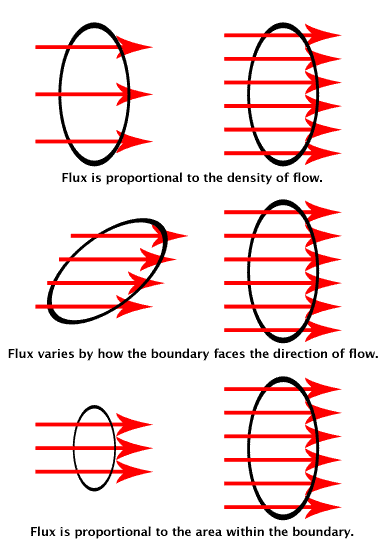
First searched in the dictionary Flux is listed as this: “A series of changes.” And also “continuous change.”

Back when I was studying science I learned about Flux in the context of physical passage: The amount of a defined thing moving through a defined amount of space in a defined amount of time.  In this context Flux is a rate. Something whose motion feels closer to a verb than a noun. I remember in particular a problem on a multivariable calculus final in which bees were flying out of a hive at great speed.

Flux is not the hive. Nor is it the bees. It is a measure of them as they pass from one place to another.

When I get to ruminating poetically, the Flux in me feels like the measure of something moving internally from the person I was to the person I am meant to be.  And right now that feeling, that rate of movement of stuff from one place to the next, that series of continuous changes, all of it feels as if it is being pushed very hard. Like a swift current, the force is visceral. It is gathering momentum.

This is why it is so funny to read my thoughts from a year ago.  Because so much in me feels like it is in motion, but so many of the words remain applicable. Most notably from that year ago, the question of what I am doing and why remains.

Most days planning spools further and further away from the present: a year before I can re-apply to this or that, to get funding to start on the next thing, maybe more before I might be ready for this other opportunity.

And at the same time, the passage seems so quick: A year, an entire year of life and what really is different? What do I have to show for it? Is it enough?

So to the feeling of Flux I must ask: Have I actually, tangibly, changed or does it just feel that way? 52 weeks later what can I say to the person who asked if I could define what I want out of art and cut out the rest of the crap to “really concentrate on making what matters”?

A year ago I was looking for change that was easy and obvious to show myself. I thought about changes in location, in career, in love, in life. I ultimately decided that these weren’t the changes I actually wanted to make.

But perhaps there are other changes. Things that are invisible forces. Changes that are harder to see with the naked eye but that move continents if given enough time.

Here is what I do know:

I don’t feel the need to make a new “play” any time soon.

I might be done making “plays” for a while.

But I do want to make something, and I need to figure out what that is.

And while all my creative impulses are terribly impractical from a producer standpoint, for the first time in a while that feels like fun and not a hindrance.

With luck (and hopefully likelihood) I’ll read this in a year’s time and see what Flux has forced me to find.

– A

Some days I’m just tired of talking about money

There’s a moment in Inside Llewyn Davis that absolutely slayed me when I saw it on Monday night. The movie, which follows a young folk singer from Greenwich Village in 1961, shows an artist struggling to survive. There’s plenty of emotional twist and turnage that make this film an engrossing one, but the moment that gutted me, that hit awfully close to my own heart’s home was one about two thirds of the way through. The protagonist has taken an arduous journey from New York to Chicago in hopes of impressing a music mogal named Bud Grossman. Llewyn Davis arrives in Grossman’s office looking beaten. He asks for… what? Recognition, money, help, something he doesn’t even quite know how to ask for, for an opportunity it seems he already believes he has no shot at.

Grossman looks condescendingly at the record he has just been handed, one bearing the same name as the movie, and says something to the effect of “Well show me what you got. Show me what’s Inside Llewyn Davis.

So he does.

In a dark, half lit room, the character nervously sits with this man who holds the potential to change his future, a man who sits like a stone staring, unblinkingly at him.

Here Llewyn Davis sings.

Sing beautifully, achingly, heart-breakingly open. The camera moves so little, it is one of the closest things I have felt in film to the real spirit of live music, to being that close to someone who is filled up with song. For me, it felt as if I was witnessing someone doing the very, exactly, and absolutely necessary thing they were put on the earth to do.  It felt that for Llewyn Davis music is the language that he as a person is truly intended to be speaking to the world. And the song, which I barely remember, is itself almost besides the point. The singing of it, and the feeling of doing it, is what’s really worth watching, and in the act is contained a beautiful kind of holiness.

At the end of the song there is this thick and vulnerable silence that feels like nakedness.

The man with the power looks at the one without and with all the casualness and ease of a Hawaii vacation, with all the finality and solidness of a period at the end of a sentence, says to him:

“Well I don’t see any money in that.”

Sucker punch.

In the heart.

With a spear.

Made of ice.

I’ve thought about that scene for days now. I’ve repeated this line to myself over and over and somehow, it only makes it worse the more I think about it.

Why does this injure me so much? Why does this wound to an imagined artist from 50 in the past get to me so much? Why does the reduction of one person’s lovely song to a lack of dollar signs get in me and stomp around? I keep asking myself these questions. And I really do wonder why, in a life where I spend so much time and effort fretting over and raising and dealing with and paying out and worrying worrying worrying about money why this stupid little line in this movie has got me so twisted and tangled inside.

This happened to me, this moment, in almost exact verbatim.

I was sitting across a table from someone proposing a production of my work. I was asked to describe the project that I wanted to create. I talked about the legacy of a movement and the music that it produced. I talked about the textures of peeling walls and echoing voices down a 200-foot corridor. I spoke about the sweeping grandeur of becoming a legend and the power of watching and listening and singing as the eye bounces between the living humans and the decaying space that contains them. And for once, happily, when I finished speaking I really felt that I had captured it, this vision of my future creation, at least in part, at least enough that I believed I had spoken about it with honesty and truth and sincerity.

And at the end of speaking, I too found myself in a moment of silence, thick and vulnerable, waiting in a kind of nakedness.

“I don’t think we can get enough chairs in there. I don’t know how we’ll be able to cover the costs of this thing.”

Same story, different medium.

And you know the funny thing?

I felt bad for having done it. I felt stupid for bringing such a proposal in. Preposterous, even, for wanting to do something so commercially unviable. That I came to that meeting kind of knowing and not really caring that the thing wasn’t ever going to make money, that it was an inordinate amount of work for such a tiny number of potential audience viewers, but that I didn’t care and wanted to do it anyway. That I believed in its value despite this.

Here is a true statement: I am not a religious person. I was not raised in a tradition of faith.  But sometimes when I make something it opens up a space that is larger than myself. And that space it is the closest thing I know to belief in something higher, bigger and more powerful than me. The moment of creation is the moment in which I feel the distinguishing line between the tiny bits that make up me and the tiny bits that make up the clothes on my body and the tiny bits that make up the people in the room and the lights above my head and the sound that passes between us and the floor that we rest on and the building we reside in and the whole rest of the world, all those tiny pieces become one part of one big thing that we all share together for the moment that the feeling passes through all of us.

Eventually I did end up making that piece that didn’t have enough chairs to make it monetarily worthwhile.

But I will never forget that moment: when you hope that the person sitting across from you, by virtue of being so close to the thing you have committed yourself to will understand, when you dream that they will see the world and the thing you show them with the eyes with which you also see it. When you imagine for a just a moment that it might be as easy as it was before you had to start selling the things you’ve made, things that in truth you would rather give away freely for the sheer love that the creation of them affords. It is the definitive nonchalance with which that hope is shattered, the tedium with which the deepness and sanctity and need you have for what you make is disregarded. This misunderstanding of what the art’s usefulness is, what it is there for, this is what punctures the chest.

It is not intended as cruel, this act of refusal, this alternate measure of art’s worth, but it is presented as truth, which to me is so incredibly much worse. Because it makes one feel that such a feeling is so thoroughly beside the point, and that you the person feeling it are silly and small in doing so.

It’s negotiating the massive space between a dollar sign and the thing that lights you up inside and makes you so much bigger than you were before. It’s taking that thing and then having to figure out how you can push and poke it so that 50 chairs instead of 40 fit inside your vision of it.  It’s taking the most beautiful song that you know how to sing, the one that comes from way way way deep down inside you and being told, as if it’s the simplest thing in the world, that it will never make any money.

It is the definitive and inflexibly casual insignificance of the artistic product when it is unable to be shaped into commodification.

This is the thing that hardens the soul.

This is the moment of singing that song, Llewyn Davis, and I feel it with you.