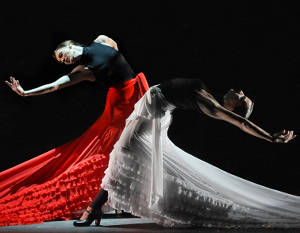
art

Crowd source the grant of the future!

Hey friends!

First! I wanted to tell you that there’s big news coming your way from Swim Pony. This coming Monday we’ll be unveiling our next project: Cross Pollination. Cross Poll will be an awesome exploration of artistic mash ups. If you’ve ever wanted to see what happens when comic artist meets a dance company, this project will be right up your alley. So stay tuned for the info on all the details and the artist application to get involved.

And a huge thank you to the John S. and James L. Knight Foundation

knight-logo-300

for supporting the Knight Arts Challenge Philadelphia. Trust me, you’ll be thanking them to when you see what we’re rolling out on Monday….

Second! I wanted to follow up and say that one of the most popular posts this month on the blog – the one in which I laid out a proposal for a results-oriented grant for gender parity – is gathering some steam. This is a project I am really hoping to make happen for realz in the relatively near future.

Most grants when being developed go through an extensive panel process. They have a lot of people reading and writing and then re-reading and re-writing the application guidelines. They examine the goals and expected outcomes. They look at the metrics that will be used to assess the project. And they think about who will enact these suggestions.

I want to create a grant that has just as much of a review process. And yet, I am just one human with my singular human brain. But what started happening informally after I posted about this the first time was that people started emailing me their suggestions. They asked questions about how things might work. They proposed ideas to make it stronger. And while I know that I wouldn’t implement all aspects of every suggestion, I also know that each one gave me a new perspective on how to think about shaping the thing. They were all super helpful in getting me to think like someone on a review panel.

It makes me wonder if this might be something worth asking for more of.

So here goes. I’ve re-listed the original guidelines proposed below and if you have thoughts about them, let me know!

What are the questions you’d have if you were to apply? Tell me the things that might seem difficult to interpret. Give me suggestions for things to expand that you’d want to know more about. Think about your work and how it might be assessed for this thing and let me know if you see a potential change to make it clearer or easier to take part in.

Think of this as your chance to crowd source the creation of a grant for the artistic world we want to see.

AWESOME LADIES GETTIN’ WHAT’S DUE (ALGWD for short)

Proposed guidelines:

1)   The ALGWD team announces to the Philadelphia-area theater community that starting next season any company, of any size, with access to their own non-profit status or a fiscal sponsor is eligible for an award at the end of a three year period.

2)   The funding awards will be made in two categories:

  • $25,000 will be awarded to 5 companies with the highest percentage of women artists represented across three artistic categories (see below).
  • Any company that achieves 45% female representation across all three categories is eligible to receive $10,000.
  • PS – You have to hit the minimum in all three. No exceptions.

3)   Female artists represented will be calculated based on a statistics over three categories:

  • Number of women playwrights
  • Number of women directors
  • Number of women actors

4)   Other rules and guidelines:

  • Companies will submit their statistics and then have them validated by the grant committee in order to be eligible.
  • The statistics must include all artistic output by a company.
  • Artistic outputs included must be open to the public.
  • A company must meet a minimum of three public works to be eligible for consideration.
  • Funds are string-free. You can use them for whatever you want.

5)   And maybe we could also add this as a bonus:

  • A $1,000 in additional funds are available for any company that can also show an equal parity across all categories of theatrical design regardless of whether they reach the above minimums.

Throw your comments in below. Or send them to swimponypa@gmail.com

You might just get what you asked for…

– A

PS – A big thanks to all those already super engaged in responses to the original post. I’ve definitely been keeping them in the mix!

Thank you for not assuming

cooltext1368115366

I’ve been thinking a lot about what it means to be an Awesome Lady ally. And I think one of the first steps in becoming an ally to the squad is by looking around and acknowledging the subtle gifts, the extra little pushes, that male artists get that female artists aren’t.

In a recent article I read about the ally movement for racial discrimination, the author “nance” (I looked, I couldn’t find her real name) talks about a funny moment in which her husband rides his bike home one day faster than ever before. He wonders briefly if finally all his months of riding have paid off, if his fitness prowess is seriously improved, as evidenced by his speed and agility during the ride. Soon though, he whizzes past a flag pole and sees the way the the flags are blowing. As he stops he realizes that a strong wind has been blowing at his back the entire time.

In other words, it’s not just his improved muscle tone that’s helping the ride go so exquisitely, it’s an invisible but forceful push that he at first didn’t even realize was there.

The author also references this somewhat “classic” article on the assumptions of white privilege in which the writer sets down a list of ways her skin color gives her advantage in situations, small and large, on a regular basis.

Inspired by these articles, and the corollary of them when it comes to gender privilege I came up with a little list of my own. I call it:

BEING A DUDE IN THEATER IS LIKE RIDING A BIKE WITH THE WIND AT YOUR BACK

Or

STUFF THAT AWESOME LADY ALLIES MIGHT NOT REALIZE AND THAT THEY OUGHT TO BE AWARE OF

–       If I am a director I am most often working on material written by someone of the same gender.

–       If I am an actor I am generally in the majority gender of the cast.

–       If I am a writer no one will read my play and assume I chose the subject matter based on my sex.

–       If I am a designer I will attend production meetings in which my gender is not in the minority.

–       It will not be assumed I want to work plays that have to do with my gender.

–       If I do want to make work having to do with my gender it will not be assumed this is the extent of the kind of work I intend to make.

–       If I eventually make work about my gender I do not have to worry about this defining how people will think of me as a creator for the rest of my career.

–       No one assumes that a grant to work on projects about my gender should be linked with social change.

–       If I bring up an issue with a gender stereotype I will not be told that I’m inserting my perspective into a piece that’s not about that.

–       I am not often asked to play sexually provocative roles.

–       I am rarely asked to wear revealing clothing onstage.

–       If I am aggressive or meek no one will assume that quality comes by virtue of my gender.

–       If I work collaboratively with people of the opposite sex, no one assumes they are the real driving force behind our work.

–       If I direct a play with mostly or all women, I do not have to worry that people will assume I’m doing that just because of my gender.

–       If I direct a play with mostly or all men, I do not have to worry if I’m being a traitor to artists of my gender.

–       I do not have to worry that my successes or failures may reflect on other creators of my gender.

–       I do not have to feel responsible to other artists of my gender at all.

–       I can assume my gender will not be a factor against me getting a job.

–       I can assume my gender will not be a hindrance to me acquiring roles in which the gender is not a major factor of their character.

–       I can assume if I am cross-gender cast that people will look at this casting as an artistic choice and not a gender diversity handout.

–       I can assume when talking about the artistic canon that it is made by people of the same gender as mine.

–       I can assume that when people talk about the “Greats” of my field they will be the same gender as I am.

–       I can assume that the most produced theatrical writer in the world is the same gender as I am.

–       I can take an interest in classical works and not worry that my gender will prohibit me from getting work in this field.

–       I can assume that works in the canon represent a diversity in type of roles for people of my gender.

–       I can assume there are a wealth of lead roles for people of my gender.

–       I can assume when learning about my medium I will be studying artists predominantly of my gender.

–       I can assume my mentors will predominantly be the same gender as I am.

–       It will not be surprising or impressive if I am good with the financial side of my company’s daily upkeep.

–       It will not be impressive or remarkable if I go into sound, light or set design.

–       I will never have to suspect I’m being paid less because of my gender.

–       I don’t have to decide whether it is more advantageous to dress to accentuate my gender or not.

–       If I’m an asshole, this trait will never be linked to my gender.

–       I will never be called shrill.

–       I will never be called bossy.

–       I will never be called bitchy.

–       No one assumes I’m not funny because of my gender.

–       I don’t ever feel like I have to choose between being funny or sexy.

–       No one automatically assumes I have interest in or will be good at working with children.

–       I can assume that if I have kids people will not worry that my priorities as an artist will be impacted.

–       It will not be automatically assumed that I will be motherly, nurturing or emotional supportive.

–       If I am an actor, as I age I will likely be in more demand not less.

–       It is not assumed because of my gender that I cannot carry heavy things or do manual labor.

–       If I have no interest in manual labor or carrying heavy things (because I’m just not fucking interested in it) it is also not assumed that I feel this way because of my gender.

–       When the gender parity going gets tough or the inequity feels too heavy to deal with on a given day, I don’t have to think about it.

And finally, this list is obviously just my own opinion because I intend to invoke the final privilege of the list:

–       No one assumes I speak on behalf of all people of my gender. I can assume I only speak for me.

See you tomorrow allies!

A

Jealousy

Hey folks,

Since there are so many newbies to the Swim Pony blog joining us for our month of lady artist awesomeness, I figured I’d re-share a post from last year that garnered a lot of attention.

It’s not specifically related to being a female artists, but I’m sharing it because I think it’s going to be one of the major principles laid out in the Awesome Lady Squad’s manifesto (coming this weekend!). One of the ways I think we all get cheated out of the arts community we really want is by being sold on the idea that there isn’t enough to go around. And if there isn’t enough for all of us, we end up feeling like we have to fight each other to get any.

Let’s decide this isn’t the case.

Let’s assume there’s enough Awesome for everyone at the table.

Hope to see you next Sunday and Monday.

– A

Swim Pony's avatar

mon Some people have all the luck

I will admit it. It’s really hard sometimes to be happy for your artistic peers. There are times when someone you know well gets a job, or some big funding, a fellowship and you just think to yourself, “Damnit. I am just as good as them. This is not fucking fair.”

There are times when I hear about people’s successes and my first instinct is to figure out how I could get a hold of the same opportunity. There are also times I despair at the seeming lack of luck, a random set of factors that make their stuff trendy and my stuff totally prohibited from some desirable professional stepping stone:  I don’t do straight plays, I don’t have an MFA, I’m not great with Shakespeare, I don’t act, I’m not part of an ensemble, whatever. It’s harder, not easier, the closer the people…

View original post 813 more words

Rounding Up #TheSummit

Hey all,

At about the halfway point in the month and looking back at what I’ve been writing so far, I thought it might also be interesting to share Ilana Brownstein’s round up of all the reactions to #thesummit so far.

PS – Mine’s in there too…

ilanaturgy's avatarDrama Lit Blog 2.0: BU School of Theatre

On Feb 17, 2014, Peter Marks of The Washington Post hosted an event called The Summit — it was a public conversation with several of D.C.’s leading artistic directors. As Peter noted in an article for The Washington Post, “Several months ago, Molly Smith, artistic director of Arena Stage, approached me with an intriguing offer: organizing and moderating a series of discussions, with theater people and topics of my choosing, onstage before an audience at her theater.” It was the first of three planned public fora — the others are scheduled for March 24 (focusing on actors), and April 28 (playwrights and directors). The event with Artistic Directors was not livestreamed, but it was live-tweeted by several attendees, chief among them Elissa Goetschiusartistic director of Baltimore’s Strand Theater. It’s probably fair to say that no one involved expected the event to blow up twitter as it…

View original post 463 more words

Choice

So I’ve been reading the many articles that have been appearing on HowlRound recently about women directors

First this one

Then this one

And finally this one

All of these to some degree are about the language we use as female directors in our rehearsal rooms.  I’ve been thinking, brewing, about this for a few days now. Thinking about my own rehearsals as a female director. Of my responses to the article and responses to the responses, and then if humanly possible my response to the response’s response.  I’ve been formulating my own opinions about how I feel in response to these articles. And it occurs to me this afternoon that to explain my feelings about how to talk about language, I need to first talk not about words but about voice.

This semester I have a student named Maranda who has the most amazing voice.

Her sound is generally placed pretty low in her chest. It’s not raspy or throaty but it’s lower and further back than the typical standard of placement for most American speakers. I should probably mention she is Jamaican and sports a relatively thick Patois accent, too.

She is usually one of the first to arrive so on the days I teach at her school, I watch students walk into the black box for voice class and greet her sitting in the second row of the seating area.

“Hello, Ma-RAAAN-dah,” most of them say.

“Hello,” she says back and smiles. 

So far this semester I’ve led Maranda and her classmates in exercises on playing resonance in different parts of the body, in articulation exercises, and projection. I’ve tried to give them skills to open up access to all the sounds their voices are capable of.

One of the first realizations to come in my class is there is no such thing as a person’s “voice” in the singular sense. Around week 3 my students always begin to write about their voices in plural. They talk about how their sounds change over a range of different contexts and in relation to different people. The voice they use for a boss or teacher is quite different than the one they might employ for their friends, entirely different from the one they use with their parents, and different still than one for performance. These voices, they are begin to realize, are not the same. Consciously or not they are employing different sounds to try and achieve a different relationship with the listener.

And it is around this time that they read an article about vocal habits and explain what the author Patsy Rodenberg means when she says that habits are only a problem when they are no longer a choice. It is also around this time that I begin to hammer home a point that I will make through the rest of the course, a moral that underpins everything about the way I approach voice work: there is no such thing as a voice that is “better” than another voice. Ethically, morally, aesthetically, there are no “bad” voices.

There are simply voices that are useful in communicating and achieving what you want, and voices that aren’t.

Which means a high-pitched tiny “girly” voice can be fantastically useful in some contexts just as much as a low basso commanding one. A quiet sound just as powerful as a loud one depending on what you’re using it to do. It just depends on what you’re after.

Most of the students, to some degree, read the article and understand that the point I’m after is that your voice, your tendencies, your style is just as “good,” as long as it’s serving you to get what you want and as long as it is your choice. So when they start making sounds that at first feel funny in their bodies and mouths I say that I don’t care if they talk that way, but I do care that they have the option. When I make them stand in front of each other and speak I ask them constantly what they are trying to make the audience think and feel. The class and I collectively listen to each person and think and talk about ways we can use the voice to get us to the goal the speaker is aiming for.

Each vocal quality is a different choice that will provoke a different effect. That effect is their choice to make. I’m simply trying to give them tools to have as many ways to do that as possible.

This is what I think about when I think about the conversation regarding language and female directors. Each kind of language is a choice. Each one will elicit a different response. Each one is useful in some ways and not in others. It just depends on the tactic the particular directing is using to get to the end goal.

Can assertive language be effective? Sometimes. It can also be aggressive and off-putting.

Can accommodating language be perceived as weak? Sometimes. It can also be welcoming of a variety of perspectives and lead to an open and collaborative environment.

There are processes where I mostly ask questions. There are others where I mostly tell everyone what to do. And I don’t think the answer is picking an answer as to which is “right.” Because inevitably that “right” won’t be right for some people and some works of art. What troubles me in the task of trying to define the best type of female directing language is that it actually removes the choices that we so desperately seek to empower these female artists with. Better, I’d say, to ask whether the kind of language you use is getting you what you want. Better, perhaps, to ask if the language you use is one that you feel you own and have agency over. Better, I’d propose, to ask if your language is a habit over which you have choice.

Most recently, my voice class has been focused on an assignment where students bring in pieces of text that they have to present in front of each other. The text cannot be their own writing and this means that each of them must think about how to shift their voices to best communicate the language they have chosen to share with their audience. Last week, when Maranda went up she looked just a tiny bit nervous.

“Can I ask something first?”

“Sure.”

“The character in my book… Do you care if I talk like a white girl?”

Everyone giggles for a second.

“You can present the text however you want to.”

And Maranda’s voice, with its resonant and lilting Jamaican accent that has charmed the class for weeks, transforms into a nasal flat Midwesterner. Close your eyes and you literally wouldn’t believe it was the same person.

Our mouths collectively hit the floor.

The next class I watch again as the students enter.

“Hello, Ma-RAAAN-dah,” they say as always. And she laughs as I tell her it’s obvious they are jealous of her sound.

And she smiles because she I can see she knows it is true. And I’d guess it’s not only because of the beautiful voice that comes naturally but also because she has the power to shape the way they hear her. She could sound a different way if she wanted to. She can be those other kinds of voices when she chooses. She can go to all the places my exercises ask her to. But when she finishes, she doesn’t stay in those other sounds.

She goes back to the accent.

Because she has the choice.

– A

One more small thing you can do RIGHT NOW

How often does an Artistic Director get a heartfelt email, call or letter about their company?

Probably not as often as you think.

It seems like a lot to take the time out of a busy schedule and send a missive. Despite the ubiquity of communication in our technological world, if I don’t actively seek their opinions out, it’s pretty rare that I get to hear directly from folks who aren’t my friends and colleauges about my work.

Which is why if one person writes a really impassioned thoughtful email I really pay attention.

Yesterday I gave you a tiny task: email the heads of theater companies you care about and let them know you’re watching their season selections for gender parity.

Today you can take that a step further.

Every one of you has people in your life that go see theater. Chances are at least a few of them are also non-arts professionals. And chances are also that many of them probably also care about seeing equal representation of women in the arts. 

Today, I want you to reach out to one or two of them and ask them to speak up for the role of women in the arts as well. Ask them to write to an AD or a board member or a Managing Director (or all three). Send them the letter I gave you yesterday to make it easier for them to do so.  Maybe look up the email addresses of the people they’d send that letter to so it’s even easier.

And then sit back and bask in the knowledge that you’ve just made a huge difference. Because I promise, such a letter will definitely mean a lot to those folks who receive them.

– A

The Problem Still Exists

Hey All,

I recently wrote a little something for TCG’s blog on gender parity in the arts. Obvs, I figured I’d share it here as well.

If you prefer to read it on an orange background with a silly picture of me sitting backwards in a chair you can click here. Otherwise, the full text is below:

———–

The Problem Still Exists

 (This post is a part of the Diversity & Inclusion blog salon led by Online Curator Jacqueline E. Lawton. Check out further Diversity & Inclusion interviews on Jacqueline’s blog. If you are interested in participating in this or any other Circle blog salon, email Gus Schulenburg.)

Diversity & Inclusion blog salon: Gender Parity in the American Theatre

JACQUELINE LAWTON: Year after year, research shows that approximately 17% of all plays produced in the United States and the United Kingdom are written by women. We’re stuck at this number and it’s hard to comprehend. Last year, Forum Theatre convened a symposium to investigate the gender imbalance in theatre and posed this question: Is there a female dramaturgy (ie. a specific point of view that female writers bring to theatre)? If so, what does it look, sound and feel like?  Who holds the agency for it?

ADRIENNE MACKEY: I think that any artist can’t help but create out of the materials of their own experience. Being a woman in the world means dealing with assumptions about how women are and can be.

I work in the devising community so my plays don’t come fully formed and ready for rehearsal. The space between the story/material at the work’s center and those tasked with representing it is a much smaller one and therefore less tricky to navigate. What is the makeup – it’s look, sound and feel – of the female dramaturgy in these works? Its the mixture of the women taking part in the process. And the agency for it is held by the particular women creating that particular piece at that particular moment.

JL: Where do you live? How do you feel your community has addressed the issues of gender parity? How has this particular issue impacted you and your ability to practice your craft?

AM:I live in Philadelphia where it feels the artistic community exists in two spheres – the half that works in the traditional regional theater mode of season programing and the half that works in a generative and original collaboration style without a set amount of content to be produced. Though the two halves are very fluid (many performers traverse between these two worlds often) I make this distinction because I see gender parity playing out very differently depending on which of these two worlds you’re operating in. Most of the women here in Philly, myself included, who feel a high degree of ownership over their artistic output and less at the mercy of others’ biases towards women artists are making their own stuff. They are self-generators and self-producers and they aren’t stuck waiting for roles or slots in a company’s season.

Last year on my blog I surveyed 12 different season-based theaters over the past six years in Philly for numbers on women directors, playwrights, performers and designers.  (https://swimponypa.wordpress.com/2013/02/07/true-story/) The results were mostly skewed towards men in all categories (generally with 2 men for every woman) and were most pronounced in this regard the larger the budget size of the company. I see how the weight of that imbalance can simply corrode a person’s soul after a while.  So I feel lucky that I am mostly in control of the work I make and my ability to create and program plays that are representative of a world where female narratives are an important part of the conversation. The only real barrier to feeling total equal is my sense that funding organizations may also be mirroring the trends we see in the theaters. My next project probably ought to be the number breakdown on funding sources and whether their support is equally gendered across their grantees…

JL: Do we need gender based theaters? What is gained by having stories of a certain community told by artists of that community? What is lost?

AM: I don’t know if I think we need gender based theaters per se. I think it’s an impulse to equalize the numbers and while I have nothing against it, it doesn’t help integrate the female perspective into the spaces that need it most. We need women in all theaters so that the next time a work has potentially misogynistic imagery or themes, there are women interested in talking through and discussing them. I personally want to give our male allies the eyes with which we see these works rather than simply secreting away.  I believe this will pave the way to true equity faster.

Better, I’d propose, to create financial incentives for companies that consistently display a parity of representation in its performers, writers and directors. Reward the outcomes not just the intentions. Try and tell me that a $25,000 grant at the end of three seasons of equitable gender distribution wouldn’t motivate AD’s to find themselves plays with more women writing, directing or performing in them.

JL: What practical action steps would you recommend to local, regional and national theatre companies to address issues of gender parity?

AM: Assume the best intentions of all creators, that no one wants inequity. So when you have these conversations, work hard on both sides to remember not to pull into defensive postures or aggression towards the folks that might want to change but just don’t know how yet.

Find measures that are quantifiable that you want to meet and share them with others.

And while I don’t necessarily advocate for only doing all-women works, I do most definitely advocate for creating an all-female spaces to discuss and strategize how to tackle these issues. It is nothing against one’s male colleagues to say there are certain struggles they just can’t really understand. There are times you need to talk to people who have dealt with the same issues and one of the unfortunate outcomes of an unequal field is that if you don’t seek it out, it’s rare to find that many female creators gathered in one space.

Most recently in Philadelphia, my company Swim Pony launched the Awesome Lady Squad – a forum to meet and use the collective brain power of women to systematically tackle the inequities we see here in our community.  In two short meetings I created a longer list of actionable steps to start working on this issue than I have felt able to do on my own in the past several years.  (https://swimponypa.wordpress.com/2014/02/14/dispatches-from-the-awesome-lady-squad-4-on-the-topic-what-wed-like-to-see-instead/)

JL: Why is it important that we continue to have these conversations to address issues of gender in theatre?

AM: Because the problem still exists.

When it’s done – when I see an equal distribution of female artists across the theaters of Philadelphia – I’ll stop talking about it.


Adrienne Mackey is the founder of Swim Pony, dedicated to works that are loud, strange and never seen before on earth! She has directed SURVIVE! – a 22,000 square ft installation exploring the universe and LADY M – an all-female take on Macbeth. Most recently, Adrienne directed THE BALLAD OF JOE HILL at Eastern State Penitentiary boasting a completely sold out run and a profile on NPR’s Radio Times. She has received two Knight Arts Challenges, an Independence Fellowship, a Live Arts LAB fellowship and New Edge Residency. Adrienne also sings backup vocals as “The Truth” for Johnny Showcase and the Mystic Ticket.


Jacqueline E. Lawton received her MFA in Playwriting from the University of Texas at Austin, where she was a James A. Michener fellow. Her plays include Anna K; Blood-bound and Tongue-tied; Deep Belly Beautiful; The Devil’s Sweet Water; The Hampton Years; Ira Aldridge: Love Brothers Serenade, Mad Breed and Our Man Beverly Snow. She has received commissions from Active Cultures Theater, Discovery Theater, National Portrait Gallery, National Museum of American History, Round House Theatre and Theater J. A 2012 TCG Young Leaders of Color, she has been nominated for the Wendy Wasserstein Prize and a PONY Fellowship from the Lark New Play Development Center. She resides in Washington DC and is a member of Arena Stage’s Playwrights’ Arena. jacquelinelawton.com

Can we talk about canon for a minute?

I’d like to talk honestly about the canon for a second.

There’s a tiny moment I recently saw a production of The Tragedy of Julius Caesar.

First off, for the record, I’m not writing about the particular production. I’ve seen it a bunch and it’s been in there every time. And so while the moment that struck me was indeed performed in this particular version of the play, but my guess is that the lines I’m wondering about are with all likelihood in almost every production of this play.

What struck me was this series of lines:

Brutus. You are my true and honourable wife,
As dear to me as are the ruddy drops
That visit my sad heart

Portia. If this were true, then should I know this secret.
I grant I am a woman; but withal
A woman that Lord Brutus took to wife:
I grant I am a woman; but withal
A woman well-reputed, Cato’s daughter.
Think you I am no stronger than my sex,
Being so father’d and so husbanded?
Tell me your counsels, I will not disclose ’em:
I have made strong proof of my constancy,
Giving myself a voluntary wound
Here, in the thigh: can I bear that with patience.
And not my husband’s secrets?

Can you see them? Can you see the ones I want to write about?

I didn’t. Or rather, I didn’t really hear them initially, while I was watching. I just saw the scene for what it was – a woman asking her husband to unburden himself of whatever it was that was bugging him. But then, I started talking about the scene to someone and I was trying to summarize what Portia had said. It was when I did that, and had to put her words into my own, put Shakespeare’s words into modern parlance that I suddenly said, “What the hell?”

Portia. If this were true, then should I know this secret.
I grant I am a woman; but withal
A woman that Lord Brutus took to wife:
I grant I am a woman; but withal
A woman well-reputed, Cato’s daughter.
Think you I am no stronger than my sex,
Being so father’d and so husbanded

Right? Now it seems really obvious.

Portia begs Brutus to tell her what’s wrong and he says he can’t and in trying to argue with him that he should she says, “Look I know I’m a girl, and by my very nature that means I’m not as good as you. But you did marry me. And my dad is pretty important. Isn’t that worth something of value?”

Can you imagine a female character saying this in a modern play? You’d better have contextualized that character out the wazoo to be able to say something like that and not have an army of actresses beating down your door. But here? Nothing. No reaction. No one thinks its weird.

Brutus responds by saying, “O ye gods, Render me worthy of this noble wife!” He clearly holds Portia in high regard. He thinks she’s the best kind of woman that a woman can be.

But the implicit assumption in this world is that the best a woman can be is never going to be as good as any kind of man.

That’s what’s super f-ed up about those lines in that scene.

So I’m asking: Are we ok with this?

Are we ok with presenting not only the antiquated language of these works but their antiquated morals?

(Sidebar: Can we all be honest too, that though there are probably a freaking ton of women who would die to get into this role, it’s a pretty weird one? Who uses the argument, “PS I also happened to have STABBED MYSELF A LITTLE IN THE LEG to show you how reasonable it is to tell me things.” WTF? Just sayin’…)

The power of the canon is one I still have trouble buying into. I don’t doubt the validity of aspects of these works. But I am not sold that these aspects justify some of the stuff that comes along with them. If we don’t remark on these things, we quietly, gently perpetuate them.

A huge part of the reason I don’t often engage with canon is that I tend not to feel like the roles and stories told about women align with my personal politics or with my sense of equity for women in the artistic workplace. Usually, rather than fighting that system I often find is set up to place women in a disadvantaged position, I prefer to spend my artistic energies on creating new works, stories that I DO believe in, that have the potential to become the canon of the future. While I can see the value of these works from the past, and understand why people pursue this study, that value ultimately doesn’t add up to enough for me to choose a classical work unless it can also be a part of my artistic code of ethics be that in terms of morality presented, absence of obvious and unquestioned sexist or racist attitudes, stories that not only offer women interiority and emotional depth but a sense of agency over their surroundings, etc.

Why are those Portia lines still in a modern interpretation of the play? Just because they might have said something like that back then, is that enough reason to keep saying it now?

For me, the answer is no. For me, a passive presentation of such language is also a tacit complicity.  For me, ALL the plays I present have to support my sense of a female character as fully formed a human and narratively important as a male character. And when I have engaged with the classics on occasion, it’s only when those works either already do that, are tailored in small or large ways so they eventually can do that, or are re-shaped to point out the lack of this quality in an actively examined way. If none of those things can happen, for me it’s just not worth doing.

In the past few years, I’ve required that women re at least 50% of the cast in a canon work. That’s true from massive Swim Pony retellings of classics like LADY M, to more traditional takes like this past summer’s The Tempest, to academic productions like my Midsummer at Arcadia this past fall. And in all of those pieces I also made a conscious effort, especially with student productions, to carefully comb the text for language that might include morals from the past that I find presently repugnant. We need to talk about why certain parts of text are (and should be) cut so that it’s clear we don’t agree as a cast, as a creative space, as a community with these statements if they are left unquestioned and unexamined.

Why this past summer did I cut massive portions of Prospero’s language about the importance of Miranda’s virginity and warnings to Ferdinand to preserve it?

Because even though I see that this is clearly written into the character, I personally find that patriarchal kind of dominance based solely on a women’s sexual purity pretty unacceptable. And I think there are plenty of ways to create a deep and complex parent/child relationship without it.

Because in the context of Prospero’s journey, neither Prospero or anyone else remarks on this as a possibly invalid way of valuing his daughter. And because I don’t value that value system, I’m not willing to support that viewpoint onstage.

If I HAD to keep it in there, because of a producer or purist’s objection, I wouldn’t do that play.

It’s the same reason I cut the classic Lysander line about Hermia being an Ethiop and Sebastien’s about Claribel being loos’d to an African. Because I would never allow those kind of casual and unremarked upon racist statements in a play I was making in the present, so I don’t include them in these plays from the past either.

And look, I understand the historical context in which they are made, but that just isn’t enough for me to justify continuing to say them. When such language is discussed or remarked upon, or featured in a new contemporary understanding, as say, many newer productions of Titus Andronicus do, or are explored or exposed in some way to unseat the assumptions they are based on (as we did often in LADY M) then I believe that the audience will see that my take on this work is different than the attitude of the character. But when such language is left in and is left un-examined or un-remarked on, I believe it creates a tacit assumption that othered identities ARE these things that the characters say they are.

So my rule is always, if I wouldn’t tolerate it from a modern playwright, I won’t tolerate it from a classical one either.

I think that there are a lot of folks who will never want these works modernized and clearly, cutting to change a character’s attitude in this regard or cross gender casting IS a modernization: A modernization to reflect the idea that women or people of color can indeed occupy the kinds of positions and embody themes that were only allotted to white men in Shakespeare’s time. And I think that those who chide cross gender casting for not being “real” or corrupting the text in some way are just refusing to see that argument from the side of the people it most affects.

So lately, I just tell myself that they’ll all die out and I will become the lord-ess of the Philadelphia art scene.

Not really.

Ok maybe a little bit.

– A

Flamenco Hoy

Small detour from talking about ladies today folks. I’ve been asked by the Philadelphia Flamenco Festival and Pasión y Arte to write about this film “Flamenco Hoy.” Check out their other articles here.

Here goes.

montreal-jazz-festival-2012-lineup-flamenco-hoy-My first encounter with Flamenco as an art form came back in 2008 when I was creating and staging Echo – an entirely musical retelling of the classic Greek myth – with local company Tribe of Fools.

For the piece I was exploring sounds that fell into a few categories. I wanted music that blurred the line between declamation and structure – sounds that blurred the difference between structure music and the noise a person screaming to the Gods above them. I was seeking the heightened sound that such a plea would provoke but also a form in which the musicality, the beauty, and the depth of that need to express were also heard.

I also wanted a music rooted in chant. I wanted to underscore the feeling of storytelling that is passed along from person to person over many many many generations.

And lastly, I wanted a musical base in which feminine beauty is can be seen not only in the light pure and clear sounds we hear in most western music forms, but that includes the depth and experience and texture that life can bring. And I wanted to find a sound that came from a human but was so deep and richly felt that person it goes beyond their human form. I wanted to hear the sound of a human channeling the Gods.

So when a friend passed along a video of Carlos Saura’s 1995 movie Flamenco and I heard this woman for the first time I had no doubt I’d found that sound.

What a treat then to be asked to return to Mr. Saura’s work for Flamenco Hoy in watching this filming of a live stage piece exploring Flamenco both past and present.

There’s something pulsing underneath the work on display in this film. It’s akin to the gentle clapping pulse that underpins so much of the music. The performers of Flamenco Hoy are a study in tension and release:

Two men carrying large sticks drum the floor in alternating bursts, each like a tiny message or challenge that builds. The energy of the face off is palpable. And then, simply, easily, they step forward, closer into waiting pools of light and begin again.

A woman (the stunning Patricia Guerrero) bounds across the stage bending in impossibly long lines. She is holding a fan that snaps open and shut like a tease between her and the audience. She is fluid and graceful one moment with fingers that flutter over each other. The next she squats and jumps like a rebellious teenager.

This alternation of hardness and softness is what makes the form so interesting for me to watch. It is this inherent conversation between rhythms that that creates stories between bodies and within voices even when they speak words I cannot understand.

And the pounding of the floor. Can I just say that it must be impossible to hear it too much. I am most sad, perhaps, not to be in the room with this performance in this regard. To feel the vibration of the floor under my own feet, to feel the rapid pulsing vibration of their feet beating into the ground and resonating through the hall and in my bones.

In what was for me the most stunning solo of the entire piece, Nani Paños (who looks charmingly similar to Zachary Quinto and had me imagining Spock as a Flamenco dancer) emerges in a modified, almost painted on, Torero outfit. The tightness of his clothing means that every quiver, every breath, every twitch is visible to the audience. The guitarist plucks out a melody that almost seems designed to taunt the poor, serious looking, dancer. He slowly begins to gently move himself across the stage. Then suddenly without warning the music seems to capture him and his feet explode. He wildly shakes in the throws of it until again without warning he is completely still but for the deep need for breath he is clearly trying to hide.

The effect is one of a human battling with supernatural forces. And this battle of the dancer and this tension between stillness and a need to fling the movement out of himself is completely engrossing from start to end.

And there’s also something captivating about the way that the staging often does not attempt to integrate the disparate parts – the singers, musicians, dancers, and those that simply take up the subtle punctuation of palmas hand claps. It is refreshingly simple to see one part of the whole watch and enjoy the other when a dancer simply listens in to the free flowing cascade of notes from a singer. It is almost as if the whole cannot be contained by any single of its component pieces.

The only admission I must make is that in the pieces where more modern elements are incorporated – projections of lines across the stage as a group of men with pained faces dance, or a nod to 1940’s noir, or a mix of jazz saxophone and the lilting rhythms of a flamenco singer – for me, they fall flat by comparison. I see the interest and desire for such an experiment. But they lose just a touch of what makes the other pieces so magical. The ease and depth and plea to the gods in these pieces, somehow gets a just little lost in translation.

– A

3 years and $300,000 and I’ll fix it, for realz…

Alright, enough moping.

So remember how I said that the tough thing about talking about the issue of gender parity, the problem, wasn’t intentions, but a lack of culpability for outcomes.

In other words, how do you get people to not just think about doing the right thing but actually motivate them to do it?

Guess what?

Yesterday, I figured it out.

You just need some money.

You need a funding program that has nothing to do with intentions, because we all have the best intentions. What you need is a reward system that is entirely based on outcomes.

So.

Without further ado, I give you:

SWIM PONY MASSIVELY OVERHAULS THE STATE OF WOMEN ARTISTS IN THREE YEARS AND WHO KNEW IT WOULD BE THIS FLIPPIN EASY GRANT PROGRAM

Also known as:

AWESOME LADIES GETTIN’ WHAT’S DUE (ALGWD for short)

(With support from Pew Charitable Trusts

Or maybe William Penn

Or maybe The Wyncote Foundation

Or The Knight Foundation

Really who cares, someone has to fund this, right?)

Here are my proposed guidelines:

1)   The ALGWD team announces to the Philadelphia-area theater community that starting next season any company, of any size, with access to their own non-profit status or a fiscal sponsor is eligible for an award at the end of a three year period.

2)   The funding awards will be made in two categories:

  • $25,000 will be awarded to 5 companies with the highest percentage of women artists represented across three artistic categories (see below).
  • Any company that achieves 45% female representation across all three categories is eligible to receive $10,000.
  • PS – You have to hit the minimum in all three. No exceptions.

3)   Female artists represented will be calculated based on a statistics over three categories:

  • Number of women playwrights
  • Number of women directors
  • Number of women actors

4)   Other rules and guidelines:

  • Companies will submit their statistics and then have them validated by the grant committee in order to be eligible.
  • The statistics must include all artistic output by a company.
  • Artistic outputs included must be open to the public.
  • A company must meet a minimum of three public works to be eligible for consideration.
  • Funds are string-free. You can use them for whatever you want.

5)   And maybe we could also add this as a bonus:

  • A $1,000 in additional funds are available for any company that can also show an equal parity across all categories of theatrical design regardless of whether they reach the above minimums.

This means for three years there’s a looming pile of cash incentivizing the choice to bring women artists in. It’s not the only consideration, but it’s enough to help counteract a tiny bit of that un-intentional push away from a female artists in the other direction.

And happily, unlike calling someone out or making a stink, this grant doesn’t hurt anyone who decides they can’t or won’t be able to meet the gender equality minimum. You can do all the dude heavy, dude written, dude directed plays you want. It just means you’re missing out on the free money party.

Of the 12 companies I surveyed numbers on last year, a few were pretty darn close – Flashpoint, Simpatico and Azuka – but not one would have hit this minimum requirement across all three categories. But if there were $10,000 at stake, how much do you want to bet they’d tweak their selections just a tiny bit to nudge them over the line? If the next time the AD’s of these companies looked at their numbers and knew that hiring one more female director got them $10,000 do you think they’d think as hard about whether or not to do it? Do you think that the choice between a female playwright and a male one would be quite so agonizing if one picking the former meant they might be one of those companies competing for the top 5 slot?

For most companies, $25,000 or $10,000 in funds that aren’t project ear-marked would make a huge difference. That’s an entire person’s salary in some cases. That’s the budget for an entire show for the really small ones. And even if you’re a bigger dog, one where the scale you’re operating on won’t be totally transformed by this kind of cash, think about how hard you chase donors on this scale. You could just do the work you’re already doing AND save women artists from inequity while getting money handed to you.

The way I see it there are something on the order of 30 – 40 companies in Philly and the surrounding areas who’d be eligible. If I had to guess, right now, there are probably only a handful – 5 maybe – that potentially meet those guidelines already.  From rough estimation it seems like about half those companies could probably hit those numbers with just a bit of effort to add a few female directors or playwrights or plays with more female roles. If I were a betting woman, I’d guess the same half of those 30 – 40 would come out the other side of three years with hands outstretched for their $10,000.

Think about the impact that would make in this community:

  • 5 companies at the top x $25,000 = $125,000
  • ~16 more companies at the minimum x $10,000 = $160,000
  •  ~15 that also hit the design minimum x $1,000 = $15,000

That’s $300,000.

This is really not that much money.

Think about that Philly funders…  For a single upper limit Pew organizational project grant:

  • You could have an incredibly concrete means to measure the impact of your efforts by surveying the stats on gender before the award period and after.
  • You could incentivize not promises or discussions but measurable, quantifiable outcomes.
  • You could reward those companies already employing positive gender parity practices.
  • You could send a message that your organization cares deeply about the status of women artists and is able to take steps to do something about it.
  • You could create an art-making environment in Philadelphia that can be nationally recognized as the most female friendly in the country.
  • You could massively shift everything about the way this city works for women artists.

No hemming or hawing. No yelling or fighting. No pipelining. No apologies for what we intended to do but couldn’t quite make happen.  Just three years to make it happen or not.

Some folks will ask you for a whole new system and ten years or more to implement it.

I’m just asking for three years and $300,000.

Let’s do it now Philly before some other city snatches up our good idea.

– Adrienne

PS – Shout out to Brad Wrenn who dreamed this up in the car with me when I was having a shitty morning yesterday.