making

Lady-festo is coming!

Hey all,

photo 1

Do you know what those giant sticky notes are? They are some incredibly awesome and hard work by a whole bunch of awesome ladies these past few days. We’ve made some awesome progress and we’re really close to a full on Lady-festo. And I wanted to share just a little of what we did in these two meetings, for those that weren’t able to join us.

As I prepped for it, I read up on a bunch of other people’s manifestos. And I thought, “What exactly is a manifesto?”

So I found a few definitions from different dictionary sources online:

A public declaration of intentions, opinions, objectives, or motives, as one issued by a government, sovereign, or organization.

A written statement declaring publicly the intentions, motives, or views of its issuer

The word’s root is Latin – manifestare – which means to be clear and conspicuous. To be unambiguously public in these beliefs. It’s the idea that if you share the view of the world you see around you others will also become aware of it. What struck me about this is that it is not a document about wishing or dreaming or becoming. It’s about what you know, deep down in a fundamental way, to be true. Which means the things that we define in our manifesto are not our future, but the things we already know in this moment.

It’s about asserting the things we believe to be true into the world around us: that women are not lesser qualified or weaker, that our work is not niche or in addition to. It’s knowing that there is a space in which those views are supported and those intentions are believed in. It’s a promise that if we are able to articulate it, others will eventually understand the beliefs we know to be true.

So we spent time articulating these ideas as beliefs. We tried to write down all the things that we know about Awesome Ladies, even if we don’t always see that reflected in the world. We tried to articulate those things as positives (“I believe X” rather than “I don’t believe Y”).

Then we shared those first ideas, clarified and honed them. We linked the things that seemed connected and then we worked to figure out how say them in the most simple and essential ways. We put forth great effort to get to the very core of our Squad’s essence.

And soon, I’ll get to share that with all of you.

I’m pretty psyched.

I think it will be awesome.

A huge thanks to everyone who made it out to one of (or both!) our Lady-festo nights:

  • Melissa Amilani
  • Hillary Asare
  • Dawn Falato
  • Arianna Gass
  • Colleen Hughes
  • Emily Johnson
  • Rebecca Joy
  • Gina Leigh
  • Jane Moore
  • Erlina Ortiz
  • Catherine Palfinier
  • Gabby Sanchez
  • Hannah Sandler
  • Meryl Sands
  • Catharine Slusar
  • Isa St. Clair
  • Sarah Schol

– A

Applied Mechanics gets an Awesome Lady Squad Commendation!

Hey friends,

Many, many things a brewin’ here at Swim Pony HQ.

I know I promised you Cross Pollination would unveil here today but this weekend was just too terribly full of fantastic awesomeness and I need just a couple more days. So Wednesday it will be! (This time I promise, for real…)

Awesome Lady Squad is in high-level action mode! We had the first meeting to for the Awesome Lady Lady-festo last night and I am humbled and awed at the fantastic minds of Philadelphia creators. Look for updates on that soon!

Today, however, I thought I’d share something new. While much of our attention in this space has been on shedding light on things I’d like to change, I think it’s also worth pointing out the amazing artists who are already modeling the kind of work that ALREADY gives voice and space to women creators (and gaining a stellar artistic rep at the same time). So every once in a while I’ll be asking some questions of folks doing just that so they can share how they are successfully getting their work into the world in a way that the Awesome Lady Squad commends.

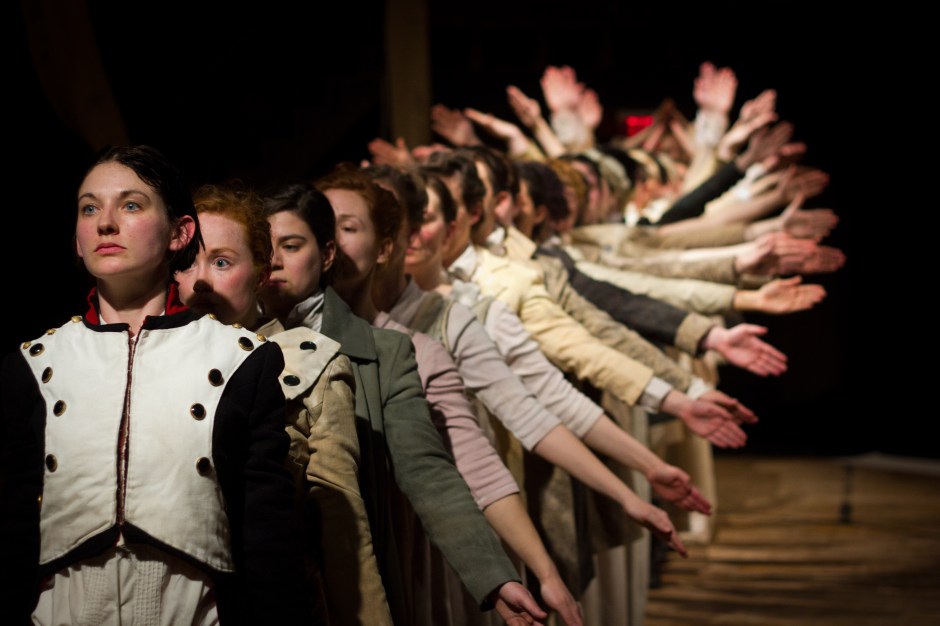
Today, get a bit inside the mind of Applied Mechanics. I chatted a bit with Becky Wright (a good friend) to find out more. But first! A pretty picture of their work to entice you:
IMG_2378b

1)   How does gender parity and awareness of women in theater play a role in selecting your material?

We are a very collaborative company, founded by women, with majority female members and an alternative-model labor-sharing administrative structure.  Every piece we’ve ever made has come from an idea or a spark of inspiration from a company member, so in a sense the work is always reflective of the concerns of the group.  I think it’s safe to say that most of us identify as feminists and that our artistic motors have been shaped by our experiences as women in the world, as female artists—and, for our one male company member, his experiences as a gay male artist.  Collaborative art-making involves such intense processes of interrogation, exploration and reflection—so I’d say, overall, gender and female-artist awareness play a major role in everything we do.

To speak more specifically, we’re currently working on a piece inspired by [Russian feminist art/punk activist group] Pussy Riot.  This idea came from two company members who were following their story particularly closely at the time of their arrest.  We all intuitively leaped on this seed of an idea; as we began research and exploration (the early stages of our development process) we quickly discovered that a big reason why Pussy Riot’s story and the questions it brings up resonated with us so deeply is specifically because they are female artists.  Their story is our story.  And they have done these powerful, dangerous, earth-rocking things with their position as female artists, claiming that position as one of profound subversive power and gigantic imaginative and radical influence.  Our piece has expanded to encompass questions about contemporary feminism, its oppositional relationship to global capitalism, protest art, 21st century resistance, and the socio-historical qualities of a moment when artists’ voices are politically important. These questions are close to our hearts and central to our ongoing artistic project.

One thing that’s been really nice about working on this piece, the first of ours that takes on explicitly political content, is that it’s made us realize that we’ve actually been dealing with these questions all along: all of our past pieces in some way engage questions of power and control, allocation of resources, society’s power to shape identity, and the possibility of communities to affect change.  These questions are central to feminism.

Again, some brief specifics: in our recent piece Vainglorious, a large-scale historical fantasia about Napoleonic Europe, we had a woman playing Napoleon and a man playing Josephine (and lots of other cross-gendered casting, mostly in the form of women playing men, throughout the world of the piece.)  While we made this choice based purely on company members desires and personal qualities, we had to recognize after the fact that the choice “says something” about gender.  Embracing this allowed us a deeper exploration of the power plays and politics of that piece.  We’ve also made pieces with trans characters (Portmanteau), de-gendered characters (Some Other Mettle), and always always make pieces with strong, unusual female characters.  It’s worth mentioning, too, that our performers create the characters they play—so the women of Applied Mechanics, through engaging in our group authorship process, have a huge amount of agency in their theatrical and artistic output.

In all these ways, I’d say gender parity and women in theater are at the heart of our material.

A tiny post-script: I think there was a while in there where some of us in the group would worry about not having “enough male energy” in the company.  And then at a certain point we were like, “why are we worried about this?”  It’s amazing how pervasive the norms of the dominant culture can be.

2)   Does this inform your working and administrative structures in any way?

It does, actually.  We have worked really, really hard to cultivate an egalitarian working model that embraces all participants, distributes company labor, and values communication and consensus over hierarchy.  For me, this is a self-consciously anti-patriarchal model.   It looks at the ways most theaters run, the received narratives created in overwhelmingly large part by straight white men (and thus designed to reward male-socialized habits and aesthetics) and says: we reject that, and reject the goal of gaining access to it, and we claim the space to work in another way.  This is often difficult, and certainly does require a great deal of energy, presence, and mindfulness from all company members, but the result is that we have this thing, this company, that allows us a sense of shared ownership while granting us all agency and a supportive artistic home.

3)   Do you know your statistics (number of actors, directors, designers, etc) in terms of representation? Can you share them?

For several years, the company consisted of five women and two men.  It has now shifted to consist of six women and one man.

Of the 32 “outside” actors we’ve hired in our history, 21 have been women and 11 have been men.

Of the 4 guest designers we’ve hired (to work with company designer Maria Shaplin) three have been women and one has been a man.

Of the 5 stage management/production assistants we’ve hired, four have been women and one has been a man.

There are also an assorted bunch of folks we’ve hired for one-off work/labor calls; this is an estimate, but I think on those we’ve been about half and half women and men.

4)   What would you say to a female artist feeling discouraged about her place in the arts community?

It can take a while to find your people.  Don’t worry: you’ll find them.  All of my collaborators I met through working other gigs, going to see stuff, or coincidences born of just doing my thing.  It makes a huge difference to have people you love to work with.  It makes it easier to feel like, at least in some respects, you have your own place and your own community.

Keep your eyes open for folks you admire and are interested in working with or for.  It’s not that hard to track people down in this town, and it never hurts to ask for a coffee—or an assistantship.

And I know this will sound a bit “follow your bliss,” but—follow your bliss!  Don’t wait for permission to make the art you want to make.  Do what you think is cool.  Claim the space to do it.

Art life is a weird life without a clear path.  There is so much bushwhacking to do, and so much stumbling.   I think men and women tend to be socialized differently, and it can often be harder for women to access the kind of assertiveness and entitlement that’s so useful sometimes in getting gigs and attention and carving out a niche.  But I also absolutely think that self-doubt and failure and periods of frustration are natural parts of the artists’ life.  Finding a way to accept those stages of the cycle without being too self-punishing can make it way easier to fight the necessary battles—whether that’s about accessing particular kinds of assertiveness or asserting other ways of working.

5)   Anything else you’d like to add?

When Maria Shaplin and I started this company, it was because there was art that we wanted to exist that didn’t exist yet.  We realized we could make it exist by making it ourselves, and we realized no one was going to give us permission to do it.  So we had to just do it.  So we did it.  And we were incredibly fortunate (still are) to have access to a community of brilliant collaborative artists who were down to do it with us.  The company, which grew out of that initial project, consists of the people who stuck around and were excited about working on the artistic and organizational experiments that Applied Mechanics has come to pursue.  I don’t think that the experience of wanting to make art and having to give ourselves permission to do it happened because we’re women (it happened because we’re artists) but I think the lesson of claiming space and asserting new working models is vital to the feminist project.  I’m not saying it isn’t a worthy battle to fight for access to existing systems, but I also say it is a necessary battle to fight for new systems.  For me, this goes for both artistic concerns (structural, as well as aesthetic) and organizational models.

Thanks Becky!

You can check out Applied Mechanics bio below or their website for more info: http://www.appliedmechanics.us/

Applied Mechanics is director Rebecca Wright, designer Maria Shaplin, and performers Jessica Hurley, Thomas Choinacky, Kristen Bailey, and Mary Tuomanen, and stage manager Bayla Rubin.  This ensemble of artists collaborates to make work that challenges conventional ideas of theatrical space, narrative, and performer-audience relationship: they create visual landscapes for the audience to wander through, and multiple intersecting storylines for them to choose how to watch.  Their plays are immersive, multi-sensory, and choose-your-own adventure.  Their process is collaborative, democratic, and based on a commitment to organizational and artistic innovation.

Applied Mechanics’ pieces include the apartment plays Selkie and Ses Voyages Sauvages; It’s Hard Times at the Camera Blanca (Fringe 2009) which took over a Fishtown Bar; the invasion play Portmanteau (Fringe 2010) which, following its Philadelphia premiere, toured from Texas to Louisville to Maine; the dystopic environmental piece Overseers (Fringe 2011); and the large scale historical fantasia Vainglorious: Epic Feats of Notable Persons in Europe After the Revolution, which involved a cast of 26 Philadelphia actors and which  remounted to great critical acclaim in the Philadelphia International Festival of Art (PIFA) in April 2013.

Awesome Ladies meet tonight and tomorrow!

 cooltext1368115366

Reminder! Reminder!  The Awesome Lady Squad is meeting March 23rd (tonight) and 24th!

That’s right Awesome Ladies! We’ll be meeting from 7 – 9:30 at Headlong Studios (formerly the Parlor) at 1170 S Broad on both the 23rd and 24th to come up with the AWESOME LADY MANIFESTO – our code of ethics for how the Squad will work.

  • If you’ve already let us know you’ll be there: GREAT! We can’t wait to see you!
  • If you know you’re coming and feel like dropping us a line: FAB! Email swimponypa@gmail.com to help us get a sense of the group size!
  • If you want to just drop in and bring a friend: DO IT! You can totally still come if you realize last minute that our meeting is exactly where you need to be.

Attend one or both. Our aim is to have a version of the manifesto to share with the world by the end of Monday night.

Hope to see you soon! (And as always, thanks for being awesome…)
Adrienne

Reframing

Sometimes when I spend a long time talking about myself as occupying a disadvantaged position it makes me a little depressed.

In writing about women in the arts I’ve found myself sometimes feeling frustrated this past month. And I think it’s because when you define yourself in this way – as a person who is being to subjected and trying to navigate a system that is not always set up to your advantage – you can start to see the problem in everything.

In the general sense, I do think women get less of a fair shake. On average, I believe it is true that we’re under-represented in almost all aspects of the field.

But I think we can probably all agree that thinking that way is no way to live. It’s just too tough constantly imagining oneself as a victim of an intractable problem. It feels too large, it feels to impossible, it seems pointless to even try, if you spend too much time in that mindset.

At least it does for me.

This, I think, is why some pretend it’s not a problem. They have to shut out any disadvantage and just keep plugging away as if things were totally equal because it would just be too depressing otherwise. I’m not chiding these folks too much, because I understand the impulse. No one wants to feel powerless. But I also don’t think that I can join them, because at a certain point I think most female artists just see too clearly the power difference.

A few years ago I listened to an interview with the famed brain scientist Oliver Sacks. I was surprised as he spoke to learn that he in fact suffers from a variety of neurological issues himself. I was even more interested in a statement he made that was something along the lines of this: I don’t know that I’d have been able to discover all the amazing things I had if I hadn’t had an abnormal brain myself. That interview made me think back to reading Jill Bolte Taylor’s book about how a stroke’s paralysis of certain kinds of “left-brain” style thinking gave her an appreciation for “right-brain” thought processes and a new outlook on life.  It made remember a friend of mine from college who was in a serious car accident and who said that she could feel the palpable difference between the kind of person who was “normal” and the way that her mind was now different, how she’d developed a sense of both the neurologically-dominant perspective and her new one as a recovering patient.

That interview planted a seed in me that’s grown into a guiding principle: I just have to believe that all the things that I believe are my weaknesses – my introversion, my status as a female artist, my lack of trust fund, my sometimes weird aesthetic impulses, my thorough dis-interest in classical works of the theatrical canon – all these things that sometimes make me feel like an outsider, are actually my secret superpower. These things that separate me from the dominant viewpoint are the things I can uniquely wield as weapons that those supposedly more in power can never hope to employ. These are the ways that I will be able to innovate. These are the things that will make my art works full of a fuller perspective. They are the things that will give me an angle in that others just can’t see.

This is nothing new, this idea. Lots of people know this. But it’s the thing that really helps on the days when the problems feel so big. When all I can see is how much harder the obvious road will be for me than for some dude with the same skill set.

Those are the times when I say to myself, “You just have to believe that in the long run this makes you stronger. You just have to believe in the long run you will be better for seeing differently.”

It’s the moments when I look at the obvious path and realize if I just cut through the bushes I might get to the top in a totally new way. It’s the moment I realize I have a machete in my hand and can start hacking at something new.

It is a problem in one lens, and I can jump into that perspective when needed to make progress on an issue I see.  But it’s something I can also reframe in my own mind to give me a sense of strength and destiny.  And while it might seem as if all this is a bunch of self-delusion, it’s those moments where I’ve really embraced the outsider in me, rather than just feeling frustration with it, that wonderful things emerge.

Things like a squad of awesome ladies, many of whom I’ve never met who suddenly are some of my most ardent supporters.

Things like creators in different cities who I am suddenly planning to meet because of our shared interest.

Things like an interview for a national theater organization because of my vocal views on an “outsider” subject.

Things like a renewed vigor for a writing forum that I’d let slide more than I wish in the past few months.

This onslaught of new and positive activity all came from just deciding to sit down and reframe an issue as one I can use as a leverage point rather than just being something that pisses me off. It’s become a power I can wield. And I like that.

Yes, it’s still a problem. Yes it’s one I’m solving all the time, and mostly likely will be the rest of my life. But it is also in my capacity to use it to my advantage.

Even on the days it doesn’t feel that way.

Especially on the days it doesn’t feel that way.

I see this as my chance to have choice.

– A

Crowd source the grant of the future!

Hey friends!

First! I wanted to tell you that there’s big news coming your way from Swim Pony. This coming Monday we’ll be unveiling our next project: Cross Pollination. Cross Poll will be an awesome exploration of artistic mash ups. If you’ve ever wanted to see what happens when comic artist meets a dance company, this project will be right up your alley. So stay tuned for the info on all the details and the artist application to get involved.

And a huge thank you to the John S. and James L. Knight Foundation

knight-logo-300

for supporting the Knight Arts Challenge Philadelphia. Trust me, you’ll be thanking them to when you see what we’re rolling out on Monday….

Second! I wanted to follow up and say that one of the most popular posts this month on the blog – the one in which I laid out a proposal for a results-oriented grant for gender parity – is gathering some steam. This is a project I am really hoping to make happen for realz in the relatively near future.

Most grants when being developed go through an extensive panel process. They have a lot of people reading and writing and then re-reading and re-writing the application guidelines. They examine the goals and expected outcomes. They look at the metrics that will be used to assess the project. And they think about who will enact these suggestions.

I want to create a grant that has just as much of a review process. And yet, I am just one human with my singular human brain. But what started happening informally after I posted about this the first time was that people started emailing me their suggestions. They asked questions about how things might work. They proposed ideas to make it stronger. And while I know that I wouldn’t implement all aspects of every suggestion, I also know that each one gave me a new perspective on how to think about shaping the thing. They were all super helpful in getting me to think like someone on a review panel.

It makes me wonder if this might be something worth asking for more of.

So here goes. I’ve re-listed the original guidelines proposed below and if you have thoughts about them, let me know!

What are the questions you’d have if you were to apply? Tell me the things that might seem difficult to interpret. Give me suggestions for things to expand that you’d want to know more about. Think about your work and how it might be assessed for this thing and let me know if you see a potential change to make it clearer or easier to take part in.

Think of this as your chance to crowd source the creation of a grant for the artistic world we want to see.

AWESOME LADIES GETTIN’ WHAT’S DUE (ALGWD for short)

Proposed guidelines:

1)   The ALGWD team announces to the Philadelphia-area theater community that starting next season any company, of any size, with access to their own non-profit status or a fiscal sponsor is eligible for an award at the end of a three year period.

2)   The funding awards will be made in two categories:

  • $25,000 will be awarded to 5 companies with the highest percentage of women artists represented across three artistic categories (see below).
  • Any company that achieves 45% female representation across all three categories is eligible to receive $10,000.
  • PS – You have to hit the minimum in all three. No exceptions.

3)   Female artists represented will be calculated based on a statistics over three categories:

  • Number of women playwrights
  • Number of women directors
  • Number of women actors

4)   Other rules and guidelines:

  • Companies will submit their statistics and then have them validated by the grant committee in order to be eligible.
  • The statistics must include all artistic output by a company.
  • Artistic outputs included must be open to the public.
  • A company must meet a minimum of three public works to be eligible for consideration.
  • Funds are string-free. You can use them for whatever you want.

5)   And maybe we could also add this as a bonus:

  • A $1,000 in additional funds are available for any company that can also show an equal parity across all categories of theatrical design regardless of whether they reach the above minimums.

Throw your comments in below. Or send them to swimponypa@gmail.com

You might just get what you asked for…

– A

PS – A big thanks to all those already super engaged in responses to the original post. I’ve definitely been keeping them in the mix!

The Means To Manifesto

cooltext1368115366Hey all,

After a couple of mammoth posts past, and a few I’m working on to come, I’m keeping things short and sweet today, if still terribly important.

Instead of sending tons of my thoughts out to you all, I’d like you to send me your thoughts so that I can compile them in time to undertake a task for the next Awesome Lady Squad meeting.

Here’s our first official creation mission: A re-framing of how we look at each other as female artists. Replacing the model of scarcity and competition to a model of abundance.

In other words? An Awesome Lady Lady-festo.

I want to create a code of ethics for how the Awesome Lady Squad will function.  This document should contain clear and simple guidelines that underpin the way Awesome Lady Squad members promise to work with each other and the world around them. It is an agreement that details the ways we can model the behavior we want to see around us.

So you tell me: what does it mean to be an Awesome Lady creator? How do we define what kinds of working models we want to hold up?

Think specific, think concrete, and ideally concise.

Throw thoughts in the comments or on facebook or by email (swimponypa@gmail.com). I’ll be compiling and setting up a committee for this soon.

– A

PS – for some initial inspiration look to the Core Principles of Artist U

#thesummit

Look.

I am bad at twitter. I don’t tweet much or well. Call me twit-illiterate. It’s also been a heinously busy couple of weeks. Which is why it’s taken me a bit of time to catch up on #thesummit.

More than a few people have passed along thoughts about this. More than a few have asked my opinion. But I wanted to wait until I felt like I’d really read enough about it to have an informed opinion before responding. If you haven’t caught up check out this for an overview. And this for the much commented on tweets in-situ. And here’s the quote from Ryan Rilette quoted from the DC Theatre Scene article:

“It’s really hard, and here’s why it’s hard.  I think it’s hard because there’s not enough in the pipeline right now.  …There are a lot of new plays that are getting produced by small theatres that are by women.” 

He went on to discuss how there are not enough plays by women produced in New York City and not enough in London (although he credited London with doing a great job), and said that a theatre needs something that’s going to help sell any play they put on.  He said one can’t choose a total unknown, and that to find three plays a season by female playwrights would require them to have name recognition or something else to draw audiences, if one is not going to go the route of using star actors. 

He said there are “not enough yet in the pipeline” and that “it’s gonna take a couple of years… a decade… before it’s going to shift, but it’s going to shift.”

A decade. Wow. I’ll be in my 40’s then.

That would be awfully… depressing to have to wait that long for more opportunities to arise. Probably depressing enough to just stop entirely. Something I see an awful lot of my female counterparts begin to contemplate around this age. It would be something I’d contemplate if I actually believed it would take that long. If I really thought my female peers had to wait around for these folks to use that whole decade’s worth of time to see some progress.

But I don’t buy this. And I also don’t feel like waiting.

Which is why what’s far more interesting to me, and what seems to have shifted this forum out of the standard and unremarkable bias women artists see and deal with all the time, is the final provocation of the night from Elissa Goetschius from Strand Theater that included a series of statistics:

  • At Signature, since the 2005 season, only 10 of 90 credited writers have been women, with women directing 2 of 54 productions.
  • Since Ford’s reopened after renovations, 2 out of 29 productions have been directed by women – the same woman.
  • At the Shakespeare Theatre, since opening the Harman in 2007, they have produced 51 shows – none of which have been written by a woman. 3 were adapted by women, and 9 were directed by women.
  • At Arena, since the 1998 season, 44% of productions have been directed by women. However, three women account for over half of those woman-directed productions, while 49 different men have directed here. The plays and lyrics that have appeared on Arena’s stages reflect the work of 110 men, but only 35 women.

When I read that and I thought, “Sounds familiar.”

I’m guessing, like myself, she’s been having this conversation for a long time. And as I went digging into her online presence I found this from March 2013.

I went back and checked my own blog for my statistics project on representation of women in Philly theaters. The dates of these posts? January 8th, 2013 AND February 7th, 2013 AND Febraury 8th, 2013.

Just about a year… Just about a year those facts have been out there. Hard numbers that do not lie about the state of the art we are in. Mine in Philly and Ms. Goetschius’ in DC.  As a former student of chemistry, I really thought when I threw my info out there it would set something off in other people. But it’s been a year now and not enough is different. I still think numbers and data are useful; they are a tool to wield. But they are not, as it turns out, enough on their own.  I admire Elissa Goetschius for going to #thesummit with numbers but I believe it is her fortitude to require their presence in the conversation that really started the firestorm.

Is it odd, do you find it strange, that within weeks of my post about gender parity in Philly theaters last year that another female director in another large America city was taking up another numerical compilation project in much the same way?

I do not think this is incidental. This means that it is clearly time to be having this conversation. I think it’s a sign we are gearing up for the real deal fight. I think it means the troops are gathering the tools we need to start taking this on. The numbers are a beginning. And now it’s time for all of us to make the response to them a necessity.

Elissa, if you happen to be reading this, I want you to know we are having this conversation in Philly too.

Like you, I am not waiting 10 years. I’ve already waited one, and not enough has changed.

So, like you, I’ve decided we’re having it now.

Which is why in honor of last March’s statistics project, I’m devoting this entire March’s blog to this issue. Every day a new article.

Every. Day. A few hours of time devoted to thoughts or actions to tackle this shit.

Cause it is shit.

Which why it stinks so badly.

You can expect more updates from The Awesome Lady Squad soon.

You can expect more thoughts about how we can critique and work with critics to change the way we frame women in theater to our audiences.

You can expect more observations about the myriad of ways we undercut women in subtle and unintentional ways.

You can expect more on what we can start doing NOW to make next year look different.

And hopefully by the end of March, by the time my 3/30 birthday rolls around, I’ll get a big fat present in the form of some actual movement and change.

I’m not giving it a year to start moving.

I’m giving it a month.

Are you ready?

I am.

– A

PS – Also worth reading is the fateful final question-er Elissa Goetschius’ thoughtful response and Brett Steven Abelman‘s as well.

Connor’s Story

When I first started doing theater I was in 7th grade. It was a way for me to get out of my own skin, skin I wasn’t super comfortable in yet. It was a way to escape and be someone else. It was also a chance for me to be with other people, to find community. I liked having what felt like a secret club of people who got together to create something bigger than any one of us individually.

When I first started doing theater the stories I told didn’t really matter: Annie, The Music Man (twice) and Neil Simon’s Start Spangled Girl. But it was the act of telling them that made meaning for me of my experience, the act of being together with people. In high school, I wanted very much to be Bernadette Peters, to have big hair and a big voice and a fancy costume and to be very good at what I did. Somewhere in the midst of that time my desire transformed from simply wanting to be a part of something to wanting to be a part of something amazing, to create it at a high level of skill.  So I trained in music and acting and having always prized myself a very good student, I threw myself into that study with fervor and drive.

When I first started doing theater I thought that the purpose of it was to raise myself up to the level of the creators whose works I was enacting. I thought that playwrights and composers had some kind of magical skill. I thought that their works can from some nebulous place that was very different than the kind of place I pulled my own artistic feats from. And it wasn’t until I first found myself making a piece of my own that I realized that I too had that capability, that capacity. And it wasn’t until then that I was really really hooked.

When I first started doing theater, my experiences shaped my ideas of what the end product was supposed to look like: fancy, professional, expensive. When I first started making theater my experiences shaped my ideas of who the audience for that work was supposed to be: increasingly large and anonymous groups of people who come to see me and my works because of my skill and excellence. It was an impulse to impress. And when I first started doing theater I thought that my job was to try and tell the stories that matter to the most people. To try and create as universal a message as possible. To create a Great American Play.  To try and reach people I didn’t know and pour into them the experience of my greater artistic truth.

I don’t really think that any more.

If your plan is to see Welcome To Campus and you haven’t yet, don’t read this next part. If you’ve already seen it, or know you won’t make it, go ahead and proceed.

There’s a moment early in Campus where the student tour guides, who have been up to this point manically presenting Drexel in a shiny brochure-style intro, crack just a little. They are listing, as one ought as a highly school spirited representative, their favorite letters in the word DREXEL. Student Cami, a go-getter, chooses D for its primary position. Garth relates his choice of the E as the “workhorse” of the word. And so on through L and X. And then just after Dean has also chosen D (without which he would “just be EAN”) there’s an awkward pause. A sort of looking around and then realizing “Oh right…” kind of moment. And then Lexi breaks the uncomfortable tension with a plaintive, “Connor’s supposed to be the R.”

Through the rest of the play – a walking tour in which the students relate their actual college experiences in the locations in which they actually occurred – Connor and his obvious absence are hinted at and remembered. His return is promised and reiterated. And while we grow closer to Lexi, Carl, Cami, Garth and Dean, our sixth tour guide Connor remains an enigmatic mystery. The audience knows only that he seems to have been rather important to our tour guides and that clearly he isn’t going to be here.

The stories the tour guides tell (once having broken their shiny personae) do not relate to him really. They are stories about their experiences from their actual college lives. They are stories of a kind that no traditional tour will give. What the actors and I aimed for was to find a way to share the intimacies and strange details that really make up their experience of higher education. And yet, in these moments in between performances of the most awkward dates of one’s life or ruminations on feeling terribly alone in a new place, they all keep hinting at this other unseen person.

An outsider to the show might wonder what exactly the decision process was behind including such a motif through the show.

I could create a fancy and artistic sounding justification. But the real reason is this: there really is a Connor and he really was going to be a sixth tour guide. He also doesn’t  go to Drexel any more.

I taught a class last fall in preparation for this show. All the tour guides in the performance were part of this class. We spent 10 weeks together talking and playing and writing and reading and sometimes farting around trying to create an idea for a play. Over the course of this term we found together this idea of a college tour, an offshoot of an initial idea I’d proposed, one that included their own personal stories. And for their final I prompted them to give a theatrical tour of an actual moment from their lives in a non-theatrical space, ideally the actual location if possible.

One of the last ones we took was Connor’s tour, which happened in a large and scary building called Drexel One Plaza (Garden Level for those in the campus know). On a cold day late in the term we walked from the black box theater over to the building, tried the back door with no avail and then walked around to the front to be told by a security guard that the building wasn’t open to the public after 6.

We got in anyway; the group managed to sneak in through a side door after one of the students confidently declared he could find a way to get us in. When we did get in,  filled with excitement and giddiness at having outsmarted the proverbial castle guards, we walked through the empty building’s halls. And though I pretended not to notice the security cameras lining the ceilings, I did gently encouraged Connor to get a move on with his tour.

We walked through the strange windowless floor to a simple and unremarkable classroom. Connor’s story was relatively straightforward. It talked about feeling a distance from the Drexel. It talked about being displeased with the administration and academic environment. It talked about how his long distance girlfriend and her support was really the only thing standing in the way of him throwing in the towel on this version of the college experience. And then he told us about the day that she sent him a text message.

He told about a recent day he had been sitting in this classroom and how he had been looking at the board (the one we were now looking at just then) and how he had been holding his phone (the one he was now holding) and how he’d received a text message. He told us that reading the text he knew he would break up with his girlfriend later that day and how he knew when it happened he was going to have to leave Drexel.

It’s how I found out he wouldn’t be there next term.

And we all sat there. Sat and stared at him and his phone and the room and each other. Each thinking about the fact that this was the room where that choice had been made. The same way you stare at the walls of Versailles knowing a king used to sleep in a bed there. It was a weird kind of re-enactment, one where you become aware of just being. Aware of your being in a place where someone else’s being has just been.

As I was sitting with the class thinking about all this a security guard arrived and told us we had to leave. We giggled and pretended to be sorry for breaking rules we clearly weren’t sorry to have broken at all.

This is one of my favorite moments of teaching, ever. I still have trouble putting into words quite why.

I really like the play I’ve made with these Drexel students. I think that Welcome To Campus is a really lovely play. But it’s funny sometimes when I watch the audience. I think about the fact that to them Connor is just some name. That even though the actors and I went to the trouble of re-creating the whole thing – mentioning Connor’s absence, staging a security guard denying us entry to a building, building in a covert break in, telling the story of the text message, the sitting in silence and getting kicked out at the end, all of it – there’s some part of me that is sad that they don’t know that what they’re seeing is just a re-creation of the real moment that has stuck so hard with me in this process.

A few days ago Connor came to see the show and I got to watch him watch his scene.

This is one of my favorite moments from teaching, too.

I didn’t direct this play solely for this moment. There’s more in this piece than just this particular layer. But it felt like the right kind of full circle. That finally we had an audience member who really knew what the journey of this play had been. Because even though he wasn’t there when we built so much of the later parts of it, he was an insider in one of the moments that sits at its center. And now I could watch this insider see the thing as an outsider. See a creative voice get to be an observer of the artistic result.

Connor is the opposite of the kind of person I used to want in my audience. He knows more about the moment of his personal scene than I can, than I ever could, understand. But that scene feels like the kind of gift I feel my work needing to be – a way to see our own lives reflected back to us, to parse them out for meaning and beauty – through the help of the artistic process. And while I don’t want to deny the anonymous who see the work their place, for the few I’ve met have been lovely and effusive, I wonder in a piece like this if the point is not for this insular community to create a message to send to the outside world, but for us to use the work as a way to understand our place within it.

How do we open our process to an audience that will not only be our external viewers but our internal community? How do we bind them to the building of the thing? How do we share in the depth and power of expanding and filling our stories with shape and craft?

I don’t yet know. But it feels like the calling.

– A

Dispatches from the Awesome Lady Squad #4: On the topic what we’d like to see instead

cooltext1368115366 

Yesterday I reviewed the last meeting of the most Awesome-est of Lady Squads and I ended with a section called:

What we’d like to see instead

This section for me is key.

I believe in the power of talking and sharing and creating a sense of community in perspective. But I value even more the ability to take the power of that sense of community and perspective and identify problems and find awesome ways to solve them. Tackling the issues we identify, this is for me what elevates support into a sense of empowerment. It’s the thing that brings me back to my super lofty goal for us Awesome Ladies: To make Philadelphia a model city for how women work in the arts. Some part of that will be discussion of the problems we face. But I hope a much bigger part is piece by piece finding concrete projects to start tackling them.

And I find that the easiest way to get to that new place is to have a vision of what it might be. So in identifying how to best channel the building energy of the Awesome Lady Squad I started with a line from the  “What we’d like to see instead” category and coupled it with a concrete projects to help start to accomplish it.

This is the list I came up with:

The “What we’d like to see instead”

–       A re-framing of how we look at each other as female artists. Replacing the model of scarcity and competition to a model of abundance.

A project that could help us get there:

–       Create a concise and clear code of ethics for how the Awesome Lady Squad. Inspired by the Core Principles of Artist U this document should contain clear and simple guidelines that underpin the way Awesome Lady Squad members promise to work with each other and the world around them. It is an agreement that details the ways we can model the behavior we want to see around us.

The “What we’d like to see instead”

–       More models of women in roles of leadership and success in the arts. Seeing female artists successful in their practices. A commitment by established artists to identify and foster talent in emerging female art makers.

Two projects that could help us get there:

–       Foster an Awesome Lady Squad Recruit! This could include: creating an survey for young artists to talk about interest areas that is then used to pair them with artists and administrators already working in the field, “Take an Emerging Lady to work day” in which young creators get to shadow women doing their awesome professional thing in action, and/or an “Ask the Lady Squad Anything” advice column in which new Squad members send their questions to the email list in search of advice.

–       An Awesome Lady Arts Administrators caucus. Bring together women who already get to make choices about the work they make and produce (as self producers or as a member of a larger company) and talk about how they can use that leverage for positive gain.

The “What we’d like to see instead”

–       Skills to handle tough conversations about gender parity. A way to talk about this that doesn’t become apologetic or defensive. Something to say when I sense people starting to roll their eyes.

–       The ability to say no to a project that doesn’t conform to my moral code.

Three projects that could help us get there:

–       A “manifesto” of the AwLaSq that details in a fuller form the believes and aims of its members. Defining your core principles specifically will help when you have to articulate them to others

–       A workbook or simple writing project that helps codify and set bars for situations you will and won’t tolerate artistically that you can come back to when trying to decide if you want to take part in a new project.

–       Conversation toolkits and practice. Just like a business negotiation, knowing that you’ve done this thing before is half the battle. This task force will identify such potentially sticky moments and help craft language and talking points that are clear and concise. It will also identify the potential counter arguments and possible responses. These “toolkits” could be downloadable online. We could also organize a session where people simulate these conversations with others coaching from the outside so that there is a low stakes situation to practice so they are more confident and comfortable in the moment.

The “What we’d like to see instead”

–       Female directors, designers, administrators and actors represented in equal numbers.

A project that could help us get there:

–       Create a symbol of Awesome Lady Approval for arts organizations that meet a certain minimum set of Awesome Lady requirements. Before minimum wage was mandated if you were an employer willing to pay a certain wage you could display a certain color flag. What if Philly had a stamp that you could put in your program, on your door, in your marketing material that indicated that your company had a commitment to women in the artistic community? Using this positive reinforcement, we could also find ways to make sure our audience bases understood what this symbol means and to help promote the theaters that make this commitment.

The “What we’d like to see instead”

–       More awareness of the size and scope of the problem.

Two projects that could help us get there:

–       Create an Awesome Lady Squad shirt. Make it something awesome that you will definitely want to share with the world. Then make a promise that any time you wear it and someone sees it and asks about it you stop and take a second to share a bit about the vision of the squad. Possible offshoots:

  • Use any proceeds to fund childcare at future Awesome Lady Squad events
  • Organize a city-wide Awesome Lady Squad “shirt-in” day to show the size and reach of all the awesome ladies that live and work here

–       A marketing effort in conjunction with our other projects (like the gender report card or Awesome Lady approval symbol) to help reach not only fellow creative sector workers but audiences as a whole. Use the model of the DC based female playwright initiative to create powerful marketing leverage that makes it Awesome and sexy to be a part of the movement.

The “What we’d like to see instead”

–       A genuine curiosity in discussions we have with people about these issues. Figuring out what’s really motivating the choices that undercut female artists and getting at them. Not assuming the worst of our peers even if they display behavior we don’t approve of.

A project that could help us get there:

–       Create a “Gender Parity Report Card”:

  • Develop a set of standards as a Squad for what poor, mediocre and outstanding work at creating equal opportunity for Awesome Ladies looks like.
  • Gather measurable, concrete, data to evaluate artistic producers in Philly and then create an awesome and well-articulated assessment of that data we share with these companies along with an invitation for dialogue about the results.
  • The key here is to find out 1) if theaters know their own stats in this regard 2) if there are trends that might indicate a lack of opportunity for women if they are willing to dialogue about how and why such trends occur 3) if they are willing to make a commitment to change

The “What we’d like to see instead”

–       A way to share these issues with my male colleagues. A means by which they can help support these issues when they see them.

A project that could help us get there:

–       Bring together an Awesome Lady Squad support team: Set up a meeting that includes a discussion forum specifically for guys who think the Awesome Lady Squad is awesome. Talk about ways that they can become Awesome Lady Allies and strategize about means through which they can help. Give them some of the tools we offer the core members so that they can go and spread the Awesome word.

And finally:

The “What we’d like to see instead”

–       Funding targeted for women that doesn’t carry a social change element.

–       Non-traditional funding opportunities and alternate way to fund and produce work

–       Subversion of some of the power systems that currently undercut the issues we’ve discussed. Starting a conversation on “this is the way that funding has worked” and “here’s how it might work in the future”

A project that could help us get there:

–       An Awesome Lady Grants and Funding Task Force that:

  • Meets and discusses what might be problematic about certain kinds of funding structures
  • Strategizes about ways to approach funders about these concerns
  • Envisions and articulates the kinds of funding we would wish in Philadelphia for the future and shares this vision with the funding community
  • Works together to try and brainstorm and create alternatives to the current structures

These are what I envision as the first tangible steps towards seeing the “What we’d like to see instead.” And over the next year, they’ll be the ways the Lady Squad starts gathering energy and focus around all those things we discussed.

The next step is to figure out which of these takes our energy and focus first.

If you have thoughts about what should happen first, let me know.

If you have expertise in one of these areas and want to help out, let me know.

If you have a lot of passion about one of the items and want to get in on the ground floor, let me know.

If you don’t really care where we get started but are interested in helping to organize or send emails or type minutes or whatever just let me at it, let me know too.

And soon, let’s say in the next couple weeks, we’ll roll out the first phase of one or more of these…

Until then…

A

52 Weeks and Flux

I used to put pictures up with my posts a year ago. Does that make them better?

A year ago I wrote this.

One year.

It sort of seems impossible.

Dear reader, in some ways it feels as if that person and her impulse to write could have been me both 10 years and 10 minutes ago.

Yet, in thinking about this past year, I also sense a slow tectonic level type of shift. And while this movement has quite possibly been in the works for a very long time, perhaps since the start of my creative career, it also feels like a wave finally beginning to crest.

And troublingly, I don’t quite know how to say any of this. Not in a way that feels specific enough. That feels like it really articulates it. I just know that there is a high level of Flux in me right now.

I like this word – Flux.

First searched in the dictionary Flux is listed as this: “A series of changes.” And also “continuous change.”

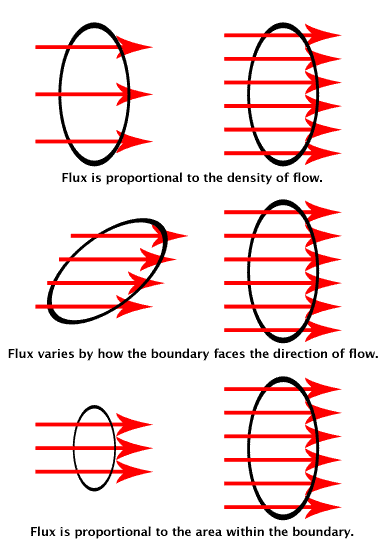
Back when I was studying science I learned about Flux in the context of physical passage: The amount of a defined thing moving through a defined amount of space in a defined amount of time.  In this context Flux is a rate. Something whose motion feels closer to a verb than a noun. I remember in particular a problem on a multivariable calculus final in which bees were flying out of a hive at great speed.

Flux is not the hive. Nor is it the bees. It is a measure of them as they pass from one place to another.

When I get to ruminating poetically, the Flux in me feels like the measure of something moving internally from the person I was to the person I am meant to be.  And right now that feeling, that rate of movement of stuff from one place to the next, that series of continuous changes, all of it feels as if it is being pushed very hard. Like a swift current, the force is visceral. It is gathering momentum.

This is why it is so funny to read my thoughts from a year ago.  Because so much in me feels like it is in motion, but so many of the words remain applicable. Most notably from that year ago, the question of what I am doing and why remains.

Most days planning spools further and further away from the present: a year before I can re-apply to this or that, to get funding to start on the next thing, maybe more before I might be ready for this other opportunity.

And at the same time, the passage seems so quick: A year, an entire year of life and what really is different? What do I have to show for it? Is it enough?

So to the feeling of Flux I must ask: Have I actually, tangibly, changed or does it just feel that way? 52 weeks later what can I say to the person who asked if I could define what I want out of art and cut out the rest of the crap to “really concentrate on making what matters”?

A year ago I was looking for change that was easy and obvious to show myself. I thought about changes in location, in career, in love, in life. I ultimately decided that these weren’t the changes I actually wanted to make.

But perhaps there are other changes. Things that are invisible forces. Changes that are harder to see with the naked eye but that move continents if given enough time.

Here is what I do know:

I don’t feel the need to make a new “play” any time soon.

I might be done making “plays” for a while.

But I do want to make something, and I need to figure out what that is.

And while all my creative impulses are terribly impractical from a producer standpoint, for the first time in a while that feels like fun and not a hindrance.

With luck (and hopefully likelihood) I’ll read this in a year’s time and see what Flux has forced me to find.

– A