Potential

The Means To Manifesto

cooltext1368115366Hey all,

After a couple of mammoth posts past, and a few I’m working on to come, I’m keeping things short and sweet today, if still terribly important.

Instead of sending tons of my thoughts out to you all, I’d like you to send me your thoughts so that I can compile them in time to undertake a task for the next Awesome Lady Squad meeting.

Here’s our first official creation mission: A re-framing of how we look at each other as female artists. Replacing the model of scarcity and competition to a model of abundance.

In other words? An Awesome Lady Lady-festo.

I want to create a code of ethics for how the Awesome Lady Squad will function.  This document should contain clear and simple guidelines that underpin the way Awesome Lady Squad members promise to work with each other and the world around them. It is an agreement that details the ways we can model the behavior we want to see around us.

So you tell me: what does it mean to be an Awesome Lady creator? How do we define what kinds of working models we want to hold up?

Think specific, think concrete, and ideally concise.

Throw thoughts in the comments or on facebook or by email (swimponypa@gmail.com). I’ll be compiling and setting up a committee for this soon.

– A

PS – for some initial inspiration look to the Core Principles of Artist U

The more (of us) you know…

When you really start looking for something you start see it everywhere.

This is how I’ve been feeling the past few days as I draw my attention fully focused onto the topic of gender parity in the arts.

When you really start looking for something you start seeing it everywhere.

I’ve had more substantive conversations and been struck by more observations about this in the last 48 hours than I probably have in the last 48 days. And that’s really saying something, because I think about this a lot. But what’s most interesting and exciting? I’ve also felt freer and more invested in really trying to articulate the difficult honest version of my thoughts. I haven’t dumbed it down. I haven’t tempered my real feelings for the sake of the easier chit-chat. I’ve really tried to say what I believe and then listen back in a way that is open, non-presumptive and curious.

I want to try and capture some of those observations and conversations. I feel like talking in generalities gets us only so far. I really want to share and discuss real world examples here in Philly and figure out how we as a community feel about particular choices. I think this is the best way to really get into the meat of the matter. But I am also cognizant that part of creating safe space is making sure people don’t feel like they might say something to me and then see it online without having been consulted or that I’m putting really specific thoughts about their company in the public eye without being invited to the table.

So I’m gonna work a bit on those writings and I’m going to send them to the people they are in reference to, and my hope is that those folks will not only consent for me to share my thoughts, but possibly get in on the action.

So for today, instead, I’m going to start with what I know: female directors.

One of the things I catalogued last year was the number of women directing for companies in Philly. Female actresses and playwrights didn’t have it easy, but female directors (most especially at larger sized companies) had a rough go of it, especially if you factor out directors who occupy multiple directing slots in a season.

Part of the problem, I think, is a chicken and egg syndrome. More guys are directing which reinforces the idea of the pool of directors being more guy heavy generally and so when AD’s think about bringing in outside directors their first instinct is likely one of the people already visibly working.

Elissa Goethschius started an awesome thing on her website in which she literally just catalogs names of female directors. There is no plug or assessment of each particular person, just a list that shows the sheer size of the population that a person in a position of choice might choose from.

So in that vein I’d like to put out into the Philly arts ether a list, as comprehensive as I can muster of female directors/lead artist types (cause sometimes that distinction is fuzzy) who are working in theater (though again that line gets blurry) that I know of who you might consider to direct the next time you’re considering…

  • Abigail Adams
  • Krista Apple
  • Gedney Barclay
  • Samantha Bellomo
  • Suzana Berger
  • Deb Block
  • Cara Blouin
  • Carly Bodnar
  • Tina Brock
  • Karen DiLossi
  • Anne Marie Cammarato
  • Liz Carlson
  • Jen Childs
  • Candace Cihocki
  • Jess Conda
  • Ginger Dayle
  • Emmanuel Delpech
  • Amber Emory
  • Lisa Jo Epstein
  • Lee Etzold
  • Rebecca May Flowers
  • Charlotte Ford
  • Kate Galvin
  • Allison Garrett
  • Tamanya Garza
  • Arianna Gass
  • Brenna Geffers
  • Anisa George
  • Karen Getz
  • Amanda Grove
  • Jill Harrison
  • Allison Heishman
  • Jenna Horton
  • Candra Kennedy
  • Maura Krause
  • Kathyrn MacMillan
  • Manon Manavit
  • Deb Marcucci
  • Sarah Mitteldorf
  • Maria Möller
  • Sebastienne Mundheim
  • Gigi Naglak
  • Charlotte Northeast
  • Megan O’Brien
  • Erlina Ortiz
  • Malika Oyetimein
  • Michelle Pauls
  • Lizzy Pecora
  • Martina Plag
  • Harriet Power
  • Nora Quinn
  • Erin Reilly
  • Gwen Rooker
  • Jen Rose
  • Sarah Sanford
  • Chelsea Sanz
  • Rebecca Schaffer
  • Jessica Schwartz
  • Joanna Settle
  • Micki Sharpe
  • Catharine Slusar
  • Amy Smith
  • Eva Steinmetz
  • Elizabeth Stevens
  • Sam Tower
  • Meg Trelease
  • Mary Tuomanen
  • Daniella Vinitski
  • Meghann Willians
  • Becky Wright
  • Blanka Zizka

And of course me, Adrienne Mackey.

That’s it for today.

A

PS – I know there are more. Let me know and I’ll update. Also, I’ve only included in town folks for now, though I know there are many who work in Philly but may not permanently reside here.

Talking about talking

So I’ve been thinking a lot in the hours since my last post about how to have this conversation.

I’ve been thinking about how we can best begin to discuss issues of unequal representation in a way that both is honest and straightforward and is also productive and provokes dialogue instead of defensiveness?

In other words, I want to start by talking about how we talk about this.

I find it easy to provoke and push when the target seems large and imposing. I find strength in feeling myself becoming a David in the face of a Goliath. My guess, without having been there, is that this was the awesome power of what happened at #thesummit. It was a moment where the folks on the stage, the ones with some degree of sway and power and perhaps a degree of unknowing complacency, had to take in the might of opinion and feeling of the voices sitting on the other side.

But in a business as tiny as this, in a community where community is key, when networking and positive relationships determine your ability to get a job or a grant next week, month or year, it is easy in the micro-moments of inequity to excuse the tiny things. Too often any one moment or choice or thought seems isolated or small enough to swallow.  And as the distance between we and the “giants” gets smaller, the harder it is to see them as the Goliaths they once were. Little things amass because it’s sometimes hard to know what is and isn’t a battleground.

And let’s also point out that these are really hard conversations to have.

Because so often I see an cry to battle dissolve when it has to translate into the daily implementation of such ideas on the nitty gritty detail level. Based on the conversation in our few meetings of the Awesome Lady Squad I hear female artists find the balance of when and how and where to try and bring these issues up the biggest barrier to change. “Do I really want to make this tiny line or scene or interaction a soapbox?” “Do I want to be that actress today, tomorrow, through this whole process.” “Am I really seeing this or am I being overly sensitive?”

It’s exhausting constantly trying to parsing it out in the moment.

And even if you are sure and you do know it’s an issue, it is so so so so so so so much more difficult to say things that are tricky and sticky to people we know and care about. It sucks to be a watchdog. To be a nag. To feel like you’re stopping everyone’s fun. To put people on their guard. It can feel like the opposite of the artistic impulse, where we want to feel open and accepting of each other. And I think it’s so hard because to have that conversation is also to acknowledge that the ills of our culture, the biases and darknesses that float around us all the time, also make their way into our brains. That we are sometimes making choices with little pushes from beliefs or stereotypes we’d never support if we said them out loud.

I wrote a while back about a study that showed how academic scientists displayed preferential treatment of men when filling a position for a lab manager.

In that post I explained how candidates in the study were never seen in person and scored based on identical applications save for the gendered first name of the potential employee.  I underscored that this bias was shown in both men and women assessing the candidate.  And I made a particular point of noting that none of the decision makers felt their choice had been affected by the applicant’s gender in any way. They all felt they were being totally gender objective in their assessments.

In other words, you can display bias and stigma and stereotype even when you don’t subscribe to them, EVEN when YOU are the negative recipient of them.

It is scary to think that stuff is in us. Even scarier to come to terms with the fact that it can affect our actions despite the best of our intentions. And when confronted with it, defense is natural. From the outside it seems ignorant and bigoted. But my guess is that the real cause is that no one wants to find in themselves dark things they didn’t ask to be in there. So sometimes it’s easier to believe they aren’t.

And it is here I want to point out the latent superpower we are missing: Yes, this is hard. Yes, It is tricky to talk David to David rather than David to Goliath. But.  The closer we are, the more potential impact we are likely to have. The closer we are to them, the more likely we can get people to let that guard down. The closer we are to the offending source, the more likely we are to find a safe space to excise these demons with their hosts intact. And if we can win them to our side we grow our army of soldiers. The less it looks like a war and the more it looks like a conversion, I think the faster the battle will be over. If we have to kill them all, we may still do it, but I bet we lose much more time and resource and energy.

So I think we should begin with two assumptions, even if it may seem idealistic or naïve:

1)   No one intentionally wants to make harmful choices to women artists.

2)   Everyone imbibes some level cultural crap that will predispose him or her to doing so.

So when we look at the choices of a company, or another artist (or in our own work for that matter) and we see something that makes us feel squicky, our goal should be to remind them of #1 and help them see where they might be displaying the crap of #2 (pun by the way, totally intended).

To do that I think we start by asking these questions:

Is it conscious? – i.e. Does the person or company know and realize what they’re doing? Do they identify their behavior as a problem or are they truly unaware of it and its effect?

And

Is it conscionably contextualized? – i.e. Have they passively presented potential problematic material/decisions or have they taken steps (even if imperfectly) to justify them through dialogue or contextualization? In other words, do they balance a guy heavy Glengarry Glen Ross with another play with mostly female cast? Do they perform a problematic cannon text in context of a conversation series about historical representation of women in history to point out the potential in conflict with the morals we have today?

How we assess the answers to these questions will help set the stage for the modes through which we express our concerns and I think also help start to identify the solutions. And in tailoring it in this way, I think we get closer to coming to real understanding of what’s at play in each specific case. Because the devils really are in these details. And if we don’t treat all offenses alike, I think we’re likelier to find specific tailored solutions, likelier to find and commit the people who are ready and wanting to change but may not yet be brave enough or know how on their own to do so.

More on this tomorrow…

A

PS – For some other awesome follow ups to #thesummit look to this from babelwright and this from Tamara Winters

#thesummit

Look.

I am bad at twitter. I don’t tweet much or well. Call me twit-illiterate. It’s also been a heinously busy couple of weeks. Which is why it’s taken me a bit of time to catch up on #thesummit.

More than a few people have passed along thoughts about this. More than a few have asked my opinion. But I wanted to wait until I felt like I’d really read enough about it to have an informed opinion before responding. If you haven’t caught up check out this for an overview. And this for the much commented on tweets in-situ. And here’s the quote from Ryan Rilette quoted from the DC Theatre Scene article:

“It’s really hard, and here’s why it’s hard.  I think it’s hard because there’s not enough in the pipeline right now.  …There are a lot of new plays that are getting produced by small theatres that are by women.” 

He went on to discuss how there are not enough plays by women produced in New York City and not enough in London (although he credited London with doing a great job), and said that a theatre needs something that’s going to help sell any play they put on.  He said one can’t choose a total unknown, and that to find three plays a season by female playwrights would require them to have name recognition or something else to draw audiences, if one is not going to go the route of using star actors. 

He said there are “not enough yet in the pipeline” and that “it’s gonna take a couple of years… a decade… before it’s going to shift, but it’s going to shift.”

A decade. Wow. I’ll be in my 40’s then.

That would be awfully… depressing to have to wait that long for more opportunities to arise. Probably depressing enough to just stop entirely. Something I see an awful lot of my female counterparts begin to contemplate around this age. It would be something I’d contemplate if I actually believed it would take that long. If I really thought my female peers had to wait around for these folks to use that whole decade’s worth of time to see some progress.

But I don’t buy this. And I also don’t feel like waiting.

Which is why what’s far more interesting to me, and what seems to have shifted this forum out of the standard and unremarkable bias women artists see and deal with all the time, is the final provocation of the night from Elissa Goetschius from Strand Theater that included a series of statistics:

  • At Signature, since the 2005 season, only 10 of 90 credited writers have been women, with women directing 2 of 54 productions.
  • Since Ford’s reopened after renovations, 2 out of 29 productions have been directed by women – the same woman.
  • At the Shakespeare Theatre, since opening the Harman in 2007, they have produced 51 shows – none of which have been written by a woman. 3 were adapted by women, and 9 were directed by women.
  • At Arena, since the 1998 season, 44% of productions have been directed by women. However, three women account for over half of those woman-directed productions, while 49 different men have directed here. The plays and lyrics that have appeared on Arena’s stages reflect the work of 110 men, but only 35 women.

When I read that and I thought, “Sounds familiar.”

I’m guessing, like myself, she’s been having this conversation for a long time. And as I went digging into her online presence I found this from March 2013.

I went back and checked my own blog for my statistics project on representation of women in Philly theaters. The dates of these posts? January 8th, 2013 AND February 7th, 2013 AND Febraury 8th, 2013.

Just about a year… Just about a year those facts have been out there. Hard numbers that do not lie about the state of the art we are in. Mine in Philly and Ms. Goetschius’ in DC.  As a former student of chemistry, I really thought when I threw my info out there it would set something off in other people. But it’s been a year now and not enough is different. I still think numbers and data are useful; they are a tool to wield. But they are not, as it turns out, enough on their own.  I admire Elissa Goetschius for going to #thesummit with numbers but I believe it is her fortitude to require their presence in the conversation that really started the firestorm.

Is it odd, do you find it strange, that within weeks of my post about gender parity in Philly theaters last year that another female director in another large America city was taking up another numerical compilation project in much the same way?

I do not think this is incidental. This means that it is clearly time to be having this conversation. I think it’s a sign we are gearing up for the real deal fight. I think it means the troops are gathering the tools we need to start taking this on. The numbers are a beginning. And now it’s time for all of us to make the response to them a necessity.

Elissa, if you happen to be reading this, I want you to know we are having this conversation in Philly too.

Like you, I am not waiting 10 years. I’ve already waited one, and not enough has changed.

So, like you, I’ve decided we’re having it now.

Which is why in honor of last March’s statistics project, I’m devoting this entire March’s blog to this issue. Every day a new article.

Every. Day. A few hours of time devoted to thoughts or actions to tackle this shit.

Cause it is shit.

Which why it stinks so badly.

You can expect more updates from The Awesome Lady Squad soon.

You can expect more thoughts about how we can critique and work with critics to change the way we frame women in theater to our audiences.

You can expect more observations about the myriad of ways we undercut women in subtle and unintentional ways.

You can expect more on what we can start doing NOW to make next year look different.

And hopefully by the end of March, by the time my 3/30 birthday rolls around, I’ll get a big fat present in the form of some actual movement and change.

I’m not giving it a year to start moving.

I’m giving it a month.

Are you ready?

I am.

– A

PS – Also worth reading is the fateful final question-er Elissa Goetschius’ thoughtful response and Brett Steven Abelman‘s as well.

Dispatches from the Awesome Lady Squad #4: On the topic what we’d like to see instead

cooltext1368115366 

Yesterday I reviewed the last meeting of the most Awesome-est of Lady Squads and I ended with a section called:

What we’d like to see instead

This section for me is key.

I believe in the power of talking and sharing and creating a sense of community in perspective. But I value even more the ability to take the power of that sense of community and perspective and identify problems and find awesome ways to solve them. Tackling the issues we identify, this is for me what elevates support into a sense of empowerment. It’s the thing that brings me back to my super lofty goal for us Awesome Ladies: To make Philadelphia a model city for how women work in the arts. Some part of that will be discussion of the problems we face. But I hope a much bigger part is piece by piece finding concrete projects to start tackling them.

And I find that the easiest way to get to that new place is to have a vision of what it might be. So in identifying how to best channel the building energy of the Awesome Lady Squad I started with a line from the  “What we’d like to see instead” category and coupled it with a concrete projects to help start to accomplish it.

This is the list I came up with:

The “What we’d like to see instead”

–       A re-framing of how we look at each other as female artists. Replacing the model of scarcity and competition to a model of abundance.

A project that could help us get there:

–       Create a concise and clear code of ethics for how the Awesome Lady Squad. Inspired by the Core Principles of Artist U this document should contain clear and simple guidelines that underpin the way Awesome Lady Squad members promise to work with each other and the world around them. It is an agreement that details the ways we can model the behavior we want to see around us.

The “What we’d like to see instead”

–       More models of women in roles of leadership and success in the arts. Seeing female artists successful in their practices. A commitment by established artists to identify and foster talent in emerging female art makers.

Two projects that could help us get there:

–       Foster an Awesome Lady Squad Recruit! This could include: creating an survey for young artists to talk about interest areas that is then used to pair them with artists and administrators already working in the field, “Take an Emerging Lady to work day” in which young creators get to shadow women doing their awesome professional thing in action, and/or an “Ask the Lady Squad Anything” advice column in which new Squad members send their questions to the email list in search of advice.

–       An Awesome Lady Arts Administrators caucus. Bring together women who already get to make choices about the work they make and produce (as self producers or as a member of a larger company) and talk about how they can use that leverage for positive gain.

The “What we’d like to see instead”

–       Skills to handle tough conversations about gender parity. A way to talk about this that doesn’t become apologetic or defensive. Something to say when I sense people starting to roll their eyes.

–       The ability to say no to a project that doesn’t conform to my moral code.

Three projects that could help us get there:

–       A “manifesto” of the AwLaSq that details in a fuller form the believes and aims of its members. Defining your core principles specifically will help when you have to articulate them to others

–       A workbook or simple writing project that helps codify and set bars for situations you will and won’t tolerate artistically that you can come back to when trying to decide if you want to take part in a new project.

–       Conversation toolkits and practice. Just like a business negotiation, knowing that you’ve done this thing before is half the battle. This task force will identify such potentially sticky moments and help craft language and talking points that are clear and concise. It will also identify the potential counter arguments and possible responses. These “toolkits” could be downloadable online. We could also organize a session where people simulate these conversations with others coaching from the outside so that there is a low stakes situation to practice so they are more confident and comfortable in the moment.

The “What we’d like to see instead”

–       Female directors, designers, administrators and actors represented in equal numbers.

A project that could help us get there:

–       Create a symbol of Awesome Lady Approval for arts organizations that meet a certain minimum set of Awesome Lady requirements. Before minimum wage was mandated if you were an employer willing to pay a certain wage you could display a certain color flag. What if Philly had a stamp that you could put in your program, on your door, in your marketing material that indicated that your company had a commitment to women in the artistic community? Using this positive reinforcement, we could also find ways to make sure our audience bases understood what this symbol means and to help promote the theaters that make this commitment.

The “What we’d like to see instead”

–       More awareness of the size and scope of the problem.

Two projects that could help us get there:

–       Create an Awesome Lady Squad shirt. Make it something awesome that you will definitely want to share with the world. Then make a promise that any time you wear it and someone sees it and asks about it you stop and take a second to share a bit about the vision of the squad. Possible offshoots:

  • Use any proceeds to fund childcare at future Awesome Lady Squad events
  • Organize a city-wide Awesome Lady Squad “shirt-in” day to show the size and reach of all the awesome ladies that live and work here

–       A marketing effort in conjunction with our other projects (like the gender report card or Awesome Lady approval symbol) to help reach not only fellow creative sector workers but audiences as a whole. Use the model of the DC based female playwright initiative to create powerful marketing leverage that makes it Awesome and sexy to be a part of the movement.

The “What we’d like to see instead”

–       A genuine curiosity in discussions we have with people about these issues. Figuring out what’s really motivating the choices that undercut female artists and getting at them. Not assuming the worst of our peers even if they display behavior we don’t approve of.

A project that could help us get there:

–       Create a “Gender Parity Report Card”:

  • Develop a set of standards as a Squad for what poor, mediocre and outstanding work at creating equal opportunity for Awesome Ladies looks like.
  • Gather measurable, concrete, data to evaluate artistic producers in Philly and then create an awesome and well-articulated assessment of that data we share with these companies along with an invitation for dialogue about the results.
  • The key here is to find out 1) if theaters know their own stats in this regard 2) if there are trends that might indicate a lack of opportunity for women if they are willing to dialogue about how and why such trends occur 3) if they are willing to make a commitment to change

The “What we’d like to see instead”

–       A way to share these issues with my male colleagues. A means by which they can help support these issues when they see them.

A project that could help us get there:

–       Bring together an Awesome Lady Squad support team: Set up a meeting that includes a discussion forum specifically for guys who think the Awesome Lady Squad is awesome. Talk about ways that they can become Awesome Lady Allies and strategize about means through which they can help. Give them some of the tools we offer the core members so that they can go and spread the Awesome word.

And finally:

The “What we’d like to see instead”

–       Funding targeted for women that doesn’t carry a social change element.

–       Non-traditional funding opportunities and alternate way to fund and produce work

–       Subversion of some of the power systems that currently undercut the issues we’ve discussed. Starting a conversation on “this is the way that funding has worked” and “here’s how it might work in the future”

A project that could help us get there:

–       An Awesome Lady Grants and Funding Task Force that:

  • Meets and discusses what might be problematic about certain kinds of funding structures
  • Strategizes about ways to approach funders about these concerns
  • Envisions and articulates the kinds of funding we would wish in Philadelphia for the future and shares this vision with the funding community
  • Works together to try and brainstorm and create alternatives to the current structures

These are what I envision as the first tangible steps towards seeing the “What we’d like to see instead.” And over the next year, they’ll be the ways the Lady Squad starts gathering energy and focus around all those things we discussed.

The next step is to figure out which of these takes our energy and focus first.

If you have thoughts about what should happen first, let me know.

If you have expertise in one of these areas and want to help out, let me know.

If you have a lot of passion about one of the items and want to get in on the ground floor, let me know.

If you don’t really care where we get started but are interested in helping to organize or send emails or type minutes or whatever just let me at it, let me know too.

And soon, let’s say in the next couple weeks, we’ll roll out the first phase of one or more of these…

Until then…

A
52 Weeks, 52 Plays: Week 2

So first off I want you to know that I’m aware it isn’t the second week of 2014.

I have been reading a play a week. I’ve just been a little backlogged in getting thoughts about them onto (virtual) paper. And I say this mostly because I am super judge-y of folks that start grand resolutions and barely complete the opening stages. And because I assume everyone in outside world is the same as the voices in my mind, I want to appease your judgments.

Clearly, there are times it’s a dark place in my brain.

Anyway.

For the second week of the year 2014 I read The Play About My Dad by Boo Kellebrew. For the uninitiated, a reminder that I’m intentionally not reviewing these works (you can read about why here) but instead free associating on the theatrical elements or ideas this play proposes or makes me think on.

The Play About My Dad is indeed, as the title suggests a play about the playwright and her father. It is also about Hurricane Katrina and the way in which we think about epic disaster on both the very small and personal and very large and overwhelming scales. The piece weaves past and present by jumping between conversations between the playwright and her father, ostensibly writing the play for the audience in this moment in front of us and three other perspectives on Long Beach Mississippi, a town very close to the Gulf and massively affected by the storm. The three other stories center around Essie – a woman who raised Larry (playwright Boo’s father), Neil and Kenny – a pair of EMTs who knew the family when Boo was young, and Rena, Jay and Michael – a family who are caught literally and figuratively over their heads when they try to ride out the storm and who meet Larry (a doctor) when they arrive at a local hospital.

Unlike the play from week 1, this piece is satisfyingly messy in lots of ways and doesn’t wrap up storylines in neat packages. There are little bits scattered through the play – the rift between Essie and her daughter – in which the playwright hints at connections between these characters and the turbulent relationship between the playwright and her father. The show is clearly a metaphor, but an incomplete one, one that seems not wholly processed or understood. I liked this about the work, that like most of us, our deepest interpersonal relationships are not ones that we often have completely sorted out and that this complexity is brought into sharp focus most when we are confronted with extreme calamity.

From the moment it begins there is a meta device at play in this play, one in which the playwright’s father is supposedly speaking to the audience. We hear “Boo” (the playwright’s same name) tell her father to stop putting on his “acting” voice. Later the same character points out the theatrical devices (changing lights to indicate shifts in time) that underpin the staging.  “What a funny thing,” I thought as I read, “to draw my attention to the insincerity inherent in acting by one who is in fact acting and therefore inherently insincere themselves.” I looked up the show’s past production to note that in fact the performer was not the playwright’s father (nor did the playwright appear onstage) a fact the audience would ostensible know. It requires a fair amount of mental calculus I think to ask us to become aware to some aspects of the “falseness” while still blissfully suspending our disbelief for others.

This theater trick, one that happens a lot, falls under a category I call: The Betrayal of Fiona Shaw. A while back I saw her at BAM in Rime of The Ancient Mariner. At the start of the piece Ms. Shaw emerges from the wings in a track suit and tennis shoes. She walks out into the house and begins to talk with people one on one. Some are clearly friends she knows, others are strangers she greets and chit chats with. It was literally electric in its effect on the audience. It was one of the most amazing moments of theater I’ve seen in recent memory. She began to bring up men to the stage, one at a time, to try on a hat and strike a pose, ostensibly to take a small part in the story she was about to enact. Her simple presence, us knowing who she was and the fact that she was out among us made the entire room focus their attention like lasers on her. Small children’s arms almost pulled out of their sockets as they vied for a moment onstage. Men around me furtively chatted with their wives about whether they ought to throw themselves into the selection pool. It was fabulous.

And then. And then. And then.

And then Ms. Shaw brings up a guy with a super fake looking trench coat. He clearly has never worn such a coat in real life. She goes through the same motions but this time there’s something awfully rehearsed abut the proceedings. All of the energy and immediacy is gone. I notice he has dance shoes on. I look in the program and I can see there is a second performer in the picture of the show. And he looks exactly like this guy.  Back in the performance she pretends as if she is dissatisfied and has him sit, not back in his seat, but in the front row while she selects a few more.

This, what I can now see is a charade, enrages me. All the things that I loved about the moment before now seem fake and tainted. I feel as if I have been tricked and I want to expose the trickster for doing so. So when, as I knew would happen, she goes back to the young dancer man with the shoes and the bad coat, I am nothing but smugly disappointed that I knew the whole thing was a lie.

This is the Betrayal of Fiona Shaw.

It isn’t that theater requires me to pretend. It’s that you take advantage of that generous instinct when you expose or undercut the fantasy with such antics but then require me not to go too far. Get me to think that I might get to be a part of the stage show, then make me feel foolish for have invested the energy to believe I could be in it.

Ms. Shaw’s Betrayal made me want to point out that I know that the actor playing Larry is not actually Boo’s father, nor is Boo actually Boo. Would it be impossible to truly put that person onstage? Maybe… There is something compelling about a “non-actor” (as one sees in some characters in a Wes Anderson movie or a piece like Beasts of the Southern Wild). As a group we discussed what it would be like in a play like this to work with the actual father, discussed the trickiness of this, because unlike a movie you not only have to pull this moment out of someone but get them to do so consistently, over and over again, that this is the endurance power that a theater maker needs.  We settled on a wish for another layer for the work that says “I’m not actually the father but I’m going to act as if I am.”

What is barely indicated in the play is sound, a recurring fascination of mine, an element I think would also change this work intensely. I hear the sound of the storm as I read this play and I imagine it coming from everywhere. Again like the previous week’s play, the sense of the rhythm of this world as created by sound that surrounds the space, makes it more than a disengaged visual and binds the bodies of the viewers into the space. Unlike the previous week, the sounds of this world seems to need to be human sized and I kept hearing a chorus of voices rising and falling in layers of sound beds as the piece continued.  In this vein, I love the idea of a performance in a place that was as anti-theatrical as the instinct to put the father onstage, to expose the workings. Perhaps it is a room where we see all of the things that make the play happen, capitalize on the power of theater to transform the pedestrian into the magical. Or perhaps we are in a space where there are dark corners and things that can hide unseeable but in plain view. Either way it feels like entrances from wings and “offstage” undercuts the feeling that all of this is happening right now around and among us, that there is no escaping and that we as the audience, just as the characters are bound to ride out this experience until its end. There are no places we can escape here.

Throughout the reading of it, this work made me think about the texture of water. Its undulating, slow amassing, its pelting cold, its fetid stagnation. Water is everywhere in this play – both in the imaginations of the characters and increasingly surrounding them as the story continues – and as a stager of plays I kept thinking, “In performance what would be more powerful if that presence were real or implied?” For the pair of EMTs stuck in an ambulance marking the level as it slowly raises around them, I really really wanted to see and feel real water. And contrastingly, with the family stuck in their attack, I wanted just the opposite – water that is implied through light, through sound, a presence that is ominous and lurking, but never actually visible.

There is something delicious about water in a theater space, an element that feels simultaneously alive and inhuman, one that is so incredibly un-controllable. Its presence en masse seems almost decadent. Why else do we coo at the thought of Mary Zimmerman’s Metamorphoses in a pool? It feels like some of the purest kind of spectacle, almost cheap in its ease at satisfying our craving for theatrical effect. While discussing this play I came across a company that created a silent version of The Tempest for DC-based Synetic Theater.

Try and tell me that without the water that production looks half as interesting. In college, I created my first devised work on the Greek myth of Ceyx and Alcyone. It was one from the Zimmerman Metamorphoses actually and tiny Adrienne was so hungry to create in her own rehearsal room the lush grandeur that I saw in that production (three times, no less). In performance one of the buckets of water that we had placed onstage slipped out of the performer’s hands and covered the theater floor in an inch of standing water. The scenes that followed – one lover fighting another not to leave, a god destroying a tiny boat as its occupant’s families watched, the transformation of a sail into the giant wings of a bird – were all utterly transformed as water clung to the bodies and fabric. It was the moment I learned that as creators we must must must accept our lucky accidents. That we must be open to creative gifts that we haven’t planned. It elevated the thing I was trying to tell in a way I didn’t know I absolutely needed.

halcyon11-1024

Theater always looks better with water. (Hey that’s Ben Camp in college!)
 

But I also wonder if that kind of clear and poetic and beautiful water is the same water of Kellebrew’s play. The kind of water in these pictures does indeed seem somewhat cruel but it is also achingly lovely. It, like a Baudelaire poem, is an image whose savagery is blunted by its beauty. And so perhaps to give us that poetic water is an easy out, a way to shield us from the real horror of such an experience. The other thing that I felt so intensely in this work is the suspense of waiting. Early on in the play, the semi-omniscient Kenny reveals that today is the day that he and Neil will die. In another space, this could be maudlin or silly, but here it truly sets the tone of anticipation. Of the sense that one’s outcome is determined and all that is left now that the wheels are in motion is to wait and wait and wait.  So I wonder if the staging, like the play, doesn’t also require us to wait for that water, to want to feel its beauty at the same time we fear its power and perhaps, as Essie is released near the end, to use that loveliness when we need it most: in the midst of our most difficult moments, when we need to create poetry out of the depths of our despair.

And I think that’s about it for this one. Week three soon to come!

– A

And if you want a little bit more info about the playwright you can get her bio from her company CTown here:  http://www.collaborationtown.org/whos-who.html

Dispatches from the Awesome Lady Squad, #2: In which the ladies plan to meet for a second time

cooltext1368115366I’ve been feeling lighter lately.

I’ve been walking around with just a bit more bounce in my step.

I’ve been feeling, well there’s just no other word for it, rather awesome indeed.

I believe I’ve been feeling that way because for the first time in a long time it seems like change is imminent.  Over the past few years, I’ve spent a lot of time worrying about finding my place as an artist in the world. I’ve worried about whether I was doing the right thing. I’ve worried about whether a choice I made would get me on the right path. I’ve worried if I’d ever land in the place where I was supposed to be. But you know what? I think I’m finally, finally, finally, realizing that the whole idea that there is a right place, that there is one just path, that there’s even a standard of measurement that is anything close to absolute is a load of crap. And that realization is part of what I think is making me feel so awesome in particular about the Awesome Lady Squad.

After the last squadron meeting I felt the positive power of defining a new perspective. About refuting the idea that there is an absolute when it comes to what’s “normal or that there is a fixed set of disadvantages and that there are givens that stay given about the way that things work.

I thought about the way I run my theater company: as a hybrid artist somewhere between non-profit and individual who is able to make the kind of creative work that doesn’t fit easily into categories and still manage to pay my collaborators the same level as many mid-sized theaters in town. I’m pretty sure that if I’d asked my mentors first coming out of school if such a set up would be possible, they’d have all said no. My guess is that at that time they would have told me there wasn’t funding or structure or opportunity for such a different way of doing things.

At the time, there probably wasn’t an obvious route towards what I wanted.

Now, there is. But that’s only because I found it.

I’ve spent a lot of time in 2013 fretting about whether it’s possible to change how women are treated in the arts. And as one of the attendees from the last meeting said, it’s a feeling that has taken up a lot of space in my life. I’ve felt mad that things aren’t the way they should be. But at this moment, I’m a lot more interested in putting that energy towards actually getting them so they are.

Right now, the route to doing that isn’t obvious.

But after we do it, other cities can look to Philly and see that it was there all along.

The resolution I want you to join me on in 2014 is this: you have to know – not desire, not wish, not hope – but deep down truly know that there is a future world where the Awesome Lady Squad doesn’t need exist because we’ve solved all the problems we’ve identified. And we need to know that it’s going to become reality, and soon. Gathering people and realizing that you are not alone, that your perspective is one that is shared by many, that your view of the world need not be rage-inducing or isolating, that you can indeed find a space where every person around you also starts from the same set of ethical givens, this is the first step. It’s an important one. Because it’s the one where we all have to stop and say, hey, the things that I disagree with are actually NOT truth. They are NOT givens. Not in this room. Not right now.

And once we carve out a little bit of space to stake our the Awesome Lady Nation, we’ll be able to invite the rest of the world in as citizens. One by one, we’ll make them all denizens of our Awesome new world.

Charting that course is already underway and you can check out our first scouting mission here. On Sunday January 26th from 7 – 9pm at the Arts Parlor (1170 S Broad) we walk just a little further down that road.

We’ll use the same format from last time, me asking some big questions, and you guys sharing your big answers. For a few hours in a few square feet of space we’ll create a world where people believe in equity and fairness and respect for female creators. And if we can make it true in a room at the Parlor for a few hours at a time, there MUST be a way to expand that perspective, that new sense of reality past that room and out into the world.

Hope to see you there.

An as always, thanks for being awesome.

– A

52 Weeks and Flux

I used to put pictures up with my posts a year ago. Does that make them better?

A year ago I wrote this.

One year.

It sort of seems impossible.

Dear reader, in some ways it feels as if that person and her impulse to write could have been me both 10 years and 10 minutes ago.

Yet, in thinking about this past year, I also sense a slow tectonic level type of shift. And while this movement has quite possibly been in the works for a very long time, perhaps since the start of my creative career, it also feels like a wave finally beginning to crest.

And troublingly, I don’t quite know how to say any of this. Not in a way that feels specific enough. That feels like it really articulates it. I just know that there is a high level of Flux in me right now.

I like this word – Flux.

First searched in the dictionary Flux is listed as this: “A series of changes.” And also “continuous change.”

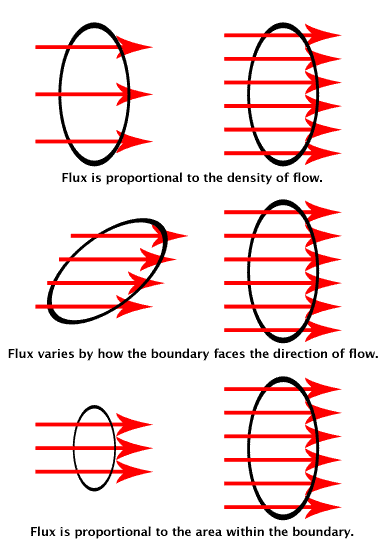
Back when I was studying science I learned about Flux in the context of physical passage: The amount of a defined thing moving through a defined amount of space in a defined amount of time.  In this context Flux is a rate. Something whose motion feels closer to a verb than a noun. I remember in particular a problem on a multivariable calculus final in which bees were flying out of a hive at great speed.

Flux is not the hive. Nor is it the bees. It is a measure of them as they pass from one place to another.

When I get to ruminating poetically, the Flux in me feels like the measure of something moving internally from the person I was to the person I am meant to be.  And right now that feeling, that rate of movement of stuff from one place to the next, that series of continuous changes, all of it feels as if it is being pushed very hard. Like a swift current, the force is visceral. It is gathering momentum.

This is why it is so funny to read my thoughts from a year ago.  Because so much in me feels like it is in motion, but so many of the words remain applicable. Most notably from that year ago, the question of what I am doing and why remains.

Most days planning spools further and further away from the present: a year before I can re-apply to this or that, to get funding to start on the next thing, maybe more before I might be ready for this other opportunity.

And at the same time, the passage seems so quick: A year, an entire year of life and what really is different? What do I have to show for it? Is it enough?

So to the feeling of Flux I must ask: Have I actually, tangibly, changed or does it just feel that way? 52 weeks later what can I say to the person who asked if I could define what I want out of art and cut out the rest of the crap to “really concentrate on making what matters”?

A year ago I was looking for change that was easy and obvious to show myself. I thought about changes in location, in career, in love, in life. I ultimately decided that these weren’t the changes I actually wanted to make.

But perhaps there are other changes. Things that are invisible forces. Changes that are harder to see with the naked eye but that move continents if given enough time.

Here is what I do know:

I don’t feel the need to make a new “play” any time soon.

I might be done making “plays” for a while.

But I do want to make something, and I need to figure out what that is.

And while all my creative impulses are terribly impractical from a producer standpoint, for the first time in a while that feels like fun and not a hindrance.

With luck (and hopefully likelihood) I’ll read this in a year’s time and see what Flux has forced me to find.

– A

Some days I’m just tired of talking about money

There’s a moment in Inside Llewyn Davis that absolutely slayed me when I saw it on Monday night. The movie, which follows a young folk singer from Greenwich Village in 1961, shows an artist struggling to survive. There’s plenty of emotional twist and turnage that make this film an engrossing one, but the moment that gutted me, that hit awfully close to my own heart’s home was one about two thirds of the way through. The protagonist has taken an arduous journey from New York to Chicago in hopes of impressing a music mogal named Bud Grossman. Llewyn Davis arrives in Grossman’s office looking beaten. He asks for… what? Recognition, money, help, something he doesn’t even quite know how to ask for, for an opportunity it seems he already believes he has no shot at.

Grossman looks condescendingly at the record he has just been handed, one bearing the same name as the movie, and says something to the effect of “Well show me what you got. Show me what’s Inside Llewyn Davis.

So he does.

In a dark, half lit room, the character nervously sits with this man who holds the potential to change his future, a man who sits like a stone staring, unblinkingly at him.

Here Llewyn Davis sings.

Sing beautifully, achingly, heart-breakingly open. The camera moves so little, it is one of the closest things I have felt in film to the real spirit of live music, to being that close to someone who is filled up with song. For me, it felt as if I was witnessing someone doing the very, exactly, and absolutely necessary thing they were put on the earth to do.  It felt that for Llewyn Davis music is the language that he as a person is truly intended to be speaking to the world. And the song, which I barely remember, is itself almost besides the point. The singing of it, and the feeling of doing it, is what’s really worth watching, and in the act is contained a beautiful kind of holiness.

At the end of the song there is this thick and vulnerable silence that feels like nakedness.

The man with the power looks at the one without and with all the casualness and ease of a Hawaii vacation, with all the finality and solidness of a period at the end of a sentence, says to him:

“Well I don’t see any money in that.”

Sucker punch.

In the heart.

With a spear.

Made of ice.

I’ve thought about that scene for days now. I’ve repeated this line to myself over and over and somehow, it only makes it worse the more I think about it.

Why does this injure me so much? Why does this wound to an imagined artist from 50 in the past get to me so much? Why does the reduction of one person’s lovely song to a lack of dollar signs get in me and stomp around? I keep asking myself these questions. And I really do wonder why, in a life where I spend so much time and effort fretting over and raising and dealing with and paying out and worrying worrying worrying about money why this stupid little line in this movie has got me so twisted and tangled inside.

This happened to me, this moment, in almost exact verbatim.

I was sitting across a table from someone proposing a production of my work. I was asked to describe the project that I wanted to create. I talked about the legacy of a movement and the music that it produced. I talked about the textures of peeling walls and echoing voices down a 200-foot corridor. I spoke about the sweeping grandeur of becoming a legend and the power of watching and listening and singing as the eye bounces between the living humans and the decaying space that contains them. And for once, happily, when I finished speaking I really felt that I had captured it, this vision of my future creation, at least in part, at least enough that I believed I had spoken about it with honesty and truth and sincerity.

And at the end of speaking, I too found myself in a moment of silence, thick and vulnerable, waiting in a kind of nakedness.

“I don’t think we can get enough chairs in there. I don’t know how we’ll be able to cover the costs of this thing.”

Same story, different medium.

And you know the funny thing?

I felt bad for having done it. I felt stupid for bringing such a proposal in. Preposterous, even, for wanting to do something so commercially unviable. That I came to that meeting kind of knowing and not really caring that the thing wasn’t ever going to make money, that it was an inordinate amount of work for such a tiny number of potential audience viewers, but that I didn’t care and wanted to do it anyway. That I believed in its value despite this.

Here is a true statement: I am not a religious person. I was not raised in a tradition of faith.  But sometimes when I make something it opens up a space that is larger than myself. And that space it is the closest thing I know to belief in something higher, bigger and more powerful than me. The moment of creation is the moment in which I feel the distinguishing line between the tiny bits that make up me and the tiny bits that make up the clothes on my body and the tiny bits that make up the people in the room and the lights above my head and the sound that passes between us and the floor that we rest on and the building we reside in and the whole rest of the world, all those tiny pieces become one part of one big thing that we all share together for the moment that the feeling passes through all of us.

Eventually I did end up making that piece that didn’t have enough chairs to make it monetarily worthwhile.

But I will never forget that moment: when you hope that the person sitting across from you, by virtue of being so close to the thing you have committed yourself to will understand, when you dream that they will see the world and the thing you show them with the eyes with which you also see it. When you imagine for a just a moment that it might be as easy as it was before you had to start selling the things you’ve made, things that in truth you would rather give away freely for the sheer love that the creation of them affords. It is the definitive nonchalance with which that hope is shattered, the tedium with which the deepness and sanctity and need you have for what you make is disregarded. This misunderstanding of what the art’s usefulness is, what it is there for, this is what punctures the chest.

It is not intended as cruel, this act of refusal, this alternate measure of art’s worth, but it is presented as truth, which to me is so incredibly much worse. Because it makes one feel that such a feeling is so thoroughly beside the point, and that you the person feeling it are silly and small in doing so.

It’s negotiating the massive space between a dollar sign and the thing that lights you up inside and makes you so much bigger than you were before. It’s taking that thing and then having to figure out how you can push and poke it so that 50 chairs instead of 40 fit inside your vision of it.  It’s taking the most beautiful song that you know how to sing, the one that comes from way way way deep down inside you and being told, as if it’s the simplest thing in the world, that it will never make any money.

It is the definitive and inflexibly casual insignificance of the artistic product when it is unable to be shaped into commodification.

This is the thing that hardens the soul.

This is the moment of singing that song, Llewyn Davis, and I feel it with you.

Fuck You Manic Pixie Dream Girl

Holly Golightly: Did I tell you how divinely and utterly happy I am?

Paul Varjak: Yes.

A few months back during Fringe season I went and saw a show inside a real house. It was a lovely play with breakfast and beautiful writing and was based on Breakfast at Tiffany’s. (The book not the movie, in case you were wondering.)

This is a post I’ve wanted to write this post ever since then.

Not because the play was bad, because it wasn’t – it was wonderful actually, one of my favorites of the season – and though I loved the staging, the writing, the actors, so much about the experiment in dramatic form start to finish, despite all this afterwards when I sat in the car with my partner in viewing-crime discussing what we’d seen all I could think was:

“God I detest that female character.”

Not the actress, not the writing of her part, but that faux feminine charming and carbonated, silly yet exotic, tiny pink banged and attractive and mysterious and wild and ukulele playing, Natalie Portman-esque, devoid of any actual humanness cypher of girlishness. Film critic Nathan Rabin put it far better that I when he called her “that bubbly, shallow cinematic creature that exists solely in the fevered imaginations of sensitive writer-directors to teach broodingly soulful young men to embrace life and its infinite mysteries and adventures.”

Fucking manic pixie dream girl. I hate her so much.

I didn’t write this post back then because I liked the people who put the play on and I didn’t want to hurt them by bashing it when so much of it I truly enjoyed. Especially when I really didn’t have anything more to say on the matter than the fact that I really detest this trope, one I see as rooted in all kinds of shitty ideas about girls and women and the kinds of people they can be, one whose recent “emergence” in this particular form is cloaked in a kind of faux liberation. I think versions of her have been around far longer than we realize. The manic pixie dream girl (or MPDG as I will call her from here out) embraces a “seize life!” zeal but only in so much as it is thrown at her pent up male would-be partners. And while I find this odious and tedious in the extreme, while I have in many ways created my sense of aesthetic and artistic purpose to fly in the face of the MPDG’s twee triviality and lack of substance, at the time I didn’t really have much more to say on the matter. I just had my silent fervent hate.

However, this summer into fall, I have been spending an awful lot of time with women a fair bit younger than myself. Amazing, bold, incredible young women. Women whose ideas and humor have surprised and delighted me, who brought choices into classrooms I could never have predicted and who found inventive slants on characters I have seen performed dozens of times. I look at these young women with their incredible talents and wild and weird inner lives and it fills me with joy.

I admit that many of these fantastic people I underestimated upon first meeting. And I think that’s in part because it took some time to find the strange and silly underbellies that were hidden within them. Wild and wondrous senses of daring, humor and ridiculousness that I suspect are not often enough given space to be explored. And I wonder if this lack of space isn’t partly what constrained my seeing the wholeness of them. And then I think about the kinds of roles they will have available to them in a year or ten year’s time. I think about the shows that I have seen recently, the struggles of my female friends who are performers, the distance between the roles that they have truly loved and the ones they have had to suffer through to keep a face to their name in the acting world. I race in my mind for plays that I could bring to these lovely young ladies, works could lift them and their wildness up.

I have so much trouble doing so. There are more than none. But there are certainly not enough.

In high school when I got really serious about theater I committed to reading a play every week for two years. I raided my theater department’s library in hopes of finding the great roles that I wanted to inhabit someday. And while I found a few, I also realized that more and more there were plenty of stories that intrigued me, that tantalized and pulled me in, but had no women in them or only a few or none I personally wanted to be unless I was cast across my gender. And slowly over time one half of a dual cast narrator from Joseph and the Amazing Technicolor Dreamcoat, the hyperventilating Alma from Eccentricities of a Nightingale, Widow Begbick in Brecht’s Man is Man, even the beautiful and frustrated monologues of love from Twelfth Night’s Viola, these roles, despite being some of the best I could ask for, just didn’t feel quite enough any more. They were the stories that were made available, but none of them felt exactly enough mine to continue telling. And somewhere in the midst of this it occurred to me that I could tell some of the stories that excited me through the performers onstage even if I didn’t actually have to be that body up there in front of people.

This frustration was the one of the forces that ultimately pulled me out of acting and into directing. In the latter space, one in which the stories I told were not limited to the options others presented to me, it felt like I had more I could say and more ways I could say it. And I found the plays, fewer and farther between than I’d have liked, that highlighted the female roles I’d wished I’d been offered. And when I eventually realized that even beyond these lay the opportunity to create new stories that were entirely of my own imagining, I finally believed that there was enough substantive food for a life of digging into artmaking.

The problem I see with the MPDG and princess and all the other lame female counterparts in much of our contemporary storytelling is that they teach women (and the girls who grow up to become them) that these are the extent of the roles that we have available to us. In art, and I think also in life. I read a study about how the greatest predictor of the number of girls that will grow up to work in science and technology-based fields is hugely correlated with how many women are working in these fields in their community. Not even how many they personally come into contact with, but the number that exist generally in their sphere of being. I would guess that the increase has something to do with a young person’s sense of awareness that such a thing is possible.

It is hard to imagine beyond anything that you know of or have seen. Our narrative context fuels so much of the imagination we later have available to us. So what you see and what you encounter in the stories you take in, especially in formative artistic years will inevitably shape the possibilities that you allow yourself in the future. I fear and I worry that the amazingly bold and smart and incredible young women I have met will be limited to becoming the most amazingly bold and smart and incredible versions of MPDGs and princesses and nurses and ingénues rather than applying those same forces of will and intellect towards the multitude of other avenues that might be available to them. I worry that if some aspect of them is too hard to squeeze into those narrow shapes that they will be excluded. I worry that if they do fit inside them that some of the other incredible parts of them will be pushed out so that they fit more neatly within.

My first year out of college, when I had so few moorings, so little outlet for the stories I wanted to tell, I flirted with becoming the MPDG. I became enraptured with a boy and then became enraptured with my ability to construct a persona that I thought was charming and alluring. And I, despite my feminist upbringing, despite my experience crafting my own stories, despite my sense of myself as a strong and independent person, found it easy to default to a narrative that seemed pre-designed for me. I could sense this trope and its effervescent power and in little bits and pieces I began playing and becoming her. I felt her narrative pull and began to conform my outer self to match it. Then one day this boy gave me a movie and told me that a character in it reminded him of me. And at the end of that movie I realized in no small amount of horror that he wasn’t wrong, that I had made myself to resemble this precious punky person and that I had created a vision of my life in my own mind in which I was a side character.

It was only when that version of my life story and the caricature of myself that I’d formulated within it began to fail that I realized how little of my whole self I’d really offered.

This is the power of art and narrative, whether we make it or consume it. It shapes our sense of ourselves in the world. It can limit not only our sense of being in the works of art themselves,  but it can transform our ability to conceive of ourselves in the world at large. A new incredible story at its best helps us change the way we think. It offers us a vision of a world that we might hope to live in. And when we limit our narrative selves to these paltry simplistic women, we limit the kinds of women we imagine we can be. And by passing those stories on, we teach our younger female counterparts that this is enough to be satisfied with.

I worry for these young ladies that I have met over these past many months. I worry that their outward forms will dictate so much of their inner artistic work. I worry that they have grown up on these stories that do not contain the entirety of them and I worry that they will be forced to shrink themselves down to fit inside the ones that are made available. I want to grab them and tell them that they should demand huge spaces in their artistic lives. That the stories we tell are the way we make sense of the world around us. That creating visions of how we can be is how we begin to become that. That they owe it to themselves and the women they will become.

That they are more than MPDGs and her static character counterparts. For she is singularly dimensional. She does not advance through the course of the story. She is there to shift the inner workings of others. She is inwardly inanimate like a rock. The manic pixie dream girl has no opportunity to change or shift or grow or move.

There are a lot of reasons that I make my own work. This is one of the biggest ones. It’s why I write this post now, several months later, not because my singular dislike of this character matters very much, but because I want to tell them they are not like she is. That they can do so much more than any of these things.

– A