art

Writers of Stage and Page: Erlina Ortiz and Kirsten Kaschock

erlina and kirsten

Two more “coffee date” creators! Today we have:

Erlina Ortiz (directing, playwrighting)

Kirsten Kaschock (writing, choreography)

This particular brand of cross-pollination feels unique.

Unlike almost all of the other pairings we did in this round, these two are creators (at least partially) in the same medium. And yet in most every other way – cultural influence, stage of career, form in which your words are expressed – their works differ. Couple this with me and my own burgeoning sense of language and you have three pretty different wordsmiths. The panel and I really liked the idea of a conversation between writers at different ages, of different races and cultural backgrounds, using different kinds of means to communicate language. And yet, despite those differences we do have a common a background in some kind of live performance form either theater (for Erlina and I) and dance (for Kirsten).

Erlina, third from the left

Erlina, third from the left

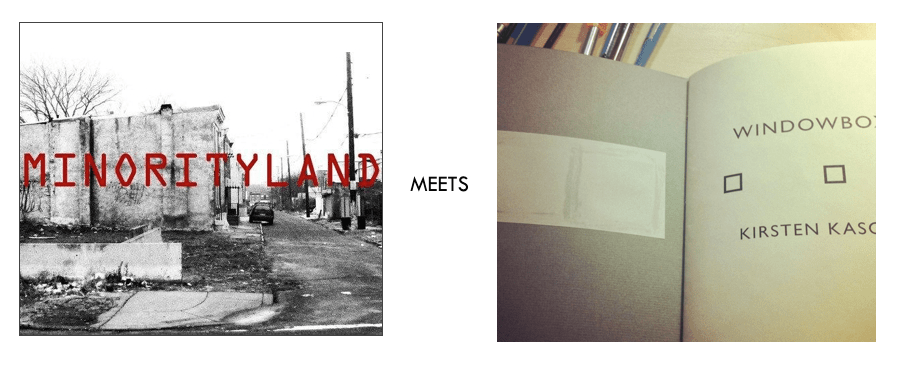
What struck us most in Erlina’s application was the review by Citypaper for her piece Minorityland. That the reviewer admits to all her preconceived notions about what Erlina’s work would be and how she would assess it, that she admits to not wanting to participate in the issue that the work is addressing and that she then flat out says that she was totally and completely wrong on every count… What a powerful testament to a young creator’s ability to transcend the powerful stereotypes that others will put on her as a young woman of color. What great evidence that her writing is something we should be paying attention to.

For Kirsten it was clear that she’s hungry to take your writing in new places. And how exciting to find a writer in this place after a Sleight-356x535successful career with a large body of output, how amazing to be on a precipice of something wholly new. I loved the bit from her novel Sleight, loved the slow burning build of tension that the back and forth between the interviewer and subject creates. It’s a lovely and quiet power. One that made me guess at answers in advance, trying to anticipate the person I felt myself in conversation with.
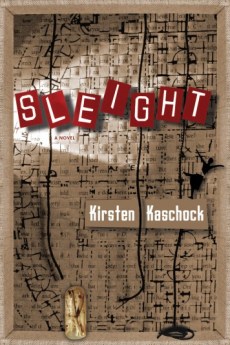
I think… well, I think I sleight because I always have. My mother sent my sister Lark and me I guess for poise and I was good. And when you are good and a girl at something you stay with it—maybe for all the goodgirl words that come. Goodgirl words like do more, keep on, further—instead of the other goodgirl words—the if-you-are-you-will words—be nice and softer and you don’t like fire do you? – From Sleight

It was this sentence from Kirsten’s application:

“So far, what I have not been able to achieve as a writer is a creative (rather than scholarly or documentarian) relationship with the performing arts. Because I have a background in dance, I often wonder if I have shied away from more text-based theatre because I felt more qualified and educated in movement techniques.”

that made me think of this pairing. Because it would be so exciting for Kirsten to offer Erlina the gift of decades of experience and vice versa for Erlina to offer the memory of the gusto and daring of first setting her words free on a stage. It would an erlinainteresting mash up to see how these two writers might write together. How their differing experiences and approaches could inform each other. How their experience with their respective strengths might shift each other’s sensibilities.

Erlina’s application describes her creation process in a sample convo with her collaborator:

“Wait! Omg.. what if she was her daughter!?”

“Oooo that’s good.. omg I can’t wait to write that.”

A typical conversation for us.

Needless to say, we are very open to change.

"thread" right over the heart

“thread” right over the heart

In person, it was clear Erlina is excited, articulate and energized. She’s a young director/creator/writer I met last year and one who I think Philly ought to be watching. We should all be psyched about where her work will go. And Kirsten is a language island of sorts – the writer in a dancing family. Her seamless transition back and forth and back and forth between language and movement (having worked and studied as both a writer and choreographer) are like a ballet in themselves, one that weaves and binds these two disparate elements together. Can it come as a surprise that she has the word “thread” quite literally written on her chest?

Pick three adjectives that describe what you make:

Erlina: Entertaining, Scary, Real

Kirsten: Visceral. Unnatural. Haunting.

What was exciting about this conversation was the fact that we span such a range of experience levels. Erlina is literally just embracing that role of playwright with her second piece for the Fringe this year. Similarly, she talked about how it was leaving home that really inspired her to embrace her Dominican heritage and begin to use it as the fodder for her artistic expression. I am a director who came to writing semi-unwillingly, creating scenes for language initially out of necessity and then discovering non-fiction writing as a means to express in the in the long in-betweens between shows. And Kirsten is both a poet and novelist – one who talked about needing the distance that fiction provides, that getting too close to reality weights and drowns the work. She often employs the metaphors of science fiction to create an othered world that can allow us to examine our own.

From Erlina’s play Minorityland:

Deb: (sighing) You know… I don’t think bees were every meant to sting humans.

Otis …what?

Deb: I think one day some stupid bee went astray and stung some human and now, that’s all anyone thinks bees are good for. And everyone started running away from all the other bees and the bees said well fuck it. I may as well sting humans too…You make your own enemies by assuming the worst out of everyone.

We also discussed the intersections of language and performance, about authenticity and the difference between movement and story. I think that there could be lots to do in this group, plenty of interesting experiments to try. There was also a lot of talk about convention – for example the choice made from necessity for Erlina’s company to cross gender cast or cast young actors in roles that are older – and how it changes the performance, whether the “real” thing is actually better.

Thanks to you both for meeting with me!

A

An interplay between effort and ease: Lauren Rile Smith and Francois Zayas

Lauren and Francois

The latest “blind date” from Cross Pollination! Today we meet:

Lauren Rile Smith (trapeze, circus arts)

Francois Zayas (music, composition, percussion)

Muscularity mixed with grace. This was a theme that emerged in both their applications.

lauren door 1Whether expressed through a virtuosic solo on maracas or the twisting expertness of a trapeze act, this pairing grew partly from a sense that both acrobatics and jazz are art forms that require intense training, years of study in almost formulaic muscle memory, in order to achieve a sense of freedom and flight in the moment of performance. They are also both mediums that depend on deep trust – of the instruments/objects used to perform, of the people who join us in that performance – in order not to falter and fall.

Francois: “Through all the years of my career I have experienced the benefit of collaboration with other artists many times. This is something that I seek out in francois maracasmy everyday life and constitutes an essential part of my creative process.”

Lauren has mentioned to me in the past that she is often seen as unique in her work for being a woman who acts as an acrobatic “base” or support (a position usually occupied by male performers). It strikes me that perhaps (though I will admit to having had only the first tastes of the banquet that is jazz music) it is also unique to have a percussionist as the leader of a jazz ensemble. In this way both of these creators strike me as participating in tradition while simultaneously innovating within it. It also seems as if your part in your artworks creates a kind of foundation, a ground floor on which everything else can be built.lauren trapeze

Lauren: “I see a powerfully interdisciplinary potential in circus, as an art form that straddles genre, from dance theater to variety-hall burlesque.”

And there’s a parallel too in the way that their works re also a vehicle to express personal identity: be it in the way we are allowed to see a female body moving through the air or in the awareness of how one’s Caribbean roots can be expressed through pulsating waves of rhythm.

Pick three adjectives that describe the stuff you make:

Lauren: feminist, muscular, inventive

Francois: Unique, thoughtful, Cuban

francois drums close

Credit: Alan Jackman

This was a conversation that wove its way through all these things and more: Lauren talking about the way that the aesthetics of ballet are sometimes necessary in trapeze but sometimes not, Francois talking about how standard jazz improvisation has become a default that people expect but might not really strengthen the composition of the music.

Thanks to both of you!

– A

Audible Pictures, Visual Music: Nick Cassway and Elizabeth Huston

Nick and Liz

Cross Pollination Coffee Dates continue with a profile of two more amazing artists. Today we meet:

Nick Cassway (drawing, portraits)

Elizabeth Huston (harp, contemporary music)

One of the things I really liked about Elizabeth’s application was her questioning of how visual media can (perhaps may need to) enrich the experience of her music. I loved this statement in particular:

“My experience as merely a musical performer and producer isn’t going to cut it anymore.”

sky harp 2What better attitude towards tackling collaboration between genres than this? And it’s clear in her samples that this is already an avenue of exploration. She a musician thinking about the future of her music genre and she’s created a body of work that explores how visual performance can help a modern audience interface with a classic art form. From what she shared, it looks like most of that exploration has thus far been with other live performance genres (there are some great dance clips in particular in her sample) and it made me wonder what would happen if the visual media that her music confronted wasn’t also in motion (or at least not in an obvious way)?

Similarly, I liked the way Nick is testing the way his audience’s interface with his work. He creates his images fast – drawing multiple illustrated versions of real life photos in rapid succession and then combining them into the final product. His pieces in some cases are also not simply static two-dimensional objects, but works that change with the passage of time (as in the installation at Eastern State Penitentiary) or with perspective (as in his “Into the Woods” series). And in this way he strikes me as a visual artist perfectly primed to explore a collaborator whose output is performance-based.

He included this in his application:

“I am also interested in how one medium translates into another – what is lost and what is gained, what language about process, creation and critique are shared and what is untranslatable between mediums.”

into the woodsAnd this is almost to the letter the initial spark that caused me to create the Cross Pollination program in the first place. I had just finished a conversation with a peer artist, a modern dancer, and thought:

“Wow. Their starting point, their sense of narrative, the frames with which they view their work are SO different, even though theater and dance are so similar in most ways. What would it mean if I had to make performance for an audience in the way a visual artist does? What about if that person had to think of their ‘static’ object as moving through time and space?”

In our meeting it was quickly clear that all three of us are solid in our current artistic methodologies but really interested in the possibility for what can happen when we aren’t just stuck in our rehearsal room, studio, or practice hall. Both had previous experiences that they shared working with a person outside of our discipline – for example Nick with a performer in creating that Into the Woods series, Liz in an avid search to combine visual components like dance into her performances – and discovered a totally new kind of thing based on the collaboration.

Pick three adjectives that describe the stuff you make:

Liz: Alive, Multi-Discipline, Engaging

Nick: Graphic, Uncomplicated, Funny

CasswayJustinLaserThis trio also seemed interested in figuring out how to make our work interesting and useful to current audiences by hooking people in with something novel – glow in the dark paint in Nick’s illustrations, a shadow play with Liz’s music, involving the audience more directly as a character in mine. That we all are intrigued by the way that we need to make sure our work isn’t just for our peers but for a lot of different people feels really ripe. We also talked about trying to really stretch ourselves past the limitations of our current ideas of collaboration. I came away really interested in getting performance (theater, music) to unseat the idea of theater as a time-based performance and think more like a visual artist – with a sense a presentation that can be interacted with in lots of ways.liz harp long

At one point we were talking about the satisfaction with trying a totally new form – me taking up the piano, Liz talking about the feeling of playing recorder for the first time and Nick saying he’s always wanted to try his hand at the banjo. Nick joked that our residency time could be employed making a “band” out of these and I said, “You joke, but what if?”

And though we all laughed at the thought, I bet if I proposed it, I bet they’d be willing to try it out.

Which I think is a really great sign.

– A

Cross Pollination begins…

Hey all,

So it’s been a bit.

And though we haven’t had much time together in this space, I feel like I’ve gotten closer to the Philly arts community in the past few days than I have in the past year. Monday marked the very first of the Cross Pollination “coffee dates” – meetings in which the folks selected and grouped together after the initial application round meet up and see what kinds of chemistry might result. I’ll be doing A LOT of these in the next couple weeks. If they keep going like they have been, the CP team will be in big trouble because we’ve found some really kick ass creators out there in the Philly landscape and choosing half of them to move on is going to be a daunting task.

abeepollen1Tomorrow I’ll begin profiling the groups that I’ve met with. I’ll be lucky enough to be an equal participant with all the groups that are brought together as part of this – the third leg of all the trios that move on. And because I don’t want to be the only one to get to see the wealth of awesomeness, one of my big goals for the Cross Pollination project is to share the creative research that happens at every step of the journey. So expect a lot of thoughts about how other genres can teach us about our own work this summer and in the months beyond.
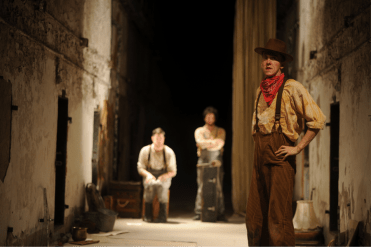
I thought that I’d start at the beginning, with myself, the only common thread through all the projects.

We received 90+ submissions for this project. Only 30 artists/ensembles, 15 pairs, were selected to meet in person with me to see what kind of a trio we might make. Each one of those folks wrote something in their application that sparked myself and the reader panel to know more. And since they did all that work, before we met I too created an “application” that I sent to them. It explained my work and impulses to pollinate using the same questions I’d asked them.

Cross Pollination Application

Name: Adrienne Mackey

Artistic area(s) of practice/expertise: Theater mostly, with a little writing and voice in the mix as well

• A bit of writing

Using 400 – 800 words on this form or another attached sheet write about why you’re interested in Cross Pollination: What makes you want to participate in this project? Do you need to shake up the way you make stuff? What makes you want to work with artists from other disciplines? Is your current process open to change?

I wrote the grant that is funding Cross Pollination on a whim.

I’d received funds from the Knight Foundation previously for another project called “Outside the (Black) Box” in which I staged theatrical works in unusual spaces including a show at Eastern State Penitentiary and another that toured to science lecture halls all over the city. And because this foundation had never done it before, I figured there was no way they fund me a second time.

So I used it as an opportunity to imagine a kind of ideal artistic experience: one that allowed me to meet a huge number of new and diverse creators, one where I got to spend substantive time, was well paid and had access to any resources I might need, and most importantly had the chance to do some research and development without the pressure of any finished product. As a former lab chemist, I approach my creative “experimentation” with a scientist’s sensibility: I ask questions I do not yet know the answer to and then carry out research that delves into the inner workings of my subject of study. And it’s funny that it was while working in a lab that I discovered directing live performance was going to the thing I would commit my life to doing.

I say live performance because when most people think of the word “play” they tend to imagine red curtains and “please unwrap your candy” speeches and sad family members sitting on beige couches talking about their relationship problems. That or Elizabethan doublets and “To be or not to be.” And while I don’t mean to say there isn’t value in those kinds of experiences, the kinds of work I’ve been making for the past decade tends to look and operate differently. I usually ask a bit more of my audiences than sitting back for an hour or two and watching. I want them to sing, I want them to move, and sometimes even choose the way they navigate the experience they take part in.

And yet, while I love creating and directing these kinds of projects, I’ve also always been a bit of an artistic omnivore. I studied classical opera as well as some pretty “out there” experimental approaches to voice. I’ve acted professionally and currently sing back up vocals in a funk band. (I’m the one in the middle with the big hair). In the last few years started writing the words my actors speak and also composed nearly 50,000 words on the state of the arts in Philadelphia and beyond. My directing works have always been an outlet for my interest in other topics – quantum physics, American labor history, science fiction, racial tensions between communities in Philadelphia – and the form these works take are often inspired by other mediums I encounter in researching them.

So in a way, this project is my chance to formalize that process. It’s my attempt to find other people who have developed skills in one area and want to see what they can learn by smashing them up against another’s. It’s a way to remind ourselves that there’s always more to learn, always new directions in which to grow.

• A bit of everything else

1)   Pick three adjectives that describe the stuff you make:  Scientific, Muscular, Surprising

2)   Work samples:

Share a bit about your work. This can links to audio recordings, video clips, a digital portfolio or website, press coverage and/or writing samples – basically, whatever you think best represents what you make. Feel free to also include information on any upcoming show/reading/performance!

Last fall I created a piece at Eastern State Penitentiary for the FringeArts festival called The Ballad of Joe Hill. I love working in spaces that aren’t theaters. Something about discovering the story of the place and how it’s architecture helps convey the emotion we’re after is really exciting to me. Below are a couple of my favorite photos from the show (all credited to the amazing Kyle Cassidy):

brad trial

hilda suitcase

reporters

hilda hall

For the NPR nerds out there, WHYY also had us on RadioTimes with Marty Moss-Coane to talk about the piece and its historical context.

Here’s a photo for another play I created in 2010 called SURVIVE!

box survive

In this one I really wanted to create a theater experience that communicated the massive, incomprehensible size and complexity of the universe. So we had audience and performers moving through 20,000 sq ft of space in a “choose your own adventure” format. A person saw one of 128 different possible unique viewings of the show’s material, and any one person only able to see about a quarter of the play’s content in a single viewing.

Here’s a video trailer for that. And you can check out more pictures here.

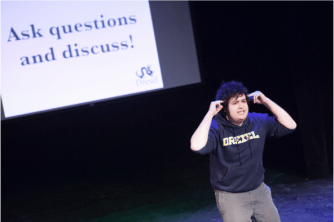
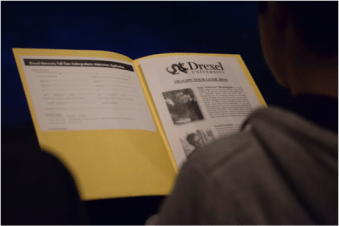
And last I’ll share a little bit of my most recent play Welcome To Campus. I created this show in residence at Drexel University (where I teach) and the piece was a traveling “tour” of the campus performed by student actors. The students brought the audience across 2 miles of the campus giving tours of their own lives in the places these events actually occurred – classrooms, dorms, the gym, etc. We also had a second set of performers out in the landscape that magically manifested whatever the person was talking about. In one scene an actor talks about having to cut a friend out of her life who started drinking and spiraling into a negative lifestyle she was comfortable with and as the tour walks by you see a series of students all having the same phone conversation based on the event the guide is talking about. You can catch another profile on NPR, this time on Newsworks, here.

One of the things I really liked about this piece was a collaboration we had with a photographer and graphic artist for objects used in the piece. We weren’t allowed to use official Drexel schwag (our “fake” tour was NOT administration approved) so we created our own folders, maps, tour guide bios, gave audiences a “voucher” for the dining hall (continent on their submission of an application for admission). Kate Raines, a photographer friend, did a brochure style photo shoot of these kids that we used in a power point that started off the show. You can see some of the photos of the students doing their best to look happy and productive.

campus 1

campus 2

campus 3

campus 4

And at the very end of the show the audience is surprised to walk out onto the main stage of the theater building as they hear “pomp and circumstance.” Their names are called as they received “diplomas” (actually the show’s programs) as they “graduated” our play. Crowning achievement of this show was when an actual Drexel applicant and his parents came to the show and said that this was exactly what they wanted to have in a tour when trying to look at colleges.

Thanks for reading. Looking forward to meeting you!

– Adrienne

What exactly is “devising” anyway?

Hey folks, something a little different for today.

This past Sunday I gave a presentation on “devised” theater for Directors Gathering. As I sat down to prep for the evening, I realized that for so much of my career I’ve defined my work (or had it defined for me) as a series of oppositions. My work tends not to exist in a traditional space. It tends not to take a linear form. It tends not to let the audience sit back and passively observe.

As I started trying to describe this “style” of work I kept asking myself, rather than thinking about what it isn’t can I articulate was it is?

The short answer is yes, I can.

And because I was so pleased with the reply that I found in answer to that question, I thought it would be worth sharing with you.

So here it is…

A


This is why, this is why, this is why…

I had promised myself that this time I wouldn’t.

But I did it anyway.

Afterwards, I always feel dirty. I always feel awful. I always feel sad and conflicted and implicated when I partake in the coverage that flares up in the wake of a tragedy like the one at UCSB.

And I certainly wouldn’t be writing about it here on the blog if my rabbit hole of darkness and anger and violence and misogyny hadn’t lead me to a spinoff rabbit warren of articles by and about film critic Ann Hornaday’s recent response to the tragedy.

Ok look. I’m not going to spend much time here rehashing exactly what went down in this exchange. If you haven’t seen it online and formed an opinion, here’s the original essay (with a follow up video in which Hornaday contextualizes some of her initial statements).  And here are two other thoughtful articles, one by a woman and one by a man, that follow the original one’s social media aftermath and point out some very salient and relevant points about said online responses to it.

And here’s the thing that’s messy and hard for me to explain.

In my view, as a women who shares stories with audiences for a living, Hornaday raises interesting and worthy points of discussion. I don’t know much about the recent work of Judd Apatow and Seth Rogan because my first experiences with both these artists fell very much in line with Ms Hornaday’s assessments of their collaborations as “outsized frat-boy fantasies.” But given the little I have seen, I see validity in her central argument: that casual misogyny present in works like these (and much of our mainstream media) can and probably do play a role in the way young men (including the one from the UCSB shooting) adjust their expectations of how the world (and in particular the women in it) should behave in relation to them.

Any honest and intelligent reader of her article should not claim that she makes a causal link between the movie type she mentions and the UCSB killing spree. She does not. But this does not stop lots of people from saying she did.

In a way, she actually implies a much deeper, and possibly scarier thing: that this one act of aggression by a single deranged individual might reflects strains of deep seated misogyny in our larger cultural consciousness. She implies that these movies could be affecting us all and not simply those that seem obviously ill. That in some small measure they are training every one of us to buy into values and desires that are hurtful to women and that it is not unreasonable to expect them to be manifested, to some degree, in reality.

Artists know this. They know that the stories we tell our audiences, the art and culture we offer them to consume, these are a kind of mirror of the sensibilities. Our works are the ideas and values that exist within all of us made visible and tangible to the viewer. To those that rant about simply understanding the difference between fantasy and reality I say this: just because I know that they are different, doesn’t mean one does not affect the other. Just because I know it’s probably not realistic when I see a pudgy character with few resources or skills in life able to “bag” an intelligent and successful and beautiful Katherine Heigl in a movie doesn’t mean it isn’t conditioning me to normalize it once I have seen it.

This is the stuff that dreams are made of…

In some measure art is indicative of the collective needs and desires of that culture we as a people are connecting to. But art is a feedback loop that flows in both directions. These stories come from us but they also reinforce our current mores within their narrative structures. They are a way in which the creators that produce them are able to mold and shape the creative landscape of influence in the future. Simply by watching a story we must take it into ourselves. Consciously or not we reflect on ourselves in relation to it. And the more something appears to us in narrative form, the more we feel its weight in our collective cultural consciousness. The more it seems like what’s normal and around us all the time.

If a prevalent type of story irritates us what are we to do? We might disengage with this aspect of our dominant culture (an act that is sometimes only possible with great effort and little external reward) or perhaps we might find ourselves slowly grinding down our rough edged opinions until they can coexist within the dominant ones.

Perhaps this how casually racist, sexist, genderist, classist, all the ist-ists out there are able to continue so much longer than they ought. Because the ordinariness, the omnipresent banality of such isms, wears down our outrage. Until such things become repeated to the point of cliche. Until they seem like the stories we’ve always been telling. Until it doesn’t occur to us that another story could even exist. Until they are as common and invisible as the air all around us.

And I imagine it’s tough if you fashion yourself a kind and funny and sensitive human, tougher still if you really ARE a kind and funny and sensitive human, to find that without intending to you’ve been standing in such air. That you didn’t want to breathe it in but you were without knowing it. That you just were going along about your business not trying to hurt anyone and now you feel trapped and can’t breathe and you’re labeled bad for just being yourself. And that this labeling someone is maybe not just indicting you with a single and simple solvable accusation, but something much bigger, something that you are deeply entangled with, something that would take a lot of life changing to really get into conversation real with.

To engage with that question is the hard hard hard thing. To dismiss a small aspect of it… To pick apart the argument and allay one’s unease with a sense that the accuser is the problem… To name call and take the fight to a simpler, lower level… much easier.

Much easier than admitting you are NOT a bad person but that sometimes we all do things that have many valences of impact on the world and about which all kinds of judgements can be made.

So I think it’s understandable that someone would react on the defensive, with anger and with outrage. Because for that person it is much more complicated that simply regretting one thing they said or did. It’s reckoning with all of it. No one wants to be called an “ist.” I think maybe no one is just an “ist.” Or that we’re all “ists” to some degree. But that label, that over-simplification of one’s identity, is what I think they fear. So they fight (Oh how they fight!!) not to end up in this box or stuck with that label or categorized in ways they didn’t agree to.

A little bit ironic, no?

This is why, this is why, this is why… it hits me so hard. Why some days the allies feel like the furthest ones away.

It is so hard to read that article and think that anyone imagines that it is anything but a woman who wanted to create a seasoned and reasoned and thoughtful raising of the question that perhaps, perhaps, perhaps there might be a way in which the stories we are currently telling have an effect on us, and perhaps especially on our weakest members.

It is so hard when at every turn in the article she raises questions rather than declaring angry blanket statements.

It is so hard when she reminds the reader that this influence is by no means the sole or even dominant force underpinning the choices that this sad and ill child made.

It is so hard to imagine that someone in that field in a position of power could completely and totally write off a statement like, “it’s worth examining who gets to be represented on screen, and how.”

When this article is perceived as a vicious, angry and male-hating attack. When an intellectual and well articulated argument on a huge number of societal and cultural forces is reduced to “How dare you imply that me getting girls in movies caused a lunatic to go on a rampage.”

And it is the hardest, the kind of hard that almost makes me weep, when that kind and funny and sensitive person, one clearly inspired by hurt feelings and a desire not to be labeled as part of the problem, responds in a way that incites a devolution into the EXACT kind of casual misogyny the article intended to address in the first place:

reaction seth 1

reaction seth 2

If how Ms Hornaday brought up the subject is the (WRONG! HORRIBLE! INSENSITIVE TO THIS ENTERTAINER’S FEELINGS YOU HORRIBLE BITCH SLUT WHORE!!!!!!) incorrect way to address this…

How on earth are we supposed to talk about it?

<sigh>

This is why, this is why, this is why we need to start telling better, fuller, more complete versions of our society’s stories.

This is why, this is why, this is why as female creators we must not be satisfied with our currently limited and problematic options.

This is why, this is why, this is why as Ms. Hornaday says we must realize:

“As Rodger himself made so grievously clear, we’re only as strong as the stories we tell ourselves.”

– A


An interview with Adrienne

Hey all,

FringeArts did a nice little interview with me a while back about my current thoughts on art, projects in the Swim Pony mix and my hopes for sustainability over the long term of a long term career.

If you’re interested in reading (and seeing me sitting backwards in that omnipresent chair) check it out by clicking this picture:

Print

Enjoy,

– A

Dispatches from the Awesome Lady Squad

cooltext1368115366

Hey Awesome Ladies!

Spring has technically sprung, despite the nastiness of the current weather, and with it comes new blooms of Awesome-ness. LADYFESTO! now created we march ahead onto bigger and even better projects.

What’s next, you ask?

Let me share with you three upcoming opportunities to take part in the Squad:

1) A Frank Convo About the Classical Canon:

I’ll admit it. I’ve been having some tough conversations inside my own head and with others about how to deal with being a contemporary female artist in relation to “great” works from the past. And so, to help sort through some of these, I’ve invited a bunch of smart and thoughtful ladies who spend a lot of their time in these works to chat with me (and maybe you) about how they navigate these waters. My goal is talk openly about how and when to keep aspects of these plays from the past while still holding true to our Awesome Lady principles of the present.

Want to join? Then come to Headlong Studios (1170 S Broad St) on May 12th from 3 – 5pm to be a part of the conversation.

2) An Awesome Lady Talking Toolkit:

Back in the early months of this year we identified a series of problems the Squad wanted to solve and some things we’d like to have to help to do. One of the most frequently mentioned “wish list” items were these:

  • Skills to handle tough conversations about gender parity.
  • A way to talk about this that doesn’t become apologetic or defensive.
  • Something to say when I sense people starting to roll their eyes.
  • The ability to talk and explain the “no” to a project that doesn’t conform to my moral code.

This meeting will be the first of several to tackle this solution.

Maybe we’ll make a workbook, a writing exercise, a checklist, a document with a series of go to argument points, something even more Awesome we can’t even yet conceive!!! If you want define what form it will take, strategize a plan and timeline for its creation, and figure out how to roll it out for the Squad at large, this meeting is for you.

Headlong Studios (1170 S Broad St) on May 19th from 7 – 9 pm to join in.

And finally!

3) Awesome Lady Observerships (ongoing):

Being a director can be a lonely business. Whether you’re a season pro or a newbie to the game, rarely get to watch each other in action.  Chatting with Allison Heishman the other day we talked about much we both wanted the chance to just sit back and observe other ladies do their Awesome directing thing. In our artistic landscape – one filled with abundance and support – we figured getting to pick up tools, see problems solved in new ways or even just admire someone else in action is just the thing to help solve this.

So! If you’re intrigued, send an email to swimponypa@gmail.com and the following info:

  1. Your name

  2. If you’re interested in letting people observe you and any upcoming work they might be able to see

  3. If you’re interest in seeing someone else’s work

I’ll put some kind of list together and follow up soon.

Whew! That was an awful lot of Awesome-ness.

And I think that’s all for now, Ladies.

– Adrienne

Local is local is local

pin


What is local? What do we mean when we talk about all politics being local? The value of supporting local art?

To the internet!

As an adjective “local” is used to mean belonging or relating to a particular area or neighborhood, typically exclusively so. As in words like community, district, neighborhood, city, etc. As Google so helpfully points out, one can research things like “local government” or “local history.” Also, this word is used as an adjective in the sense of being at hand, near, close by, easy accessible, convenient and handy. One might eat at a “local restaurant” not only for its quality but also because of its proximity to oneself. Also as in serving or related to just a particular defined area – a local bus, a local infection. In this sense, the word local perhaps more restricted, contained or confined.

As a noun, a “local” is a person or thing, that inhabits such a local area or place. An event might be filled with “locals” as opposed to outsiders or visitors. Local here means inhabitant, resident, native. The “locals” complain when outsiders come in and make a mess.

A local lives in the local place doing local things in their local way.

Local can be small. Local can be confining. Local can be networked. Local can be supportive, limiting, loving, stifling or neutral.

It can be any these things. It just depends if the locality that’s local to you, the local, is locally working in the way you wish.

Lately my impulses have been feeling awfully local. I think about the fact that I am in the midst of a number of localities, when you think about it:

  • My local city Philadelphia with its governance and policies
  • My local neighborhood, block and street
  • My artist community at large with its myriad of members
  • My specialty of theater arts in particular and the generative/deviser/collaborative/weirdo/whatever-you-want-to call-it subset within that
  • My community of administrators and advocates for sustainability
  • My network of Awesome Ladies
  • My circle of artists also working other jobs to survive

The list goes on. These are not large-scale national interests, for the most part. There might be theater happening in New York and D.C. that I see and appreciate but until I am literally taking and making my work there, it’s still a reference point. It’s not something impacting me in particular in a day-to-day way.

This is the thing about the things around me. They are close. We share space and place and resource.

They are local.

This is why I think I feel the need so greatly to talk and reach out recently. There might have been a time when I would have said, “Ah, yeah, those people do things I’m not crazy about but they don’t affect me.” More and more though it feels like this just isn’t true. I can’t swim in the pool and not get touched by the water. I am in the mix. I am affect, even just as a ripple, a current of what’s in the soup around me. And unless I am to bounce myself out, I must respond with the currents. I can swim into them or against them but I am linked with them through nearness.

My nearby community is (literally) around me. And like it or hate it that will always be true unless I leave it.

It’s like the saying (that I just made up this moment) goes: Local is local.

So I’ve been asking myself this question: how do I take the things that I love about being a local and deal with the things I really don’t?

And something that frustrated me at first was an ability to even begin making headway on such massive and all consuming problems like arts sustainability or the funding community or the meaning of a career in this field or trying to tackle gender inequity. It seemed like there’s just SO much to do. It seemed so hard to even begin to think about where to start.

And then I thought: just start with yourself and work outwards.

These are the projects you’ve been seeing from Swim Pony:

  • The Awesome Lady Squad
  • Cross Pollination
  • Residency-based theater works like WELCOME TO CAMPUS
  • Site based plays like THE BALLAD OF JOE HILL
  • A soon to come Adjuncts Soiree

I am tackling artistic and advocacy based questions one at a time through projects that start close to me and begin to push outwards from this center. In a way it feels like I’m taking my many kinds of local-ness and smashing them all into the same super tiny space and making them reckon with each other.

For many years I did a lot of work separating out these different communities by compartmentalizing them in myself. I became a local in each locality without require the others to enmesh. But these new works buck this method. They are projects that are active attempts to put my worlds up against each other and begin to make them touch. It’s a way of easing the work I do within my own brain and heart, by letting the outside world begin to hash this out. It’s meant putting one perspective into view of the other and seeing how they both shift in relation.

So that rather than trying to constantly be outside of the place I am in for one reason or another, I can slowly grow the space just beyond my own personal physical borders into a locality that can contain all the aspects of what I define myself as local to.

So that some day the city and community and women’s group and art community are all able to be in the same space without conflict: when local is local is local in me.

– A

Ladyfesto!

cooltext1368115366Drumroll please!

A few weeks back I promised you that the Awesome Lady Squad would be soon bringing you its LADYFESTO. In case you don’t remember I said that this document was about

…asserting the things we believe to be true into the world around us: that women are not lesser qualified or weaker, that our work is not niche or in addition to. It’s knowing that there is a space in which those views are supported and those intentions are believed in. It’s a promise that if we are able to articulate it, others will eventually understand the beliefs we know to be true.

Well guess what? It’s here. So, at long last and after great amounts of work we bring you:

THE AWESOME LADY SQUAD LADYFESTO

We*, the Awesome Ladies of the Awesome Lady Squad, hold these most awesome truths to be our evident and awesome tenets:

1)   We believe art is powerful and necessary.

  • As artists, we have the power to capture and reflect the human experience
  • As artists, we have a super power in our ability to influence the broader culture with our work

2)   We believe in supporting and celebrating our community of Awesome Lady artists

  • We see our artistic landscape as abundant and plentiful of opportunity and resource and do not subscribe to model of competition and scarcity
  • We believe that the successes of our peers are beneficial to all of us
  • We believe in mentoring Awesome Ladies of the future and preserving the legacy of current Awesome Lady artists

3)   We believe in an Awesome Lady’s equal worth as an artist

  • We believe in our right to a place in the field and that our artistic products are not “niche”
  • We believe our community should be a safe and respectful place for us as creators
  • We believe in equitable pay for equitable work and in the value of parity of representation for all artists in all aspects of our field – on and off stage, in the board room, and on grant committees

4)   We believe that being a Lady can inspire us but it does not limit or define who we are

  • We see the perspectives and tools we develop as Lady artists as being of value
  • We believe a Lady artist is a multitude of things and that a variety of different experiences and identities intersect within each individual Awesome Lady
  • We believe in challenging assumptions of what “female” art can be
  • We believe our gender is not the only lens through which we understand our individual experience of the world and the work we make

5)   We believe in supporting other marginalized groups

  • We recognize that our voice is not the only voice that is under-represented in our artistic community
  • We believe that the more representative our work is of our community’s diverse population, the richer and more connective it becomes

6)   We believe in taking action according to these principles

  • We believe hard truths need to be stated publically and that there is value in honest and open critique of the mainstream
  • We believe in being uncompromising in our refusal to tolerate such oppressions
  • We believe in the power of the collective to dissolve damaging narratives and structures


*Expanding on a couple definitions:

Who are “we”?

We are Awesome Ladies who are inclusive of race, age and sexual orientation. We are ladies who are contained in a variety of body shapes and come from varying socioeconomic backgrounds. We can be funny, or not. We are experimenters or follow in a long line of canonical learning. We are history challengers and embracers, listeners and talkers. We are as varied a number of things as can be imagined. The one thing we share is our inherent Awesomeness.

Why call yourselves “Ladies”?

Words like “female”, “gender”, “woman” etc have long and complex histories and definitions that are in a constant state of flux. While some members of the squad may identify with all, some or none of these identities, the intent behind “Lady” is to create a new label that is self-applied for those who believe they have a kinship with the identity of the Awesome Lady Squad.

In other words, an Awesome Lady is an Awesome Lady because they define themselves as such.

And that’s why they’re part of the Awesome Lady Squad.